
Paths of Rhythm is brought to you with support from vinylunderground.co.uk – take 10% off your next order with the code POR10 and free UK shipping on orders over £100
Paths of Rhythm is a Remote-CTRL production. If you’re looking for audio or video production, then check out https://remote-ctrl.co.uk to see how they can help.
Other ways to support the show
- Follow the show on Spotify or Apple Podcasts
- Any feedback or questions? Hit up https://www.instagram.com/pathsofrhythmpodcast/
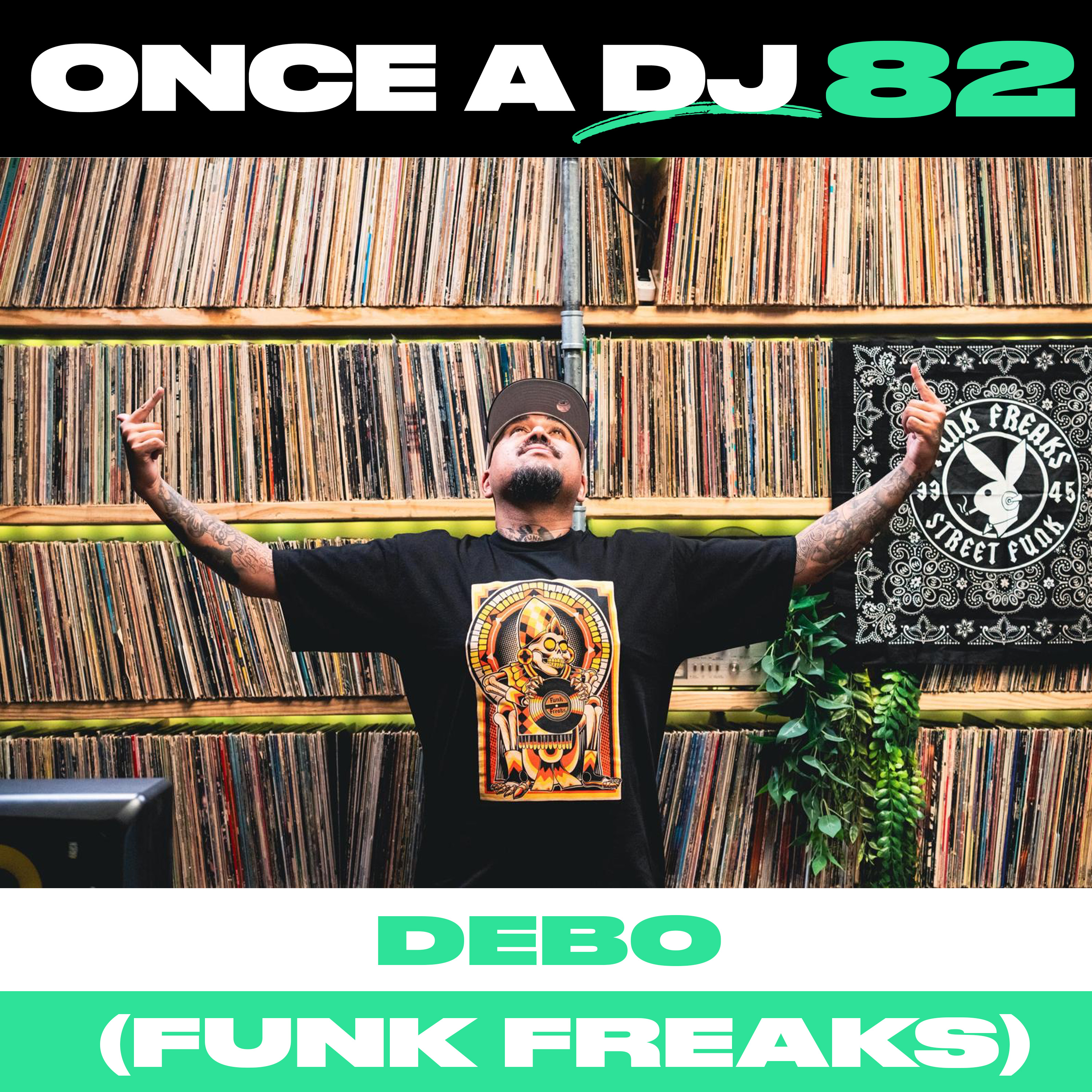
This week we’re heading to the West Coast to sit down with Debo (Ivan) — the man behind Funk Freaks, one of the most authentic funk communities operating anywhere in the world right now.
Born and raised on the west side of Costa Mesa in Orange County, California, Debo’s story is one of music as lifeline. From breaking a needle on a Sesame Street turntable at five years old, to getting his hands on a beat-up pair of mismatched Technics at age 12 — after his older brother borrowed them from a friend who was heading to prison — to teaching himself to mix at 4am before school every day for six months straight. The obsession was always there.
We talk about what makes Orange County’s relationship with 80s boogie and funk so deep-rooted and distinct from LA, the lowrider culture that kept this music alive for generations, and how Funk Freaks went from backyard boogies and house parties to a nine-year residency at the legendary OG Mics in Santa Ana — and eventually to chapters across Europe, South America and beyond.
Debo also opens up about the blood, sweat and tears it took to break the stigma of “cholo music” in bars and clubs, his year living in Barcelona, touring European funk bars with nothing but a tourist visa and a crate of records, and how all of that led to opening the record shop and launching the Funk Freaks label.
A genuinely inspiring conversation about community, culture, creativity and the power of music to change the direction of a life.
In this episode:
Growing up on the west side of Costa Mesa and how the environment shaped him
Learning to DJ on a borrowed mismatched pair of Technics and a busted crossfader
The Stanton DJ-in-a-Box moment and the mother who matched his first paycheck
The Beat Junkies influence and applying hip hop technique to funk records
Backyard boogies, house parties and the stigma of “cholo music” in venues
OG Mics — the Santa Ana residency that became the capital of funk in Southern California
Living in Barcelona, buying Euro funk pressings for cents and building the international network
How the Funk Freaks chapters work (think: graffiti crew ethics applied to record collecting)
Digging road trips from New Orleans to New York to Baltimore and why California is slim pickings now
The Funk Freaks record label — limited pressings, DJ tools, and the story behind the Colors movie recreation
Why there’s no such thing as overpaying for a record that means something to you
What the DJ’s job actually is — and why Europe gets it right
Links:
Funk Freaks Instagram: @funkfreaks
Remote Control (production): http://www.remote-ctrl.co.uk
Transcript
Right.
Speaker A:Welcome back to Once A dj, everyone.
Speaker A:I’m not a massive fan of doing social media, but what I do like about it is it’s the opportunities to learn.
Speaker A:And sometimes you’re kind of flicking through your feeds and stuff and you see things and you see more of the same thing and you realize there’s something special going on somewhere.
Speaker A:And sometimes in cases like this, it’s a bit of a community.
Speaker A:And I kept seeing funk freaks coming up here, there and everywhere.
Speaker A:So I thought, you know, it’s worth reaching out.
Speaker A:So I reached out to the funk freaks Instagram and got in touch with our guest today, Debo, and we’re going to talk a lot about west coast funk, the funk freaks movement, the scene, and everything around that, really.
Speaker A:So, Debo, how are you doing today?
Speaker A:Do you prefer Debo or Ivan?
Speaker B:Debo’s fine, yeah.
Speaker B:It’s the street name I’ve had since I was 12.
Speaker B:So, yeah, I’m 41 now, so just stuck to me and obviously the rest.
Speaker B:The reference to that is to the movie Friday.
Speaker B:Sure.
Speaker B:You guys seen that movie?
Speaker B:Ice Cube, Chris Tucker?
Speaker B:Yeah.
Speaker B:So that’s where Essence, I got it from.
Speaker A:Yeah, yeah.
Speaker B:So, yeah, Debo’s fine with me.
Speaker A:Cool, cool.
Speaker A:How are you today?
Speaker B:I’m well, brother.
Speaker B:I’m well, man.
Speaker B:Got the.
Speaker B:You know what I mean?
Speaker B:We got the time difference and stuff, man.
Speaker B:So I got the trash guy outside.
Speaker B:Sorry if you hear that in the background, but I’m.
Speaker B:Well, thank you for having me again, you know, I mean, it’s going to be amazing.
Speaker B:Interview.
Speaker B:And just off the bat, you know.
Speaker B:Thank you.
Speaker B:I want to pay my respects to the people over there on the other side of the pond who collect funk music and just keep this music DJing culture alive, you know.
Speaker B:Much respect to you guys out there.
Speaker B:And I always love from California.
Speaker A:Yeah, I mean, for, you know, funk and boogie, it’s kind of been sort of up and down.
Speaker A:Like when I was DJing more, there was a bit of.
Speaker A:t that sort of time, say late:Speaker A:So it’ll be really good to get into.
Speaker A:So with these interviews, I don’t know if you’re aware, but basically the first thing I’ll start with really is just if you could tell us about where you spent your early years and what your earliest memories of music are.
Speaker B:Yeah, I could pinpoint exact my fascination with Vinyl records started as a young boy.
Speaker B:As of.
Speaker B:I believe I was like five, six years old.
Speaker B:My father would go to what we call swap meets here or flea markets.
Speaker B:And he bought me with an iconic Sesame street turntable.
Speaker B:And he had records laying around all the time.
Speaker B:And he bought it for me.
Speaker B:And it lasts 30 seconds in my hands.
Speaker B:And I broke the needle while playing records.
Speaker B:He showed me how to play it the minute he stepped out, not even 10 seconds.
Speaker B:I swear to God, I spotted 10 seconds.
Speaker B:I broke the needle scratching, going crazy on it, got a whooping for it.
Speaker B:But that was my obsession with it.
Speaker B:I was like, man, like, how did that sound come out in.
Speaker B:That was my earliest recollection of me just being fascinated with vinyl.
Speaker B:And then after that, my father will always buy me records from you, from the flea markets and whatnot, from Chipmunk records to old classical, you know, I mean, you know, Kid Storyteller Records and whatnot, Disney records, all that good stuff, man.
Speaker B:So.
Speaker B:And honestly.
Speaker B:And also his records that he would have and stuff, man.
Speaker B:So, yeah, that was my earliest recollection of it.
Speaker B:And ever since then, it just progressed.
Speaker B:Skip forward to when I got my nickname Debo at the age of 12.
Speaker B:My brother, who was part of a gang, his friend was a DJ, he was 17, you know, either teenagers at the time.
Speaker B:And he knew he was going to jail.
Speaker B:And he caught and he told my brother, he’s like, hey, I’m gonna go to jail for a year.
Speaker B:Do you want to borrow my turntables?
Speaker B:Because my mom’s gonna throw those shits out, like, if I.
Speaker B:If.
Speaker B:If I don’t take care of it, you know.
Speaker B:So my brother’s like, yeah, shoot them.
Speaker B:So long story short, he went to jail.
Speaker B:My brother got his two turntables and a mixer and a stack of records.
Speaker B:We ghetto rigged it into our little boombox, you know, had RCA inputs in the back.
Speaker B:Back into the little boomboxes.
Speaker B:Yeah, yeah, with tape players.
Speaker B:We connected to it and then there you go.
Speaker B:It was a busted Newmark crossfader with.
Speaker B:No, with.
Speaker B:With pretty much.
Speaker B:With a little stick hanging out of the crossfader.
Speaker B:It was just jiggity raggedy and two techniques.
Speaker B:It was.
Speaker B:he other one was a techniques:Speaker B:So it wasn’t even matching pairs.
Speaker B:Stain 500 cartridges and a stack of records is just hip hop, man.
Speaker B:So I fell in love at that moment, man.
Speaker B:I had shared a room with my younger brother.
Speaker B:Mind you, I was in junior high, so I had to wake up at 6:30 in the morning, get ready to go to school.
Speaker B:I would wake up at four in the morning, pitch black and start playing records and start trying to like figure it out.
Speaker B:You know, back in the days, we didn’t have YouTube, we didn’t have anybody.
Speaker B:We either fully indulge ourselves into DJing or we learned from friends.
Speaker B:But I just woke up every morning for about six months.
Speaker B:I woke up every morning at four in the morning and just trying to understand the, the mechanics of how to mix and channel and lows base all I was trying to figure it out from 4 in the morning.
Speaker B:And then I’d get ready for school at 6:30, take off and then come back right after school and do the same process again and just be there playing records and trying to learn with a little stack of records.
Speaker B:And for six months straight, because he got lucky.
Speaker B:He got off on good behavior from, from, from juvenile home and prison and he came back and took his back.
Speaker B:And after that I was like, yo, I need that.
Speaker B:You know, I need the, I need my fix.
Speaker B:I mean, like, how you going to take that away from me?
Speaker B:And then, then that was at 12 years old, at 16 when I got my first job, my mother, I got my first paycheck and I used to work at art supply stores and I used to do a lot of graffiti.
Speaker B:So it was beautiful.
Speaker B:A great match made in heaven right there.
Speaker B:Working at art supply store, doing graffiti at high school, you know, finding yourself, that was my first job.
Speaker B:My first paycheck was 400.
Speaker B:And then my mother saw how much I was involved and how much I cared about this and she’s matched my paycheck because.
Speaker B:Do you guys remember statin dj in a box?
Speaker B:The craze box set when had two str 80s and the craze needles and the headphones.
Speaker B:I ended up buying that box.
Speaker B:That was my first set of turntables.
Speaker B:I bought that box for $840.
Speaker B:I only had 400, mind you.
Speaker B:That my, that I got for my first paycheck.
Speaker B:But my mom saw how passionate about it I was about it.
Speaker B:She’s like, look, I’m gonna match your 400 and go get your turntables.
Speaker B:And you want it that bad, go get it.
Speaker B:So God bless my mother.
Speaker B:She’s the one that was that late 90s then.
Speaker B:s, early:Speaker B:90 Around.
Speaker B:ah, around that time into the:Speaker B:Yeah, that’s what they.
Speaker B:That’s when I first bottom.
Speaker B:That’s my personal.
Speaker A:So you Would have.
Speaker A:You would have like, had you would have like previously like been played like it would have been a few years before that.
Speaker A:Then when you borrowed the turntables and the records, right?
Speaker B:Yeah, yeah.
Speaker B:It was in the early 90s.
Speaker B:I was a junior high, mind you.
Speaker A:Yeah.
Speaker B:So I was in junior high.
Speaker B:Might have been like 96, 97.
Speaker B:n’t get into high school till:Speaker B:And then I didn’t get my first best set of turntables till.
Speaker B:Yeah, had to be four years after that.
Speaker B:So around like:Speaker A:Yeah.
Speaker B:Had to be around that area.
Speaker B:Yeah.
Speaker B:So that was my first job.
Speaker B:I remember being 16 again.
Speaker B:That was my first paycheck.
Speaker B:And I bought those damn turntables.
Speaker B:That was crazy.
Speaker B:In a.
Speaker B:Bought DJ in a box.
Speaker B:You remember Newmark had DJ in a box.
Speaker B:Gemini had those.
Speaker B:Oh, beat up XL100 turntable, like.
Speaker B:Well actually what the Gemini XL500 were kind of basic and that they’re still the first direct drive turntable that people could really mess with, you know.
Speaker B:But the str 80s, they did well for me, man.
Speaker B:I rocked a lot of house parties, man.
Speaker B:Shout outs to stand, man.
Speaker B:They had quality back in the day, man, for sure.
Speaker A:Yeah.
Speaker A:I think their budget stuff was just a bit better, wasn’t it?
Speaker A:Because my friend had the Geminis and yeah, they, they weren’t up to too.
Speaker B:Much at least, you know, it’s.
Speaker B:Let’s be honest man, like you didn’t know if you’re gonna continue with it.
Speaker B:You know, you don’t know if you’re really about the music or if you’re just doing it to get chicks.
Speaker B:Like, you know, you just want to be the dj, the enemy, the, you know, the eyes on the DJ tapa.
Speaker B:Like so I understood the marketing behind it, but I was obsessed with DMC battles as well at the time.
Speaker B:This is when Craze was at his peak and in my eyes, you know, when he just took over.
Speaker B:Mind you, this is post be Junkies and X Men being, you know, I mean, and you know, Cuber and all them weren’t.
Speaker B:Were banned from DMC battles and shit because they’re just killing it.
Speaker B:So.
Speaker A:Yeah, yeah.
Speaker B:But like after that, I think the one that just took the helm was crazy.
Speaker B:And he’s forever going to be like in my top three DJs, five DJs.
Speaker B:And when it comes to innovation, man, Craze Is a beast, man.
Speaker B:And then I find out he has a.
Speaker B:Like a starter pack with the.
Speaker B:The Needles were decent too.
Speaker B:They’re hella cool, man.
Speaker B:The Needles, really good.
Speaker B:The headphones were whatever.
Speaker B:And it came with the SK6 Stanton mixer, which is basic two channel mixer, but it was dope.
Speaker B:The.
Speaker B:The fader was butter, man.
Speaker B:Yeah, it was cool, man.
Speaker A:You know Craze as well, like, Craze was one of those guys that just made battling look cool.
Speaker B:Yeah,.
Speaker A:They’re just both like, cool.
Speaker A:Yeah, yeah.
Speaker B:Big smasher.
Speaker B:Mike, for me is.
Speaker B:Is a alien, man.
Speaker B:He’s a perfectionist.
Speaker B:He’s like out of being type of dude where you’re just like, how is that physically possible?
Speaker B:But then when you see Craze, yeah, like, he’s a.
Speaker B:He’s just like on some other swag where he’s just like, you don’t give a. Dude, check it out.
Speaker B:I’m kind of like doing this for shits and giggles and I’m killing it.
Speaker B:Like, you know, like his whole attitude and demeanor towards it.
Speaker A:Something else, isn’t it?
Speaker B:Yeah, indeed, man.
Speaker B:So that’s what happened.
Speaker B:I got that turned.
Speaker B:I got that set up and, man, I can even show you.
Speaker B:This is a. I’ve had this little stool right here my whole life, my whole DJ career full of graffiti stickers and whatnot tags and stuff, man.
Speaker B:I started with this stool and the actual cardboard boxes at the turntables came in.
Speaker B:That was my setup.
Speaker B:There were.
Speaker B:I literally didn’t have a table, I was broke, I wasted my whole check.
Speaker B:I probably had like a good like four records.
Speaker B:But there’s.
Speaker B:I set it up on top of the cardboard boxes that they came in, man.
Speaker B:Like, and I shared a room with my younger brother, so my younger brother was experiencing it as well with me, the evolution of what I was doing, you know.
Speaker B:So it’s like, it’s a beautiful story because, you know, it literally was me giving it my all and being like, yo, man, this is me.
Speaker B:This is my.
Speaker B:You know, this is what I want to be.
Speaker B:Not to in essence.
Speaker B:Not in essence thinking that I was going to get paid to travel the world and create what I’ve created now and done with what I’ve done with my crew.
Speaker B:But, like, just.
Speaker B:It was that.
Speaker B:That essence of me needing to be having those turntables in that life, in my.
Speaker B:That part of my life.
Speaker B:You know, at that point, I was in a really up place because all my friends were either incarcerated.
Speaker B:Either incarcerated, kicked out of school or had jobs or got their girls Pregnant.
Speaker B:And that was it, man.
Speaker B:Out of 25 of my friends that we started high school, only three of us graduated high school.
Speaker B:So you can see the statistics in that.
Speaker A:Wow.
Speaker B:So I was, you know, I was kind of like, man, like, where do I go from here?
Speaker B:Like, the only reason I was playing a freshman football was because all my boys in there, but all they got kicked out for whatever reason for fighting, for bad grades, expulsions and stuff.
Speaker B:And I’m like, dude, I’m gonna be playing football if I’m not here with my.
Speaker B:My homies, you know?
Speaker B:So I got out of that and got in to hip hop.
Speaker B:It was my first love.
Speaker B:It always been my first love, you know, graffiti, DJing, all that B boying, man.
Speaker A:So can you just talk a bit about where you’re from?
Speaker A:Because, like, it’s easy to just like, assume that you think, oh, yeah, west coast funk, stuff like that.
Speaker A:I just think, yeah, la, whatever.
Speaker A:Everything’s like, nearby, everything else.
Speaker A:But, like, I had to look at a map earlier and it’s really not because you’re quite far out from LA, aren’t you?
Speaker B:Yeah, we’re about a good 45 minutes an hour out, depending on traffic.
Speaker B:I grew up in, on the west side of Costa Mesa right here, which is a.
Speaker B:An Orange county, which is the county under Los Angeles.
Speaker B:It’s LA county, and then Orange county, then you got San Diego and then you got the border in Mexico right here at Tijuana, which is right there.
Speaker B:So we’re close to the border, but we’re right under LA county, which is Orange county right there.
Speaker B:And I grew up.
Speaker B:Yeah.
Speaker B:In Costa Mesa on the west side.
Speaker B:You know, at that time, the street that I lived in, 80 of the crime in the city was occurring in that block area where I lived.
Speaker B:We had about, like, four different gangs in the.
Speaker B:In that I say less than.
Speaker B:Yeah, two block radius.
Speaker B:You know, it was very active, man.
Speaker B:Like, due to my brother being associated with gangs and whatnot.
Speaker B:Like, you know, it’s kind of guilty about affiliation, association.
Speaker B:Like, I had a role with my boys, you know, that was my neighborhood, all my wherever.
Speaker B:And that’s just referring back to my friends.
Speaker B:All my friends got jumped into my brother’s neighborhood.
Speaker B:And due to the fact that.
Speaker B:Oh, you’re Spanky’s brother.
Speaker B:All right, cool.
Speaker B:So you got to pass kind of like I was just there, you know what I mean?
Speaker B:I was either.
Speaker B:I had to be associated and be there and, you know, and, you know, there was no other choice.
Speaker B:It was right there, you know, I Mean, like, it’s just like, yeah, man, like, growing up in your neighborhood, I’m sure, you know, you had your squad, your crew that was right there on the block.
Speaker B:Like, that was your guys’s click, you know?
Speaker B:And that.
Speaker B:That was our generation, you know, my older brother had his friends, his generation, which I was cool with all them.
Speaker B:But then when it comes down to, I guess, recruitment, you got to look at the youngsters.
Speaker B:All right, like, all right, who’s the new kids coming in the block?
Speaker B:Or I was trying to K it, you know.
Speaker B:All right, well, you got to get jumped in.
Speaker B:Whoopi.
Speaker B:Whoop.
Speaker B:But long story short, like, that’s what growing up here in California, you really had in my eyes, in my upbringings, you had two options.
Speaker B:Either you hit the books or you go to work, or you start gang banging.
Speaker B:Like, one or the other one, you know, like, those are the other options that we have, unfortunately, in life.
Speaker B:But yeah, man, it’s.
Speaker B:It’s hard living out here, man.
Speaker B:Other than, you know, other than like, the issues with police and also, you know, I mean, other gangs, you know, you had to also have to be on top of, like, not being truant to school and all that good stuff, man.
Speaker B:You only had certain options.
Speaker B:And then for me, self expression was through music and through hip hop and through collecting, through DJing, and I really fell in love with all that right there, man.
Speaker B:So that was.
Speaker B:That pretty much saved my life, man.
Speaker B:Record collecting, DJing, and for sure gave me an outlet to express myself, you know, through the, you know, my accumulation of records and the different styles that I like and whatnot.
Speaker B:And I. I do get, honestly say that, you know, gangster rap really saved my life.
Speaker B:All this sampling that I remember hearing from back in days from RBL Posse, A Proper Dose, you know, I mean, Latin lifestyle, all this.
Speaker B:All this, like, Chicano rap rappers from Cali, West Coast.
Speaker B:His name is Dominator, who we actually put on our record label.
Speaker B:He was from a crew called Central Coast Click, and he used a lot of funk music.
Speaker B:He’s from Oxnard, out that area, 805 area.
Speaker B:Sampling from that, like, really got embedded in my head.
Speaker B:And then I started finding out when I went to record shops, like, oh, man, I know this song.
Speaker B:You know, so and so sampled this and boom, here, you know, it’s the time, you know, get it up.
Speaker B:And then next, you know, Patricia Rushman.
Speaker B:Oh, wow, I’ve heard this song before, you know, and then DJ Quick was, which is the greatest in my eyes producer in California, and maybe the World.
Speaker B:Because I do love his production man.
Speaker B:DJ Quick is on another level, you know, of production music wise and knowledge.
Speaker B:Yeah, yeah, but that influenced my upbringings and just my whole style of music and what I love to listen to and then we.
Speaker B:Yeah, that’s where it pretty much came from, man.
Speaker B:That’s the, that’s the living out here in California.
Speaker B:LA has its own, uh, you know, your upbringings is almost exactly the same.
Speaker B:The only difference I would really say between Orange county and LA is the infatuation and love for 80s funk music.
Speaker B:Boogie, Synth, a vocal or top box electro.
Speaker B:And Orange county, man, I don’t know what it is.
Speaker B:Doo wop, sweet soul, R B in LA is God like area.
Speaker B:Everybody collects that.
Speaker B:Very deeply embedded.
Speaker B:But in Orange county, it’s the funk, man.
Speaker B:It’s a something in the water over here.
Speaker B:I don’t know what it is, but we are obsessed.
Speaker B:And it’s a generational thing as well.
Speaker B:And it’s crosses, you know, I mean, barriers.
Speaker B:Honestly.
Speaker B:It goes from generations to even women just knowing all the funk music that you like to.
Speaker B:They like to hear at the parties.
Speaker B:Rare obscure funk, you know, boogie from Nigeria boogie funk to UK jazz funk.
Speaker B:These little kids, man, these youngsters are coming up and asking for these crazy obscure records and we’re like, damn, okay man, I didn’t know you knew that.
Speaker B:Okay.
Speaker B:Like, you know, and that influences us and kickstarters us to even dig harder and try to produce those tracks for them, you know, because they love it, you know, And I think that’s how we have been staying relevant in this scene.
Speaker B:That’s happening, man.
Speaker B:A lot like you were stating.
Speaker B:Like you hear about funk freaks but you don’t really understand what’s happening because it’s like we’re a subculture here where we’re just always trying to reinvent ourselves.
Speaker B:And actually the music never stops.
Speaker B:You learn new music every day, you find out about new tracks every day.
Speaker B:You know.
Speaker B:It never ends, dude, like just recently I gave you a great example, man.
Speaker B:I just got a French little synth pop record over here.
Speaker B:Regrets I can’t even pronounce this in French.
Speaker B:But you know, I just got put onto this, man.
Speaker B:It’s just.
Speaker B:It never ends.
Speaker B:This is the search for new music, the new sound.
Speaker B:It never ends, bro.
Speaker B:So.
Speaker B:But yeah, that’s California living for you, man.
Speaker B:Like especially on Orange county, man.
Speaker B:We’re known for it.
Speaker B:It’s also embedded deeply in the gang culture because backyard boogies, I don’t know if that’s the reference.
Speaker B:We Always call the house parties.
Speaker B:And what we have over here, we call them backyard boogies.
Speaker B:And that’s where I got my bones.
Speaker B:Where, you know, DJing in house parties, man.
Speaker B:I used to DJ abandoned houses.
Speaker B:I used to DJ, you know, I mean like backyard can asadas, what we say, like barbecues and whatnot.
Speaker B:Like, that’s where that was where like the essence of where I like doing.
Speaker B:And because of the.
Speaker B:We didn’t have a platform to play our music.
Speaker B:Clubs, bars and whatnot, because of the stigma and the labeling that it’s gang music.
Speaker B:It’s like we can go to a regular bar, be like, oh, man, what are you playing?
Speaker B:80S.
Speaker B:We even.
Speaker B:We wouldn’t even call it funk.
Speaker B:We just say 80s boogie.
Speaker B:80S boogie?
Speaker B:Like what?
Speaker B:Like.
Speaker B:Yeah, like zapping Roger.
Speaker B:Oh, nah, man, that’s.
Speaker B:That’s game use.
Speaker B:That’s cholo music.
Speaker B:What is a term we use for game gang members out here?
Speaker B:That’s cholo music, man.
Speaker B:We don’t want you playing that because we’re gonna get the wrong people in here.
Speaker B:And it was so bad that they would limit us to just 30 minutes max of funk music that we’d be able to play.
Speaker B:Then you have to switch it, yo, switch it to top 40, switch it to whatever, anything west coast or anything else but funk, you know, man, like, that’s how bad of a stigma it got.
Speaker B:So, yeah, we were the first ones to break that barrier, man.
Speaker B:We were the first one to change up the narrative.
Speaker B:And we were playing strictly 80s funk music and on vinyl too.
Speaker B:Everybody was already converted to, excuse me, MP3s, but we were the first ones just could keep it strictly 80s funk music boogie.
Speaker B:Well, we played modern funk as well, but all on vinyl.
Speaker B:And that was us that we did out here.
Speaker B:Yeah, like, we strictly had this style and what we label street funk.
Speaker A:This might be a really silly question, but, like, was there a lot of it, like roller rinks and things like that?
Speaker B:That was.
Speaker B:There was a lot of roller rinks back in the day.
Speaker B:That was where I, I.
Speaker B:You remember, you’ve seen, I’m sure, the movie the Straight out of Compton.
Speaker B:Like, they used to perform only roller rinks.
Speaker B:And also, dude, because of the negative stigma behind it, because it would attract the bad people the.
Speaker B:The gang culture.
Speaker B:So the roller rinks were around forever.
Speaker B:And there were, I think they still be.
Speaker B:Might be a couple in like La A Slauson area out that way, you know.
Speaker B:But yeah, the roller rinks are major, like influence on that music at the style too.
Speaker B:But that was Transcending too with the music.
Speaker B:It was changing, you know.
Speaker B:But yeah, I love roller disco boogie music, you know, the Bond Mason and stuff like that even Touche.
Speaker B:Like stuff like that, you know.
Speaker B:Yeah, that’s for sure.
Speaker B:I love bumping that stuff right there, man.
Speaker B:But yeah, so that, that had a heavy influence, especially amongst the black culture when it came to like 80s boogie music.
Speaker B:But like I said, like for us in the lowrider culture, that’s where we kind of like gravitated towards it and kind of archived it and started collecting it and just started pushing out and like, hey man, like there’s more to this music, man.
Speaker B:There’s other songs other than bounce rock skate out there that has the same vibe and feel, man.
Speaker B:And it’s even like on these more independent labels.
Speaker B:And that’s when we started digging hard, you know, and that’s how it is.
Speaker B:We rolled back, like going back to low riding.
Speaker B:Low riders is a passion.
Speaker B:It’s also art form in my eyes.
Speaker B:You see these artworks that people do with lowriders, man, they.
Speaker B:People drop hundreds of thousand dollars on lowriders.
Speaker B:On 64 Impalas, you see them gold plated chrome undercarriages and stuff like that.
Speaker B:You look at a car where you see a whole platinum, you know, I mean, motor assemblance, you know, like he dropped over $70,000 on the motor loan type of thing.
Speaker B:Yeah, that’s a passion.
Speaker B:So when you want to make an appearance, you’re peacocking.
Speaker B:When you pull up to a low rider car show, you have your car you worked on all year for Easter Sunday.
Speaker B:Like here religiously cruising is Easter Sunday and Cinco de Mayo is like the days you want to come out.
Speaker B:Let’s say you’ve been working on a project car for a year.
Speaker B:You want to have your car ready for Easter Sunday.
Speaker B:Because Easter Sunday everybody goes to the parks and brings their low riders out on the Sunday.
Speaker B:So mind you, you want to make an entrance.
Speaker B:And what entrance do you do?
Speaker B:You got to pick a particular song.
Speaker B:You want to pick a song that is obscure, something’s really heavy, a term like a low rider funk song.
Speaker B:You know what I mean?
Speaker B:Like Bottoms up the Shot Lights is like having the kind of style of low rider funk, lower bpm, heavy synth bass lines and you know, just grimy.
Speaker B:Like that’s a good, an example of what it might be a low rider funk song.
Speaker B:But like at the end of the day, you want to pick that song.
Speaker B:That’s because that’s the.
Speaker B:Your entrance theme to your car.
Speaker B:If that Makes sense.
Speaker B:You know, you’re pulling up with your whole.
Speaker B:Yeah, roll call.
Speaker B:You got seven, eight cars, your whore car club.
Speaker B:And you want to make sure your song is something that’s original too, just like your car.
Speaker B:So that’s the influence of the lowrider culture had on boogie funk and.
Speaker B:And vote quarter top box funk and what we call, you know, street funk over here.
Speaker B:So that.
Speaker B:That’s where it escalated from the 80s and they just started getting passed on down generations, general generations, and where we picked up the helm because we’re already collecting these records and DJing these records and heavy through the influence of the beat junkies, of how they were manipulating records and yeah, from their hip hop as is from the doubling up and back scratching and you know, I mean, be juggling.
Speaker B:We implied that skill set into our 80s funk style, if that makes any sense.
Speaker B:Man.
Speaker B:That’s why I like forever respect to the beat junkies.
Speaker B:Like, I listen to them since I was a youngster, man.
Speaker B:Friday night flavors out here, you know, Mr. Chuck.
Speaker B:Yeah, you know, me and J Rock and all that Melody Red Matic and stuff, man, they influenced my style to the fullest because we just took their.
Speaker A:Energy down to your area.
Speaker B:Yes, we have.
Speaker B:We’ve been having them for a couple times.
Speaker B:We’ve had J rock, we’ve had Mr. Chalk, we have Melody coming out this Friday.
Speaker B:So yeah, we give them their flowers, man, every time.
Speaker B:And they know it too, man.
Speaker B:They know what time it is with us, man.
Speaker B:We’ve always like, have been appraising their, you know, their involvement of the culture, man.
Speaker B:We always praise them, man, because they did, man.
Speaker B:They put a lot of people up on Game and man, and they’re.
Speaker B:They’re mixing his top notch, man.
Speaker B:They’re on another level and man, so we are just trying to.
Speaker B:Trying to necessarily keep up with them, but like, I just, you know, keep the culture going alive and keeping it right, like where mixing is a fundamental in DJing and especially in this style of music that we cater to, you.
Speaker A:Know, with the beat junkies.
Speaker A:It’s like, I think when you.
Speaker A:When you see how they do the sort of beat junkie style and stuff, what amazes me is it’s not just the sort of techniques of the juggling and the cuttings.
Speaker A:It’s how well you’ve got to know the arrangement of the records to be able to restructure them in the way they do.
Speaker A:Because, you know, they’re not just sitting there just like even doing something really creative with two bars of a. Sod they’re progressing the move through the song in that way and it’s.
Speaker A:It’s just genius.
Speaker B:Yeah, it’s gliding, man.
Speaker B:And it’s like, you know, the manipulation of the record is just on another level and it’s just smooth, man.
Speaker B:And that’s what I’ve always tried to be keen on is like, damn, man, these are butter.
Speaker B:Like, you know, just spraying butter on the toast.
Speaker B:Like, it’s so smooth and it makes me level up.
Speaker B:It makes me want to start mimicking their style and start understanding.
Speaker B:What did he do in that particular cut?
Speaker B:Like, you know, I mean, like, what?
Speaker B:To an essence where I’d be like, damn, what pitch control was that on?
Speaker B:Like, you know, it sounds a little bit different and it just sounds better at that style, at that speed, you know, stuff like that, man.
Speaker B:So always give my praises to them, man.
Speaker B:And if it wasn’t for them too, I wouldn’t be here, man, like, realistically.
Speaker B:But yeah, man, that’s the culture though, man.
Speaker B:That’s the style, man.
Speaker B:The cool thing that I could really say about them.
Speaker B:And this is for like Baboo, because in Red Matic, I’ve heard they started off in the same message as we did, doing quinceaneras, which is like sweet 16 parties over here for like, in Mexican culture, 15 year olds, they call quinceaneras weddings, you know what I mean?
Speaker B:Parties.
Speaker B:They.
Speaker B:They also did the legwork that we did.
Speaker B:Like, got their bones doing parties like that, man.
Speaker B:Like, that’s what I was doing when I was a teenager, into my early 20s.
Speaker B:And man, doing weddings, doing house parties, doing backyard boogies, doing quinceaneras, doing anything to get paid, you know, like at that time.
Speaker B:So they did all that, man.
Speaker A:Wasn’t your first gig pretty wild?
Speaker B:My first gig, man.
Speaker B:Brother club gig or like regular house party gig, man.
Speaker A:Like house party gig.
Speaker A:First time playing out, wasn’t.
Speaker B:Yeah, the first time playing out.
Speaker B:I remember, man, I might get in trouble with this one, but like.
Speaker B:So back in the day, I was 17 and we pretty much had this older woman that we used to use her apartment house to throw parties.
Speaker B:I just was very.
Speaker B:How do I say I was very.
Speaker B:I knew her very well and she would allow me to do house parties there every, every month, you know, like she was an older woman, man.
Speaker B:I’m not throwing her under the bus or whatnot, but like, you know, I was only 17 at the time and she didn’t give a.
Speaker B:She’s like, yeah, use my house.
Speaker B:Don’t trip, man.
Speaker B:I’ll Just get my kids out of the house and, you know.
Speaker B:All right, cool.
Speaker B:So mind you, a little one bedroom apartment, man, I used to have like 80 people in there, man, partying down, like, going crazy.
Speaker B:It just ended up happening.
Speaker B:Stopping because there was a shooting and that was it.
Speaker B:She’s like, nah, man.
Speaker B:Like, some kid lost his eye over here.
Speaker B:Like, we got to stop this.
Speaker B:I’m all right, cool.
Speaker B:So that was the essence.
Speaker A:One of the parties that you thrown?
Speaker B:Yeah, one of those parties that threw.
Speaker B:I threw, man.
Speaker B:There was a gun.
Speaker B:Gun involved shooting and had to stop it.
Speaker B:So I’m like, all right, man.
Speaker B:It happens.
Speaker B:You know, unfortunately, this is the territory that we came.
Speaker B:You know, I mean, that we’re involved in that.
Speaker A:That must be really frustrating for you at the time where you’re like, we’ve got this music.
Speaker A:I want to kind of shake this stigma and get it out and build something here.
Speaker A:But, you know, how do we get away from these things happening without just abandoning rp?
Speaker A:That must be so tough.
Speaker B:It’s hard, man.
Speaker B:And because I’ll be honest with you, there’s a lot of blood, sweat and tears that we shed, man, trying to make this happen.
Speaker B:I move.
Speaker B:We kept moving around, man, amongst my.
Speaker B:My brother and my boy, loser.
Speaker B:Like, we kept moving around, man, because same thing.
Speaker B:Due to the stigma.
Speaker B:Security.
Speaker B:The venues not wanting to supply extra security, or now you want to play security at all.
Speaker B:And sound systems too.
Speaker B:They’re just like giving us the space.
Speaker B:Were killing it at the bars, but, like, it was.
Speaker B:It was.
Speaker B:It was hard, man.
Speaker B:But, you know, I mean, we.
Speaker B:We surpassed that.
Speaker B:We ended up just making it about the culture.
Speaker B:And the beautiful part is now, like.
Speaker B:And I’ll gladly speak on it, people, how do I turn this correctly without incriminating myself?
Speaker B:The people incarcerated know what.
Speaker B:What we stand for, which is productivity in our culture.
Speaker B:Does that make sense?
Speaker B:And so we got the.
Speaker B:Okay, so in a sense to where our people have been told now, like, you guys come with respect and show respect or don’t come at all times.
Speaker A:Yeah, yeah.
Speaker B:So that’s the beautiful part, you know, like, that’s.
Speaker B:That.
Speaker B:That once we got that from the.
Speaker B:What we call the big homies, the respect now things have changed.
Speaker B:Things have changed.
Speaker B:Once we got that pass, you know, it’s kind of like, all right, man.
Speaker B:Like, you guys come show respect, do what you guys do, you know, like, you guys are doing right among us and keep it going.
Speaker B:You know, you guys represent something more than just, you know, gang violence and stuff, man.
Speaker B:You guys represent the culture of what we are trying to show the world that there’s talent in these hoods, man.
Speaker B:There’s talent amongst us.
Speaker B:There’s talent amongst the Chicanos of Mexican Americans who are keeping this 80s black music alive through preservation of, archiving the records and also bringing the artists out and giving them their flowers, you know, we’re doing that for the culture, man.
Speaker B:We are the culture to an extent, man.
Speaker B:Like, the.
Speaker B:That kind of life, the California lifestyle is real.
Speaker B:People do live it day in, day out.
Speaker B:I live it day in, day out.
Speaker B:Funk music is my life day in, day out, you know.
Speaker B:And, you know, at one point, yeah, it might be able to be, like, sold to the masses.
Speaker B:But, like, realistically, if I was to lose social media tomorrow, I’m still going to be doing the same thing.
Speaker B:I’m still going to be collecting these records, man.
Speaker B:I’m still going to be playing these records.
Speaker B:And if I don’t have a platform anymore, then I’ll still be here with my kids just playing these records, you know.
Speaker B:I don’t mind being that old man, just playing records at home, you know?
Speaker A:Yeah.
Speaker A:So with the parties then, was there a certain venue where it just, like, all clicked into place and was able to start growing?
Speaker B:It did, brother.
Speaker B:It did.
Speaker B:What we called it here is called Original Mics.
Speaker B:And it was a big bar.
Speaker B:Slash.
Speaker B:Yeah, mostly, like, it was like a bar.
Speaker B:It was huge, massive, three rooms.
Speaker B:It was called Original Mics.
Speaker B:And due to the fact that there were so many homies and like, uh, uh, OGs, what we call, uh, Original Gangsters, Veteranos, uh, veterans, they renamed it OG mice instead of original mice, because the OGs, you know, the Original Gangsters.
Speaker B:And that was a nickname, it was term.
Speaker B:And we.
Speaker A:Excuse me.
Speaker B:We went in there and it was our residency for about nine years.
Speaker B:And we made it, like, somewhat like the capital of funk there.
Speaker B:Every last Friday of the night.
Speaker B:Will you be able to go in here like.
Speaker B:Like obscure, cute, like, rare funk music in the back room.
Speaker B:And it just became this whole, like, place that we’re in anywhere in California.
Speaker B:Southern California.
Speaker B:It’s Northern California.
Speaker B:You ask about, like, Orange County.
Speaker B:Oh, OG Mics.
Speaker B:That’s the first thing they say.
Speaker B:Not even Original Mice.
Speaker B:They know it as OG Mics.
Speaker A:Oh, OG Mics.
Speaker B:Yeah, I’ve been there before at Santa Ana.
Speaker B:Oh, I’m right there.
Speaker B:Yeah.
Speaker B:You know, that was a.
Speaker B:That was the Mecca.
Speaker B:It’s now under new management.
Speaker B:It’s a barbecue joint now.
Speaker B:But at this point, like, we’re trying to bring the nostalgia back and we rename.
Speaker B:We have a night inside there called OG Mike.
Speaker B:It’s kind of like, hey, you want to get the same feel at the same place?
Speaker B:Come through.
Speaker B:We’re gonna be playing over here, playing the same type of music.
Speaker A:Yeah, yeah.
Speaker B:And now that we’re 17 years old with this funk freeze thing, like it’s kind of like they come back for like the.
Speaker B:Oh, I remember OG Mike, you know, the older crowd, man, so.
Speaker B:And then we got the younger crowd too, man, that kind of see the vibe that what it is, man.
Speaker B:Like we’re not trying to be all about hypes and balloons and like, you know, social media presence for us is more like get lost in the music, don’t worry about anything else and just have a good time, you know, like that’s the whole thing that we try to push.
Speaker B:We do do recap videos, which I love doing it because our ratio is always three to one girls to every guy that’s in there.
Speaker B:So that’s what you really want to have in there.
Speaker B:And you really rather.
Speaker B:I’d rather be seeing like, you know, beautiful girls dancing to, you know, I mean, to some funk then, you know, I mean, a bunch of dudes just standing against the wall and watch two people.
Speaker B:Dad.
Speaker B:Nah, man, like get fully involved in there, man.
Speaker B:I, I gotta give this to Europe, European culture because they’re very anti social media and when it comes to parties and events, man, like I’ve noticed even more now when I went on tour with Dabu, like I will.
Speaker B:I sold out the.
Speaker B:Well, Dabu sold out the Olympia, which is in Paris, France.
Speaker B:The biggest, one of the biggest concert halls.
Speaker B:And I was just DJing like all 45s and I was going ham, man.
Speaker B:I had the people chanting out funk freaks.
Speaker B:Funk freaks.
Speaker B:But we’re so lost in the moment that I forgot to even document any of this, you know, like, that’s why like, oh.
Speaker B:But I noticed the whole time nobody in the crowd had phones.
Speaker B:Nobody had their phones out, man.
Speaker B:Like, that’s a beautiful thing.
Speaker A:That’s amazing.
Speaker B:That’s really beautiful, man.
Speaker B:I was like tripping out.
Speaker B:I’m like.
Speaker B:And then it would have been a.
Speaker B:In my mind, yeah, this, it came in.
Speaker B:I’m like, man, I should have recorded that when I had a whole sold out crowd at the Olympia.
Speaker B:A Mexican American at Chicano, the first chicano to be DJing at the Olympia at a sold out crowd venues, chanting funk freaks, you know, like simultaneously rocking.
Speaker B:The whole crowd just hyped up for my set.
Speaker B:That Dropped for an hour, an hour and a half.
Speaker B:I’m like, and those all 45s too, man, they were loving it.
Speaker B:But again, man, we’ll just get Let it be and be, you know, I mean, I guess, you know, me just a story to tell, you know, because I didn’t have actual footage of them chanting and doing that, going crazy about it.
Speaker B:But in my heart, I know what I did.
Speaker B:And they have people that.
Speaker B:They’re experienced it, they saw it for the first time.
Speaker B:They.
Speaker B:They’re loving it.
Speaker B:So that’s something cool, man.
Speaker B:That’s cool that I have to, like, you know, now that right now with this podcast, we’re documenting it.
Speaker B:But, yeah, that was a great experience in my life, seeing that happen, man.
Speaker B:Like how it is over there.
Speaker B:Unfortunately, here in America, it’s all about social media.
Speaker B:It’s all about hype.
Speaker B:It ain’t really about talent no more.
Speaker B:It’s not anything like that.
Speaker B:Not.
Speaker B:Not hating on the yoga crowd, but, you know, you got to go back to, you know, the essence of just, man, like, having an actual love for the passion for the art and the craft, the DJing, and whatnot, man.
Speaker B:Like, that’s where we’re at.
Speaker A:Yeah, I think it’s.
Speaker A:I think it’s a problem over here as well, from what I see.
Speaker A:You know, especially, like, you go to gigs and you just got to look at.
Speaker A:You got.
Speaker A:Got to watch the gig through someone else’s phone.
Speaker B:Yeah.
Speaker A:Azimuth and Marcus Valen, and it was just like a low ceiling, low stage sort of thing.
Speaker A:And, yeah, literally just watching through people’s cameras and you say, oh, yeah, see,.
Speaker B:Man, yeah, that ain’t about it.
Speaker B:That’s not.
Speaker B:That’s not the vibe we try at least to give out, man.
Speaker B:The cool thing about us, man, I could really state is that we never have a VIP section.
Speaker B:Like, we don’t promote VIP sections.
Speaker B:You’re in here, you’re.
Speaker B:You’re just a regular person listening to music and dancing.
Speaker A:Yeah.
Speaker B:You know that we never had a VIP section.
Speaker B:The only time we ever do is if we have an artist, then we give them their green room, their respect.
Speaker B:There’s privacy.
Speaker B:But other than that, like, there’s never.
Speaker B:We’ve never tried to promote a VIP section or any of that, man.
Speaker B:Like, nah, man, you’re there for the music.
Speaker B:You’re not there to be seen.
Speaker B:We’re not.
Speaker B:We don’t care who you are.
Speaker B:You could be an influencer with like 200, 000 followers.
Speaker B:But, you know, this girl next to you she only has 200 followers and she’s having a better time than you are because you’re more self involved, you know, get lost in the music, you know, like realistically, like that’s what we try to push.
Speaker B:We try to push that narrative when it comes to our parties.
Speaker B:And what, yeah.
Speaker A:Do you get people that travel quite far for the kind of the authentic experience of the funk?
Speaker B:Yeah, brother.
Speaker B:I’ve had homies come from Utah, which is almost like a close to 20 hour drives.
Speaker B:People come from San Diego, two hours, three hours.
Speaker B:I’ve had people fly out from Sweden, I’ve had people fly out from France.
Speaker B:They just want to experience the party they just hear so much about, you know, the beautiful part is that we’re also deeply embedded into the popping, the pop locking scene.
Speaker B:Because I don’t know if you know, but popping was invented in California.
Speaker B:There’s a lot of people that don’t know that pop locking, it was invented out here in California.
Speaker B:Oakland to Fresno, those areas that, that they had pop locking.
Speaker B:And that’s a California lifestyle.
Speaker B:Believe man, like that’s what people are trying to understand, mimic a lot of times and not in a bad way.
Speaker B:I’m not disrespecting them, but the California lifestyle that we represent realistically is literally gang culture, graffiti, hip hop, surfing, skating, tattooing, low riding, all that, man.
Speaker B:That’s a California lifestyle.
Speaker B:That’s what I grew up on, man.
Speaker B:So mind you, I’m living right by the beach over here this way.
Speaker B:So that’s all California lifestyle, man.
Speaker B:You see Dog Town, you know, that’s great essence of what it is, man.
Speaker B:Venice beach out that way, man.
Speaker B:Like it’s a mixture of us, you know, skateboarding with cholo, gang life, you know what I mean?
Speaker B:Like that was a implication of that.
Speaker B:Tattooing, grayscaling, you know, like all that’s a culture, California culture right there.
Speaker B:Low riding, surfing is a California culture, you know what I mean?
Speaker B:Like all this stuff, man, that’s.
Speaker B:Imagine growing up in that.
Speaker B:So that is going to influence you in a certain way, you know what I mean?
Speaker B:From all that, from that, that, that growing up in that, that, that I guess you mean that cluster that’s gonna just form something out of you, you and I. I take pride in all that, man.
Speaker B:Right now I’m in the in works and trying to start up a skateboarding brand as well with our logo with punk freaks, man, because I just didn’t notice that I had so many friends that skate like their, their sons and they’re like yeah, my son’s pro.
Speaker B:I’m like, holy.
Speaker B:Your son’s pro.
Speaker B:Like, damn.
Speaker B:Here, let’s start making some skateboards, man.
Speaker B:Rock our gear, you know.
Speaker B:And they’re like, yeah, they love listening to your music while they’re skating and whatnot.
Speaker B:Or your mixes and like, all right, hell yeah.
Speaker B:That’s what’s up.
Speaker B:And I love hearing that kind of stuff.
Speaker A:Yeah, brother thing, there’s like.
Speaker A:It’s like you say with like the graffiti that there’s so many sort of visual elements to the scene as well.
Speaker A:Is it like you like with the pop locking and it’s like how the pop.
Speaker A:Poppers and lockers will dress and stuff like that as well, you know, and even just the sort of visual identity of the shop and the logo and stuff, it’s so kind of bold and strong.
Speaker A:Just going back to digging what.
Speaker A:When you started going deep down the funk rabbit hole, was it easy to pick up a lot of stuff locally or were there other people that were all over getting that stuff?
Speaker A:Did you have to go further or was there a lot less when you went further?
Speaker A:Because I know the other week you went to.
Speaker A:Was it New Orleans?
Speaker B:Yeah.
Speaker B:How to go to New Orleans?
Speaker B:Because over here now it’s slim pickings because everybody’s collecting and getting records now and selling them post Covid.
Speaker B:You’ve seen, I’m sure, how the record game has changed tremendously.
Speaker B:Everybody and their moms is a record seller vendor now, you know, Discogs.
Speaker B:So prior to that we were actually.
Speaker B:Me and my boy lose.
Speaker B:We’re actually spoiled because we had the great American record show, which is one of the longest running record flea market, swap meet type of record show that’s been going on for over, I don’t know, I’d say at least 40 years.
Speaker B:I believe a little over that.
Speaker B:And every Sunday, every last Sunday of the month, we used to go in there and go record shopping, man, and buy records.
Speaker B:So we had this is.
Speaker B:Yeah, I was only when I already started going over there at 17, 18 years old.
Speaker B:And like, man, it was.
Speaker B:Me and him were the only hip hop heads really in there looking for records.
Speaker B:And it’d be an older crowd, man, so imagine all that, what we had added accessible to us.
Speaker B:All these guys would pick up collections off guys from college that, you know, I mean, got over DJing.
Speaker B:So all the boom bat we’re getting for a dollar, all the crazy like funk records we were buying for a dollar, everything was, you know, so cheap, you know, and like bargaining with them and whatnot.
Speaker B:It Was loser’s brother.
Speaker B:And his tattoo shop, he owned a tattoo shop.
Speaker B:He goes, his name is unique.
Speaker B:He had a tattoo shop called Boulevard Tattoos.
Speaker B:And amongst them it was an associate named Smiley from East side Buena park and Rascal from LA Mirada.
Speaker B:And then you had a spider out from LA also all these OG gangster cats that knew their funk records.
Speaker B:And we see again, because it was more like out of respect.
Speaker B:You watch the dj, you see what he’s playing?
Speaker B:Not, hey, what is that?
Speaker B:Let me see, what is that?
Speaker B:Like, you know, you know how it is growing up back in the day, it was kind of like a mentorship sensei type of, you know, or, or you know, apprentices.
Speaker B:Like, you know, you don’t just go and like ask.
Speaker B:No, you watch and you observe and you know, absorb all of it.
Speaker B:But he would put up, he would show us and he would like, let us like, you know, oh, this, that record right here.
Speaker B:This is, this record.
Speaker B:And then we go out trying to find it, you know, in record shops and record shows.
Speaker B:But mostly that record show.
Speaker B:We were so spoiled because we’re the only kids in there that were in the mid 19, early teens and twenties looking for funk records and hip hop records.
Speaker B:And we’re just coming up, we’re cleaning house, brother, cleaning house, man.
Speaker B:Anything that we wanted was right there at our reach.
Speaker B:And yeah, so we’re spoiled.
Speaker B:But now, man, it’s a slim pickings.
Speaker B:I have to travel outside California to get decent records now.
Speaker B:s, I haven’t been there since:Speaker B:I got Chicago lined up, you know, I always go to Chicago, I always go to the east coast of Baltimore, all the way to Philly, to New York, down to Richmond, Virginia, all the way to North Carolina, North Carolina, soul out that way.
Speaker B:I’ve gone down all the way down to Miami, doing the whole west coast, up to Portland to Seattle, all those areas to.
Speaker B:Yeah, it just.
Speaker B:You got to step out.
Speaker B:But I still go out to San Francisco, up to the bay, you know, San Jose, Fresno.
Speaker B:Shout out to my boy Paul Raging Records out there in Fresno.
Speaker B:And I gotta, yeah, travel outside, you know what I mean?
Speaker B:Because it’s so hard to find these records now, man.
Speaker B:I’m always catered to finding the funk 101 basics.
Speaker B:That especially to pro to pretty much fill up our record shop so people could come in.
Speaker B:Like the rare obscure records, you know, is a whole other level of collecting when it comes to those obscure records.
Speaker B:limited press of:Speaker B:Yeah, yeah.
Speaker B:It’s either you had it or you won’t be able to afford it.
Speaker B:t this for five bucks back in:Speaker B:You know, I’m just like tripping out looking at these record prices now.
Speaker B:And I’m just like, wow, man.
Speaker A:Like, yeah, it’s even like you’re saying about the Boom Bap, if you, if you bought Boom Bop stuff at the right time.
Speaker B:Yeah, tell me about it.
Speaker A:A lot of Boom Bap albums are sort of 100 pound plus, aren’t they?
Speaker A:If you got them in decent.
Speaker B:Yeah, right.
Speaker B:Like I think I saw it was.
Speaker B:It’s like the black moon.
Speaker B:I’ll be going for like a hundred bucks.
Speaker B:My whole like black room is my, you know, all that, you know.
Speaker B:Yeah, yeah, that’s a trip, man.
Speaker B:Seeing that go down.
Speaker B:What did I see last time?
Speaker B:The shadow boxing 12 inch, you know, going for a. Yeah, I think like 40, 50 bucks.
Speaker B:So I’m like, damn.
Speaker B:Like, you know, I’m.
Speaker B:I was copying this for a dollar and so.
Speaker B:That is something else, brother.
Speaker B:It’s something else for sure, dude.
Speaker B:And yeah, but we’re spoiled.
Speaker B:When we had that record show.
Speaker B:Now it’s a.
Speaker B:The record show is still cool, man.
Speaker B:But yeah, pricing on records is so much easier.
Speaker B:Before it was just word of mouth.
Speaker B:Like, all right, yeah, that’s a dollar record.
Speaker B:That’s.
Speaker B:You know, you’re going out to vendors not knowing what they had.
Speaker B:Half the time they didn’t care because they got it at a collection that they got for 200 bucks or something, you know, they didn’t care.
Speaker B:Yeah, like 2,000 pieces they got.
Speaker A:What I think from, like, from doing these interviews, it’s just, it’s highlighted how important relationships with people are now when it comes to digging because you’ve got the whole sort of Discogs thing.
Speaker A:But if you know people that have got collections and stuff and you know they know you’re a good person to deal with, that seems to be where you can kind of get this, get the hard to find stuff.
Speaker A:And you know, rather than having to go to someone on Discogs that’s just charging whatever they can for it.
Speaker B:Yeah, man, it’s a man.
Speaker B:They’re ciphering the.
Speaker B:Out of the records out there, man.
Speaker B:Like, it’s getting crazy right now.
Speaker B:Like, whether I.
Speaker B:Whether what’s happening, whether it’s a good or bad, I really, I see it as nothing bad because as anything, there’s never.
Speaker B:When you want A record, there’s never a really overpriced over paying for it because you wanted it.
Speaker B:You’ll pay whatever the.
Speaker B:You want to pay for it.
Speaker B:You know what I mean?
Speaker B:Like, oh, you pay too much.
Speaker B:Like, I don’t give a. I paid it because I want it for whatever sentimental value has to me, man.
Speaker B:Like, it to you.
Speaker B:I’m not putting a price on that set of that worth of that record because it means something to me.
Speaker B:Like, it means more than just a thousand dollars.
Speaker B:It means something, you know, I mean, emotional time in my life got me through life.
Speaker B:Or just a personal, you know, like, essence.
Speaker B:A personal feeling that brings when I hear this song.
Speaker B:So I needed it.
Speaker B:So there’s never.
Speaker B:For me and my eyes, there’s never over.
Speaker B:There’s no such thing as overpaying for a record, man.
Speaker B:You want that, you get it, man.
Speaker B:Like, you know, for whatever personal sentimental reason, it’s yours and it’s.
Speaker B:And you got it.
Speaker B:It’s in your possession.
Speaker B:It’s better than having the goddamn MP3 on your phone.
Speaker B:It’s like, right there physical, you know, and it’s a ownership of it.
Speaker B:So, yeah, man, the game is something else, man.
Speaker B:But that’s how I always seen it, you know?
Speaker B:And I think I’ve convinced through life already where not that I lost sentimental value or, like, emotional attachment to records, but life is a little more about than just collecting records, you know, like, you have a child now, you know.
Speaker B:You know, you sell it in a heartbeat.
Speaker B:If my child needed it for college tuition or whatnot.
Speaker B:And that’s how I am as well now, too, is my son needs to go or my daughter needs college tuition.
Speaker B:God forbid something would happen like a emergency.
Speaker B:I can know.
Speaker B:I could just be like, here, get rid of this.
Speaker B:Sell this here.
Speaker B:You know, buy a house with this, you know, that we.
Speaker B:We have a collection that’s pretty thorough that I like.
Speaker B:All right, let’s say I do need to sell a.
Speaker B:Buy a house.
Speaker B:Cool.
Speaker B:I’ll sell this in this heartbeat, man.
Speaker B:It’s just.
Speaker B:It’s just part of me, you know, It’s a.
Speaker B:It was part of me.
Speaker A:Yeah.
Speaker B:But now it’s kind of like, you know, it’s time to move on, pass it on to whoever.
Speaker B:And as long as I don’t need to, I’m gonna still be playing them.
Speaker B:And, you know, but at any given moment, man, we.
Speaker B:You know, there’s more to life sometimes just, you know, this.
Speaker B:The whole obsession with records that we have and, man.
Speaker B:And it’s beautiful, though.
Speaker B:It is me, but it’s.
Speaker A:Yeah, some.
Speaker A:Sometimes it can kind of like get.
Speaker A:Get in the way, can’t it?
Speaker A:Like, if you’re ever on a family holiday and you go past a record shop, you’re like, yeah, let’s go in there for a bit.
Speaker B:Yeah, right.
Speaker A:Yeah, I know we’re going to the beach, but there’s a record shop.
Speaker B:It’s happened too many times where it’s just like, hey, just stop there.
Speaker B:Give me five minutes.
Speaker B:And next, you know, five minutes became an hour.
Speaker B:So that’s what you just gotta bribe them, right?
Speaker B:What do you guys want to eat?
Speaker B:We’re gonna eat pizza.
Speaker B:Let’s go.
Speaker B:Come on.
Speaker B:You know, but yeah, brother, that’s life, man.
Speaker B:That’s life with the collector.
Speaker B:Like with a dj.
Speaker B:I think that’s what it is too, you know, Especially with the other significant others.
Speaker B:And it’s good when they understand your obsession, but at the same time, like, they have to be in tune.
Speaker B:Your record collection, you’re digging and your spouse has to be on the same page and know that the records are there before them.
Speaker B:They’re always going to be there after them.
Speaker B:So that’s what I always tell her.
Speaker B:Like, she gets mad when I say it, but you know what I mean, like, my records were here before I even met you.
Speaker B:They’re going to be here after I.
Speaker B:After whatever happens, if we ever leave or anything with God for forbid happens, they’re still going to be here.
Speaker B:Whether I’m gone.
Speaker B:Any.
Speaker B:You know, it’s there.
Speaker B:The records are still there.
Speaker B:You know, the record keeps spinning.
Speaker A:You know, I’m going to be careful what I say on this just in case my partner hears it.
Speaker B:Right.
Speaker A:All I’m gonna say is it’s.
Speaker A:It’s a tricky thing to balance.
Speaker B:Yeah.
Speaker B:Dad.
Speaker A:Doesn’t get me in trouble, does it?
Speaker B:No, it doesn’t.
Speaker B:Not at all, man.
Speaker B:But hey, it’s the lifestyle she bought, she get into, right?
Speaker B:She married into it.
Speaker B:She knew you, who you were.
Speaker B:You’re a dj.
Speaker B:That’s what I always tell my girl.
Speaker B:My.
Speaker B:You know what you got?
Speaker A:True.
Speaker A:So when can you talk about when you decided to open the record shop?
Speaker A:And.
Speaker A:And like, what was the journey like with that?
Speaker B:So I started touring Europe.
Speaker B:I used to live in Spain in Barcelona, for about a year.
Speaker B:Yeah, I stayed out there.
Speaker B:The reasons I left Barcelona, we’ll get into it really quick, was my brother got caught in a RICO case.
Speaker B:His whole gang forming chaos gang got caught in a black flag operations where atf, FBI raided my home, raided My friends were all pretty much a big RICO case.
Speaker B:He ended up doing a couple years in prison and I had to get away from that.
Speaker B:So I was in a financial place with no children where I was able to get away.
Speaker B:And I was like, man, I gotta get the at job, dodge, get out of here.
Speaker B:And I left Spain for a year at the time and I loved it.
Speaker B:I the culture shock was a bit.
Speaker B:But at the end of the day I got used to it.
Speaker B:I chose Spain because they spoke Castellano, which is Spanish, you know, and I could really maneuver myself a lot more out that way.
Speaker B:Stayed in a whole year and made those connections face to face with all the, remember MySpace back in the days and whatnot.
Speaker B:We had forums and stuff where we traded knowledge on records and traded records as well.
Speaker B:So I made a lot of connection with artists and mostly artists and DJs out there.
Speaker B:Like my boy Kashif in Lyon, France, Air striker and all these Wadi guy from Paris, France and also friends in Germany from Frankfurt, Hamburg, Amsterdam as well.
Speaker B:My boy Luca out there.
Speaker B:People I only knew through social media.
Speaker B:And when I got closer to him, I’m like, shit, I’m right here bro.
Speaker B:Like I started meeting him.
Speaker B:Barcelona is only a four hour drive to Lyon.
Speaker B:So I went DJed with him a couple of times and from there went to Berlin, made connections with my boy Valen in Berlin and then went to Amsterdam, made connection with Bo Luca out there.
Speaker B:DJs and these are all, mind you, part of Funk Freaks.
Speaker B:They all represent Funk Freaks crew and their respected chapters and cities out in Europe.
Speaker B:And yeah, so I made those connections.
Speaker B:It was hard living.
Speaker B:This is:Speaker B:So this is when the euro plummeted from 133 to 110 to the US dollar.
Speaker B:I believe that’s UK left the EU fucking years prior to that, a couple of years before that.
Speaker B:So even fucking made that shit go down even worse.
Speaker A:I think we.
Speaker A:We were, we left a bit after that.
Speaker B:But yeah, yeah, it was around that time Greece was in the shithole, Spain was going down.
Speaker B:The unemployment rate was like 55%.
Speaker B:And then it was kind of wild because I was there on a tourist visa, but I was trying to find employment.
Speaker B:And it’s kind of hard when the shoes on the other foot, when I’m the one that’s working illegally and trying to make a living, sustain a living out there.
Speaker B:I lasted a whole year, so it’s cool man.
Speaker B:But I love the experience again man.
Speaker B:Like it humbled the out of me like of how to.
Speaker B:A necessity, of what it’s needed to survive and what do you need to do too?
Speaker B:You know.
Speaker B:It was a life lesson.
Speaker B:But to an extent too I had to come back because as a man I needed to have a source of income to provide for a family.
Speaker B:I was married at the time by then, but I ended up coming back.
Speaker B:Then I started my family with my kids and I ended up getting divorced after that.
Speaker B:But long story short, I made those connections in Europe when I was living there.
Speaker B:And at:Speaker B:Consistently touring.
Speaker B:So when I was in Europe, I was buying records.
Speaker B:This is Prior, this is:Speaker B:This is before the boogie funk scene just blew up in Europe again.
Speaker B:I was picking up those Euro presses, man.
Speaker B:Those, all those, all the funk records that I couldn’t find over here in California, I was picking them over there for two for one Euro.
Speaker B:You know, like dope records, man.
Speaker B:Like, oh, I never seen this, you know me, French pressing.
Speaker B:All right, cool.
Speaker B:And I, I started a trend out there.
Speaker B:It seemed like it like, you know, everybody started paying attention.
Speaker B:And when I was touring out there, I would go into funk bars and just ask if I could open up in DJing.
Speaker B:Like, yeah, they’re openly.
Speaker B:Because they didn’t care.
Speaker B:You know me, I’m doing their job for them Next, you know, I’m rocking the party like the little pubs and.
Speaker B:And they’re getting all wild out and I’m shutting them down at 11 o’ clock at.
Speaker B:I’m sorry, I’m shutting up the club on a Thursday or a Wednesday at 4 in the morning getting drunk with the owner just talking about funk music like.
Speaker B:Because he’s like, I’ve never heard none of this.
Speaker B:Like, where did you get this?
Speaker B:I’m like, yeah man, this is:Speaker B:What?
Speaker B:Like, no, like, you know.
Speaker B:And then we get into heated discussions over funk music.
Speaker B:Like, oh no, this is, this is pop music.
Speaker B:It’s on the one, man.
Speaker B:Like it’s technically funk, man.
Speaker B:It’s a synth bass replaced, you know, a regular slap bass, you know.
Speaker B:And like.
Speaker B:No, no, no.
Speaker B:Like, nah, man, it’s man, like Bootsy Collins produced this.
Speaker B:And then be like looking at me like, what?
Speaker B:No, because you know, you have the die hardest funk is strictly 70s James Brown on the one soul funk, you know, that’s it.
Speaker B:All this other post that is post funk, you know, it’s pop or it’s, you know, boogie.
Speaker B:And it’s not considered funko ma, man.
Speaker B:It’s still the arrangements on the one.
Speaker B:So According to the man, the God, Bootsy Collins, if it’s on the one, it’s on the one.
Speaker B:That’s funk.
Speaker B:So that was just discussions we’d had.
Speaker B:But they mostly show respect because I came in there.
Speaker B:I went in there wholeheartedly, not expecting anything, but they let me play throughout the whole night.
Speaker B:And this was a, in essence, in Le Funk and a small little pub in Hamburg that I did, you know, other bars I did in Berlin, same situations at Frankfurt.
Speaker B:We just go in.
Speaker B:My friends, some of them had established funk nights, but I’d go in there and start DJing with them, man.
Speaker B:And like, we.
Speaker B:We blew it up, man.
Speaker B:And what it is now is just an international community now, like funkheads.
Speaker B:All the way to Sweden, Stockholm, Sweden as well.
Speaker B:I was touring out that way all through.
Speaker B:Where else was I?
Speaker B:Amsterdam.
Speaker B:I went all the way to Oslo, Norway, been out that way touring and all the.
Speaker B:Amongst all these places.
Speaker B:I wouldn’t do the whole sightseeing.
Speaker B:I would go record shopping at flea markets and just buy records and ship them back to California.
Speaker B:And that’s how initially I was selling out of my garage and initially selling at record shows.
Speaker B:And then.
Speaker B:And that’s what I had a necessity.
Speaker B:I was like, man, I need to get my own shop going.
Speaker B:So ended up opening it up with my brother.
Speaker B:My brother runs the shop as well.
Speaker B:He’s owner of the shop now.
Speaker B:He is the one that puts it pretty much like it was a hub for us.
Speaker B:We needed that.
Speaker B:And that’s how I started the record shop.
Speaker B:So I catered to strictly 80 spunk boogie, sin Bow, Quarter Top Box funk and Martin soul to Chicano soul.
Speaker B:So that.
Speaker B:That’s why you’re pretty much gonna find in that record shop, man.
Speaker B:Like 80s boogie.
Speaker B:Yeah, you’ll find a couple of, you know, little disco records and, you know, I mean, other stuff like that.
Speaker B:But that’s what you’re really gonna find.
Speaker B:So you know where you’re walking into, like, all right, man, if I’m looking for a Roger Troutman 45 right quick, you’ll find that right there.
Speaker B:You have a copy for it at a reasonable price as well too, you know.
Speaker B:So I try not to go all crazy on it.
Speaker B:But yeah, that’s how it started, man, out of necessity.
Speaker B:And then first it was apparel, mind you, too, we’re doing clothing, apparel, like, you know.
Speaker B:And then after that, that’s where the record shop was.
Speaker B:Just secondhand, you know, it came in.
Speaker B:But yeah, that’s how.
Speaker B:That’s how the record shop started, man.
Speaker B:I used to be selling it at our flea markets and shows and I’m out of my garage when I come back from Europe and stuff like that, dude.
Speaker A:So, yes, it’s interesting what like when you talk about having the chapters in different places, because that makes me think of like the Hell’s Angels, which where you’ve got, you’re collective and you know, it’s an interesting sort of, I guess, model for a community, if you like.
Speaker B:Yeah, man, you want to be.
Speaker B:I’ll be completely honest with you, man.
Speaker B:I. I was a graffiti writer.
Speaker B:And also what you, what you have to understand about graffiti crews, you’re put on a probation period for the.
Speaker B:At least in my crew when I started, it was year on probation period for six months.
Speaker B:You need to put in work, you need to go and do graffiti.
Speaker B:You can’t put your name up.
Speaker B:You got to put your crew up first.
Speaker B:My crew was as a tzm, the Zero Minded Terrorism crew.
Speaker B:Like you have to put TZM bombs for a whole six months.
Speaker B:Don’t put your name up.
Speaker B:You got to pay the dues.
Speaker B:And they see, let’s.
Speaker B:We got to see if you got hard.
Speaker B:You got to drop at least a bomb every week, you know, and that’s how you got your stripes, that’s how you got your rep, you know that, that’s, that’s how, that’s the method I took into the crew.
Speaker B:It’s like, all right, you’re being crew, I gotta go dig with you.
Speaker B:I gotta see what kind of records you got.
Speaker B:You got to be able to at least have a, a decent record collection or be able to at least mix, you know, the records you got.
Speaker B:So that’s how in essence we started.
Speaker B:So I’d fly out to Frankfurt, my boys had their own night there.
Speaker B:And I told them, hey man, like, I’m trying to open up, I’m trying to DJ with you.
Speaker B:They were openly open their homes to me.
Speaker B:I came, they go to work, literally give me their house keys and be like, here you go, bro.
Speaker B:And I go record shop and they come out of work and pick me up at a record shop, talk about the records we find and then go DJ a gig and do the same thing the next night over.
Speaker B:Or if it was a day off, we all go record shopping together.
Speaker B:Like, oh, it’s a beautiful thing.
Speaker B:Now that I think about it, man.
Speaker B:We’re in Berlin and I had members from Hamburg, Frankfurt, Sarbroken, Berlin, and also I believe, Italy.
Speaker B:The homie came in from Italy and we’re all record Shopping a good six of us into record shops, just talking about music.
Speaker B:Like, imagine six guys go into a record shop, all different nationalities, and just start geeking out on funk records.
Speaker B:Oh, you got this one.
Speaker B:You know this one.
Speaker B:Oh, this is good right here.
Speaker B:Oh, what about this one?
Speaker B:You know about this one.
Speaker B:Like, you know, it was cool, man.
Speaker B:And.
Speaker B:And in essence, I took that, that graffiti mindset where it’s like you put your crew first, put your stickers up everywhere, put, you know, slap tags and just build off of that, man.
Speaker B:And then like, just keep repping the crew, man.
Speaker B:Rep the crew.
Speaker B:Have the heart for it, man.
Speaker B:Like, just keep going.
Speaker B:And it’s.
Speaker B:And it’s exploded now, man.
Speaker B:We have, like I said, chapter members all over the world now to Argentina, Buenos Aires.
Speaker B:We had members in Brazil, we had members in Bogota, Colombia, Mexico City.
Speaker B:And also we’re starting up Mexico.
Speaker B:We’re gonna be out there this next month in May, but all over the world, man.
Speaker B:And they all pay homage to us, the Chicanos, the Mexican Americans out here that are keeping the culture live through, you know, I mean, DJing and archiving records.
Speaker B:And man, that’s the cool part, dude.
Speaker B:Like, all different nationalities, you know, from black to, you know, Italians to, you know, I mean, Nordic cats from up in Sweden.
Speaker B:And man, you got my boys, you know, I mean, in Frankfurt, you know, like that.
Speaker B:Mind you, I mean, their pops were all in the.
Speaker B:Their pops were in the army, so they’re half black, half German.
Speaker B:And dude, like us Mexican Americans, it’s like, it’s all over, man.
Speaker B:Like, so that’s the beautiful part.
Speaker B:This.
Speaker B:The show’s the essence of what music can bring people together, man.
Speaker A:Yeah, yeah.
Speaker A:And when did you start the label?
Speaker B:Then the label started in:Speaker B:I had.
Speaker B:Was given.
Speaker B:You’re gonna trip out on this.
Speaker B:I was given a CD called Confection.
Speaker B:And the band is a synth pop band out of Sydney, Australia.
Speaker B:And I just hear this dude, Joshua, uh.
Speaker B:Joshua Beagle.
Speaker B:Yeah, I believe Joshua Beagle and Juanita Tippins, the vocalist.
Speaker B:This synth night just hits her so hard like, oh, what the hell is this?
Speaker B:I end up reaching out to him and I put out a 12 inch.
Speaker B:And as a DJ friendly 12 inch, he came with that extended version.
Speaker B:Original version on the B side had instrumental and acapella.
Speaker B:Like that’s all you really need as a DJ.
Speaker B:So we.
Speaker B:That was our first 12 inch record that we pressed, man.
Speaker B:And then that’s how it started, man.
Speaker B:That was at a.
Speaker B:As a DJ wanting to have a track and be able to manipulate and do whatever the we want to do with it.
Speaker B:I used to be able to be done.
Speaker B:This is:Speaker B:Yeah.
Speaker A:12.
Speaker B:So imagine like there was our.
Speaker B:Nobody was pressing records.
Speaker B:No more Fat Pieces.
Speaker A:Yeah.
Speaker B:Close down, like, so Nobody was doing 12s like that anymore, man.
Speaker B:So we did that.
Speaker B:Our second 12 inch that we put out was the Funky Dry Band Funky Drives Me Crazy from Leon, France.
Speaker B:And the cool part about that, I don’t know if you know about this movie with Sean Penn called Colors.
Speaker B:It had Don Cheadle in it.
Speaker B:It was about the gangs in Los Angeles.
Speaker B:Colors.
Speaker B:It’s a really great movie, man.
Speaker B:You gotta get a chance.
Speaker A:Stick it on my list.
Speaker B:Yeah, please do, man.
Speaker B:It’s a really good movie.
Speaker B:So, long story short, there’s a gang scene where they shoot up a house.
Speaker B:And Herbie Hancock was actually the soundtrack producer for the album.
Speaker B:The original song was supposed to be Flashlight by probably Fogadelic, but they didn’t clear the rights to it.
Speaker B:So Herbie rearranged with the.
Speaker B:With the npc rearranged the song to.
Speaker B:Into this little song, a little, like, minute and a half song.
Speaker B:And I had.
Speaker B:Long story short, it never came out on the soundtrack.
Speaker B:And it was a rumor about this song being by Keena Hernandez.
Speaker B:Love Guarantee.
Speaker B:That song has never seen the light of day.
Speaker B:So I asked the Funky Dry Band to recreate the song from scratch with vocals just to fit the, you know, the urban myth.
Speaker B:Like, oh, we found the song.
Speaker B:This is the song.
Speaker B:So, yeah, we.
Speaker B:That’s the second LP that we put.
Speaker B:A second 12 inch that we put out.
Speaker B:And after that, we just started doing these street punk compilation 7 inches, which pays homage to the Eastside Story Project.
Speaker B:Covers, soundtracks.
Speaker A:Yeah.
Speaker B:So, yeah, we, we, we.
Speaker B:I pretty much, you know, I’m just trying to reinvent the wheel and just, you know, stay original with it all, man, with this music and represent the culture as well, too.
Speaker B:So that.
Speaker B:Those are the.
Speaker B:The compilations that are now worth hundreds of dollars, man.
Speaker B:They’re all over the place.
Speaker B:People are known.
Speaker B:I like, know about that.
Speaker B:So, yeah, that’s.
Speaker B:That’s the cool thing about it, man.
Speaker B:And record pressing is just for ourselves, man.
Speaker B:For us DJs.
Speaker B:Like, I do it mostly for us.
Speaker B:Not.
Speaker B:Not for Cloud, not for sales, man.
Speaker B:It’s limited runs.
Speaker B:Limited 500 runs on certain records, you know.
Speaker B:Yeah.
Speaker B:And then this latest album that we just put out, this LP is the Cavalier collaboration with Eston Oriole, which is a famous photographer out here in la.
Speaker B:So that’s a Cool collaboration.
Speaker B:We just did and we’re just keeping it going, you know, like realistically, we’re just keeping it moving because the culture needs to be represented correctly, man.
Speaker B:We want to be in the forefront of it all and you know, through the fact that we pay those dues with it.
Speaker A:Yeah, it’s awesome.
Speaker A:And it just also, like, just to your point before, it does all just feel like you just.
Speaker A:There’s no sort of ulterior motive.
Speaker A:It’s just for the love of the music, love of the togetherness with people and just getting great music to people.
Speaker B:Yeah, man, that’s.
Speaker B:That’s the main goal, right?
Speaker B:Like people Forget, man, the DJ is there is to bring communities together.
Speaker B:The DJ’s main objective is to put people on to new music, man.
Speaker B:That’s the goal.
Speaker B:That’s the whole.
Speaker B:His whole job now.
Speaker B:It’s just a. I think a society has made it like a.
Speaker B:Of like a machine where it’s just a social lights, social media likes like that are there for influencer purposes.
Speaker B:And man, like ah, man, the DJ was someone who loved the craft, man, someone who cared about the music.
Speaker B:He was putting out there to the, to the masses, you know, and we lost that.
Speaker A:Yeah.
Speaker B:And I think it was time to turn around, man, go backwards a little bit, you know, I think what did I just see?
Speaker B:Some dj.
Speaker B:First DJ to dj all vinyl set at a EDM concert.
Speaker B:I was just like, oh, that’s when I used to go to raves.
Speaker A:Like, yeah, yeah, that’s where it’s gone, isn’t it?
Speaker B:Yeah, right where the glorifying him.
Speaker B:Like, man, this is what I grew up on.
Speaker B:You’re supposed to play vinyl sets, you know, like.
Speaker B:But it’s cool, man.
Speaker B:At least as people are starting noticing it, man.
Speaker B:That’s the cool thing about it now.
Speaker B:I like that for sure.
Speaker A:Yeah, brother.
Speaker A:So, so just to kind of wrap things up, to go back full circle, there was something I meant to ask you earlier on and I don’t know if your mom’s still.
Speaker A:Still with us or not, but have you at any point had chance to ask her or talked about did she just kind of know that music was the good going to be the thing that was going to give you the life that wasn’t down the other path, if you like?
Speaker B:Yeah, yeah.
Speaker B:It’s funny because literally in this whole conversation, she’s the one that just called me right now.
Speaker B:My mom called me, right.
Speaker B:So like honestly she saw it.
Speaker B:I think she saw it in me.
Speaker B:Like she saw how passionate I was about It.
Speaker B:And from all three of her children, she saw my work ethic and she saw.
Speaker B:It’s like, man, I don’t think, you know, I mean, like, maybe I want to say.
Speaker B:I’ll even ask her right now when I pick up, like, what made you give me those?
Speaker B:You know me.
Speaker B:Give me that 430, so I get my turntables.
Speaker B:I’m gonna ask her that question.
Speaker B:I never really asked her that because she saw it as just as a parental duty, I think.
Speaker B:You know what I mean?
Speaker B:It’s like, yo, like, if anything, this is what he wants.
Speaker B:He’s so passionate.
Speaker B:Any other child at 16 were your first check.
Speaker B:I don’t know, you might have want to got bought some clothes or some gear, some shoes.
Speaker B:I’m not respectfully saying that it was you, but you like.
Speaker A:Yeah.
Speaker B:To be that passionate where you’re.
Speaker B:Oh, your whole first check, man, like, you’re.
Speaker B:I mean, instead of buying, you want to buy something where you can invest yourself into and be about.
Speaker B:She probably saw that as I.
Speaker B:All right, man.
Speaker B:Like, you guys, this is what he wants.
Speaker B:So I’m.
Speaker B:As I would do with my children, support his dream or her dream and do anything I can to make it come true and help her out.
Speaker B:Him or her out, you know?
Speaker B:So, yeah, man, like, I think that’s what it was, man, as.
Speaker B:It’s that parental guidance and duty, as in, like, all right, you really want to do this, then here, go at it, you know, like, you finally find something.
Speaker B:Find something, as that term is, find something and let it kill you type of thing where it’s like, you’re really about this life.
Speaker B:You really want to do this here, let’s see you go with it, you know?
Speaker A:Yeah.
Speaker A:If you have a chat to her about it, if you just like, ping me a little video message if you got time afterwards just to.
Speaker A:It’d be interesting to hear what that conversation is after we’ve had this chat.
Speaker B:Yeah, for sure, brother.
Speaker B:I will, man.
Speaker B:It’s gonna be in Spanish, though, because you only speak Spanish.
Speaker B:So I’ll translate it.
Speaker A:Oh, yeah, you’ll have to translate that.
Speaker B:Yeah, no doubt, brother.
Speaker B:And yeah, man, I do.
Speaker B:I want to, you know, just.
Speaker B:Just really pretty much specify that, man.
Speaker B:I’m.
Speaker B:My parents are immigrants, man.
Speaker B:They’re here citizens now.
Speaker B:But I came from an immigrant background.
Speaker B:First generation, Mexican American, Chicano.
Speaker B:And if you were to tell me when I was 18, 19, selling weed, smoking weeds, kicking in the corner, not giving a.
Speaker B:That I would be traveling the world in meeting individuals like yourself, collecting Records, doing something that I love, that I’m passionate about and being able to maintain a livelihood off of.
Speaker B:I would have been telling you, like, man, you’re, you’re crazy.
Speaker B:Like, you know, I mean, like that was my mentality at the time and it’s beautiful that music has done that for myself and my family.
Speaker B:That it just, you know, that this is something that’s a really, you know, powerful to an essence where, you know, coming from nothing, real estate still.
Speaker B:I used to share shoes with my brother, my older brother, you know, and clothes to where I’m at and what I’ve accomplished, man.
Speaker B:I’m proud of what I’ve done and I’m proud to say that, you know, music saved my life.
Speaker B:And it does, man.
Speaker B:Music does.
Speaker B:Saves people lives and puts them through the right path, whatever.
Speaker B:Most high, what chose for me, this is what it is that I’m supposed to be at.
Speaker B:So.
Speaker B:Yeah, man, that’s DJing.
Speaker B:That’s what it is, man.
Speaker B:Music is what it is.
Speaker B:It did save my life, man.
Speaker B:It’s a trip that’s beautiful.
Speaker B:It’s a beautiful struggle and a beautiful life trip that I’m going through right now, so.
Speaker B:And still going, man.
Speaker B:So.
Speaker B:But that’s the realness of it all, man.
Speaker B:Right, like that’s how that, that the music does that.
Speaker B:That could take us places, man.
Speaker A:Yeah, amazing.
Speaker A:Cool.
Speaker A:And are you still due to be coming over to the uk?
Speaker B:I’m planning to.
Speaker B:I’m.
Speaker B:I’m locking that in right now.
Speaker B:I got Barcelona locked in.
Speaker B:We got Germany, South Germany, Frankfurt and Sarbrooken locking in.
Speaker B:And I believe Paris, France.
Speaker B:The thing is, I’m gonna be flying in to do Barcelona and then Germany, but I gotta fly right back because I got Mexico City and I got Guadalajara in Mexico and then I’m gonna be flying back to Paris and man, so I’m going back and forth, dude.
Speaker B:So I’m trying to lock it in.
Speaker B:We have a couple potential spots in London that we’re supposed to lock in, but I’m kind of like more emphasizing probably just the guarantees out here.
Speaker B:And what is Barcelona and Europe and, And I’m sorry, and Germany and France right now, so.
Speaker B:But it’s still an option.
Speaker B:You know, I do want to come out there again.
Speaker B:I, I did the sold out show at the Coco with Dapple too.
Speaker B:Shout out to my boy, David Dapple.
Speaker B:Yeah, amazing over there.
Speaker B:That was a great show, man.
Speaker B:A great time over there, man.
Speaker B:Yeah, but I had to have plans to come back, man.
Speaker B:I do.
Speaker B:I was only there less than 48 hours, but it was cool, man, the whole time I was there, so.
Speaker B:Yeah, that’s in the books.
Speaker B:I got to get back in there, man.
Speaker A:Amazing.
Speaker A:Well, yeah, yeah, if you do, let me know.
Speaker A:And anything I could.
Speaker A:Like I say, I’ve not got a crazy network or anything, but anything I can do to try and help, appreciate it.
Speaker A:Yeah, yeah.
Speaker A:Be an absolute pleasure.
Speaker A:And even if I could catch you at show, you know.
Speaker B:Yeah, right.
Speaker B:Hey, man, same situation here.
Speaker B:If you ever get a chance to come back to come to Cali, man, feel free to hit me up, man.
Speaker B:Have you come kick it with us, man.
Speaker B:See the real life, some car shows.
Speaker B:Take you out to our parties, man.
Speaker B:Take you out of Vegas if you want to party, too.
Speaker B:We’ll do all that, man.
Speaker A:Why not?
Speaker A:Sounds good, right?
Speaker B:Right?
Speaker B:All right, brother.
Speaker A:All right.
Speaker A:Cool.
Speaker A:Best of luck.
Speaker B:Ah, thank you, brother.
Speaker B:Take care.
Speaker B:My man.
Speaker A:Come on.
Speaker B:Oh, that was nice.