
Paths of Rhythm is brought to you with support from vinylunderground.co.uk – take 10% off your next order with the code POR10 and free UK shipping on orders over £100
Paths of Rhythm is a Remote-CTRL production. If you’re looking for audio or video production, then check out https://remote-ctrl.co.uk to see how they can help.
Other ways to support the show
- Follow the show on Spotify or Apple Podcasts
- Any feedback or questions? Hit up https://www.instagram.com/pathsofrhythmpodcast/
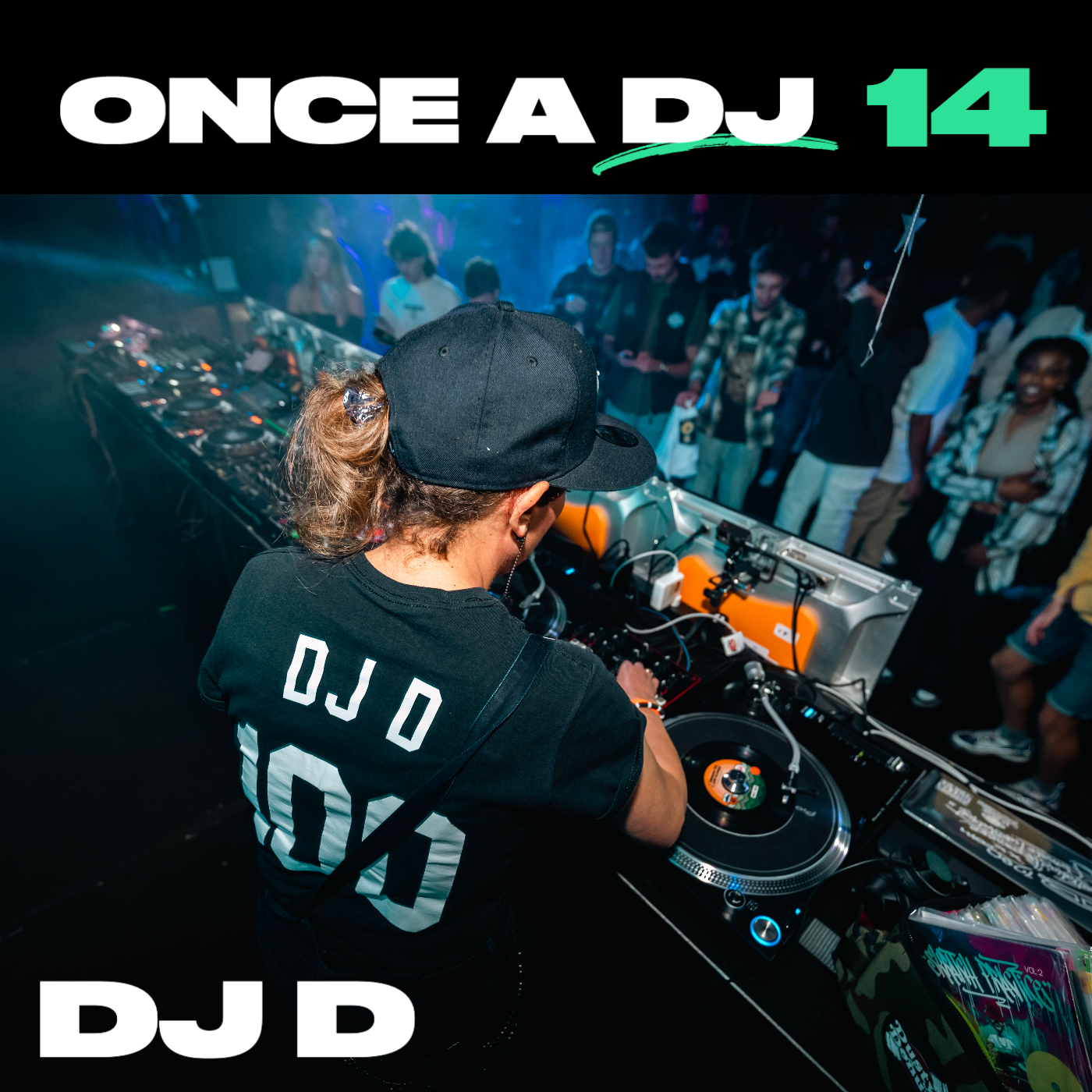
Prepare to be spun into an epic tale of turntable triumphs and trials as Wax On brings you DJ D on the latest episode of “Once a DJ Podcast”. This powerhouse began her journey with vinyl in the vibrant 80s, teaching herself the art of turntablism, and has since then never stopped spinning. Listen in as DJ D reveals the battles she faced – from competing in the all-vinyl finals, confronting a serious illness, to the challenges of being a woman in the hip-hop world. Discover how she perseveres through it all, driven by her love for the beat. Plus, buckle up for a ride as we talk about her treasured ’64 Chevrolet Impala ragtop convertible. DJ D wraps up with pearls of wisdom for budding female DJs. Tune in now!
Transcript
Welcome back to Once A DJ.
Today we’re sitting with one of Australia’s top turntablists, graphic designer and former head teacher DJ D to talk Battling, Lowriders, Sevens and more.
So, yeah, so thanks for coming on the podcast today.
DJ D:Absolute pleasure, thank you for having me.
Adam Gow:And let’s kick it off by just looking at.
Considering how prevalent vinyl is in your life, where did you first come into contact with records?
DJ D:Pretty early on.
So not having a whole bunch of toys to mess around with growing up, I kind of gravitated towards my dad’s 7 inch vinyl collection.
Just all those colored labels were kind of like candy to me.
So yeah, that was definitely a early start.
Probably before working, I would say toddler years.
So that kind of kicked it off.
My brain brother had kicked off my vinyl collection and a habit that I still have today.
And my sister used to actually sell records at vinyl market stalls.
So I used to give her a little bit of a hand growing up.
And yeah, that I guess has led me to where I am today, still a vinyl addiction.
Adam Gow:I’ve spoken to quite a few people on this, where it seems to be elder siblings have been the big influence.
What sort of things were your siblings.
Into at the time?
DJ D:My sister was definitely in a bit of a punk phase and of course little sister does what big sister does and it was kind of artists and groups like locally, Hoodoo Gurus, you know, around the globe, people like the Damned was a big one for me, a group that I was lucky enough to meet when I was about five and I also met them again maybe about 30 years later, which was amazing.
And so I was a little five year old girl giving Dave Vanian a rose in a record store where they were doing a signing.
And they’re just the sort of moments that, you know, kind of stay with you.
Something I won’t forget.
Apart from that, my brother was more into like the kind of rock, rock sort of stuff and 80s rock because that’s kind of the era we’re talking about here.
I’m a 70s baby, so I kind of grew up through, I would say some of the best of it in terms of one of the genres that I love, which is hip hop.
So that’s a bit of a journey that I’ve taken through my vinyl years now, more so venturing into like the original samples of hip hop.
So delving into funk and soul and disco and that’s actually kind of what I really enjoy playing these days off 7 inch.
So yeah, it’s a never ending journey.
I’d say.
And something I’m going to probably keep doing for some time to come.
Adam Gow:So when was your first gig?
DJ D:s,:It was a big year actually, Bicentenary for Australia.
And it was a private party that I did.
I kicked it all off with few of my 45s and a few 12 inch vinyl records as well as all of the pre cued cassette tapes.
You know, you’d get the pencil and cue it to start just when you hit play so you could get that almost continuous mix.
And yeah, I rocked out a 21st party for the next, I’d probably say about 10 years or so.
I did a lot of private parties.
Family, friends, relatives, high school mates, having birthdays, those house parties.
And yeah, it was probably more the mid-90s where I got a professional setup and actually started, you know, doing it properly.
And I would say it would have been still the late 80s though, where my passion and my love of turntablism comes from.
So that 88, 89 sort of era, actually a bit earlier as well.
Thinking of things like that recording Live at Union Square, that was a big one for me.
That’s where I kind of wore out my cassette tape in my Walkman.
And also stuff like De La Soul, Maceo, all of those samples.
h I believe from memory was a:And that’s kind of really what kicked it off for me.
And it’s almost like I’m full circle now too.
I’ve kind of gone back to the era.
I can’t escape that era.
I love it.
You know, it’s, it’s, it’s kind of my roots and it’s.
I don’t know, it just still sounds so good today.
Adam Gow:Yeah, I mean, I think particularly with the De La Soul and the Beastie Boys of that era, like the Dust Brothers stuff, like some of the production’s just insane and, and I think it was kind of what they were doing with samples.
They were just anything, weren’t they?
Because, you know, not everything was being cleared and unfortunately there were problems with that afterwards.
But yeah, I mean that era was, was fantastic for music.
So just going back to something that you mentioned before, you were, you were mixing between tapes and records in the early days.
DJ D:Yes.
Adam Gow:So how, how would you do that?
Queuing with the tapes with the pencil.
How would you know when the start was?
DJ D:You would kind of hear it and Take it back.
And it wasn’t always precise.
There was always maybe a little gap in there.
So it wouldn’t be like I would be beat mixing cassette tapes unless I was doing the tape to tape mixes, which I used to do a lot as well.
So my sister, you’d used to head to the clubs, I used to sneak into her room and do the cassette to cassette mixtapes, which I still have some at home.
But in terms of actually live playing, it was a bit of a.
A bit of a gauge with the, you know, twist it to three turns or so and it was about, you know, about there rather than having like, you know, five, six, ten seconds of nothing.
So, yeah, just kept it going a bit better, you know, in terms of actual throwing down vinyl, I didn’t have two turntables at that point, so it really was kind of like vinyl to cassette to vinyl to cassette.
It was one of those home systems with one turntable.
So that was kind of like how I came up with as a child to keep the music going without any real gaps, beat wise.
I did BPM stuff with the stopwatch.
So it wasn’t perfectly matched, but it was, you know, kind of, kind of the.
It was close.
It was close.
Adam Gow:Yeah.
I think with that it’s such a sort of hip hop way of doing things as well, like having these discussions.
It’s all about being as resourceful as you can with the equipment that you’ve got and things like that.
And then it can force a different type of creativity.
Do you think that with the kind of pencil cueing, do you think that made you start to think more about construction of beats and things?
Because it’s almost like you’d maybe think of that in a way you’d think of beat juggling because it’s about rewinding back to that point and that sort of thing.
DJ D:Do you know, you could be right.
I never really thought of it that way, but yeah, totally, totally.
Cause you kind of like breaking it down and you have to know where the first beat is, you know, where it goes to next, the kick, et cetera.
So, yeah, totally.
I think you might be right.
That is definitely something that I love to do.
So these days, for those that don’t know, I have competed in many DMCs, generally on the all vinyl tip.
And yeah, just last year,:First lady to rep for Australia, which was pretty dope.
And yeah, it was definitely a moment.
A moment that I probably wasn’t as proud of initially because I wasn’t happy with what I submitted.
So, yeah, especially when you have to submit something to an absolute idol of yours and it’s not quite perfect.
And I actually submitted and went and had a good cry and then came back and a few days later found out that it actually came fifth.
I was like, what?
No way.
Like, that was crazy for me.
So the person that I had to submit to was Cutmaster Swift and definitely a big inspiration for me coming up.
I used to watch all of those VHS videos and yeah, he was definitely one of the faves of the champs.
So, yeah, to be in contact with him and having to email, you know, an effort that I thought wasn’t really my best.
And of course, mum, life doesn’t allow a lot of time for prep and practice and getting a perfect cut.
So sometimes it just has to.
To do, you know, sometimes you just have to get it in and that’s it.
So I’m glad I did, though, in retrospect, next time, hopefully a little bit better.
Adam Gow:I think that’s.
That’s interesting what you struck up on there.
I do think parenting is a real big thing for teaching you to accept good enough in.
In just general aspects of life, because all you do is you do your best and it’s never perfect.
And I suppose it kind of works with that thing with a routine.
So who were the first DJs along with Cutmaster Swift, then that made you think I want a battle?
DJ D:Well, Live at Union Square, DJ Jazzy Jeff.
That was number one for me in terms of really opening my eyes for this thing called turntablism.
I think from that recording I could hear.
I never saw it until actually just a couple of years ago, but have heard it for years, obviously since it dropped.
And I could hear the show factor in that, you know, and I loved that.
And that’s a really big part of what I still do today.
The show factor is a big deal for me and that’s why I still like to flip vinyl, because there is more show factor in that as well.
In terms of DMCs, though, yeah, Cutmaster Swift, Roc Raida, May he rest in peace, is definitely up there as one of my number one ultimate influences.
One thing I love and have always loved to do, his body tricks.
So that’s definitely a big one for me.
And of course DJ David.
And I mean, we can’t forget people like Q-Bert and Mixmaster Mike and, you know, all of the absolute legends of the game.
eleased yet, but Also with my:And that again brought me to be a finalist in Australia each year.
Thankfully, as a mum that I’ve competed, I’ve become one of the at least, you know, top 10, if not top five.
But last year to make the worlds, I think that was probably the best I’ve done yet.
That was a big deal for me.
So yeah, let’s see what happens next.
Adam Gow:That’s it.
So, starting to learn turntablism.
Did you have anything?
Were you just kind of trying to reverse engineer the things that you were seeing on the DMCs or did you have anyone around you that was teaching you or.
DJ D:No, so it’s pretty much self taught.
So I learned pretty much from watching VHS because we didn’t have YouTube and all of that stuff back then there was no social media.
It was literally, you know, people down the road you’d go and visit or maybe hop on the phone.
No one really gave me lessons or anything like that.
So self taught.
Watching VHS’s, you know, pretty much going to sleep every night was a routine for me and that’s how I’d sort of pick things up.
I would try and do what they were doing but I’d always want to try and make it my own in some way rather than just, you know, that’s their idea and I’m ripping that off.
No, I’m all for are building and, you know, innovating where you can.
Some of the things that I’ve actually personally done in the last few DMCs was right in front of me.
I’ve got a hydraulic turntable.
Lowriding is another love of mine.
So I was actually flicking switches to make the turntable go up and down.
But yeah, another one was I got a talk box and connected that up to a turntable and managed to scratch via voice as well.
Kind of really killed my feelings though, so I couldn’t do that for too long.
And yeah, I always like to sort of, you know, introduce something that’s a little bit different.
I think the year prior I’d done a seven, seven channel set, so three turntables and four digital all playing simultaneously.
So yeah, that year I was called the hip hop octopus.
So yeah, there’s always been something where it’s not just to innovate for the scene.
It’s to give myself a challenge, it’s to give myself some fun, you know, keep it interesting for me too.
So everything that I do here, one traditionally, it was kind of.
Because back in the day there weren’t really very many ladies doing, I guess, what we do.
And that was one aspect.
Yes, to kind of rip for the ladies, but like, more so for me, a personal challenge because I feel like, and this is why I’m back at it again as a mum.
I feel like I got to a certain stage 20 years ago and then never really progressed past that and I always wanted to.
So now that child is, you know, nearing seven, I’m kind of back at it again and starting again in a way and reinventing what I do and how I do it and working with a new medium, just purely 7 inch.
It is like starting the journey again.
But I’m loving that and now getting the chance to push myself a little bit further.
Adam Gow:Can I just ask then, what was it 20 years ago that you think stopped you progressing?
DJ D:Life.
Life got in the way.
Things happened.
Growing up running a business, running a company, working full time at the same time having a radio show.
I was kind of doing it all and touring as well.
DJing still most weekends, you know, nationally and internationally.
And yeah, really didn’t stop.
And then things happened in the family.
Mum got unwell, she survived a battle with breast cancer and then four years later it returned.
So things like that really halted kind of everything.
And yeah, I had to sort of take a little step back.
One other thing, actually a big one that really made me pull back was DJing in Canberra, which is about three hours away from where I’m.
Where I am based in Sydney.
And I actually was spiked, the DJ was spiked at an event and that was a really big one.
That knocked me out for quite some time and it made me really cautious to return as well as the family, you know.
So from there on it was like dropped off at every gig, picked up like 10 minutes after finish.
And it was a different, different life, you know, it wasn’t this, oh, yeah, let’s party, let’s do this anymore.
So, yeah, blood tests and police reports later, you know, I was glad to have passed that one and I think that just kind of soured things because I was there to give people a good time, you know.
Adam Gow:Yeah.
DJ D:And then to.
To be so like severely kind of affected.
It was to the.
I wasn’t sure if I was able to have children, so it was pretty severe, you know.
And yeah, Thankfully I’ve got one now.
Everything’s okay and I’m back and yeah, I’m so grateful to be back and doing it again.
It’s what I love.
I’m not me without it.
Adam Gow:Yeah, that’s a huge thing to have had to go through.
I’m sorry to hear that.
DJ D:Oh, it happens to so many, sadly.
That’s, that’s the hard part, you know, and having gone through it, sorry to go into details but like it’s, it’s such a big thing like to, to be conscious but paralyzed, you just, you don’t want to think about what could have happened, you know.
So I really feel for girls and ladies that go through stuff like that because that’s.
Oh, that’s something you just don’t ever forget.
Adam Gow:Yeah.
What was the business that you were running?
You mentioned having the, the business as well as the full time job and.
DJ D:Yeah, okay, so the full time job was actually 20 years of being a head teacher at college.
So it’s equivalent of university here.
It’s just.
Yeah, the other option to uni and the, the business and the company was in the same area.
So web and graphic design and it’s something that I started in the 90s as well and I initially started to kind of like, I guess give myself what I needed to do as a dj.
I wanted to be an artist as well.
I was at a split road, I sing.
So there was a point where I had to choose am I going to be a singer, Am I going to be a dj?
And for both of those I need some really good graphic design.
I need someone to look after, you know, the whole image.
And I thought, you know what, I’m going to do it myself.
And so I did the courses I studied and then not even a year out of study I got reached the college, reached out and said, hey, did you want to come and teach?
Because I was actually teaching teachers while I was a student.
So yeah.
And this is going back to the 90s where you know, Photoshop was one layer.
It was like really, really a different in terms of what you could do.
And again pre this is literally the early days of the web as well.
That’s something else I used to do.
I used to hand code for a number of corporations building websites where we didn’t have video and images were super limited.
I remember the day that the animated GIF came out like it was that.
It’s crazy right to think of it that way now where we’ve got these full screen videos and everything happening these days.
So yeah, it really was a different world, but glad to have those skills because they’re still coming in handy now.
Adam Gow:That was going to be one of my next two questions because you know, your brand as a DJ is such an important thing.
So that must have really helped you.
And if you were kind of early on web as well, that must have been a really big thing to kind of just have that little edge on people.
DJ D:Yeah, totally.
In terms of the web, that’s where a lot of the international stuff came from because I think that was the difference.
You know, anyone here, if you didn’t have a website, you didn’t have that international connect back then, again pre social media.
So it really was the way back then.
And I remember as soon as I put that website up I was getting like inquiries and stuff from all sorts of places and like places that I would have loved to have gone to DJ but just couldn’t because I was a teacher, you know, and unless it fell in the holidays, it was not going to happen.
So some of them did, thankfully, and that’s how I got to do some.
But a lot of them I had to turn down, which was such a shame.
But yeah, definitely the skill set came in handy.
emember would have been early:And I remember creating this digital decks where people could interact and like one side was beats, one side was cuts and people would just hang around on my homepage just scratching for hours with samples that I’d thrown in there.
So yeah, and that’s all stuff that, you know, I kind of created and hand coded myself back then because it kind of, it was early days and we didn’t really have that sort of stuff online.
So.
Yeah, I had a lot of fun with that too.
Adam Gow:Yeah, Flash was an interesting one.
You got some crazy websites.
I think it was.
Dante Ross had a. I don’t know if you saw it, his MPC one.
DJ D:I didn’t see it, no, but it sounds.
I can imagine.
Adam Gow:I can’t remember the full functionality, but yeah, it was good and easy.
Mo B had a really crazy one as well.
It was like a spaceship or something.
Wow.
DJ D:The mothership.
Adam Gow:I wish, I wish someone had like unarchived them or something like that now because they were, they were just mental.
DJ D:Exactly.
I actually, I saved mine, the one I was talking about and I wanted to get it back up, but it just doesn’t work without the drivers anymore.
Yeah, so yeah, because you have to have that old version of the driver to Run it.
So I was like oh what a shame because I was actually going to re upload it just for fun you know.
Adam Gow:So just another thing to ask you then and I hope this isn’t kind of too personal in that period I mean and you’re still very very busy now are you someone that just doesn’t relax or like can you relax?
DJ D:Yes, I, I totally can.
Yeah.
No honestly it’s not work for me.
For me this is my enjoyment, this is my pleasure, this is my fun and now in mum life this is me time.
So the more of that I can get the more I will.
So yeah I am, I’m an all, I’m generally an all night sort of person.
I always have been ever since I was a teen staying up, up late night making those tape to tape mixes to as a graphic designer.
That’s the lifestyle you have to pull those all nighters to meet the deadlines you know and so then that was the next period and and then mum life.
Hello.
Same thing again.
So it’s, it’s something that I’ve always done.
I’m grateful that I’m able to function with little to no sleep and of course tour life, you know you kind of live that life there too.
So yeah I’m well trained with no sleep.
Tired often but yeah can still you know get my stuff together and, and pull off a pretty fair enough gig you know on little to no sleep.
Adam Gow:So when you had your child did DJing totally disappear or did you in some way manage to keep that going?
And if you didn’t did you just feel like you lost a sense of identity?
DJ D:Yeah I wasn’t me without it, that’s for sure.
I was grateful that I kept one thing going.
So all of these like gazillion things I used to do just halted like it was from 150 to 0 almost.
But I did maintain my radio show.
That’s something that I didn’t, didn’t stop even you know during like delivery the, the air was, the show was airing so yeah I made sure that that continued pre record where needed to be and yeah still doing that today.
ng since I kicked that off in:Adam Gow:Still going now Was that Internet radio or radio?
DJ D:No FM yeah so 88.1 FM is what I’ve always been on here.
That’s, it’s local radio so local to Sydney but yeah online internationally of course.
Now though the couple of radio shows that I have are actually Australia wide and they go via a community radio Network.
So that means it gets picked up by multiple radio stations, both FM and digital.
Digital.
And it also gets played over in New Zealand and the UK and yeah, it’s, it’s got a pretty good spread thankfully after all of these years, but still self produced, still created in my home studio because that’s what mum can do at 3am When.
When needs to be done.
And yeah, that’s, that’s every week, two shows on top of the other stuff.
And at the moment I’m just.
Oh, I’m non stop with gigs too, which is fantastic.
I’m absolutely loving having that aspect back in my life because that.
I totally missed that building, you know, a vibe with the crowd and the energy and feeding off that energy and such a buzz.
Oh man, it’s.
Yeah, it really is a big part of my overall energy having that.
So I missed that in the early years of my child.
So yeah, good to be back.
Adam Gow:Yeah.
So at what point did you leave the head teaching?
DJ D:Oh, just recently actually.
I, I did take a break when I was pregnant so that’s pretty.
I would say I, I was still in the position but I wasn’t there, if you know what I mean.
Adam Gow:Yeah.
DJ D:So yeah, I didn’t actually fill that role since I was pregnant.
So I’ve been pretty much full time mum since about six, seven years ago, which was a choice of mine because those early years are so formative and I really wanted to be there to build a good foundation for my son as, as much as.
And of course, you know, we’re talking years of COVID as well where it wasn’t really some.
It was a luxury to be able to drop a child off at daycare.
I chose to keep him at home and raised him here.
He spent half his life in the house, which was quite sad at that time.
But we made it fun with DJing and with music.
So he started DJing when he was three and he was live streaming at that age.
And he does throw down 45s as well.
7 Inch vinyl and he’s part of the 45 Kids which was founded over in the UK.
He’s the Sydney Rep for 45 Kids which is part of or under the umbrella of 45 Day.
And yeah, these kids from around the globe would hop on Twitch and throw down vinyl an hour each generally or half an hour sometimes back to back.
And this is what got us through those, you know, tough years and, and it gave them a chance to have, being an only child, it gave them a chance to have that interaction with other kids.
You know, which is so important at that age.
So, yeah, he’s still doing it, he still loves it and he’s still taking over my sets.
He’s still streaming and yeah, it’s a beautiful thing.
It’s a beautiful connection that we share and hopefully we’ll continue to share for some time to come.
Adam Gow:I think streaming was a massive, massive thing for DJs.
I think if it didn’t exist at the time of lockdown, a lot of DJs would have probably had quite severe mental health challenges through that level of isolation.
So, yeah, it was huge.
DJ D:Totally.
I took that time to kind of step into this studio and it would have been what, 20?
Yeah, early 20, 20.
I looked around and I just saw these records, mainly twelves, 12 inch, sitting on these shelves for at that point, 20 years or so, maybe longer, and getting dusty, getting dirty.
And I took the opportunity to start cleaning.
I rolled up the sleeves, got the rags and started cleaning all of this vinyl and just looked at it and said, I need to give another life to this because there’s just too much good stuff here.
You know, it was just sort of getting mouldy and dusty and just.
It wasn’t right.
So now, last few years, they’ve all been well used again and I’m just loving going through that journey and pulling out memories, you know, memories from certain events or gigs.
I remember throwing that one down here and all of that sort of vibe, you know, it’s.
I love this studio.
It’s kind of like it’s my sanctuary, it’s my retreat.
Adam Gow:Yeah.
DJ D:And, yeah, I don’t get enough time in here, unfortunately.
I’d love to have more.
Adam Gow:That’s just life, eh?
So just jumping around your timeline a little bit.
Something else I’m, I’m quite keen to ask and, and I don’t want this to be kind of a tokenistic interview or anything, but what I’m interested in as well is the journey of being a hip hop dj, a female hip hop DJ in what’s, you know, you, you look at, you look at kind of gender balances, proportions in different careers and industries and things like that.
I think hip hop DJing must be a pretty heavily skewed one.
Was it something that was ever challenging to you or does it continue to be?
DJ D:Yeah, it definitely was not an easy road coming up.
So, yeah, especially hip hop, yes, but also the battle scene.
Those two worlds were totally male dominated.
I think in the US it varied slightly, but here in Australia it was just males.
I literally was.
When I Came up the only female competing in things like DMCs.
And, yeah, like, initially, you know, you have those moments especially.
I think this is a very female thing to do.
Something us ladies do is, you know, you’ll experience something.
You’d be like, did that really happen or am I imagining it?
You know, it was things like sabotage, even to the point of broken needles and, you know, just little things here and there where you’d kind of like, be like, did that person really just do that, or am I actually imagining it?
You know, until.
Fast forward now, I’m thankfully, over the years, become really well connected with a lot of people locally.
And just even this year, sitting down with a bottle of scotch with, you know, someone in the scene saying, yeah, Dee, we saw you as a threat.
And I was like, so you’re telling me that stuff?
I didn’t imagine it.
It was really.
Yep.
No, that we really all did that.
I’m like, why was this the lady coming up?
You know, like, what sort of threat was I?
Honestly, you should seem like if you saw me back then, I wasn’t very aggressive or anything like that.
You know me as, you know, smiles and hugs wherever possible.
So it was kind of hard for me to comprehend how I would be seen as a threat because I never saw myself that way.
But.
Yeah.
So fast forward to now, though.
Now.
Oh, I can’t even.
I have no words.
It’s a different world.
It’s two extremes.
Absolutely two extremes.
And I put that down to the world of, again, 7 inch vinyl, 45s.
The love and accept acceptance in this community is like no other.
It really is family.
And it’s kind of.
It’s weird to say that, but it’s so true.
Like, even these people that we’ve never met face to face, they’re legit, literally family.
I just had one come and stay with me for three and a half weeks.
We did a whole Astronomy Australian east coast tour.
Speaking of DJ Robert Smith from Germany, someone I connected online streaming with through Covid, and he literally said, Dee, I’m coming over.
I’m like, I don’t have a spare room.
Okay.
He said, I’ll sleep in your own parlor.
All right, cool, let’s go.
And we just did a whole.
Yeah, as I mentioned, Australian East coast tour.
23 Gigs in 20 days.
Absolutely nuts.
Hit the road over:And I can’t even explain the buzz, the energy, the high that we had from doing such a high concentration of gigs in such a short period of time.
And then the Comedown at the end of that, that was just.
Oh, man, that was next level.
And yeah, I’ve been DJing for many years and I’ve never had a connection where we did everything freestyle.
There was no planning there.
Prep it was literally, throw some records in a bag and let’s go.
And just the way everything turned out and came, it was.
It really looked rehearsed, it looked like we’d prepped for days and it just wasn’t, you know, that freestyle element, I think is today, what does it for me, you know, go, go back to my first DMCs.
Everything was so heavily rehearsed, so planned and so practiced, whereas now I’m the opposite or I’m trying to do the opposite, so.
And I think that’s what’s keeping it fresh for me.
That whole freestyle element of as you’re freestyling, you’re going to find stuff that, you know, you’re breaking your, your patterns, in a sense, you’re breaking your habits, which is what I need to do to sort of get out of those routines that I just always do.
So, yeah, I’m loving it.
It’s really like a new, new buzz, new energy, newfound energy.
Adam Gow:Yeah, I think just going back to battling as well.
I mean, I was watching the:You can be quite mind blown by some of the disses that are used in that period, like the level of homophobia and misogyny and that sort of thing.
But it was part of the culture at the time that, oh, totally.
That’s just what people did.
So I don’t think there’s that element to battle in now, is there?
That real sort of acerbic, vitriolic type of punchline usage.
I think that kind of direct person to person has dropped off a bit.
DJ D:You get it a little bit.
You’re not going to see it throughout the whole competition like you used to.
Like back then it was like everybody did that.
Now you’ll get maybe one or two or three.
Usually the fellas doing that still.
And I have seen it more at the finals sort of level when they go head to head.
You know, if you have two finalists going head to head, often that’ll pop up.
But in the general competition, not so much, not so much.
But again, it’s a different competition now.
You know, the last few years have been purely online and that’s meant that we’ve had even kids competing.
It’s meant that, you know, there’s been ladies, there’s been fellas, there’s been little girls, there’s been little boys.
And I think that’s a beautiful thing, though.
I think that’s.
That’s been incredible.
But it has definitely changed that dynamic because you couldn’t do something like that.
Like that with little kids around.
Not like we used to, you know, back then.
Adam Gow:Yeah, it’s.
And I think the.
I think I’m right in saying the Canadian and US Champs are both female now as well.
DJ D:Oh, yes.
I think you’re right.
Us.
Wait.
Current.
We’ll have to check the current status, but yes, there have been.
For both.
Correct.
Adam Gow:So there’s definitely kind of a shift going on then in the battling culture.
DJ D:Definitely.
And I just.
I’m loving seeing more ladies competing.
I think that’s.
That’s always been the wish.
I’d love to see more locally here, though.
Honestly, I thought there would be more here in Australia by now.
I gotta say, as I mentioned earlier, it’s not an easy road, and that’s perhaps why we don’t have as many competing here now.
I hope that changes.
I really do, because.
Such a beautiful thing.
And I know there are a lot of ladies out there that have that interest.
There’s always just that, taking that next step.
You got to get past those walls or those challenges or those feelings, if that’s what it is.
Yeah, it’s an interesting one.
I hope it changes soon because it’s been 20 years, and thankfully there is a couple now.
It’s not just me, but I would have thought there’d be a few more still.
Let’s see what happens in the next couple years.
Fingers crossed.
Adam Gow:And I think the thing as well, with it, it’s.
There’s just so much that you take from battling as a person.
I did a couple of competitions.
Not.
Not a lot.
And, you know, I was never kind of a national finalist or anything like that, but those experiences, I’ll take them with me.
You know, that.
That discomfort, those nerves that.
Trying to put the needle on and just hands just shaking like crazy.
You’re pretending to look confident.
You know, you give it your best shot, and there’s just so much emotionally that you.
That you get from it.
It’s a fantastic experience.
DJ D:It’s a roller coaster.
It really is.
Adam Gow:Yeah.
DJ D:And it’s a roller coaster that’s like up and down and up and down.
It doesn’t just go on one ride.
It goes on multiple rides.
But, yeah, totally.
Yeah.
This is the thing, though.
See, you were at a time where you did have needle on record with hands shaking.
That doesn’t happen as often these days.
You know, a lot of it is digital now or Phase or button pushing.
You know, I’m not dissing that.
That’s amazing.
And I push buttons too, on occasion.
I know some people out there, we see rather.
I see when I watch the finals and you know, everyone gets up in the chat and puts their comments in and you know, generally there’s.
There’s some love and then other people like to sort of dis that sort of way of DJing.
I think that, like, everything has its place for me and because of where I came up, needle to record is how it has to be done for me.
I don’t have Phase at the moment.
I’m still holding back.
But at the same time, I held back for Serato for many years too.
I was still, you know, touring internationally with vinyl when.
And paying way too much in excess luggage and then later, you know, succumbing to Serato, which was then Scratch Live.
But yeah, all in time, I guess.
You know, it’s.
It’s a different comp.
It’s a comp where you can have whatever setup you want.
One turntable, two turntables, six turntables.
You can.
It’s up to you.
You call the shots.
And that’s a big change from back in the day where they used to define what equipment you could use.
So yeah, it really is an open playing field, whatever you want to bring, which is.
It makes it kind of interesting as well.
So, yeah, has definitely changed over the years.
Adam Gow:sort of mid to late, say late:And then 3Style came along.
So they had to do something to.
To be less rigid.
DJ D:Exactly.
Adam Gow:So, yes, it’s a very different thing now.
So just on the sort of international touring, what sort of places have you been and is there anywhere particular that holds a great memory beyond all else?
DJ D:Oh, many, so many memories.
I’ve played a couple of times in Prague, once in the summer and once in the winter.
Fond memories because I ended up making my wedding six months earlier to make that first trip to Prague the honeymoon.
So that was definitely some fond memories.
By chance, my maid of honor ended up crashing our honeymoon and we all went to the club together and I rocked out my, you know, all vinyl set back then.
So yeah, played there a couple times, Played in Malaysia a couple times.
Definitely some amazing memories there.
Rocking out for New Year’s parties And whatnot.
They know how to party up there.
That and this is the days of Serato.
So, yeah, I brought a few records, but yeah, had Serato there.
Probably the most fondest memory, though, was when I played in the Sultanate of Oman.
I had been hit up by them.
Gosh, when was it?
2000.
They hit me up in:I was a little bit nervous to go as.
As a lady and going solo.
I was a bit scared, to be honest.
And I thought, you know what?
I don’t know these people.
I don’t know what could happen.
I’m going to send a friend over instead.
So I said, hey, we’ll make a deal.
If you can hold it out.
Get my.
One of my DJ brothers back then.
DJ souls, if you can take him on, Take him on for this event because I’m busy.
I. I couldn’t leave work as well at that time and it was quite quick.
So he went over there.
I said, hey, bro, go suss it out for me.
See if it’s legit, see what it’s like.
Come back, let me know if it’s good.
I’ll go back the second time, it’s exactly what happened.
But the second time we went back together because I said, hey, I want my security guard.
Oh, my security guard with me.
w Year’s, which we brought in:And yeah, man, memories.
Oh, just everything.
I. I think apparently I was the first lady to play in, in their area, and I did so in a skirt and backless top, which was definitely pushing some boundaries on more levels than one, you know, first lady playing records and then second, being dressed like.
So, you know, we did play in a quite westernized Al Bustan Palace, which is like a westernized kind of hotel.
So it was appropriate and accepted there.
But if I had done that outside of that area, it probably would not be as accepted.
Memories are crazy because that room that I played in, it was the biggest chandelier in the world.
They literally had like, you know, know these fountains and everything was covered in gold.
And you walk into the foyer and I heard a harp thinking it’s like a CD playing in the background.
It’s literally a dude in the corner playing a harp.
It’s like, you know, it’s just.
Just crazy, crazy moments.
Stuff that I’d never experienced coming from Australia.
And then to then play things like, you know, we’re talking hip hop, you know, Ice Cube and all of that sort of stuff.
And there’s A row of sheiks sitting, sitting, you know, on the floor, just watching me play.
Things like Ice Cube with swear words and everything in there, you know, it was really surreal.
It’s kind of like, yeah, like a dream almost.
So, yeah, very fond memories, definitely.
Adam Gow:Yeah, I suppose there is that.
That real kind of fear of getting in trouble for getting the culture wrong.
DJ D:Now, I was going to say I was really careful in the normal areas.
So airport and walking the streets, definitely all covered up.
I didn’t quite do the headdress, but I did have hoodies.
So, yeah, I did want to show respect to obviously their culture and to the general population.
But again, in that space, and this is based on the advice of the promoters, I was like, is it okay to work, wear this?
Is it okay to do this?
And they were really nice and they helped me out.
They said, yeah, within this space you can pretty much do what you like.
But yeah, outside on the streets, you probably want to follow as much as you can as well.
So I still did get the odd look here and there, even though I was covered up.
Long sleeves, long pants and whatnot in.
In like 40 degree heat.
And their heat is different heat.
Like their heat is real hot.
So to be full covered up in that heat, it was, yeah, wasn’t easy, but I did it.
So, yeah, I was very grateful to wear the skirt on that New Year’s Eve while you’re playing because you know how, you know how it is when you play.
You get hot.
It’s like a workout.
Adam Gow:Yeah, yeah, definitely.
I was somewhere the other day playing, and it was only when I’d finished and I was packing up, I realized there was a fan next to me.
I just totally not noticed and not thought to put it on.
So do you want to tell us about your lowrider?
DJ D:Oh, yes.
Adam Gow:Yeah.
DJ D:Okay, so I have a:And it’s something that I dreamed about since I was about, oh, I don’t know, 14, 15, 16 years old, early teens.
A dream that finally came true around 30 years later.
And something that was inspired by that whole west coast movement, which I kind of grew up listening to and absolutely loved.
I remember seeing video clips like Let Me Ride, Dr. Dre and there was a lady flicking switches.
I’m like, one day I’m gonna do that.
That is so dope.
And fast forward to now:Well, I’m endorsed by Pioneer DJ Australia.
And what that means is that the car is also induced endorsed by them.
We have a Couple of turntables in the trunk and I do events here and around Australia.
DJing out of the:So, yeah, so that’s.
That’s kind of my life.
I’m also part of Majestics Australia, which is one of the original lowriding clubs from the US of A and straight out of Compton in the 70s.
They were one of the first to do it and highly respected in the car club scene all around the world.
So an absolute honour to be the first lady in Australia to rep for them and, yeah, something that I enjoy doing so much, something that I enjoy doing with my family.
It really is a family affair with the lowrider.
Very special.
I always say that’s my first baby and then my child is my second baby.
It’s kind of how it happened chronologically, but also it’s.
It’s a very, very fun thing, that car, to me.
One thing that my mum knew that I always wanted growing up, as I mentioned earlier, she then passed and I tried to get a couple of cars.
Cars.
The deals fell through.
This one came through.
It was.
I could write a book about getting that car here to Australia.
It was an absolute mission.
But we did.
It took a long time, but we got it here.
livery for the first owner in:And I just thought, what are the chances?
What are the chances?
This car is definitely.
This is meant to be.
This is meant to be mine.
And yeah, we’ve worked on her for 10 years.
That journey’s not yet over.
At least she’s back on road.
I just did the first drive two days ago for a car show here and, man, it felt good.
Three years off the road, finally back, and the last shows that I’ve done for Pioneer have been trailered.
So to actually drive to this last one over the weekend was just such a good feeling.
Really, really good feeling.
Adam Gow:So when you, when you first had had designs on getting the car, was this vision fully formed of DJing out of it as well, or was that just something that came along?
DJ D:It was.
It’s not something I ever shared with some, with any, anybody, but it was always part of the plan and that’s something.
I think I’ve always worked that way and maybe it’s a graphic design thing, I don’t know.
But to have that overall vision, it’s an important thing for me and that’s how I work with most facets of my life and what I do.
It’s sometimes hard to explain to others and they don’t always get it until they see it.
Same sort of thing happened even with the car and Pioneer DJ and I mentioned, you know, what I wanted to do and they just didn’t get it.
And they said, can you show us?
I’m like, yeah, I’ll mock something up for you.
Give me, you know, give me till tomorrow, I’ll send it through.
And then finally they got what I was talking about and yeah, we’ve done a whole bunch of shows now.
We even opened the Bathurst 12 Hour earlier this year.
So I got to drive my car down the racetrack which was amazing and you know, we played, we unveiled it there.
That was the first time it was ever shown and did a private party with all the race car drivers on the track and then played for the next four days in the Aussie heat and absolutely melted.
We all got burnt.
But good memories nonetheless.
We had a great time and of course my son threw down some wax on there as well too.
So good memories for him.
Him, he’s.
His dream is to be a racing car driver.
So of course mum had to do this one just for him to have those memories growing up.
So yeah, good times.
Adam Gow:How’s it been for your partner over the years?
Kind of working around your really busy sort of lifestyle.
DJ D:Luckily he’s busy too.
He understands and I appreciate that so much because not everybody could kind of live that life.
He is also in the music scene.
He’s a vocal trainer and he actually has been up until me being pregnant he was teaching seven days a week.
So yeah, less now.
I made him take Sundays off to give me a little hand.
So yeah, he, thankfully he understands it is a, it is a juggle.
It’s a juggle between the two of us and you know, pre child we were like ships in the night, you know, oh, good morning, good night.
And because, you know, I was working nights and he was working days and we’d pass each other by.
But yeah, now it’s a bit more of a tag team effort of, you know, who’s going to look after child today and who’s going to feed, who’s going to do the bath, who’s going to.
But we have our little routine.
It works.
You know, luckily what I do now, I’m just literally doing radio shows and DJing now, and that’s to a degree, flexible, all but mainly based on weekends.
So he gets the week, I get the weekend, and it kind of works, you know.
So, yeah, I don’t know how long we’ll be able to maintain it for, but let’s go for as long as we can and make the most of it as we go.
Adam Gow:Yeah, that’s it.
Make hay while the sun shines.
A mindful of time.
So let’s.
Let’s look at wrapping up in the next few minutes.
So a couple of big questions that I want to ask you are if you’ve got any key pieces of advice for anyone looking to start DJing, or if there’s anything for any female DJs that are looking to start battling, for example.
DJ D:Definitely.
Okay, so.
So number one to anybody is just.
Do you.
I think that’s.
It’s so simple, but it’s so key.
Often, you know, you sort of see, it’s great to learn, like I mentioned earlier, it’s great to learn from other people.
Imitate them by all means, but then make it your own.
Bring your flavor to that thing that you’re doing, whether it’s a battle routine, whether it’s a recording, whether it’s a live stream, who knows?
Do you?
Because there’s only one of you, and that’s going to make you stand out, and that’s kind of what you need to do in this scene.
You know, you have to stand out in some way or form to get that attention and get noticed and hopefully then get some props for the ladies.
Perseverance, it really is the key.
Yeah.
Practice, practice, practice.
You hear that all the time.
But perseverance, I think, really is perseverance and dedication.
ed about me back in the early:And I think it’s really what’s gotten me as far as it has.
Just, yeah, I’m at this thing that I love 24/7 where I can.
Obviously not always possible with child, and that’s a juggle in itself.
But every other waking moment that I can where I’m not absolutely passing out because I’m so tired, I’m going to dedicate something to this, and that alone pays off in time, you know, so it’s all about the energy you put in.
It’s all about the dedication, the perseverance, and probably the biggest one, the one that took me about maybe 20 years to figure out and learn.
Don’t worry so much about what Other people think.
I think that’s the big one for the ladies because that’s something we tend to do a lot.
And, you know, getting kind of of online, you’re going to get trolls, you’re going to get, you know, maybe not so nice comments.
Don’t let it stop you doing what you love.
That’s really key.
I think maybe we’ll see more ladies that way, too.
Adam Gow:Fingers crossed.
And just the final question then.
Is there anyone particular that you would like to hear on this podcast?
DJ D:Oh, yeah, for sure.
Oh, there’s many.
But I have to say, my brother from another mother, DJ Robert Smith, I’d love to see a podcast with him on there.
He’s an absolute legend.
He’s been a pillar of strength for me over the last three years.
And yeah, he’s got a pretty cool story to tell, which is what I’ve been finding out over these last three years.
I’d love to see the.
That if you could make that happen, that would be absolutely incredible.
Adam Gow:Amazing.
We’ll go for it.
Dee, thank you so much for your time today.
This has been a really cool conversation.
And is there anyone you want to shout out or anything before we go?
DJ D:Definitely.
To the whole 45s community, I love you guys.
From the 45 Kings to 45 Day to Dusty Donuts, to all of the labels out there doing their thing, both local and international, internationally.
Mama D, love you.
And yeah, honestly, the love that comes in, I want to send it back threefold.
If I can just.
It’s so appreciated from the nice comments to people sending me records.
Yes.
More of that.
Let’s bring it on.
And of course, everybody that tunes into the shows, to the streams, to the live gigs, all of that sort of stuff.
You know what?
I don’t just.
I do this for me.
Yes.
But I do it for you guys as well.
You know, I want to get out there, I want to give people a good time.
Forget about those worries, forget about those stresses.
Let’s just, you know, for this 1, 2, 3, 4, 5, whatever many hours that set is, let’s just enjoy ourselves, you know, that’s really what it’s about.
Enjoy the music, enjoy ourselves.
Have a good time.
Best thing to do in life, in my opinion.
Opinion.
Adam Gow:Wonderful.
Great.
Thanks very much for your time.
DJ D:Anytime.
Thank you for having me on.
Adam Gow:Take care.
DJ D:You too.