
Paths of Rhythm is brought to you with support from vinylunderground.co.uk – take 10% off your next order with the code POR10 and free UK shipping on orders over £100
Paths of Rhythm is a Remote-CTRL production. If you’re looking for audio or video production, then check out https://remote-ctrl.co.uk to see how they can help.
Other ways to support the show
- Follow the show on Spotify or Apple Podcasts
- Any feedback or questions? Hit up https://www.instagram.com/pathsofrhythmpodcast/
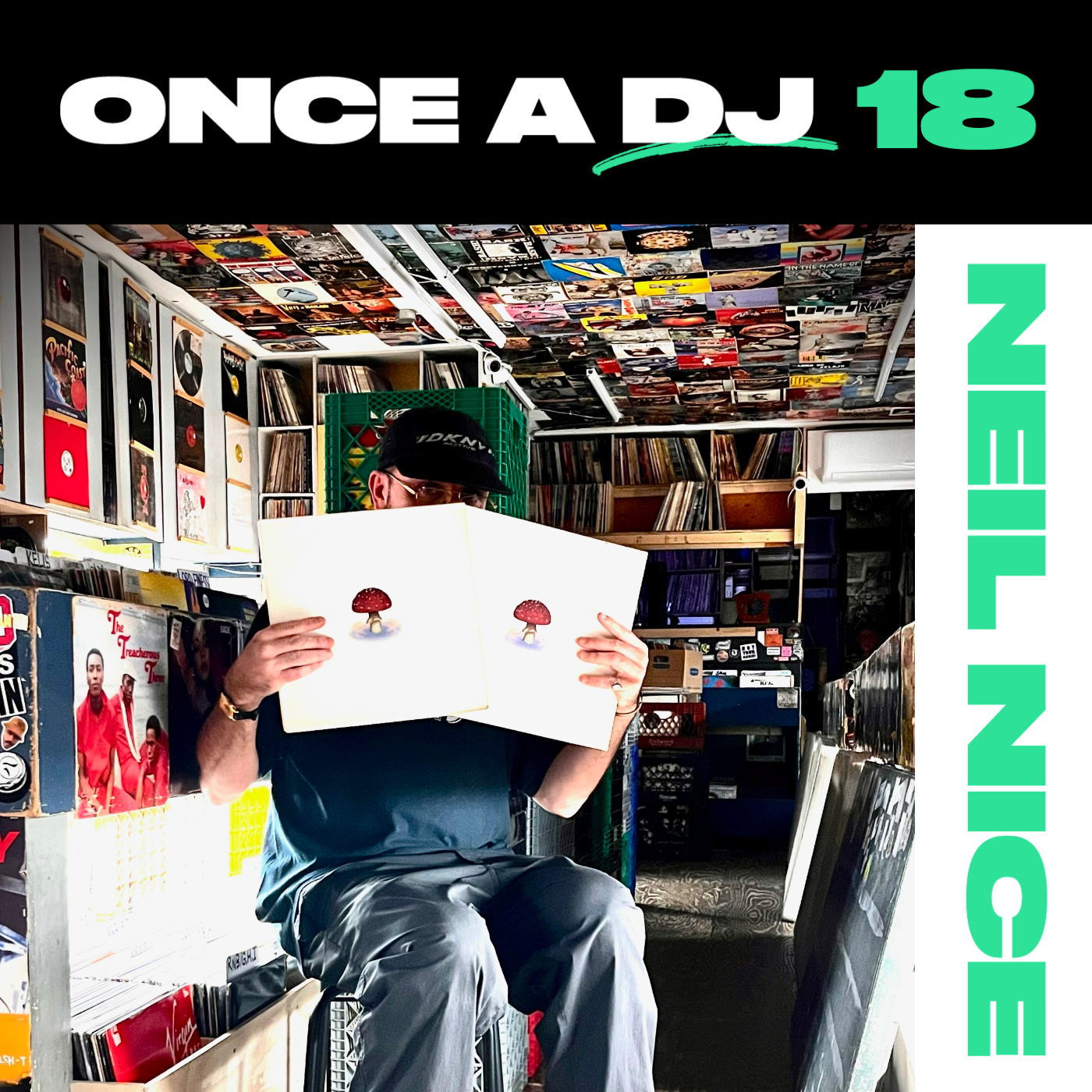
In this episode, we embark on a captivating journey with Neil Nice, tracing his path from a skater in Rhode Island to becoming a renowned DJ. Tune in as we explore the early influences that shaped Neil’s passion for music and how he found his way into the DJing scene and then into embarking on a whole career of music curation. From his first gig to working at record stores like Turntable Lab, Neil shares his experiences and the impact of turntablism on his life. Join us as we delve into the evolution of DJing in New York City, Neil’s ventures in the music industry, and the importance of music curation. This episode is a treasure trove of captivating stories, music discoveries, and valuable insights for aspiring DJs. Get ready to ride the waves of rhythm and unlock the secrets behind Neil Nice’s remarkable journey.
Transcript
Neil Nice.
Thanks a lot for coming on the show today.
How are you doing?
Neil Nice:I’m doing wonderful.
Thanks for having me.
Adam.
I love the podcast.
Adam Gow:Brilliant.
Thank you.
You’ve sent me over a bit of a list of the kind of things that you’ve done, and there’s a hell of a lot for us to get into there.
So do you just want to kind of start from the start with us and start telling us your story and we’ll take it from there?
Neil Nice:Yeah.
Basically, I grew up in Rhode Island, which is the Ocean State, which, as many people know, is actually the smallest state in Rhode Island And in the U.S. i’m sorry.
And yeah, it was a good time growing up there.
The summers were always really nice.
It’s like a place where a lot of people come to have summer homes and stuff like that.
And the radio was always really, hugely influential on me at that time because we had a lot of college radio stations.
We had Brown University radio, we had Rhode Island School of Design, AKA RISD, and we also had University of Rhode Island Radio.
And I can remember all the way from the 80s being, like, kind of obsessive, tuning into these stations and recording shows and.
And just being really into all the amazing music I was hearing.
You know, it was any.
Anything from like, freestyle to hip hop, reggae, dub, dancehall, new wave, synth pop, you know, just a lot of stuff like that.
Very, very influential on me to this very day.
Adam Gow:So that level of diversity has always been there then?
Neil Nice:Most definitely.
For sure.
Yeah.
I would say in the 80s, growing up as, like, a skater, you know, you have a tendency to get into more, like, punk rock sounds back then, but then once like 88 rolled around and like De La Soul’s 3 Feet High and Rising came around like that just like, blew my mind.
Also, like MC Lyte Eyes on This album.
By the time, like, 91, 92 rolled around, I was like, way more into hip hop that I was like punk and hardcore.
But because I was listening to that radio station that, like, modern rock, new wave, post punk station, I still listen to that religiously.
And I still love, like, Jesus and Mary Chain, Echo and the Bunnymen, the Cure, New Order, like, all.
All that music still means, like, a lot to me.
Adam Gow:So what do you think?
It was about 3 Feet High?
Because it’s quite interesting that it’s that album that would have taken a skater into hip hop, but with it being Dante Ross did.
Dante Ross, A and R. That.
Neil Nice:He certainly did.
Yes.
Adam Gow:Yeah.
And he was very much a skater that kind of crossed over into hip hop.
As well.
So it’s interesting that it’d be that.
So is there any sort of key thing about the album then, do you think?
Neil Nice:I think it has so much to do, of course, with the samples and how dense it was.
Also, the skits were funny and just, like the rhyme styles and the flow that all those guys brought to it, it was just so different.
And it was just one of those albums much like Beastie Boys, Paul’s Boutique, that you could just listen to start to finish, and you would, like, never get sick of it.
You know what I mean?
You find something new and every time you listen to it.
Adam Gow:Yeah, and they were very kind of bold with the sampling, weren’t they?
They were sampling pretty obvious stuff, but also both sound really ahead of their time, I think, as well.
Neil Nice:Yeah, at that time, my dad, like, used to play, like, the Steely Dan Aja album all the time, and I’m really grateful for that because I also really love Steely Dan.
And of course, you know, De La sampled it, and that was a connection I had there to it.
But, I mean, it’s really hard to describe why I loved it so much, but I just did, you know, and I played it nonstop.
Adam Gow:Yeah.
So were you buying vinyl then?
Neil Nice:I wasn’t.
My.
My older brother, I got to give him a lot of credit.
He was three years older than me, and he really got me into hip hop because he worked at this store called Woolworths.
It’s like a department store.
Adam Gow:Yeah, we had that in Britain.
Neil Nice:Yeah, he worked in the sporting goods section, but he had a friend who worked in the cassette and vinyl CD section.
And that guy would let him come and, like, you know, get like, a new tape, like, every week.
So he would bring home, like, all the new albums, and some of them he would like, and he would play in his car nonstop.
And then other ones, he’d be like, I don’t get this, like.
And just throw it at me and be like, maybe you’ll like it.
And that was like, MC Lyte, Eyes on This.
And actually Tribe Called Quest, the first Tribe album.
Peoples, he didn’t really like that so much.
It took him a while to catch on to it, but he gave it to me and I pretty quickly warmed up to it.
Adam Gow:Yeah, that’s an amazing album.
It’s interesting you say about your brother, because I’ve.
I’ve been thinking about this because so many people on here say that it was their older brother that put them on.
For me, it was my older sister that got me into certain music, and I’M a middle child.
Neil Nice:I pretty much am, too.
Yeah.
Adam Gow:Yeah.
So I’m Wondering how many DJs are middle children?
It’s just a new theory I’ve got because it’s the middle children that want the attention, isn’t it?
They struggle for it, theoretically, in the household.
So it’d be interesting to understand if, like, a lot of DJs and middle children.
Neil Nice:Yeah.
It kind of trips me out, though, because while I’m still very much music obsessive, he has, like, a wife and three kids now, and he’s just fine putting on the radio and listening to Red Hot Chili Peppers.
But back then he was, like, so passionate and he was, like, so into it.
Like, yo, you got to hear this.
You got to hear this.
And just like, riding around in his car every day to high school and, like, playing NWA and EPMD and, like, you know.
Yeah, I’m very much appreciative to him for putting me onto a lot of that stuff very early on.
Adam Gow:Yeah, I know what you mean.
My sister still likes a lot of music, but it’s very kind of mainstream stuff.
She doesn’t kind of seek anything out.
Whereas with her, it was a lot of the kind of breakbeat hardcore and the rave stuff in the mid-90s.
So it was.
Yeah, she put me on some really good stuff.
Neil Nice:Oh, that’s awesome.
Adam Gow:Yeah.
So, so from there, then, when did you start buying records or when did you decide to DJ?
What was your first exposure to DJing?
Neil Nice:I remember in, like, the 80s, I used to go roller skating at a roller skating rink, and I would hear, like, the DJ mix, like, Newcleus Jam On It and like, Freeez Like A, E, I, O, U and songs like that.
And I remember the songs, like, blending and kind of being like, wait a minute, how is this happening?
But not really understanding what was going on.
And it wasn’t until I moved to San Diego when I was 19 and I got a copy of Mark Farina Mushroom Jazz that it really clicked with me.
Also another similar cassette mixtape by Julius Papp, DJ Julius Papp, also out of San Francisco, called lazydays.
And it was really like a mix of, like, instrumental hip hop, jazzy kind of dubbie kind of beats, and also some, like, you know, like, modern soul or like UK soul and stuff like that.
And I just got really into that sound at that time and.
And then I wanted to go out and actually find the instrumentals to, you know, a lot of these, like, hip hop singles.
I didn’t really care to have the actual, like, vocal versions.
I Mean, I.
To this very day.
One of the reasons why I really love hip hop so much is because you get like the amazing lyrics and you get the beats and you get to learn about all the sample and DNA of the music when you want to go and you know, on like who sampled and learn about that stuff.
But for me it was always like the beats.
At that time I was just really like addicted to listening to instrumental hip hop and also trip hop as well.
Adam Gow:Yeah.
Neil Nice:So yeah, I started going to like a store that had like a bargain bin and they had like records for like two and three dollars.
And I didn’t even have turntables when I was like at that time, I was like, man, if I don’t buy these, like I’m never going to be able to get this again.
And it says instrumental right there, like I need to get it.
So I just started buying all these records and then I accumulated like probably like about almost like a crate or something like that.
And then I started looking for like turntables and stuff like that.
t I should probably invest in:gh money and I eventually got:And I was, I was hyped because I got them for only like $450 for like two of them.
But the funny thing was I didn’t even know what the pitch control was for.
And one of the pitch control, one of the controls was broken and I later had to get it repaired.
But yeah, I still have those turntables in this apartment to this very day.
And I will never get rid of those.
Those are like my kids.
Adam Gow:Yeah.
I was close to getting rid of my Technics, but I just realized I need to clean them instead.
So what was it that took you to San Diego then?
Neil Nice:It was like it was like:And I actually had an opportunity to move to New York City at that time because Rhode Island is only like four hours from New York.
So I was entertaining that.
But I had a friend who became a professional skater, Jason Maxwell.
And he invited me out to sleep on his couch.
And on a whim I just bought like a one way ticket, leisure airlines.
It was 109, 99 Boston to L. A.
And I just went there and an old friend picked me up at LAX.
He let me crash on his couch.
He was going to UCLA at the time.
And then the next day he Dropped me off at the train station.
And then my friend Jason picked me up in Del Mar, and I stayed on his couch for, like, three months, and until I eventually got, like, a job working for a skateboard company.
Yeah.
Adam Gow:So did skating kind of give you quite a big community across the country then?
Neil Nice:Oh, most definitely.
That’s like, the most beautiful thing about skateboarding is there’s a real brotherhood among skaters, especially back then, because it wasn’t so, like, socially accepted and cool, you know.
Adam Gow:That was kind of the lull, wasn’t it, in the popularity of it?
Was it sort of mid.
Early to mid-90s?
Neil Nice:Yeah.
Like, where I grew up, like, we used to get, like, harassed and we would sometimes have to fight, like, I hate to say it, like jocks and like, sometimes even, like, metal heads and stuff like that.
That would, like, yell stuff to us out the window, like punk skater or something like that.
But it’s all good, you know, it’s not like that anymore, but, you know.
Yeah, those were really memorable times.
And.
And living in San Diego was also very memorable at that time.
Like, the acid jazz scene was pretty popular.
And there was a guy called Greyboy.
I used to go see him, DJ at this place called Green Circle Bar.
And that was probably my very first experience.
Like, I had, like, a fake ID and like, I think I was only, like, 20 at the time.
And I was able to go out and hear him, like, cut up doubles of, like, the Whatnauts’ Help Is on the Way and, like, just like, all these amazing songs, like, you know, Mary Jane Girls All Night Long and, like.
And just being, like, wowed by that.
And also playing, like, a lot of hardcore hip hop from 96, 97 around that time, which was, like, very inspiring to me to see, you know, because he really rock.
He was.
I don’t know if people are familiar with Greyboy as a dj, but he was really dope, man.
Like, he.
Everything was super precise.
And, you know, he would be cutting up doubles still, like, rocking a dance floor, you know?
Yeah.
Adam Gow:I only know of him because of the.
Because I’ve got that Greyboy Allstars, right?
Yeah, with, I think, with Fred Wesley on it.
Neil Nice:Yeah.
He also has, like, album on Ubiquity and stuff like that.
Yeah, he’s.
He’s dope, man.
Yeah.
So I got really into, like, the acid jazz scene and sound, so I started buying those kind of records.
And yeah, once I got my turntables, I just really tried to.
To.
To.
To.
To learn to mix as.
As quickly as I could and it kind of came, like, easy for me.
I never really learned, to be honest, I never really learned how to scratch that.
Well.
I could do my little zigga zyga.
For me, I was more passionate about the music and mixing, trying to have, like, long mixes and really keep the.
The beats like on point and you know what I’m saying, Like, stuff like that and like recording myself and playing it back and hearing how it sounded.
And I really like that whole concept of like mixing two songs together to almost kind of make something else if you could hold the mix long enough.
And how certain songs really do sound like they were meant to go together.
And back then I didn’t even know about like, key or anything like that, you know what I’m saying?
So, yeah, because you’ve.
Adam Gow:You’ve got a lot of mixes on Mixcloud as well, haven’t you, spanning a lot of different genres?
Neil Nice:I most definitely do, man.
Yeah, I, at one point I got like really passionate about making mixes as a way to express myself.
And I think that’s like the greatest thing about making mixes.
It really is like a blank palette and you could just go in and you can just like start to finish, like, curate the playlist, go on YouTube, find certain, like, samples that you can chop up and add and sound effects and.
Yeah, so I got really into that for a while.
I was very passionate about that for a long time.
Adam Gow:So how long after getting your decks did you first DJ out and was it.
Was it hard to get gigs in with it being a new city to you?
Neil Nice:Well, I worked at a store called Urban Outfitters.
I’m sure many are familiar with that.
It’s a pretty popular retail clothing chain store.
I think they have them in Europe as well.
Yeah, and the woman there, she kind of took a liking to me and she offered me to bring my turntables and she was like, I’ll give you a hundred dollar gift certificate if you want to come in and.
And play records, you know.
So that was really my first gig and I thought it would be like, perfect because at that time, again, I was really into like just blending like instrumental hip hop and like trip hop and stuff like that.
And I knew that would be like, cool for like background retail music.
So that’s just what I started doing.
And yeah, the first gig I had, I was like hella nervous.
Like, oh my God, I definitely had some train wrecks and stuff like that.
But, you know, I did my best.
And she invited me back, like more than a few times.
And I was always really glad to do it.
And yeah, that’s initially how I started.
And then San Diego had like a really big reggae scene, like, and so I was always hugely into reggae.
And again, I really want to give a lot of credit to this dj, Peter Dante.
He recently passed away and he was on University of Rhode Island radio.
He had a show called the Reggae Showcase.
He’d been on since:Just volunteer, not getting paid, playing reggae music every Sunday from 2 to 5.
And this man was so influential on me, like just educating me on the foundation of like reggae music.
From ska to rocksteady, to rub a dub to dub to dancehall, lovers rock.
Like I would say reggae music is probably the most dearest music to my heart to this very day because of that.
And I owe, I owe everything to him because of, you know, his.
He would really educate you on what was being played.
He had a three hour show and he would talk about, you know, what the labels were, the studios, you know, the bands playing on the records and stuff like that.
And so again, I’m very grateful for him.
And rest in peace, Peter Dante.
Adam Gow:So just thinking then about how diverse you are as a dj.
I think it’s fair to say you’re probably the most diverse person that’s been on in terms of the depth of all, you know, going from reggae and things like that to new wave to shoegaze to hip hop, you know, just that everywhere.
Like, how was that for a DJ that’s buying records?
How were you managing to buy enough of any particular genre?
Neil Nice:Oh man, it’s funny you should bring that up because that at one point, living in New York and like being so passionate about so many different kinds of music, my record collection grew so huge at one point.
Like I. Fortunately I was able to get a job at a record store called Off the Record in San Diego.
And I eventually became like the downtempo reggae and also hip hop buyer there.
,:The type of collections that would be coming through there.
And like you, I would get like Gang Starr 12 inches mint condition for like $2, you know, I’m saying.
So I really built up my collection there at that time.
And sometimes it’s funny working in a record store because like some of the other coworkers, we’d literally almost get into fights over certain records that would come in.
Like, because like a lot of reggae collections wouldn’t come in.
But like whenever collection would come in and I would see like a Greensleeves, I’d be like, I got to have that.
And then the other dude would be like, no, I already got that.
In my opinion.
Whatever.
But yeah, I buy my reggae, hip hop, new wave, you know, rock, soul, jazz, rare group collection grew very quickly.
And even when I got to New York, I was eventually able to get an expense account working for Ecko.
$3,000 A year, which was like, amazing just to buy music, to record, to play in the Ecko showroom.
Adam Gow:Yeah.
So just.
Just going back then.
So how long do you stay in San Diego?
Neil Nice:until April of:I went to school for a couple years there.
I went, yeah, I went back to college, junior college, and then I applied to Hunter College in New York and I got accepted.
And I made up my mind that New York going back to the east coast was where I wanted to be.
I took a couple of trips over a couple summers and stayed in New York.
And it was just so mind blowing to me.
Like, I couldn’t believe growing up in Rhode Island I didn’t make more trips to New York.
Like, New York was just like everything to me at that time.
It’s just everything was so exciting around every corner, you know.
Adam Gow:How many records did you have to move then across, across the country?
Neil Nice:It wasn’t that I would say it was like about like maybe 10 to 12 crates, you know, I’m saying.
and I moved in early:So I would say very quickly I was able to get like a pretty solid collection of like, legit joints, you know.
Yeah, and, yeah, and like, as soon as I got here, it was.
It was a little difficult.
I was able to transfer to Urban Outfitters, which was a nice cushion to have a job when I got here.
And thankfully I was able to get a job at the Turntable Lab store, which hadn’t opened yet.
Summer:I had a friend growing up in Rhode Island who now actually runs Mad Decent with Diplo, who was one of the original founders of Turntable Lab.
And he looked out for me.
He hired me and also DJ Neil Armstrong to open the first Turntable Lab store on 7th street in the East Village, which is actually only like in the backyard of A1 where I work now.
So A1 is on six between 1st and A.
And Turntable Lab was on 7th street between 1st and A.
So it kind of came through a circle, you know what I mean?
Adam Gow:So what was that, like, then, because Turntable Lab became such a big deal for a lot of DJs, did you kind of.
Was there a plan for it to be such a big thing, or was it very casually like, oh, we’re opening a record shop.
Do you want to come and work there?
Neil Nice:At that time, I knew Turntable Lab was like, becoming pretty well respected on the online tip.
Like, you know, they had really cool music reviews on there and they.
There, you know, it was really, like, highly curated.
And of course, like, the equipment and stuff like that.
Yeah, I was very, like, honored to be working there and stuff like that, but I didn’t really know the impact it was gonna.
It was gonna make.
But very quickly I realized what.
What it.
I mean, we had in August of 01 when.
When we opened, we had Qbert in there for.
For the launch.
And.
And like, man, like, I was never.
I went to some DJ battles and stuff like that, but I was never into, like, really, like, turntableism like that.
But I definitely had a respect for it.
And at that time, like, Qbert was the guy, you know what I mean?
And just to have him in the store, I mean, there was like a line down the block.
You know what I’m saying?
Adam Gow:Yeah, those guys.
It’s.
It’s interesting how.
How the Skratch Piklz managed to really kind of commercialize turntablism.
Neil Nice:Definitely.
Adam Gow:You know, it was absolutely phenomenal what they did.
Neil Nice:Yeah.
Adam Gow:So was Turntable Lab operating online before the physical shop then?
Neil Nice:Yeah, I would say they.
I would say they launched in, like, late 98.
They had like, a really, like, kind of small space in the same building that Fat Beats was in Manhattan in Desbrosses Street.
And yeah, like, they were able to move to Williamsburg at that time into.
Into a much bigger space.
And yeah, they.
They took off, like, really quickly because if you remember, at that time, like, turntableism was.
Was real huge.
So they were selling a lot of equipment, a lot of scratch records, and just a lot of records in general.
Adam Gow:Yeah, because I was watching someone’s interview, it might have been something with a track where he was kind of explaining why they did so many scratch records, because you basically didn’t have to pay any sample clearance on anything on them.
Neil Nice:Oh, yeah.
All that stuff was.
Was, like, very much like bootleg and.
Yeah, definitely.
Although Turntable Lab didn’t really sell a lot of bootlegs.
You had to go to Rock and Soul for that.
Rock and Soul was the place to get the bootlegs.
Yeah, I spent a lot of time in there.
Because the Ecko Showroom was on 37th street, and Rock and Soul was literally only like two blocks away.
So I was in there weekly.
Yeah, that was like.
I was awesome.
Adam Gow:So you went from Urban Outfitters to Turntable Lab?
Neil Nice:Yeah, I actually got a job.
I left Urban Outfitters pretty quickly.
I only worked there for, like, a couple of months.
I was kind of miserable there.
The store was, like, pretty highly unorganized, and I was only making like $9 an hour at the time.
Adam Gow:And.
Neil Nice:And turntable.
I was actually supposed to open in early summer, but didn’t open until end of summer.
But a mutual friend offered me a job at Ecko, being the facilities manager, making $10 an hour.
And they had this, like, beautiful showroom on 37th Street.
And I just jumped at the opportunity.
And so, yeah, I started working there.
And the cool thing about that was Marc Ecko had a 25 CD this changer, but he only had three CDs, and he had Erykah Badu, Mama’s Gun, he had Common Like Water for Chocolate, and he had that Bob Marley remix album at the time, and that was the only CDs he had.
And I had just moved out to New York City with, you know, all these records.
So on a whim, I just emailed him.
I was like, I found out what his email was.
I hadn’t even met the guy yet.
I was pretty naive at the time, but I guess that’s being young and just like, excited about everything.
And I just took a chance.
I still had the email in my.
In my sent email and hotmails, and it has like, typos and stuff like that.
But it’s funny, I go back and read it, and he totally went for it.
I told him I moved out to New York.
I’m working as a facilities manager at your showroom.
And I would love to just, like, record a bunch of the records that I brought out here and make some mixes to play in the showroom.
And he was super down with it.
You know, he gave me the expense account.
I went and I bought like a.
A CD recorder and I just started making CDs and I started sending to them to him.
And it was like a mix of rare groove and reggae and hip hop and R&B and soul, and he was really feeling it.
So I quickly kind of warmed up to him and.
And he was grateful for that.
The showroom was playing great music.
And, man, like, the people coming through there at that time, like Grandmaster Flash and like, I remember Special Ed used to be in there every day, smoking on the Rooftop Tek from Smif-N-Wessun.
Like, it was just like I worked at the front desk with the office manager.
And every day like people would come in there like Primo and like, man, like you would that like the elevator door would open, you wouldn’t know who would be next, you know what I mean?
Ecko was huge at that time.
Like, man, the campaigns like we had like Capone-N-Noreaga, Reece a Redman and Method Man and you know, Ecko was really making moves at that time, like hugely, you know.
Adam Gow:Did Ecko cross over into skate culture then as well or was it a lot more hip hop?
Neil Nice:It was always more hip hop, but they always tried to have a footing in that.
There was a guy named Andre Page who has been down with Ecko since day one and he was like an amazing skater and he always made sure to flow like, like skaters, like, you know, Ecko gear and stuff like that.
But they never really, really had like a huge campaign for that, I don’t think to try to get into skate.
That’s why they later on they went and bought Zoo York.
Yeah, so at that time I was managing the Zoo York showroom.
Complex magazine just started.
I was managing that office, the Ecko showroom.
And this was all in like a two block radius.
And my job was just to make sure like the light bulbs were working, the cleaning company was doing their thing.
And if they did have music playing in there, I made sure to have my CDs playing in there as well.
Adam Gow:So where did that develop then?
Neil Nice:Well, eventually Ecko had an opportunity to open their first five retail stores.
They did a deal with Levi’s at like in the US There’s a lot of these, like outlet malls that are like really popular.
And Ecko opened their first five retail stores.
And initially they had hired like Play Network and Muzak, which are very popular background music companies.
Muzak at that time was huge for programming music for the Gap, Play Network, for Starbucks and yeah, we initially met with them and Play Network initially got the gig to do the music.
But very quickly Marc wasn’t really happy with the level of curation, you know, because at that time like Ecko was like a real proponent of like indie hip hop.
And I just think the catalogs at that time were really there yet.
Like they would have like some Rawkus stuff and everything.
But like, you know, eventually Marc wanted me to just focus on the music.
And so I wrote up a job description and fortunately, once again, because he believed in me, he hired me to be the music director for the brand.
And that encompassed being, you know, music Director for the stores, also for the.
All the showrooms, and then also doing, like, marketing, like, product placement and stuff like that on artists.
If you look at the Pete Rock instrumentals album, like, the Pete Rock is wearing, like, an Ecko shirt on there.
I helped with that.
Just doing stuff like that.
Yeah.
And I did that for years, and that was an amazing gig, for sure.
Adam Gow:When you were doing that, did you ever worry that music would lose its fun?
Neil Nice:You know what?
At times it kind of did lose its fun because I would have to come up with five hours of music every month for these stores because I remembered when I worked at the Gap, the Muzak loop was four hours, and people would complain about that.
So I said, okay, let me give these stores five hours.
So at least they only have to hear the songs twice a day, not three times a day.
And at that time, I had to make sure that they were, like, the right radio, edit and clean versions.
And as you can imagine, like, there was a lot of dope, hip hop at the time commercially.
But tracking down all those clean versions, radio versions, and just, like, the right music that much every month was a challenge.
So I really had to do my work, you know, and iTunes, like, had it launched yet?
It would be, like another year until iTunes launch.
So I really had to go to the labels and make sure, like, I had to record a lot of radio versions off of vinyl and stuff like that, but I made it work as best as I can.
But it was really challenging at times, you know, because I worked in retail and I knew how important it was to have, like, the best new music because it would be motivational for the staff and.
And for the customers, and they didn’t want to keep using the same songs and stuff like that.
So.
Yeah.
And then also DJing at that time, you know, it was cool.
Like, I enjoyed it, but, like, at times, like, the music wasn’t always as inspiring as I wish it would have.
Adam Gow:Been, you know, because of the music policies of the places that you were playing.
Neil Nice:I don’t know.
I don’t want to.
It’s just like, certain.
Certain stuff that was popular on.
That was becoming really popular on the radio at the time.
Like, I just didn’t get it, you know, like Ying Yang Twins and stuff like this.
Like, it was silly.
Yeah.
You know, you did the best you could.
It was New York City because.
So you could get away with more.
You know, there’s like, a classic style of DJing in New York City that was really cool, and I wish we could kind of go Back to that where you open up with a lot of, like, R&B, 80s classics.
And then you go into some, like, new club bangers, hip hop and R and B.
And then you have your dance hall set, reggae set that always goes off.
And then maybe you go into some more like, up tempo classic hip hop, like De La Soul Saturdays.
And then you go into some, like, disco classics like Give Me the Night to close out the night.
And yeah, you got to play, like, a lot of amazing music.
But, like, as the years progressed, like, that format was getting less and less popular in, like, the Friday and Saturday night spots that I was being paid to deejay.
Adam Gow:So what did that formula become then?
Neil Nice:Just very, very radio driven.
Like, for instance, when.
When In da Club came out, like, like, you would literally have to play that sometimes like, like back to back, like three, four times.
You know what I’m saying?
And it’s okay.
I mean, I still like that song to this day.
But yeah, there was just a lot of music at that time.
Again, I grew up on, like, listening to, like, Stretch and Bobbito and stuff like that.
I was more into, like, the independent side of hip hop.
But, man, when like, N.O.R.E., Nothin’ came out, like, you could not deny that that wasn’t an amazing rap track.
Like, that song was, to this day is, like, bonkers.
You know what I’m saying?
So there was always those moments where stuff would come along and, like, R and B to, like.
I’ve always been, like, a big fan of R and B ever since I heard, like, Erykah Badu Baduizm.
Like, that album, like, changed my life.
Also Sade Love Deluxe.
Yeah, like, being able to work in some of those, like, Neptunes Usher R&B joints and stuff like that, like, definitely help.
And it’s funny because a lot of this stuff you can still play now and it still works.
Adam Gow:Yeah, yeah, definitely.
The Neptunes stuff, it’s a lot of fun as well.
Neil Nice:Yeah, definitely.
Yeah.
Adam Gow:es seem like that kind of mid-:And I wonder if some of it’s, like, generational.
Some of it could be to do with when was like, Jersey Shore.
Neil Nice:Exactly, man, you know what happened?
I had a lot to do with CD sales falling off and the, you know, radio just demanding, like, a format of music.
By the time Black Eyed Peas and Lady Gaga and all that stuff started coming in, like, if you go back and listen to that stuff, like, what’s that group like party rockers in the house tonight, LMFAO, like all that stuff.
It really has like a similar structure.
And that was.
They were like basically brainwashing the listeners.
And unfortunately if you were DJing like Friday and Saturday night bar clubs, you had to play that stuff because you were getting like requests for it.
And that was when the whole EDM sound was coming in.
I don’t really have anything against EDM.
I remember back in the day I kind of used to like, like deadmau5 and stuff like that.
Like the production would kind of like blow my mind, you know, I started getting into more like four on the floor style music.
Going out to like After Hours in New York.
Like I really started getting into house music, more techno music, more dub techno, which I still love to this very day.
And I’m very grateful for those experiences.
You know, they were definitely enhanced by certain substances until the wee hours of the morning.
But man, like those, those, those experiences I had at those after hours, like they were kind of life changing, you know.
So I’m grateful that to have gotten into more like up tempo music and those kind of sounds, you know.
Adam Gow:Did you start to step into DJ in that sort of stuff then?
Neil Nice:Oh, most certainly, yeah.
Like by the time like the EDM dominant genre like started.
Really?
Really?
Yeah, you would have to play that kind of stuff.
And you know, I always did my best to search for stuff on Beatport that I still loved.
I wasn’t just like playing like a top 40 playlist at that time.
It was really cool.
There was always kind of really cool remixes of stuff that you can find.
And then of course there was genres like New Disco, which I really got into.
You could like warm up a night with that and there would be like new disco remixes of like pop songs.
Kind of cheesy, you know, like, like what was that Hype Machine?
Stuff like that.
Like I.
Do you remember that website?
There was a website called Hype Machine that was hugely popular and they would have like a top 100.
And I remember when I worked at Turntable Lab, I would like check that religiously.
And that was when the whole blog era was dominating and you could really go in and just get free remixes everywhere.
And so, yeah, I very quickly warmed up to playing a lot of that stuff.
Yeah, some of it was really cheesy in retrospect, but you know.
Adam Gow:Yeah, but if it worked at the time, it worked at the time.
Neil Nice:Exactly.
Yeah.
Adam Gow:So what was the crossover with Ecko and Turntable Lab then?
Neil Nice:There wasn’t much of a Crossover with Ecko and Turntable Lab.
I remember at one point, Ecko wanted to buy Turntable Lab, and that was on the.
That deal was on the table, and it never really came to fruition, but I was working at Turntable Lab on the weekends because I got the job at Ecko working Monday through Friday, and then I scaled it back to just working on Sunday.
And then eventually I was just like, man, I want my weekends free.
So I recommended somebody else for the job.
And I left Turntable Lab.
And I kind of did regret that because, like, that was the amazing thing about working at Turntable Lab was just being around that music and all the new cool records that they were getting in all the time.
I really felt like I at least should have kept my job working there either on.
On Saturday or Sunday.
But, you know, I was DJing out till like 4 in the morning and stuff like that, so I didn’t want to have to go to work, you know what I mean?
Adam Gow:So that’s a lot of your time occupied.
That’s a busy life.
Neil Nice:Yeah.
Back then, in your 20s, you could do it.
I don’t know how I did it, because even now, like, working at A1 now it’s like I get offered gigs sometimes, and I know I have to work on Saturday and Sunday, and sometimes I’m like, nah, I can’t do it because I, you know, I gotta be functioning at Ecko.
I mean, I’m sorry, A1, and I can’t stay out that late.
I need my rest and.
And relaxation, you know?
Adam Gow:Yeah, I mainly just try and DJ day times now.
There’s just not that much good daytime stuff that goes on where I am.
Like, some of the guys that I’ve talked to on here and even like down in London and in San Francisco and Miami, you know, they’ve got all these restaurant gigs and things like that on the daytimes.
It sounds amazing.
Is there much of that sort of stuff in New York?
Neil Nice:There most definitely is.
And when I was working at this company called El Media Group, doing background music programing, I was able to get those kind of gigs more.
And those were awesome because you’d be DJing in like, hotel lobbies and stuff like that, and you were just playing, like, background music.
And fortunately, one of my favorite styles of music is really, like, chill.
Like, I love, like, Balearic music.
I love a lot of lounge music.
And you could get paid like 3, $400 in a night to just play that stuff.
So.
Thievery Corporation.
You know what I mean?
Adam Gow:Yeah.
Neil Nice:Whatever else.
And yeah, I still appreciate that music very much.
So I took advantage of those gigs as much as possible.
Adam Gow:So nowadays then what, what would be in retrospect, what’s your favorite type of music to dj?
Neil Nice:I would say now it’s like starting the night was more like mid tempo music, electronic music mainly.
And then like working the tempo up to more like deep house sounds, even some like tech house sounds to look to work up to like a dance floor frenzy.
That’s what I really want to play.
And I’ve had a vision to start my own party for quite some time now.
But I mean, as you know, it’s a lot harder than people think.
You really got to be focused.
But I have some things in the works and as far as the music that I want to play out, it’s a lot of electronic music.
It’s a lot of music over the last 10 years that like, you know, I feel like I go out and I don’t hear the songs playing and I’m like, man, like, if I was playing this, I know the crowd would be responsive to it.
Not only young people, but older people too, you know.
Adam Gow:Yeah, yeah, yeah, sorry.
Just going back to your timeline, I appreciate I jumped about a bit there.
Neil Nice:No problem.
Adam Gow:When did Ecko come to an end then?
And what did you then go into that lice?
The media company from there?
Neil Nice:ion hit, the big recession of:Basically I asked for like a raise and they wouldn’t give it to me because at that time Ecko came out with a video game and it won a vma and I was highly involved with the music supervision for that game.
And yeah, so that was like a big deal to me.
So maybe I got a little ahead of myself.
But I said, you know, I want to get a raise.
They thought that that was, I was, you know, asking for a little too much.
And they said like, yeah, you could still work for Ecko on like a freelance level, but maybe it’s your time to move on.
Because I had been there for seven years.
I didn’t know that like right around the corner the recession was coming.
They still gave me that amount in severance and I’m very grateful for that because later on I found out that a lot of people were let go and they didn’t get a similar severance that I got.
So I went back to DJing like a lot of lounges and like little like bar gigs to pay my bills and.
And then thankfully Turntable Lab hired me back And I started working at the Turntable Lab store again.
And then from there I got a job working for Legitmix, which was like a music tech company from Canada at the time.
And yeah, that was a very rewarding experience.
I worked there for at least four to five years.
Adam Gow:Legitmix that wanted to kind of monetize mashups.
Neil Nice:Exactly.
And, and, and actually mixtapes.
Like, the owner, Omid, who founded the company, he’s, he’s definitely a genius.
You know, he was like, big into like, mix like CDs at the time, like Ministry of Sound.
And like, he was just always wowed by like, those kind of like, mixes.
And he wanted a way to be able to like, he knew that DJs were recording mixes and that they couldn’t legally release them.
So that’s why he founded Legitmix as a way to, to, to, to monetize that.
And for a while it worked out pretty good.
I don’t think we could foresee that streaming was going to catch on as much as it did.
And then also, like, edit and remix culture is kind of like a free kind of culture.
And I think that people who create edits and remixes, they kind of like that about it.
They’re not like, you know, and a lot of sites could, you could still get away with like, selling like, your remixes and mashups and, and like, you know, Legitmix was a way to actually do it like legally.
So respect to them for, for at least trying to get the original artist paid and the remixers and DJs paid.
Adam Gow:Yeah, I remember trying to use it.
I don’t know what it was.
That was the barrier with it.
Maybe just that no one wanted to hear what I was doing.
Neil Nice:No, I doubt that.
There was definitely some barriers with it.
Like in order to download like a mashup, like it would scan your library and, and you would have to have like the exact copy of the file for what you were using.
And if you had like an extended version or like a remastered version, it, it wouldn’t always work.
So you would have to buy the, you would have to identify the remastered version in order to, to make it happen.
You know, they definitely had some, some real, some real triumphs and, and progress for a while.
They got into, believe it or not, like, cheerleader mixes.
There’s this, a whole subculture of like, cheerleaders that like to take pop songs and like, remix them and make the tempo faster to, to, you know, accommodate.
Like they’re like cheer, Cheer squad style.
And they started selling a Lot of that stuff, yeah.
Adam Gow:Oh, wow.
Yeah, there’s another.
There’s.
Is it.
I think it’s Tracklib at the moment, isn’t it?
That’s one of these.
Is about like being able to legitimately license samples.
And that’s got that same thing where you’ve got to use their.
The exact specific digital version.
So you can’t just sample something off a record onto your MPC and think that’s brilliant.
You’ve got to do it in a really specific way, which kind of takes away from the magic.
Neil Nice:I think with them you have to identify the source material that’s already been approved for licensing in their catalog.
Adam Gow:Yes, that’s right.
Neil Nice:And I think that Tracklib was a really great idea and I think it was amazing.
I think they had DJ Prince Paul, who’s a God as you know, a spokesperson for them, and I thought that that was really cool and I feel like they’ve made some.
Some good progress.
Tracklib.
I’ve never used it personally, but yeah,.
Adam Gow:I think they work with Bob James as well.
Neil Nice:Yeah, I heard he has a new album coming out and it has like, a lot of like, people who have sampled him are going to be working with him on the album.
I heard that on the Questlove podcast.
Adam Gow:Yeah, I think he’s kind of warmed to his musical legacy now, hasn’t he?
And the impact he’s had on Sample culture.
I think it took him a while.
Neil Nice:It certainly did took him for.
Take him for a while because I think back in the day he was very much against it and he was like, really angry actually.
But, oh yeah, he’s like.
Talib Kweli just hosted him at the Blue Note and did an on stage, like live thing with him.
A Q and A.
And also something musically where a bunch of rappers and stuff came out.
Respect to Bob James.
The guy’s a legend.
Adam Gow:Yeah.
And maybe he has realized because without sample culture, I wouldn’t.
I probably wouldn’t be DJing.
Neil Nice:You know, it’s like that’s another thing that I loved about Legitmix was like the whole DNA of the music.
And anytime you can educate people on the source material, because to this very day I’ll be working at A1 and all.
Someone will throw on like a random jazz record and I’ll be like, oh, my God, that’s from that indie rap song that I haven’t heard since 99.
And like, it’s just always like.
It’s literally like the type of thing where like, if I’m not having like a Good day.
And I don’t have much motivation.
Like, that will spark something in me and get me, like, excited.
Like, I love it, you know, I love WhoSampled.
WhoSampled is awesome.
Adam Gow:Yeah.
The one that blew my mind recently was hearing the Seals and Crofts record that sampled for Put your eyes where your hands can see, the Busta Rhymes.
Neil Nice:Oh, yeah.
Somebody was telling me about somebody bought that record at A1 recently.
It was like, customers always do that.
They’re like, you don’t know this.
And like, yeah, it’s really cool, man.
Like, that’s.
I love, like, Eddie.
That’s why I love working at A1 and like, working at Legitmix and working also for EL Media Group, like, the levels of music discovery was just like, insane.
Like, when I worked at EL Media Group, like, we could.
That we had like an expense account to download as much music as we want from Apple, like, daily.
And, like, it would.
That’s all it was.
Every day was like, listening to music and then like curating it into playlists, tagging it, of course.
And like, I did that for like five years.
And fortunately I was able to keep my collection and I have that today.
I have over 100,000 songs, like, all highly tagged and curated and stuff like that.
So very grateful for that.
Yeah, do.
Adam Gow:When you got that job, was it.
Was it just a kind of, oh, I know this guy that wants the job, or were you in a proper application process with people?
Neil Nice:You know what it was, man?
I was Legitmix could no longer afford to pay me because, you know, it.
You know, it was like they were doing their thing, but, like, I was more involved on the marketing level and they didn’t, you know, they didn’t need, like, so much marketing and stuff like that.
I had.
My course had run with them and then I was.
All this time I was putting music on iPods for a lot of places where I was DJing and stuff like that.
And I was getting a lot of feedback all the time.
Like, I would come into, like, these restaurants where I’d be DJing on Friday night at this one place, Delicatessen, I DJed there for over 10 years in Soho.
And like, the staff would be like, hey, you know, customers are always asking, like, who does the music here?
And I would leave my business cards and customers would actually email me asking.
I would get gigs that way.
So I knew I had, like, a talent for it and I just kept doing it.
And I wanted to get a job for like an actual company doing it, but I did.
I didn’t really Know, like, if there was, like, a lot of companies like this doing that.
At the time, I had, like, a chance meeting with a friend, Oscar, who wanted me to get his record in at Turntable Lab.
He’s like, can you meet me at Turntable Lab?
Can I get my record in on consignment there?
And then he, like, randomly asked me.
He was like, yo, what are you doing for a living now?
Are you still working for Legitmix?
And I’m like, no.
I’ve been doing a lot of, like, music background programming for restaurants and places like that.
You know, retail, some stuff like that.
He was like, well, I know someone that just signed a resort in Jamaica, and they’re really looking for someone that has a knowledge of reggae.
And I know you do, because at that time, I was really passionate about my mixes.
And so he knew that, like, I was like, you know, recording mixes regularly.
So he just recommended me.
He told me to send a resume.
I did.
I thought he was just being nice.
I didn’t even send my resume.
It was like a Thursday and Monday morning I had an email from the owner, like, telling me to come in there for an interview.
And that was just, like, mind blowing.
So I went there and I got the job.
I had to intern for, like, two weeks.
And, yeah, and then immediately I was in charge of, like, this whole resort down in Jamaica that had, like, 20 to 30 different zones.
You know, they would have, like, an Italian restaurant.
They would have, like, a Latin restaurant.
Of course, they would have, like, a jerk chicken spot.
They would have, like, a zone by the pool.
They would have, like, a spa.
And I was responsible for most all these zones.
And, yeah, it was like, I would get emotional at time.
Like, I remember, like, the one creative director at the resort in Jamaica, he’s like, I really need a playlist of, like, reggae music, but, like, jazz, like, no vocals.
And at that time, like, I knew I was, like, really in love with, like, the music of Dean Fraser, who’s, like, a really famous saxophonist.
He plays on, like, all the early reggae.
And I remember, like, I was just, like, downloading, like, music to put into a playlist to curate for this resort.
And I got, like, emotional.
Like, I was at my job and, like, I literally had, like, a tear like, like, down my cheek because I couldn’t believe I was, like, getting paid to do this.
Like, you know, because again, that’s how, like, reggae music, like, is like a spiritual music.
And to this very day, it affects me like, that, you know.
Adam Gow:Okay, I’m gonna ask you Something.
And I’m gonna get a bit personal here, because sometimes if I’m in.
In a situation, I can’t necessarily tell when I feel stressed.
I notice it through certain actions, and sometimes it doesn’t happen very often, but sometimes I’ll be in.
In some sort of stress situation, and a bit of music will just set me off, and I’ll start crying.
So when you were describing that to me, the.
The job and the amount of different zones, that sounded like it’d be really stressful.
So do you think there could have been any of that involved where your stress level is climbing as well and the music just kind of dials in?
Neil Nice:You know, when I first got the job, I would be lying to you if I didn’t say it was stressful, because very immediately, not only did I have that resort as one of my main clients, I had, like, hotels and, like, restaurant groups.
Like, I had to do the music programming for this one restaurant group in Atlanta that had 10 different concepts.
And this is in Atlanta.
So they want a lot of, like, they had, like, Tex mex music, country music, blues music, like a rockabilly.
Like, all this music I was not really familiar with, but it was like, out of the frying pan into the fire.
I just had to do it.
But, yeah, it would be, like, really stressful at times, but that particular moment with the resort, I just remember, like, listening to those Dean Fraser songs and remembering listening to the same songs on the Peter Dante reggae show that I grew up on, and being like, this guy would be so proud of me because, like, he.
He influenced me.
And here I am getting paid pretty well to do this job where, like, I’m just placing this music down in Jamaica.
Like, I couldn’t ask for anything more at that time, you know?
And I love that job.
That was one of the best jobs I ever had, and I very.
I very much want to continue to do that work.
And.
And it’s my goal to get another job doing that.
Yeah.
Adam Gow:Yeah.
Amazing.
Neil Nice:Yeah.
Adam Gow:So.
So what was next after that?
Neil Nice:So once I was working for el Media Group, I had a really great experience with them.
Was there for, like, five years.
I mean, I was eventually hired to do the music for Pharrell’s restaurant, Swan down in Miami.
And we would have to take trips to some of these places.
That was always very interesting, actually getting to go there and, like, catch a vibe.
But sometimes you wouldn’t be able to go there, and you would just have to, like, imagine yourself there and what people would be receptive to without Being there.
And most of the time I would get it right, but sometimes I wouldn’t.
And you know, the most rewarding thing about that time was just being able to like, get the feedback that I was doing a good job.
And yeah, I did that for like, five years.
But then, of course, when the pandemic came, I was laid off, unfortunately.
And that was kind of devastating because I really didn’t see that coming.
You know, I really felt like I was a shining light for that organization.
I mean, I was in charge of all the holiday playlists.
I was in charge of all the top 40 pop music playlists.
The classic rock, the pop disco, the, you know, the deep house, the reggae, the, the 90s hip hop, the 80s hip hop.
Like, that was mainly my job because I was in love and passionate about so many different genres.
They knew that.
So they assigned me to creating like, those masters genre lists or music programs for them that were working quite well.
I mean, my playlists were playing in like, restaurants like Nobu and, and Tao and like these big, big restaurant groups that, you know, to this day are flourishing.
But, you know, I no longer have a job doing that.
But again, I am going to do my best to get a job.
Adam Gow:Yeah.
Neil Nice:Because I loved it.
And that’s the only thing I’ve really been told over the years that, like, I’m really good at, you know, is selecting music the right music for, for, for all these kind of moments.
Adam Gow:Yeah.
Neil Nice:Yeah.
Adam Gow:So how did you find lockdown then?
Was that tough?
Neil Nice:Lockdown was tough for me because, I don’t know, I, I just, I didn’t really feel like that inspired anymore.
I, I, I just, you know, I, I didn’t do much.
really into a Facebook group,:And I just started like going down these like, wormholes, finding all these like, vintage skateboard magazines.
And I like switch my passion from music to like, memories of growing up in the 80s and skateboarding and posting in this group.
And there I was getting a lot of positive feedback.
And I was getting paid, you know, unemployment.
And that money was okay.
I got a severance from my job.
And then fortunately my landlord asked me to leave my apartment where I was living for 20 years.
And I had a rent controlled apartment.
And he offered me like a decent amount of money to leave.
So I took that money.
So I was kind of like paid and I was just kind of chilling, you know, saying in retrospect I shouldn’t have been.
But, you know, I did almost get an interview at Spotify.
Someone Recommended me for a playlist editor job and the woman hit me up and I was supposed to interview with her and then I didn’t hear back from her for like a few weeks and then she said that they eliminated the position unfortunately.
But she did say to, to keep a line of communication with her and that if I did see anything on their site to, to, to reach out to her.
She was a recruiter and.
Yeah, you know, I didn’t really, I didn’t, I didn’t really take advantage of that per se.
But yeah, I would love to work for a streaming company as a playlist editor or like music curator in any capacity.
Yeah.
Adam Gow:Yeah.
It’d be interesting to see how that’s going in the advent of big data and AI.
How much of it’s still with humans.
Neil Nice:I know it’s, you know, it’s one of those things where I, I believe in AI and I think it’s great.
But I still think for music curation like that warmth of a human touch is like so essential also when you’re dealing with like tempos and stuff like that.
I don’t know if AI can pick up on that.
You know, that’s the one thing when I go to Spotify and they recommend songs, it’s like they’re recommending songs that are like much more down tempo than the other songs in the list, you know, and when you’re, when you’re trying to create a, like a real mood for certain playlists, like it’s okay to have one or two more downtempo songs, but it is important to keep that energy up.
And sometimes I don’t know if like, I think human curation is still like essential, you know.
Adam Gow:Yeah.
And everything Spotify does tends to be.
Their data is all about.
When we had Will Page on here and we were talking to him from Spotify, he was talking about the intimacy with music and how everything’s kind of one on one rather than sort of group listening so much now.
So you’re basing it on a different thing.
So say the kind of how you would create a playlist for, for people is very different probably to how it would create a playlist for a person.
And I think the four people is going to be a lot harder for it to, to successfully do because you didn’t know those intricacies.
It’s not been there in front of.
I don’t know how many times you’ve DJ’d.
Hundreds, thousands.
You’ve been in the room, you’ve seen the reactions when you put this song On.
You put that song on after this song or before this song, and it’s.
Neil Nice:It’s.
Adam Gow:Yeah, I think it’s going to be hard for it to replicate and replace that level of experience and exposure.
Neil Nice:Yeah.
I think there’s always going to need to be that balance with human curation and then, like the AI algorithm, I think that’s always going to be important.
And that’s why I think, like, having curators are now important than everything, especially for music, because, I mean, the amount of content that is being released daily, it’s important to have.
I know taste is subjective and stuff like that still, but it’s important to have people, you know, creating playlists, breaking down like, these, like, you know, different, like, moods and similarities between the songs to create, like, the best vibe, you know?
Yeah.
And I still very much am passionate about that and I hope to.
To continue in that field.
Adam Gow:Amazing.
Neil Nice:Yeah.
Adam Gow:Is there anything that we’ve not gone through?
Because we’ve.
We’ve covered a lot of different places.
And what.
What just struck me when you were talking about lockdown.
Sorry, was it comes across that you’ve got a real appetite with the curation for.
It’s kind of curating things to share with the people.
So it’s kind of when that was taken away from you musically with lockdown and the job going, then you kind of move that to curating something else to share with people and it gives you that kind of connection.
Neil Nice:I just think it’s important to remember that there is a real value in what I do on a surface level.
It’s like nowadays everybody creates playlists, but personal taste really plays so much into it.
And again, I know music is subjective and I’m not trying to say, like, I have the greatest taste in the world, but to be a great music curator, you need to be able to listen to hundreds of songs daily, not the whole song, and very quickly recognize what is special about that song and where it needs to go, you know, and tagging plays into that and stuff like that.
So, you know, I think I just need to remember that, that there is real value.
And fortunately, because I still do it for venues in Brooklyn, the Woods, the Breakers, a few other places, I still am getting that positive feedback from the clients and from the people that work there.
So, again, I know what I’m doing has real value and I just want to take it to another level and continue to DJ as well.
I really am hoping that I can get it together enough to have my own branded party, either a day party or something.
At night again, it’s been like something I’ve been wanting to do for a long time and it just takes a lot of work and I just want to do it right, you know what I mean?
I don’t want to just like show up somewhere and hope that people show up.
I really want to build like a brand and, and get people excited about the music that I’ll actually be playing there to get them to want to come and have a good time.
Adam Gow:Yeah, I think promote is its own beast of a job.
Neil Nice:Isn’t really is.
I’ve never been good at it.
I’ve never been good at like talking about myself, per se.
And, you know, that’s why, you know, you got to get someone younger.
I really like that dynamic of like having someone younger like myself, who back in the day just randomly emailed Marc Ecko and he went for it.
You got to get some like, younger energy because over time you get a little jaded.
And especially living in New York, it’s like, it can be tough here, man.
You know, it’s not an easy place to live.
But if you love it, if you love the heart and pulse of the city, you do your best to get every.
Get up every day and make it happen as best as you can, you know.
And that’s basically what I’ve been trying to do for over the last 22 years living here.
And I don’t plan on leaving anytime soon.
I would like to move to someplace tropical like Costa Rica or even it would be a dream to move to Jamaica one day.
But New York still has my heart and I’m going to be here for a while and I’m going to do my best to contribute and just express myself in any way that I can musically and to inspire people is really all I’ve ever wanted to do.
Adam Gow:And have you got any new projects coming up, any new mixes?
Neil Nice:I’ve had an idea to do like an ambient mix to help me sleep because I really recognize the therapeutic value in music.
And there’s a lot of like, lounge songs that I’ve come across that have like a meditative quality to them.
And I can literally put on a song and fall asleep on YouTube within like, you know, three minutes.
The songs like a seven minute song.
So I figured why not make a whole two hour mix of those type of songs that I’ve been regularly falling asleep to and for myself first and foremost, but hopefully for others.
So, yeah, I haven’t been recording as many mixes as, as I.
As I want to, but I do have Some live mixes I’ve uploaded to Mixcloud recently.
Live at Turntable Lab a couple years ago.
And then also what was the other one that I did?
Oh yeah, live on The Lot.
Radio Analog Soul.
Those are my people’s.
I’m actually going to see them tomorrow with DJ Ellie Richard, Dina, 4th of July party.
Very much looking forward to that.
Yeah, so yeah, just I’m going to try to, to knock that out hopefully like next week.
So look out for that at mixcloud.com/extra niceness.
And I want to give a shout to A1 Records.
Check them out at A1 Record Shop.
The whole staff, they’re amazing to work with them.
They always put me on to like some of the illest music I’ve heard since like working there these last couple years.
And I just feel very blessed to have a gig there and, and the whole, the whole team there is just really top notch.
I’m there Friday, Saturday, Sunday.
I love working at the store.
They just opened a store in Paris.
That’s pretty exciting.
And it’s just mind blowing how many amazing records come through that place in addition to the artists that come through there.
I mean RZA was just in there.
Large Professor is in there all the time.
Q-Tip, Buck Wild, Pete Rock.
I mean, I’m just like a kid at a candy store, wide eyed, you know what I mean?
Every time those guys walk through the.
Adam Gow:Door, do you manage to kind of stay cool and talk to them or do you just fan out or.
Neil Nice:You know what man?
Like maybe like Pete Rock is my favorite hip hop producer of all time.
Adam Gow:Yeah, me too.
Neil Nice:I recognize who these guys are and I do my absolute best to play it cool as possible.
But you better believe when they’re in there, all these songs are going through my head that they made and I’m just like, that’s the guy, you know, saying.
But now, I mean Large Professor is like.
I consider him like a personal friend.
Like he’s one of the coolest, most serious dudes ever.
And it’s insane because he’s at A1 every week.
He’s still hella passionate about records and you know, curious and you know, he’s always putting us on to stuff we didn’t know about.
And I just really feel blessed to, to be in an environment where I get to be around this, you know, and, and I wouldn’t have it any other way.
If even if I land a job working Monday through Friday, I’m still going to keep a job at A1 working at least a Saturday or Sunday, because I just love being around records again, you know, it’s like I kind of forgot.
I kind of lost my passion for record collection collecting and stuff like that.
Having to move and having so many thousands of records, it kind of got, like, annoying.
But, man, like, working in a record store, you can really build up your collection, like, really quickly, and I’m starting to do that again.
So I hope to, like, DJ more vinyl gigs and stuff like that as well.
Adam Gow:Yeah, amazing.
Neil Nice:Yeah.
Adam Gow:And just the last couple of questions then before we go.
Is there any one key piece of advice you’d give for anyone starting DJing?
Neil Nice:Man, something I wish someone would have told me so many years ago is to really, even when I was playing vinyl, like, I was never the person to BPM my records or, like, you know, like, I just always kind of winged it, and, like, somehow I would pull it off and I would, you know, have, like, great nights.
But even to this very day, I think being prepared is, like, super important, you know, knowing your music, having it in the right playlist, you know, Also, you know, just being, you know, the older you get, it’s easier to not be as passionate and not to think that this kind of stuff matters.
But if you love music, like, just stay with it and, like, really, really do your best to always be learning about music, listening to music and sharing music and.
And.
And play what you love.
That’s something I feel like I’ve heard on this podcast a lot, and I couldn’t agree.
I couldn’t agree more.
Also, I have heard on this podcast a few guys have said that they don’t drink anymore.
I respect that wholeheartedly.
During the pandemic, I didn’t drink for like a year and a half.
But I will say sometimes if you have to rock a party, if you’re DJing a wedding and you need to get on the level of a dance floor, having a shot of tequila is okay.
It’s all right.
And it can sometimes make or break the night.
You know what I mean?
Adam Gow:Yeah.
Neil Nice:But I get it.
For some people, they’re just.
They.
They’ve had enough of it and they need to put it to the side.
And.
And I definitely do respect that.
But don’t start drinking a lot of beers when you’re in your 40s because you’ll have to go to the bathroom like, every 20 minutes.
And while you’re DJing, that is the absolute worst.
Adam Gow:Yeah, I think certain genres as well that you dj say, if you’re just DJing, funk 45s that’s when it’s a problem.
Because everything that you play is only about two, two and a half minutes long.
If you’re a disco DJ and you have to go to the toilet all the time, it’s not too bad because you can put on six, seven minute songs.
Neil Nice:Exactly.
Yeah, yeah.
Adam Gow:So that, that’s a good tip for people.
Don’t DJ deep funk if you’ve got a weak bladder.
Neil Nice:Totally, man.
Yeah, that’s.
That’s some of the best advice ever for sure.
Yeah, yeah.
Adam Gow:Nuggets.
Neil Nice:We’re getting nuggets droppin’ science.
Adam Gow:So just the last thing to ask you then is, is there anyone particularly you’d like to hear on this podcast?
And if so, why?
Neil Nice:I would like to recommend a DJ friend of mine.
We actually used to be roommates.
His name is DJ G. Brown.
He lives in Miami now.
He used to DJ for Afu-Ra.
He was actually pretty tight with Premier.
He used to tour with Afu-Ra and Gang Starr.
And man, he was just like a really dope dj, man.
He used to work at the club circuit in New York City and he was just a good dude.
He did a couple mixtapes for me at Ecko and he just comes from that old school party rocking, raw rap meets reggae, hip hop, reggae, raga vibes.
And I think he would be an interesting and unique guest to have on the.
On the podcast for sure.
Adam Gow:Amazing.
Neil Nice.
Thanks very much for your time today.
Neil Nice:Adam.
Thank you so much, man.
It’s been a real pleasure.
Adam Gow:Likewise.
Take care.
Thanks very much.
Neil Nice:Thanks.
Peace.