
Paths of Rhythm is brought to you with support from vinylunderground.co.uk – take 10% off your next order with the code POR10 and free UK shipping on orders over £100
Paths of Rhythm is a Remote-CTRL production. If you’re looking for audio or video production, then check out https://remote-ctrl.co.uk to see how they can help.
Other ways to support the show
- Follow the show on Spotify or Apple Podcasts
- Any feedback or questions? Hit up https://www.instagram.com/pathsofrhythmpodcast/
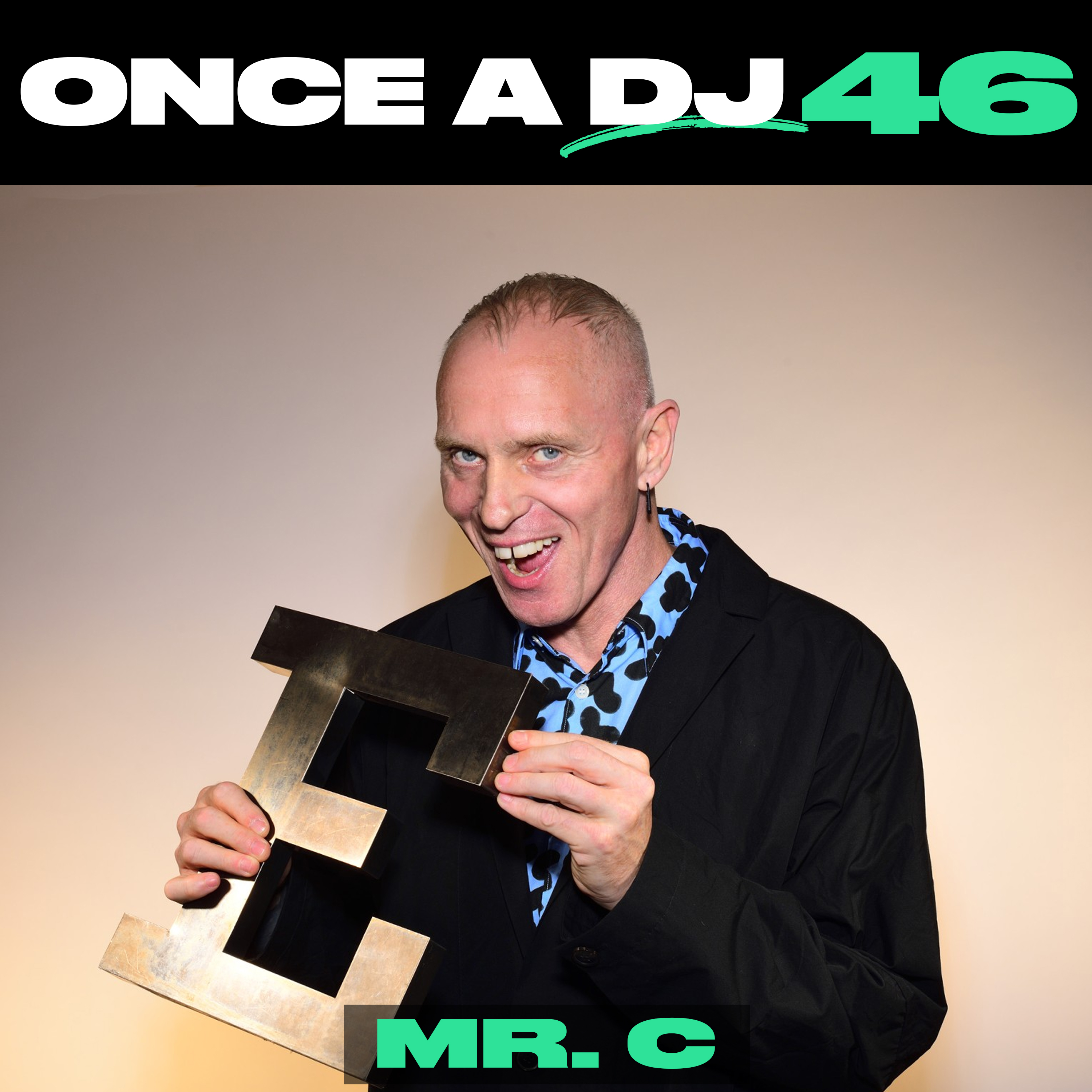
In this engaging conversation, Adam and Mr.C delve into the intricacies of DJing, the evolution of music genres, and the profound impact of meditation on creativity. Mr.C shares his journey from rapping to becoming a prominent figure in the house music scene, highlighting the importance of balance in sound and the communal experience of DJing. They explore the spiritual aspects of music, the challenges of fame, and the cultural implications of drug references in songs, particularly in relation to the iconic track ‘Ebenezer Good.’ The discussion is rich with insights on personal philosophy, the role of music in society, and the transformative power of meditation. In this engaging conversation, Mr. C shares his journey through the music industry, emphasizing the importance of happiness, authenticity, and community. He reflects on his experiences as a DJ, the challenges of maintaining his unique sound, and the financial aspects of his career. The discussion also delves into the creation and legacy of The End nightclub, his views on politics and society, and the significance of mindfulness and meditation in personal growth.
Transcript
So today we’re here with legendary underground dance DJ, hitmaker extraordinaire, frontman of the Shaman, Richard west, aka Mr. C. Thanks for coming on.
Speaker B:That’s my absolute pleasure, sir.
Speaker A:Brilliant. And I hope it’s. We get into things in a little bit of a different way.
Speaker B:Okay.
Speaker A:To what you may have done, because I think what. What you tend to find with people is if they’ve done a few podcasts, it might just be the same sort of things in the same way.
Speaker B:Yeah, I get. I mean, obviously people do want to know about Ebenezer Good. And I do get all that, but ye, it’s.
We usually end up branching off onto different subjects because, you know, I’m an interesting character, which is why I’m here.
Speaker A:Yeah. And I’m looking forward to getting into it. Yeah.
So the first thing I tend to ask is around how you got into music and how you got into DJing, because just to give you some context, my experience is all kind of around hip hop, funk, soul. So that’s more the world of people that I’ve interviewed. So it’s exciting to get someone that’s.
That’s got a lot more into sort of techno and deep house and things like that. Because for me, it’s about. I want to understand the commonalities for all DJs, be it a funeral DJ, techno.
Speaker B:Right. Okay, well, that makes sense. I’m actually playing a gig tomorrow night where I’m playing five hours of fun console.
Speaker A:Oh, amazing.
Speaker B:There you go.
Speaker A:So was. Was that an entry point for you then? The funk and so.
Speaker B:Yeah, very much so. My mom used to, like, listen to soul music when I was a kid.
So she’d listen to like the Commodores, Barry White, Stylistics, like those sort of bands in the early 70s and mid-70s. So, you know, I automatically liked soul music because it was like, yeah, as a kid I did like Elvis Presley. He’s very soulful anyway, for a rocker.
And then when he died, I was like, immediately. And I. Posters off the wall, get rid of the records. And became an ABBA fan for about a year when I was 11. That’s my first guilty pleasure, I guess.
Speaker A:Why did you. Why did you get rid of everything when he died then? Was it like, there’s no point lamenting.
Speaker B:My mum asked me the same question. She’s like, what. What are you doing? Why are you taking. I’m like, he’s gone, mum. I don’t know. I just had this thing.
I was only 10 years old, I believe, around that when. When he passed and No, I was just like, okay, we are. He’s gone. That’s it. I’m not wor. I’m not going to be a fan of someone who’s dead.
There’s no point. Find someone new. And that was. That was it. I dropped him like that, like a ton of hot bricks overnight. Yeah, it was very weird.
My mum thought it was a bit weird.
Speaker A:Yeah. So, like, with. I try not to do too much research on this because sometimes it can. It can end up.
I’ll try and guide you somewhere that I think is where things happened.
Speaker B:I’m the. I’m the sort of person. I do tend to pull away and make other answers out of questions when people do that. All right, that’s okay.
Speaker A:So the thing that really jumped out to me, looking at your Wikipedia, was that your kind of entry point into the world of DJing was through rapping, right?
Speaker B:, I started rapping. This is:Breakdancing started.
And before that, like when I was sort of 13, 14, 15, robot dancing came first and it was all that Jeffrey Daniels moves and balloon and all that malarkey. And then. Then came the body popping and the pop knocking. I was, oh, yeah, we’ll have a little go of that.
And then all of a sudden these kids are spinning on their heads and doing windmills and all that. And I’m like, no, way like that. Not the thickest set of hair. Follically challenged.
And even back then I was like, oh, I’m a little bit follically challenged to be spinning on my head. I’m not. And I thought, well, how do I stay a step ahead? So I thought, you know what?
n I started writing lyrics in:Speaker A:So at that point, what were you getting? ACC. You from London, right?
Speaker B:I’m from London, yeah. We had access to absolutely everything that ever got released in America. You know, that’s the good thing about being in London.
It’s the music capital of the world and it’s the hub for Europe. So all the New York and LA stuff or whatever would all fly into London and there it would be in our record shops.
You go down to Groove Records on Wardour street and they had everything, you know what I mean? It’s like absolutely everything. And there was a whole lot of record shops Bluebird and all that.
And also at that time we had a lot of pirate radio stations in London, the early ones, jfm, Horizon, Invicta, Solar Radio. And they used to champion American black dance music. So it would just pile in. Soul, funk, disco, reggae, jazz, hip hop. It would just pile in.
So people like me, I was right place, right time as a kid.
Speaker A:Yeah, so, so which, which rappers were you listening to?
Speaker B:Well, in the early days obviously there was the, the biggest boy band ever for rap music, the Sugar Hill Gang. Because they were totally manufactured band. There was nothing about them that was real. It was like a boy band for, for rap.
f rappers, but that was what,:So you know, it started there for me and then obviously Grandmaster Flash and Furious 5, Dr. Jekyll and Mr. Hyde. Although those sort of artists were big for me. The Jazzy 5, Kool Herc, you know, that, that, that whole New York thing was definitely big for me.
And yeah, that, that was, that was what I first got into with as far as rap is concerned and loved it, loved it all. And for me that, that fitted in perfectly with the disco. You know, I liked my rap a little bit more up tempo even back then.
And for me it started as loudmouth MCs chatting over DJs or even loudmouth DJs wanting to talk to the crowd. And that was how that whole thing started for me. So my influence really comes out of funk and disco more than it does hip hop.
Hip hop wasn’t the thing back then really. It was just its very beginnings and that, you know, I don’t know. Yeah, it wasn’t really hip hop. So I soon got into electro.
Yeah, in the early 80s when that started to come through and those bands were like Nucleus Africa Bamba and the Soul Sonic Force again, Grandmaster Flash and the Furious 5. There was loads of them. Egyptian Lover and that, that really got me. The electro got me immediately. It was ah, this is it.
ow, in again, if I go back to:As soon as I think of that, I think of the Fun fair and it being played time after times. Like you go to the Fun fair for two hours and that’d be the only Song you would hit on every ride. You’re perfect for fun. For the fun fair.
Speaker A:Yeah.
Speaker B:So, you know, I always had that like, you know, it’s wanting to know more about electronic music. And when the old school electro came in, I was like, yeah, it got me straight away.
I’d already started listening to a little bit of craft work around that time as well. So that was my entry point for electronic music was hip hop.
Speaker A:So a couple of questions then. When you were, when you were rapping, when you first started, were you rapping with an American accent or were you kind of British with it?
Speaker B:No, no, no. English accent. I mean, it did have a little bit of an American accent, I guess. You know, like my first raps were totally old school.
It’d be like, like the Sugar Hill Gang or you know, like that, that sort of style. Like that, you know, Grandmaster Flash and the Furious, Furious 5 style. So it was very, it was basic, it was really early.
It just started as a movement and so I’d copied that style and parrot that kind of style. So there was a little bit of an American in there. But I was rapping about being from London.
You know, London is my place of birth where the people that are rocking are down to earth. It don’t matter if you’re north, south, east or west Because London is the place that rocks the best.
Well, I missed the sea and the place to be Rocking all around, spending cash money and so it’s not American, but it’s not. It’s something in the middle, I guess. I don’t know. But that was how my thing was right at the beginning because I’m not American.
And I think that was one of the things people liked about when I would rap. When the acid house scene exploded, the energy and that I came with was definitely a London vibe. And.
And as my rap got better and as I wrote more lyrics and my accent became more like my normal accent rather than the American thing. So that it changed quite quickly. But there was definitely an American twang in there when I started. Without doubt.
Speaker A:Yeah, because.
Because that’s something I find interesting with the sort of first wave of like brick core or whatever you want to call it, the sort of rap like gunshot, hijack, things like that.
Speaker B:Yeah, I was already out of it by then.
Speaker A:Yeah, yeah, yeah.
Speaker B:t like a ton of hot bricks in:Speaker A:So how did 16 year old rapping Richard, Mr. C kind of get ingratiated into that acid house movement and the. It was the nights at the clink, right?
Speaker B:Yeah, I Mean it took a little while. I was always into music and my music was black dance music to be loose as a term. So soul, funk, up tempo, funk, disco, then electro.
But it was all like yeah, I always liked that soulful vibe. I always liked the deepness of black music. I like the, the jazz influence, the minor chords, minor fifths, jazz sevenths.
Like that side of the music really appealed to me. I’ve never really been into a major chords and I found that I got that with black music a lot more.
to:And as that music progressed into the 80s, it started to become a lot more electronic as well.
You can have people like David Joseph like you can’t Hide my Love as an example and it’s got a real electronic vibe and even some of the London stuff, you know, Southern Freeze by Freeze. There’s like, you know, songs like that really got me, you know, so there was always something about the more up tempo stuff that I went for.
ion on Easy street Records in:It was, it didn’t have another name and it sort of as disco got more electronic it was just oh, dance music. It wasn’t called anything else. So I was already into that. And then obviously with the electro stuff, 82, 83, 84.
And although like the body popping and stuff. So that also pulled me into electronic. So now I’m already in.
So when house music actually came along, even though it wasn’t called house, for me it was the same as electro, but we’re for four, four instead of an offbeat. There’s absolutely no difference. Yeah, there were tracks that we called electro, like the Voice of Q by Q as an example, that was, that was 4 4.
But that, that for me was house music before there was anything called house music. So you had those sorts of songs that were definitely house.
So for me it was just a natural progression from dance music that I absolutely adored in, in the early to mid-80s. It was a natural progression into that. And you know, when the word house came along it was like oh okay, what’s that? Oh, it’s just dance music. Oh.
When the word garage, Garage, New York, the New York garage started. Garage. And I was like, oh, what’s that? Oh, it’s just disco, electronic, disco. Okay, all right, okay. Techno, what’s that?
Oh, no, it’s just same as house but from Detroit and with a bit more of an edge to it. Oh, so they were all. It was just the same thing, you know.
If we go back to, you know, classic tracks like Super Nature by Sirone, where would that fit at? Italo house. Italo disco. It’s Italo disco, but it’s house. What else would you call it? You know that. That is what it is.
So when these early tracks started to come through from Chicago, you know, it was like I was immediately interested in them. And then late, very soon after that, New York and Detroit, I was immediately interested in them.
And by the time we got to:Like I always preferred the slightly more up tempo disco based rap. Yeah. And when it started to get a bit too slow, come on, I want some fun, you know.
And rap was started off very positive and it was all giving it the big I am, look how good I am. Look how the I’m sleeping, check me out and all that, you know what I mean?
But then it started to slow down and get a bit more aggressive and be about ego and like fat got my fat gold chain and started, you know, calling derogatory to women and hoes.
Speaker A:And Yeah, I guess kind of Run DMC and. And yeah, that’s kind of the turning point, isn’t it?
Speaker B:That was Eric being Rakim run DMC. It was that mid-80s, that 85, 86. And I was like, yeah, you know what? Not for me. So I dropped, I dropped hip hop. I was like, you know what, I’m out.
And now this new movement is coming through house music. I was fascinated by it. It was like, this is it, I need to know more about this, this house music.
So I started rapping like writing loads of lyrics about jack jack in your body. And I was the only people, the only person rapping on house music anywhere in the world at that time.
And I actually did a track in:And like, Eddie’s like, come on, you’ve got to come and do that in the studio. We’ve got to get this put down on vinyl.
When I went into the studio and Eddie played me this beautiful deep house track that he was working on, so deep, it didn’t really lend itself to rap because rap needed to have a bit more bounce to it, a bit more bit of that. And I thought, you know what? This, this, this needs a different type of vocal. And I said to Eddie, look, I really love this tune. This is beautiful.
And I’m up for a vocal, but can I do a spoken word instead of a rap? He’s like, well, yeah, what do you want to talk about?
I said, I do a spoken word about the benefits of meditation and transcendental meditation and positive thinking and what we’re going to do, what we can do and what we can achieve today. He’s like, okay, fair enough. So that was what we did.
Now, if I’d have done a rap, which is what I’d intended to go in to do, it would have actually been the first hip house record ever released. So I missed a trick, but there’s a trick because instead I’ve got the first house, spiritual house record ever released. So.
Speaker A:Wow.
Speaker B:It’s a different. It brings something else in, you know, I mean, and it would have been nice to have been at that claim to fame.
Oh, yeah, I did the first hip house ever. Because you can milk that rubbish, can’t you? You can milk it all day long, like, oh, I’m the original. So I don’t. I don’t get. I don’t get to use that.
But I do get to have put out a most amazing tune, talking about stuff that I want to turn people on to and help give them a clue about something spiritually that could benefit them in their life.
Speaker A:So on another point that you mentioned then, for lack of a better word, let’s say new age, right?
Speaker B:Yeah.
Speaker A:Call it what you want.
That’s probably quite a limited, progressive sort of outlook and set of things to be thinking about when you’re quite young, in the 80s, I would guess.
Speaker B:Yeah. I didn’t know anyone my age that was into anything spiritual like meditation. Yeah.
Speaker A:What was your journey into that, then?
Speaker B:Well, when I was 17, my stepfather, he got into meditation and he was actually in jail and he came out and he’s. We started chatting. He’s like, you know what meditation is, Richard?
And I’m like, well, actually, yes, when you think about Something like, let me meditate on it. That was a common term in the Exile. Let me meditate on. That didn’t actually mean let me meditate on it. It meant let me think about it.
Which is the opposite of meditation. Because meditation is to not think and to bring your mind and body to complete stillness.
And at that point of concentration on nothingness, at that point of nothing, because there is no space and time, there is everything that ever existed.
Because if there’s no space or time, that means everything in the past, the present and the future, in every dimension of the multiverse is in that point of nothing, which is everything. So, you know, I got into these sort of concepts at a young age and my stepfather told me, he said, well, if you’ve got.
Do you know what meditation is? I’ve got it wrong. And he explained to me, no, it’s this.
It’s when you bring your body and your mind to stillness and when your mind is still, you focus on that nothingness, that point. Like as Buddhists would say, concentrate on the sound of a one hand clap. A load of nonsense that one is.
But they’d come out with this cryptic, weird like that. But yeah, I thought, I’m interested in this. And it was what came with it.
Or my stepfather saying, well, meditation increases making things happen by thinking about it. I said, what do you mean? He’s like, well, if you think about something repetitively, in detail over and over and over again, you manifest it.
And if you’re meditating, that makes the manifestation more powerful and quicker. And I’m like, oh, really? So I started reading about it and that got me in.
the Law of attraction back in:I’d never seen it anywhere until probably the Secret came out, the book. But that was what it was I was doing. I was using the law of attraction under the name the power of positive thinking.
And it just work, it just gelled for me. It was like something. It worked for me. So I started meditating every day, doing thought experiments, like thinking.
If I had to go to the shop to get a packet of Rizzlers, yeah, I’d go like, right, what’s the journey? I’m going to go out sort down the stairs.
I’m going to go out my house, I’m going to walk up to the corner of the street when across the road I’m going to go in the little shop, I. I’m going to get the rizzlers, I’m going to come home, take and I’ll do the journey in my head first.
And now you know, I’d see a cat, I’d see someone walking a baby, I would see the certain car or a van go by and then I would do the journey afterwards to see how much of it I could would come true, how much of it I was right. And the more I meditated, the more things came true, the more it was like I was seeing the journey before it was happening.
And it was just like that confirmed to me that something was going on and I needed to use this technique for my life, to better my life. And it was, it was the perfect thing to come along for me. At the time I was a kid housing, housing estate, trash.
Getting in trouble with my mates, getting in gang fights, getting into trouble. Football, football.
what got me into that back in:They don’t think I’m an absolute lunatic. Yeah, you’ve got to think about things to create them. You’ve got to visualize them in detail because there’s no time.
Space and time are man made constructs. And people are like this is cancel estate trash. It’s talking about space and time being man made construct. I thought I was mad. Richard, stop it.
Speaker A:Yeah, I remember I got into meditating about eight years ago and, and immediately my, just my work days seemed to go better. Yeah, I just felt, yeah, those.
There was a few different things I can think of in particular where I was like, I’m just dealing with this better because of meditating. It’s just. It was helping me in so many ways and I just couldn’t stop telling everyone to do it.
Speaker B:It’s everything people don’t re. People don’t realize. It’s. It’s fascinating. They don’t realize what it does.
I mean even if you don’t get into the spiritual side of it, just the technique of it alone, you know, by might, you know, doing a body scan and scanning your body from the tip of your toes to the top of your head. Slowly but surely, every muscle in your body brings you completely into the moment and makes your thoughts disappear right at the very beginning.
And this is before you even start the focus of meditation on whatever it is you’re focusing on, be it a mantra or your breathing or your senses or depending on what type of meditation you’re doing. But, you know, it just, it brings about focus. It brings about.
You know, if you focusing on your senses, all of a sudden you’re not procrastinating anymore, you’re not focusing anymore. Things are not winding you up. So it’s a technique for all these mental health benefits right off the bat.
And that’s before you even go down the mumbo jumbo route, which I love the mumbo jumbo side of it.
Speaker A:Yeah.
Something that might be cool to do at the end of this, if we’ve got time, is if you’d be up for giving me a little guided meditation, something a bit different to do.
Speaker B:tation. I started teaching in:I had a psychedelic experience on DMT and pushed the boat out and I was getting these hieroglyphics for rushing along this wall and I could read it, it was like English. It was completely bizarre.
And I was being warned and told off, reprimanded by the universe for not sharing the universal information that I’d gathered adequately and was warned that if I don’t share this information that’s not mine, because it’s not my information, it’s universal information. If I don’t share it, my powers are going to be removed.
Well, obviously I myself because like, you know, I’ve been using these, these powers, if you can call them that, since the mid-80s. And you know, it’s. It worked. It. It was the meditation.
It helped me to become a successful rapper, helped me to become a successful dj, helped me to become a successful producer, helped me to become a successful record label, a successful nightclub owner, a pop star, a songwriter. And it was. Meditation was the root behind all of that. Yeah. And that really fueled all of that.
So when I get told that I’m going to have my powers removed, it’s not. I’m going to shut myself. I was like, what the. What’s going on here? So I started putting information on Facebook.
Like I would just put a line, come into the moment and be. Make your mind still twice a day for 20 minutes and watch the world blossom in front of you.
Post like little one things like that like every day I thought, right, every day, put something. So I put a little something and then it would start threading. People would ask questions and I would answer them.
And someone said to me, yeah, if you want to get quite a few people start saying if you. Have you ever thought about teaching Richard? I’m like, no, no, no, no, but have you thought about teaching Richard? Right? And I was getting it.
Why not? Why not Richard? I’m like, you’ve got all this information, you should be sharing it. I’m like, okay, I’m getting those messages again from my mates.
And I’m like, no, look, who’s going to want to listen to a drug addled ecstasy head dj, right? Who’s out there? Absolute raver, who’s going to want to listen to like, you know, me telling them how they should run their life.
But they’re like, but hold on a minute, you’re not just an ecstasy head raver, you’re, you know, a double platinum winning number one artist, songwriter of the year who has a Midas touch and everything he touches turns to gold. Don’t you think you should share that? And I’m like, oh, actually yeah, I should, but I haven’t got time.
I got time, all that I’m DJing, I’ve got my record label, I’ve got all this stuff going on, I’ve got the end, I’ve got all these things going on and you know, my club and one friend come in and said, her name’s Jack, she’s always been a very. One of my most spiritual friends and a great inspiration in my life. And Jack said, you’ll have time if you make it. Can’t really argue with that.
So I started off by doing a ten week course. Yeah, in Los Angeles, in my home. And I had 10 students. Friends came, they wanted it, it sold out like that.
The course I did, it was gone as soon as I put it up there it was like bang, bang, bang, it was gone. And I’m like, okay. And the 10 subjects were meditation, oneness with the absolute, the minds, the conscious mind and the subconscious mind.
And the differences between them, Psychology, self psychoanalysis, positive thinking and the law of Attraction, Negativity, banishing negativity and cleansing karma. Attachments. What attachments are, how do we get rid of them? What is the point of them?
And actions, the actions that we make and how to make right action instead of wrong action or no action.
And what those actions do, the brain waves, psychedelia, what’s what happens to brain waves when they Change your, when you change your state of consciousness and what is the relevance of all states of consciousness with the human evolution and the human mind? And finished on the pineal gland. What is the pineal gland? What does it do? How do we service it? How do we make it? And that.
d of nine, that at the end of:You know, on my first class I was chatting with, with my friends who were there and I said, look, I’ve never taught in my life, so you have to excuse me if I’m not doing things quite right.
At the end of it, there was two people that came who I didn’t know flat out called me a liar and said, you know, there’s no way that you haven’t done this before. Like you just the way you do all, the way you explain everything is so easy to understand.
I’ve always been an advocate of simple explanation, which can be quite tricky when you’re talking about sciences or spirituality. You know, there’s a lot of words that might be difficult to understand if you’re a layman.
And so I always like to use layman’s terms for things to make myself very understandable. So there can’t be any ambiguity and it’s not getting lost in not understanding. So I did that course and it went amazingly well.
I did three types, three types of meditation, basically Transcendental meditation, which I’m not qualified to teach in any way, but I knew how to do it and I shared it. And you’re not supposed to because they want people to pay for it. They want people to pay for it, don’t they? Paint off paper? Do you know what I mean?
It’s free meditation. It’s free for everyone. About pay for it.
Speaker A:Right, so the medicine money as well, isn’t it? Tm?
Speaker B:It is tm. It’s ridiculous. A ripoff. And you know, it really is, is a ripoff.
Like I don’t feel that they’re, they’re really giving people the truth because like you shouldn’t, you know, like they give you a mantra or a sound that you’re not allowed to share. I shared mine, but I didn’t pay for it. I had mine given to me for free as well. So, you know, there’s the TM side of it.
There’s mindfulness meditation. And I do mindfulness meditation based on concentration on the senses or mindfulness meditation based on the breathing.
And then I do also teach a short, 2, 3, 4 minute blast that you can do before an important job interview to get yourself focused and grounded and centered, or before doing an interview or a podcast or going into the studio to make music.
You know, there’s a little five minute meditation I would teach to help people with their creative endeavors or whatever it is they’ve got to do that day, that moment. So, yeah, so I started teaching it back then. And the workshops are very special.
They would last 11 hours, 12 hour workshop jobs and sometimes longer because I was also doing psychoanalysis work on the individuals as a group and psychoanalyzing their actions and thoughts and trying to find out what their problems were. Very good at that. I’m very good at finding out what people’s problems are by asking questions and challenging them.
Modern day psychiatry kind of pisses me off a little bit. You know, I think for most people, one what it should be a one stop visit. You should be able to find out what your problem is.
What is the, what the event is that caused your problem? What is the event that gave you this purpose in life that is hidden and unwanted?
And what can you do to get rid of that problem, which is finish thinking on the event and how do you finish thinking on the event? Are there techniques for finishing your thinking on the event and all this kind of stuff? And psychiatry doesn’t really give you those things.
Like you’ll go to a psychiatrist and they’ll ask you questions and get you emotional drag up from the past and then say, all right, off you go, go think about all that and then come back next week. No, that’s, let’s see, that’s where it all falls down for me. It’s like, all right, we’ve dragged up this from the past, right?
How did you come up with that from the past? That, you know, what is it that brought that from the past up? What is it that brought that into that person’s mind? And then what?
Why is it coming to the person’s mind? The only reason that that from the past has come up into the person’s mind is because they haven’t finished their thinking on the event.
So therefore, when it comes up, the event is still there causing problems. And when you have a traumatic event in life, that trauma will give you something that we call an unwanted hidden purpose.
Like for an example, someone who’s bullied by their big brother yeah. As a kid would have the. They’re being disempowered by their big brother. Yeah.
That disempowerment would give that person the unwanted hidden purpose to be powerful, which in turn will make that person into a bully. Yeah. And if that person has the purpose to be powerful, if their.
If their purpose isn’t being achieved, they get angry, violent, all sorts of problems start to happen because the purpose isn’t being achieved. And that could be. There’s 101 different purposes.
You know, it could be the purpose to be loved, the purpose to be respected, the purpose to be acknowledged, the purpose to be correct, and the purpose to be powerful. The purpose. There’s those 101 of them. So it’s really important for the psychologist to get the purpose right. Yeah.
And once you have the purpose, it’s from the purpose. And you get the purpose by challenging the person’s anger or their affinities.
Because the only time you’re ever going to be angry is when your unwanted hidden purpose is not being achieved. If your unwanted hidden purpose is being achieved, you are the happiest person on the planet.
So if you challenge anger and question anger, you will then be able to find out what the purpose is that isn’t being achieved. Once you find the purpose, you can then regress the person to the event that caused it.
Once you find the event, you then go into the event in details, and it is then that you showed the client the techniques to be. How to be able to finish your thinking on that event. Once you finish your thinking on the event, the purpose that came with that trauma disappears.
It disintegrates along with all of its bodyguards that are the voices in your head saying, oh, don’t do that. You’re going to fail. Oh, you’re not good enough. All these voices are protection mechanisms for your purpose. With the purpose comes security.
So the security disintegrates along with the purpose once you finish your thinking on the event. And that’s where psychiatry gets it wrong. They don’t give you techniques to finish your thinking on events. And that’s what I would do with people.
Speaker A:Just going back to your timeline then. So you were rapping and then it was from there that you started DJing, is that correct?
Speaker B:Yes, I started rapping in:I was rapping with lots of parties and people. I used to Be the resident rapper with Colin Favor and Eddie Richards at the Camden Palace.
MCA, Tottenham Court Road. In:I was working with Jasper the Vinyl Junkie and Ron Tom before I completely switched to house, you know. So, you know, for me, the. The whole rap thing, it.
I established myself and was well known as a rapper, and I was well known as a house rapper and one of the only house rappers that existed.
Speaker A:Did that make it easy to. To kind of get into the club’s DJ in there?
Speaker B:Yeah, absolutely, because I knew everyone.
oter in like, you know, early:I’m like, yeah, of course I’ll mix. Do you know what I mean? Like, you know, and I just died. Do you know what I mean? But I could mix immediately as a rapper.
I knew where the brakes were, you know, I knew where to come in. Yeah, where to go out. I knew when it was the tempo went right, I could mix immediately. Tight as you, like, spot on, like, run tracks together.
It sounds like one track. It was immediate. So I could then use my notoriety as a rapper and say, all right, yeah, here’s a cassette. They’d listen to it and go, oh, wow. Yeah.
t party? And by the middle of:I’m playing all over England, you know, I’m playing all over the place. I’m doing parties. By the end of 88, I’m playing in Berlin in night. By 89, I’m playing in Ibiza, Holland, Berlin, France.
A year later, a year after, Stomach to dj.
Speaker A:You know, that’s pretty incredible.
Speaker B:Yeah, because I knew I was already known, so I already had a springboard. And then all of a sudden, there’s this new DJ on the block. Who’s this new dj? Who does he think he is, just coming in here, taking over like that.
So I did get a little bit of that from other DJs, but not that I really care. Their problem is not my problem, it’s their problem.
Speaker A:So did you learn music when you were younger?
Because you were talking about specific sort of chords, you know, minor seventh and things like that that you get in sort of jazz and so have you got a background in like keys or anything?
Speaker B:No, I was exceptionally gifted in school. At the end of the third year, when you pick your. What you’re going to study.
I didn’t pick music and my music teacher at Holloway School, his name was Mr. Ward and he got my mum on the phone and he’s like, like, you’ve got to come into school. And she went in, I went in with. I went in with my mom and he’s like, yeah, you’ve got to make your boy pick music. I’ve been here 13 years.
,:And I didn’t learn, you know, I could read. I can read notes and whatever, you know, I couldn’t read a night music and play it because I didn’t study. But I didn’t even go to school.
Like, I didn’t pick music and like the. My music teacher was sobbing to my mum, you’ve got to make it. My mum’s like, can’t make him pick anything he don’t want to do.
I thought I was going to be an architect back then. I took technical drawing and carpentry and did you know, I mean, not that I ever went because I was totally true from school right after that.
Didn’t even want to board me. I was too. I was too gifted. I would do. I would finish my work and mess up the class, cause trouble, like, be disruptive. I was disruptive child.
I was a pain in the ass. Yeah. You know, so, yeah, I was. So. I didn’t have a background in music but I’m naturally musically gifted, I would say. Yeah, yeah. Never studied it.
Never studied it.
Speaker A:So how did you meet the Shaman, then?
Speaker B:Shaman manager first back in:Speaker A:They’re Scottish, right?
Speaker B:They’re Scottish, yes.
ic rock band from Aberdeen in:They were making their sort of psychedelic rock with a bit of electronic sampling in it.
The manager moved down to London from Glasgow to get the band recording deal, a publishing deal and when he got down to London, he stumbled across an acid house warehouse party. It was us lot, you know, and blew him away. He was like, this is. This is unreal. This is amazing. So he got back, he got in touch with a band.
He said, look, I’ve stumbled across this thing in London that’s going on called Acid House. It’s amazing. It is the next level. The whole everything about it, the community, the scene, what is happening here, it’s unbelievable. It’s psych.
It’s your psychedelic band. You really need to come and check the out. It doesn’t get any more psychedelic than this.
So the band came down to London to check it out, saw what was going on, stayed in London, squatted, changed their blueprint from rock psychedelic alternative rock to house and techno immediately and got involved. The manager, Charles Koch, his name is. He put on a couple of warehouse parties in Whitechapel that I. He got me to DJ at. Also rap.
Rap and DJ at the same time. And so he got me to do a couple of warehouse parties in Whitechapel. They were amazing in 88 and he was. They were regular. They started.
The boys would go to Clink street in London Bridge, where we did the rip parties in 88, and the dungeons in Lee Bridge Road in 89, which we did every week. The their boys would be regular. I didn’t really get to know them. I was always different, different scene.
I come from this casual boy, hip hop, soul, funk kind of scene. They come from a more grungy, alternative, political, lefty, political kind of scene. So it’s different scenes.
Speaker A:It’s interesting though, how, like, because I think about, you know, say, like sort of New York in 77, how you had the emergence of disco, the emergence of punk and the emergence of rap. And then I think about sort of 88, England being a little bit like that, where you had the kind of offshoots of the bag.
Like everything kind of came together and then exploded apart again.
Speaker B:Yes. Yeah. I’d have people coming up to me in 89, 90 saying, this music comes from punk, doesn’t it? Oh, no, it comes from disco. They go, no, it don’t.
Comes from. Okay, comes from bug. But it came from all of those things.
Speaker A:Yeah.
Speaker B:So they weren’t really my types of people that I would hang around with. They’re still not, you know, I like. I was a bit of a poser. Love fashion, love my designer club. They were grungies. Do you know, I mean, different.
Different thing. Different, different thing. So I didn’t hang out with them.
But in 89, that shaman got Paul Oakenfold to mix down one of their songs, a song called Move Any Mountain. Yeah, and Paul Oakenfold, they. They was. They said to Paul, yeah, we’re looking to consolidate this song with a rapper. Do you know.
You know, got any suggestions as a rapper? And Okie said, oh, there’s only one house rapper. There’s Mr. C. He’s. He’s the way. He’s the man. And they’re like.
They’re like, oh, why didn’t we think of that? We’ve been watching him dance, like, dancing to his DJ sets and that for ages. Why didn’t we think of that? So they got Charles.
They knew Charles knew me from doing his stuff, and they got Charles to invite me on, and he said, do you want to get involved in this song? I’m like, well, who? What? It’s like the band’s called the Shaman. Oh, interesting name.
And in:He said, it’s called Move Any Mountain. It’s about being able to move mountains. This is just what I’m into, you know, positive thinking, meditation. This is me. Oh, let’s hear it.
I heard the song. Bit alternative for me, a bit white. I was. I’m a disco baby. You know, this isn’t really my thing, but I thought, you know, it could be house.
It could have some more blackness in it. And if I put my wrap in it, I think it’ll work. All right, I’m gonna go for it.
But if I do it, you’ve got to let me do a house music remix rather than an alternative dance dance. Because it’s. For me, that wasn’t house music back, right? It went. It was alternative electronic dance. Yeah. And there’s a big difference for me.
I’m a house head. So I wanted the house, I wanted to groove. I wanted the black. I wanted to. You know, which. So they said, okay, you can do a remix. So I did. So I did.
I did, did my version of it.
I redid the vocals on mine, because on the original, I was like, well, you know that any mountain is keep, like, almost like a Beastie Boy attitude to the rap. Whereas when I did my version, I redid it. Well, you know, the dirty mountains capable of moving more laid Back more like a how I would rap.
that came about, that was in:right at the end of:And then after Move Any Mountain the Shaman released Make It Mine and that. That kind of little bit higher in the charts and then they did released Hyper Real and that climbed a bit higher in the charts and.
But Move Any Mountain was still the cult classic even with those other tracks coming out afterwards.
Speaker A:Were you on the other ones?
Speaker B:No, I wasn’t, I wasn’t on those, no.
The original rapper on Make It Mine was Lexicon or Lexicon and Hyper Real was Colin doing the vocals with Plavka Lonok who went on to sing for Jam and Spoon.
So and also like I would do like gig, I was djing so the Shaman would ask me to come and do a performance at their gig and rap Move Any Mountain and they were offering me 50 quid and I’d be like I’m getting 150 or 200 for DJing, can you match it? You can give me 150, I won’t do that DJ gig and I’ll come and do that. And they couldn’t, couldn’t.
having that money. So through:The odd if like if they wanted me to do a show and I wasn’t booked, booked, I mean if they wanted me to do a show and I was booked. Sorry, can’t do it. Yeah. Then in 91 we decided that we was going to re release Move Any Mountain but we needed a better video.
So we did a new video in Tenerife with the director Matthew Glamour and it was at that point when we was doing the video that Colin and Will and asked me to join the band as a full time member rather than just being a guest mc, producer, dj. I did DJ at a few of their Events as well.
They obviously saw the value in getting me on board as a full member of the band and brought me in on a cut. Of the artist role is and of the publishing world is depending on what I’d contributed writing wise.
Well, obviously as a house music producer, I’m contributing beats, some contributing bass lines, I’m contributing raps, I’m contributing. Right, let’s do it. So. And also now you don’t need to pay me the 50 quid because I want a piece. Yeah, right. So now it’s a different story now.
I mean, now I’m turning down gigs and struggling to get by because now I’m on a piece of the action.
Speaker A:When they offer you that piece, did you have in mind that you thought it was going to get as big as it got?
Speaker B:Oh, yeah, without doubt. You know, when I knew Move Any Mountain was going to be a hit, sadly, after we shot that video for Move Any Mountain, we lost Will. Sinner we was.
He went over to the next island, La Gomera in the Canary Islands, with his girlfriend and she almost got caught. Caught with the undercurrent, the Atlantic Ocean.
She nearly got caught and warned, we’ll not go out to a certain place in certain parts because she was a stronger swimmer than he was. And he ignored her and went out and got pulled under and we lost him. The drown and obviously into. Into integral part of the Shaman. The guy was.
It was like a sharma. He was a vibes master. He knew the beats, he knew the rhythm. He had great vocals, superb bass player, he had everything.
It was a devastating getting lost for the Shaman at that point. So we just started to make the band of one. And then that happened. So that was very, very, very hard.
Plavka Lonok was asked to join the band as a full member as well. And she did want to, but once Will, we lost Will. She’s like, well, that’s it, I’m out. I’m out here.
And decided to go and take her her own route, which was fine. And we were about to stop the band, but Colin was getting so many letters from fans. Please don’t stop. It’s a very important information band.
There’s no one out there giving information about human evolution, about psychedelic experience. There’s no bad like this out there. There isn’t one. Yeah, please carry on. Please carry on.
So we talked about it and decided that Colin and I, we would carry on. So we went about getting a new singer to join us and we did. We went. We did it ourselves and carried On Colin and I, as to Shaman.
So, yeah, very, very difficult period for the band. But yeah, that was where it. When it went from there. It went from there. That was when we started writing the Boss Drum album.
And I knew, yeah, like when we, when we wrote Ebony’s Good, I’m laughing about it. I’m like, God, this is number one. He’s like, do you think, do you think it’s. I’m like, do I think this is now your number one mate? I know it.
It’s like I knew, but I’m a. I was a Noah. I’d already visualized it. I’d already seen myself on Top of the Pops. I’d already. Going back to my visualization and my spiritual side.
I knew it was a Knowing right there was like, oh, did you know that? Did you? Did you think you might do well? No, I knew it already happened. All we had to do now was just catch up with space and time.
It already happened. It was a. It was a given. So now I knew.
Speaker A:So I don’t think we need to get into the specifics of the song. If, if you don’t know, Ebenezer Good. I. I don’t even know what to say.
Speaker B:Greatest pop song ever made. I reckon I would say that, wouldn’t I?
Speaker A:Phenomenally big song.
Speaker B:Yeah.
Speaker A:And that album, that was a great album. That was one of my early cassettes that I bought. Actually. Just thinking about a Boss Drum when you mentioned it as well.
And just like a little bit of the rap and stuff. I’m not gonna do it, but like, it’s still, you know, it still kind of rings there in my head.
Speaker B:Yeah, it’s a good rap. It’s a good rap. Yeah.
Speaker A:What was it like having that level of success?
Speaker B:I knew it was coming, so I braced myself. It was fun for me. I never really took myself seriously. I mentioned it earlier on in this interview that I think that we’re only here to have fun.
We’re not here for any other reason. We’re not here to hunt and gather. We’re not here to get rich and hoard money. We’re not here to, you know, be the big I am.
We’re not even here to procreate. We’re here to enjoy ourselves. That’s it. We’re here to have fun. We’re here to be happy. Happiness is our God given right. And we.
That’s what we should all be doing is being happy.
And that’s how we are controlled by the establishment and the powers that be in the ruling Elites in that they’re making us unhappy and they’re making a struggle and they’re making us desperate and that stops our evolution. Because happiness is enlightenment. That’s the only reason we’re here. And for me, doing every. The whole shaman thing, I was enjoying it. It was.
It was fun. I was having more fun than you could shake a stick at, especially doing interviews, like winding up the media, winding up the tv.
You know, for me, it was just one big piss take. It was like, all right, let’s. Let’s have a laugh. And that was what it was. So the right. The writing of Ebenezer Good was hilarious. You know, the.
The performing of Ebenezer Good was hilarious. And yet I knew it was going to get to number one. I knew it was going to cause trouble.
I knew that it would be controversial, I knew that we’d be splashed all over the papers. I knew all of those things. And that just made it even more fun when they all came to be.
Speaker A:Did it make it difficult in any way to be taken seriously about your sort of wider message about how we are on this earth and what we’re here for and stuff like that? Would you kind of push that? And then people are going, yeah, yeah, but pills are ace, aren’t they?
Speaker B:Yeah, yeah, absolutely. Yes. But that was my disguise. It was my beard and glasses.
Speaker A:Oh, yeah. Trojan horse.
Speaker B:Yeah, my Trojan horse. So, you know, all the time, you know, I was worried for quite some time that I would get in trouble, like, not legally, but bigger than that trouble.
I mean, directly giving information to people about how to evolve as humanity, how to change the control system that we’re stuck in. And that’s dangerous for certain people. So being the clown prince helped, you know, being that cheeky chappie. Naughty, naughty, naughty. Perfect foil.
The perfect foil. So we was able to. And nobody really took us seriously because we was joking about all taking the piss the whole time. All the interviews I did, I was.
I took the piss as much as humanly possible, you know, with. On tv, TV interviews, I didn’t care. Took the piss. Radio interviews, took the piss. That was one of the funniest.
I think my finest moment ever with the shaman was taking a piss when we did. We did Ebenezer Good on Top of the Pops.
And I’ve told this story many times, so it will be repeated and sorry I have to do that, but we were doing the run, we’re doing the rehearsal. We insisted on. On open mics on Top of the Pops, we would never mime. We called It Lipstick. We’re not doing it. We’re not doing it. No way.
Right, so if you want us to come on and do Move Any Mountain, then we’ve got to the live vocals. And we also want a live feed on the turntable for throwing in breaks. And we want. And they’re like, okay, we’ll give it to you. They did.
So when it comes to doing like we did Live with Love, Sex, Intelligence. And then it come to Ebony’s Are Good. There’s our third Top of the Pops appearance. And I’m doing. We’re doing the.
The run through the, like, sound checks and all the rest of it. And I’m going, e’s are good, these are good. And like, everyone’s getting the needle.
The record label’s getting the needle, the manager’s getting the needle, The BBC are getting the needle. They’re all getting up there like, what are you doing? What are you doing? You’re saying, these are good. I’m only mucking about. I’m having a laugh.
Come on your tits. You know what I mean? Hello. So I said, I’ll do it properly. When it comes to the take, I’ll do it properly. It’ll be easier. Good.
It won’t be ease or good or I’ll do it right. All right. Promise you. So we go around to the top, fold taken. I’ll do it all properly. He’s a good. He’s. Ebony’s a good, He’s a good.
But then instead of saying, has anyone got any salmon? I’ll go, has anyone got any underlay? So now afterwards, they’re all like, it’s all recorded, it’s all done. They’re like, what’s underlay?
What’s all that underlay? I’m like, it’s rubber. It goes underneath the carpet. Make it nice and soft under your feet. They’re like, what? It’s rubber black.
Usually goes underneath your car bit. No, it’s a drug reference on my. My manager going, oh, yeah, it’s speaking speed. Speed. I’m like, speed. I’m like, how is it speed? Underlay. Underly.
Speedy Gonzalez. It’s speed. I’m like, it’s not. It’s just rubber. Forget about it. Anyway, they let it go out.
They let it happen with me saying, as anyone got any underlay? They let it go fast forward that we recorded it on. I think it was on the Wednesday or something.
And then it gets shown or Tuesday, and then it gets shown on the Thursday. And then the next week I’ve asked To get interviewed on BBC Radio 1 by Mark Goodyear.
Sent middle of the day, middle of the afternoon, I’m like, all right, I’ll have some of that. So I’ll go. Go up to BBC. And we’re chatting and he’s gone. So, Mr. C, you know, tell us, are there any drug references in Ebenezer? Good.
I’m like, yeah, there is, there are. And he’s like, what are they? I said, well, you know the bit where I say, has anyone got any salmon? He’s like, yeah.
I said, well, salmon and trout is a snout, which is a cigarette.
And I really shouldn’t be promoting the government drug nicotine, right, because hundreds of thousands of people are dying of lung cancer and emphysema, and it was really, really wrong of me to have support. Has anyone got any salmon in the song? Because the government drug that they’re making all the money of is killing people. And I really shouldn’t.
I’m so sorry. He’s laughing now. So you left it out on Top of the Pops. You didn’t say, has anyone got any salmon? Is that why? I said, correct.
He’s like, but you said, has anyone got any underlay? I went, yeah. He said, well, what’s underlay? I said, it’s a rug reference. I think that was my finest moment, that is.
It was just like, live to the beat to the nation, like, rug around for itself, that. Let’s just take in a piss.
Speaker A:But that is really interesting about cigarettes and. And it’s. You know, there’s so much to be said around the sort of drug debate and stuff.
Like, I don’t remember when Leah Betts was in the news, but I’m guessing it was a couple of years afterwards.
Speaker B:But it was around the same time. Actually. It weren’t. There wasn’t a lot. It was just out. It was. It was just after, I think, the whole year before that incident.
And the misinformation around that was just awful. You know, she actually died on the brain. So, you know, because she’d been given misinformation and, like, you know, if that.
People have been told all that, it does dehydrate you, but you have to be careful. You can’t drink too much water. You don’t drink 6 liters of water all in one go.
It’s going to cause a problem then, you know, for me, it was the lack of information that was in it that was a problem with all that, that stuff which we were addressing.
Speaker A:Did you get vilified, though?
Speaker B:We were always certified Right, right, right the way, across the board. Not that I cared. If I’d have had the money at the time, I would have. Well, you know, I was actually said to some of my mates, it’d be great to have.
Do a big billboard poster, right, and have a picture of an ecstasy tablet and a picture of Leah Betts and a picture of a cow and put ecstasy safer than British beef. Not gone down very well, but I would. I was already getting people’s faces with that sort of very too delicate, obviously, with.
With her family must have been devastated on losing, on losing a family member in, in the manner that they did.
And it was a real tragedy and absolutely heartbreaking, you know, but most of that deaths that were recorded as ecstasy deaths were due to mitigating circumstances like heart issues or water on the brain or other things, you know, and when you, you know, more people are dying from eating peanuts than ecstasy, I was always going to stand up and say that, say, oh, do you know more people die from eating peanuts than eating ecstasy?
Speaker A:Yeah, you see, I asked because I just imagine if there was ever anything come up in the news that if you saw it, you just think, oh, God, bad. It’s that people are going to come.
Speaker B:At me or, no, I didn’t care. You know, look, it’s not me, not my problem. If you start to make something your problem, then you’re messing with your own psychology.
And I don’t let other people’s problems be my problems. It’s someone’s got, like. If someone’s got a problem with me, like, yeah, I’ve got loads of haters, you know, jealous people, haters.
People that don’t like me for whatever reason. I’ve got loads of them and they’re the ones with the problem. Like, people say, oh, I heard someone said this about you. Okay, so, well, don’t care.
I have. I do not give it flying. Because what’s not my problem if they’ve got a problem, they’re the one who has a problem.
And they’re welcome to keep it all to themselves. My thing is about happiness. I am going to be happy, I am going to share happiness and I’m going to have as much fun in my life as humanly possible.
Because that’s why we’re here, to have fun, to. To have joy, to be happy and to share. That’s it.
Speaker A:Yeah. So just going on then, to that sort of peak of, of the shaman’s popularity. How did that impact DJing? Were you getting booked?
Did you ever get booked for kind of the wrong sort of gigs. Because you were the guy from the Shame. And I’ll probably called the Shaman or whatever.
Speaker B:Yep, I did. I got bit, I booked, I got booked, you know. Oh, it’s the guy from that pop group. Let’s book him to play our big Mecca discotheque, you know.
And I would get, yeah, I’d get. I was getting a few bookings. I’ll be. At first, I’ll be like, they’re not going to like my music because they don’t know what I’m gonna play, do they?
They’re just booking me because I’m Mr. C from the Shaman, right. So. And I’m, I’m gonna, I’m going to go and I’m gonna play techno, acid house music, underground, up really twisted. That’s what I’m gonna do.
And I’d go into these big places and none of them booked me again. But I would go in and I would pull their trousers down and spank their bottoms.
And then you get after people give you and the other people like this, look, what the is this? What am I doing here? This is mental. And they didn’t know what to do. And it was, it was hilarious. And I did that.
I must have had about eight or nine of those gigs.
Speaker A:Did your DJ money sort of kind of really bump up then?
Speaker B:No. For those handful of gigs, the Mecca ones? Yes.
Speaker A:Yeah.
Speaker B:But they, none of them booked me back again, you know, back then, you know, we’re talking 92, 93. I was earning 250 quid a gig and like even when I became a pop star in 92, 93, 94, it was starting to creep up. 500, You know.
And you know, by the time I got to, you know, 95, 96, it was a grand. But I always kept it like that. Yeah, I didn’t put my price up from a, you know, a grand was my minimum. Like that’s what I’ll do it for.
I didn’t put it up until a year and a half ago.
Speaker A:Wow.
Speaker B:Yeah, because I play underground music. Yeah. And if I’m getting like eight gigs a week and I’m earning a grand a gig or sometimes a bit more, that’s eight grand a month.
I don’t need any more than that. That’s plenty, thank you very much. I’ll have that. Don’t have to compromise my sound, don’t have to compromise my integrity.
I can have as much fun as I want in places with like minded people having a jolly to celebrate life. And that’s How I kept it, you know, there are gigs that I get more now.
You know, there were gigs back then, you know, if I played a bigger gig and it was a bigger event, I’d charge more, you know.
Speaker A:Yeah.
Speaker B:But for me, it was never about the money. So back then the DJ fees were adequate. It was enough to get by on and survive, you know.
You know, like, yeah, I remember when I had my first five grand month and I, you know, I remember it well. I’ve done a couple of gigs in Tenerife that paid like 800 quid each and it was like, you know, not 300 quid.
So, you know, that, that, that sort of stuff happened. And you know, because I was putting bums on seats, I was worth seven or eight or nine hundred quid.
When my peers were getting three, four or five hundred, I was worth it because people would come and I would fill the house. Yeah. But I was never greedy and I would never compromise my style.
So, you know, when like, you know, I see DJs are getting 100 grand a year, kid now, it’s ridiculous. I see there’s DJs, Thunder, there’s DJs that I actually know who I respect, who I look at as peers.
And they’re asking for 50 grand to go play records for a few hours. 50 Bags of sand, you’re having a laugh. And that forces up the price on the door. That means everyone’s got to pay 100 quid to get in. I’m a socialist.
That’s not me. I’m a socialist. I can’t do that. I, like, it’s all about, you know, I want to keep the price down.
I don’t want a business class flight because that puts the price up on the door. So I always traveled economy, always did it, you know, kept it real. And that meant I could come and play what the I like.
And if you don’t like it, don’t book me.
Speaker A:Yeah, it’s. It’s a tricky one, isn’t it?
I mean, there’s, there’s someone that I had on here that they were saying about the millennium when things got to this peak of like 100 quid a ticket on the door for places. And after that, people kind of realized that they could have a good time at home and. And it’s kind of like the bottom fell out of it a bit.
Speaker B:Yeah.
Speaker A:Did you kind of suffer at that point?
Speaker B:No, I’ve, I’ve always had my gigs, you know.
Speaker A:Yeah.
Speaker B:I’ve always been able to survive. I’m really Lucky.
I’m really fortunate and I thank my lucky stars all the time that I’ve been afforded a career as a DJ and that’s been my main body of income. Like all the money that I earned from the shaman I put back in to the underground music.
Speaker A:Yeah.
Speaker B:So my DJing has always been my livelihood, not the shaman. And it’s a bit of a weird one. Like, you know, I went as soon as I got my first paycheck.
I set up a hundred grand record, 150 grand recording studio called the Watershed. And then I started a label called Plink Plonk Records with Paul Rib and I got all my mates into the studio to learn and the music was good enough.
I released on Plink+ like with this amazing covers and shrink wraps and artwork and all the rest of it for the up underground. Twisted music. Yeah. Didn’t give a flying.
I put every penny back in and that I always said that I would, if I made money from pop, I would put that back into what I believe in, which is underground dance music. And that’s what I did with the label, with the studio and with the End.
I pumped my remaining shame and stuff I had into the End nightclub when we opened that and that was where it all went, all went back into the underground. So I’ve always lived, actually survived from my DJ themes.
Speaker A:Yeah. Now that was going to be my next question, sort of like how did the end come about? Because it was. Was it yourself and Leo?
Speaker B:Yeah.
Zoe was the managing director later when we started, what happened was a friend of mine, Paul Francis, I used to put do events with him called Harmony in 92 and they were like deep house house music, acid house events underground, totally illegal warehouse parties and stuff in London. And in 93 he was chatting with Leo and Leo said, oh, like my dad is that.
Leo’s father is one of the best architects in London from a company called PKS and Paskin Carrier CDS and Sands. So probably pronounced the second name a bit wrong.
So PKS were like the, this amazing architects in, in central London and Leo is the son of Douglas, one of the main men there. They got commissioned to turn this space into some sort of a space that they could maybe use it for, I don’t know, leisure in some way.
And it was a basement. So Leo went and looked at it and Leo said I can’t we do it ourselves like, like.
And he’s like no, this is a big project, it’s going to cost a lot of money to do. He was talking to Paul, he Was doing parts and he said, have you spoke to Richie yet? And he’s like, no, no I haven’t. He said, well, why not?
It’s the only one out of all of us that can pull that off. You know, like he’s got the, got notes, right, he’s got fame, he’s got it all right now. He’s one of the linchpins of the underground scene in London.
Been there since it all started. And he’s now pop star. So you should talk to Richard. So he’s a great idea. Leo come to me and said, do you want to come and have a look at this space?
So I went and had a look and I was like, okay. It was three, three tunnels going like this, like what? One, two, three. And then another one going long ways like that.
And the, the, the where the roof of the tunnel started to arch was like here. So it’s too low, you couldn’t do anything in it. It was right. And it was the only way to get from one tunnel to the other was a little thing at the.
ral London post office in the:All the mail that went from Holborn, which was the central London post office, to other parts of London would all go part of this underground network of tunnels in London. These horses never saw the light of day. But his troughs were in still there. And the place was being used to store whiskey. So.
Okay, let’s have a look at it.
We started chatting and I was like, look, basically there’s no way, like, you know, unless we can get like excavate down a couple of meters at least that’ll give us the height that we require. And then we’d need to make these breakthroughs through these tunnels, which are all brick tunnels. It’s like, how’s that going to happen?
So Leo spoke to Douglas and Douglas said, well, actually we can excavate down and we can make those breakthroughs, but we’re going to have to underpin the building with silicon concrete and all the rest of it to do it stop the building falling down. So it’s a massive, massive project.
And basically I said, all right, well, I’m up for putting in my, putting my money where my mouth is, if it can be done. I’m up for putting my money in whatever I’ve got left. I’ll put it in and I can raise money and Douglas can raise money and Leo can raise money.
We can all get investors in the bank. We went to the bank, the bank said, whatever we got from investors, it match. So he said, right, let’s do it. We went for it.
ginning. And then by December:Yeah, that we had to build in those stairs to go down like that because they didn’t exist. So we had to build stairs down into that third tunnel. The toilets, the ladies toilets on that side and gents toilets on this side became that.
And the circulation area was. That was that third tunnel. Then there was an open space on the right like a square.
And there was a tunnel that went down that way that became the big. The bar in the room two. And then went right down and became bar store room. The ceiling didn’t exist. We was in a basement and you could see the sky.
So we had to build. Put beat metal beams and build a ceiling and a roof and a ground floor, then add a floor because it was just a hole.
But if he was upstairs, it’s just a hole into a basement. Big massive hole. So we had to build all that and cover that. Then. Then we decided to build AKA on top of that. That on top of that space. So it was a.
It was a hard job to do, but I was up for it. We all went for it. We got the investment that we needed, which was nowhere near enough. We, well, overspent.
It took us 10 years, nine years to break even on the project. Everyone thought we was rolling around in money. What is so difficult? So difficult.
Speaker A:Must have been stressful.
Speaker B:It was stressful. Like, you know, I’ve put all my money into the underground, all my shaman money. I didn’t buy a house, didn’t buy a flash car.
I did get myself a Saab once we got to the end. I’ve got to upgrade a little bit from my Vauxhall Vectra, do you know what I mean?
And I ended up getting a Saab, which I suppose is sort of flash, you know, But I didn’t do that with my shame and money. I put it all into the music. I didn’t get a house and a car. I was still driving around in a little Datsun, you know what I mean?
Like pop star driving a Datsun. Because I didn’t care, you know? Yeah. It was. Meant nothing to me to have to have Things, you know, like, the only things I really like was clubber.
I’m a poser, so I’ve always liked to be a clubber. And, you know, so I would spend money on clothes, but didn’t do coke, did do, like, expensive drugs. I wasn’t addicted to anything.
Yeah, you might have said I was addicted to ecstasy because I took it every single bloody week. But it wasn’t an addiction. I could stop it and not, you know, it was, yeah, something I wanted to do. So I never had big outgoings on anything.
I didn’t need a big house. I didn’t need, you know, I was able to, you know, sort out some money for my family and, you know, help my mom out and whatever.
Help family out a bit, which I did because I’ve always been a giver. But, yeah, that was never really a big part of it for me. The money, the money side of it.
Speaker A:So my next question would be then, as a dj, how cool is it to be able to have a say in what a nightclub becomes and more importantly, what the sound system’s like?
Speaker B:Brilliant. I mean, it’s not just to say, is it? Here we are, me and Leo, making a club designed by the people for the people. You know, this is it.
This is the real deal. House, techno, breaks jungle, the lot. We’re going in no cheese, no trance, no fluffy. No, no, we’re not doing it.
We’re gonna be really focused on what we’re doing. So we, you know, there was everything that we wanted. We, we were meticulous. We never left a stone unturned.
Like, you know, like, how do we stop your legs hurting at 7 o’ clock in the morning? I know. Let’s put the dance wooden dance floor on. Hydraulics spring it, Have a sprung wooden dance floor. That’s what we did.
How do we stop people getting hot and sweaty? Oh, I know. Let’s put some air conditioning units, but big, massive airflow going in there. How do we make people comfortable?
I know, let’s get Philippe Stark Schizzle on furniture and all that, like Lister. How do we stop people being dehydrated? Oh, we put a water fountain so people can drink water. Everyone said I was mad when I put the water fountain.
They’re like, you’re mad. What about all the sales you’re going to lose? We didn’t lose any sales people. We didn’t have anyone die of dehydration either.
Yeah, see, so it’s about doing it right, you know, all the, the toilets were done, right? All that Maintained well with people maintaining the toilets. What one person does in a cubicle on their own is their business.
You know, we did it right and it was. We left no stone unturned. So it wasn’t just the sound or the lights. Yes, we had the best sound in the world.
The Thunder Ridge X:We’ve got amazing light, light rig, light show, you know, we built the perfect designer dance space, bespoke dance space for underground dance music. And it was wonderful. It was a pleasure to do. So what’s it like to have a say on sound? What’s it like to have a say on everything?
Speaker A:Yeah, yeah.
Speaker B:Dream come true, mate. Dream come. It was just like, you know, it was unbelievable. Unbelievable.
Speaker A:That’s amazing. And I think the fact that it’s had that longevity. How long was it going?
Speaker B:the beginning of the December:Speaker A:So what, what was it that led to the closure?
Speaker B:Well, we wasn’t expecting to close, you know, but we were thinking, well, we’ve got to start thinking about an exit plan. And what happened was this.
Our landlord, who took over about three years before we closed, a new landlord bought the whole property and he wanted to develop it and build a. Build luxury apartments on the whole block. Go up. Now our the face of it, like where we were, Grade A listed building. Right.
So that couldn’t be changed. Yeah, like that. So he had to make the entrance for that building out of side of the four sides of it. It had to be there.
That had to be the entrance and everything else had to be there. So that’s where our club entrance is. So he couldn’t do the job.
So he’s trying to get us out, trying to get us to leave, putting up prices where he can just trying to be a pain in the ass. But we was open seven nights a week and we were killing it. Like we were really.
We were having it seven nights a week in there and we were like, no, we’re not going. This is it, this is our space. We’re not. And like, you know, they.
You could put the lease, the lease up within a reason, but there was laws through how much you can put prices up when you’ve got a lease. It’s all got to be done in the right way and whatever that they did well. All right. Okay, yeah, Sweet ego. There you go.
Then it was in:I’m going to wait you out and then I’m going to build. Yeah. And that’ll be it.
However, I will give you eight years profit at your best year to leave now in January when there’s eight years left and we’re like, the best year was the year before. We just had our best year ever because we’re open seven nights a week, it’s motoring and we’re like, hold on, so what do we do here?
Do we work our bollocks off for another eight years and maybe earn that, but likely not because that’s our best year? Or do we take the money and take the money for eight years hard work all now and not have to do lift a finger for it? It’s a no brainer.
So we accepted the deal and we said, okay, we’ll do that. And a month later we had the credit crunch code. Wow. The owner was like, can you please stay? No, please stay. What do we get out of it?
Oh, well, you just get to carry on functioning as you are. No, we’ve already got the money. What are you going to give us the money or you want us to keep going as we are without the money?
It’s like, oh, no, keep going as you are without. No, no, we’ve already made this deal, signed, sealed, delivered with solicitors and lawyers and everything’s done and we’ve made. This is it.
If you’re not going to give us, you know, we’ll stay if you want to give us more money, but we’re not going to stay. We’ve already got the money. What do we want to work for? It’s a no. And that was it. We pulled out that we’d, we had, we was able to plan our exit.
We had an amazing exit strategy that all the residencies that we had there, all the monthly nights and the weekly nights all had their own ending, their own closing party. And it was a beautiful thing, it was a beautiful strategy. And you know what pleased me was I gave almost half of my shares to my family.
I’m very poor, come from a poor family in Islington. So I gave my, you know, my mom, my brother, sister, auntie, everyone, everyone got sorted out, you know, so for me I was really excited.
Need to be closing and getting this money because I could give that to my family. There’s, you know, it’s a lump each. There’s 50 grand there, 50 grand there, 50 grand there. 50 Grand.
To be able to do that filled my heart with the most amount of joy that you could ever imagine. And, like, you know, people are like, you’re mad. You’re giving all your money. Giving it to my family. They said, let’s have it.
Right, okay, I’m an earner, I can survive.
Speaker A:So after the end, then, was it a bit like, what do I do now? No, like, as was Super Freak going by that?
Speaker B:going. Super Freak started in:I’d been doing it regularly in Ibiza and stuff like that. And Super Freak was about to continue. So for me, you know, I knew what I was doing. I’m carrying on. I’m doing my label, I’m doing my music.
I’m going to keep producing music, I’m going to keep putting on underground parties. I’m going to keep putting on, like, events. I’m going to keep having fun. I’m going to keep enjoying myself.
I’m going to keep doing everything I can to help others to enjoy themselves as much as possible. Because that’s why I’m here. That’s my point of being. I’m here to help people have fun, and that’s what I do.
There’s no other purpose for me to be here other than to help people forget about the. And celebrate life. That’s what I do. So for me, I knew it was, oh, I’m always going to continue to. To do that.
And I’m, you know, like, that was 15 years ago now that the End closed and, you know, I’m still here.
I am still DJing, doing events around the world, still playing underground music and having fun, twisting people’s melons, pulling their leg, you know, like having a laugh. And I do it because I can, and I do it because I want to have that enlightened life of happiness. This. That’s all for me. All I want is to be happy.
I don’t want anything else. I don’t care about fame and fortune and rags and riches. It’s just not a bother to me. I’m happy with my lot.
You know, I’m living here with my girl in London on a council estate in Ivory. And I love it here. I love it. I love being back on the manor that I Was raised in Islington. I was born and raised in Holloway. I’m on the manor.
Got my brother up the road there, I’ve got my sister there and, you know, I’m doing gigs and, you know, I give a lot. I’m always giving a charities and this role and this. Just giving that I’m a giver and that’s what I do.
Because I know I’m always going to be all right. You know, I’m like, I’ll be. I’m coming up to 60 soon, you know, a year off. Just over a year off being 60 years of age and I’m still enjoying my.
My life. I’m still having as much fun as possible and I still know that I can survive. I’m not worried about money. I know how to earn crust.
I know how to earn more money than I need and I know how to share what I don’t. So I’m happy just to keep going.
Speaker A:I always find it weird asking about financial things because it is quite personal. Do you still get kind of publishing coming in from the shame and stuff then?
Speaker B:Yeah, yeah, yeah. It’s not a lot, you know, like it’s not enough to live on.
Yeah, you know, but yeah, I’m still getting like publishing royalties coming in, but yeah, it’s nice. It comes in every six months because. Bit bucket money. Yeah, just go shopping. No, it’s all right, you know, but it’s not. It’s not huge.
It could be a lot more, I think, if the shame in music was managed properly in, in these days, in. In today’s day and time.
You know, the 90s is the new 80s now, you know, like, it’s all about the 90s and I think the shaming could be exploited a bit more. But it’s. The only problem is it’s. It’s political.
It’s like, you know, Colin doesn’t want the shaming exploited because he doesn’t want the original record label recouping. Right. I don’t care myself. I’d rather exploit it, let them recoup and let’s earn a little bit more money that we can put into things that need being.
It needs being put into. That’s my version of it.
But everyone’s got their own way and I’m, you know, the shaman is Colin, Angus’s baby, and I’ll support him with whatever he wants to do and say, we’ve reached a point now. Like, people keep talking about reunions this and getting together that. No, it’s not going to happen.
Five, six, Seven years ago, I would have said, yeah, let’s do it. But since the pandemic and now, you know, it’s different when you’re 50 and you look 35, but now I’m nearly 60 and I look 48.
Speaker A:I was gonna say you’re not looking bad for your age.
Speaker B:No, no, you know, I’m doing all right. No Botox still got me wrinkles or if I go like that, but no Botox. And I think it’s like I’ve looked after myself. I keep myself in. In decent shape.
I eat well, I eat healthy. Daily meditation, being positive, celebrating life. All these things keep you young.
When people ask me how I do it, I let them know that I do have a of piece picture of Dorian Gray that’s falling apart in my attic. And I also did pickle myself in chemicals.
Speaker A:Are you okay for time? I know, yeah.
Speaker B:Yeah, brilliant. Getting hungry. But you know, I’ll survive. I won’t die of starvation in the next 15 minutes.
Speaker A:One that I’d like to ask, based on what we’ve discussed, is have you, like, I don’t know if you still use records or not, but were you good at organizing your records because you’ve hit upon a lot of things about what, where one genre ends and another one begins. Would you organize them and did you find it as painful as I do?
Speaker B:Yes, I did organize my vinyl. It’s a mess now, but I organize it into genres.
So I’d have New York garage, 80s, New York garage, 90s, deep house, acid house there, Detroit techno there, disco there, electro there. So I would split into genres.
And if I had a say, a 12, an E, an EP, and it had a house track, a techno track and an electro track and an ambient track on it. Whatever was my favorite tune would go in that genre off of the ep. So if it was the acid house tune I like the best, that would be there.
But I’d know that it was there and I’d know when I’m playing electro, electro tune up with that, you know, So I did do that. That’s my. More recent. Years ago, I used to do it by catalog number.
So I would have the record label, eight record labels, A to Z, and then catalog number within the label.
Speaker A:That sounds like a lot of work.
Speaker B:It was easy. It. You know, it’s really. I was like, all right, new one on tracks. It goes there, doesn’t it? At the end of the tracks pile.
New one, new one on DJ International goes there. New one on Mick Mac goes there. New one on Strictly rhythm goes there, New one on. Alleviated music goes there, new one.
And it was easy, you know, it was. Now it’s all. It’s pretty much that is kind of a mess. It’s not a mess here at home.
But all my other stuff, I’ve got a load of records of my sister’s up the road. They’re about 4,000 or I’ve got about 4,000 or three, three and a half, 4,000 I’ve got to bring back from LA.
Yeah, they’re all in a bit of a mess, I’m not gonna lie.
Speaker A:When, when did you live in LA and how did you find that?
Speaker B:Oh, I found it on a map. Nice. I loved la. It’s a. It’s a great city, but there’s a lot wrong with America. LA is fun. Apart from the 70,000 people living in tents on the streets.
It’s a bit shocking but, you know, restaurants are great, food is great, produce, fresh produce, organic produce is superb. Quality of life is good, the weather’s amazing. I find people a bit flaky in Los Angeles. I’d call it Liz Angeles. People are being friendly in that.
But when you follow through, I’m busy and oh, I can’t be, you know. No, I’ve already agreed to do this.
So it’s a bit flaky like that, a bit clicky, you know, people stick to their own clicks and without me opening, I’m one of these people. I was always open, armed to everybody. I didn’t make that many friends in the music industry there, like real friends, real close ones, you know.
Most of my, my closest friends in LA were Chelsea fans that I’d go and drink in the pub with of watching football.
Speaker A:Was it music that took you over there?
Speaker B:st closed the end, the end of:My wife is from Mexico, we’re separated now, but she’d given me her best 10 years in London and it was only fair for me to move. Let’s move over there. She. I met, when I met her, she was living in LA and mom and dad were in Mexico City.
It’s a three hour short flight from LA compared to London. And I thought, you know what, let’s try something different. I also had a plan to break into the acting industry, which never materialized.
I just ended up wrapped up in music the whole time. Did a couple of little bits, bits and pieces of acting and it’s something that I still wish to do when I grow up. So, no, the acting was a part of it.
I studied here in London method acting thing with a. A genius called Gerald Swan Hughes, and he’s did a thing called the. The. What was it? The. It’s method acting. This is basically the psychology.
Psychology of acting. And amazing. I studied with him for years, learning about Stanislavski, Chekhov, method acting and psychology, how the minds work.
And there was meditation involved with it. So it’s the spiritual psychology of acting that he does.
So it involves psychology, spirituality and method acting rolled into one thing, which was right up my street. So I learned that and then I thought I’d go to America and push it, but never had the opportunity to really leave the.
The music because I always needed the money from that to survive.
So it was like stuck in music and wanting to do other things as well as music, but not having the funds to be able to say, all right, I’m not going to do any DJing for six months and I’m going to concentrate on this. I wasn’t in a position to be able to do that.
So I had to keep doing the music, much to my happiness, because I’ve always enjoyed making music, putting on events, doing the record label, DJing. I still love it a bit. Do you know what I mean? I was still like a. Like a new dj.
When I’m out there throwing it down, I’m getting involved to go, let’s have it. I still love it. So. But it is still something I wish to. I’m not finished with acting.
I did one short film where I did the lead role and it picked up a few international awards straight off the bat, which was really nice. I knew it would again. It’s that knowing. Knowing how things work. And I know that at some point I will go, you know what?
I’m going to go headlong into some acting now and play some mature roles and that will happen at some point. I’ve got no doubt about that.
Speaker A:That amazing.
Speaker B:But, yeah, that’s what took me there.
Speaker A:Yeah.
Speaker B:And I loved it being there, but it was all music that I was doing while I was there. And. Yeah, and now I’m delighted to be home. The politics really got great in my nerves out there. You know, the, the, all the, the div.
The divisiveness, the, the brainwashness. They’re all brainwashed, both sides.
Like, you know, you know, Democrats are still going to vote for Kamala Harris even though she’s, like, instrumental in helping a genocide. The. The Republicans are going to still vote for Trump, even though he spreads lies about dogs being cats being eaten in Springfield.
The Simpsons won’t like that, you know, so, you know, like, it’s just like. And they won’t change. People are stuck in their ways and so narrow and stuck. Oh, I’ve got to vote for this or I’ve got to vote for that.
And they drive wedges between everyone when everyone’s the same. Everyone wants the same things, left or right. You know, we all want to be happy. We want to be comfortable, we want to be secure.
We want to be able to go down the pub on a Friday night if we want to without worrying about breaking the bank. We want to go on holiday with our family. We. We want the same things in life. We just want to be comfortable and enjoy ourselves.
So we’re actually all the same, yet all this nonsense is being driven between us and no more so than the United States of America. And, you know, I. I was happy to get the. Out of there, to be honest.
Speaker A:Amazing.
Speaker B:It’s not much different here in. In England, to be honest. Same. They were using the same techniques, but at least this is home. The show is. Is I’m. I’m home.
I’m home by my friends and my family and, you know, obviously I miss family I’ve left behind, but it’s good to be back.
Speaker A:Yeah, I think a lot of places, I mean, I don’t know a lot about politics, but I think there’s a lot of places, particularly in Europe as well, where things are a bit of a mess.
Speaker B:Yeah, I. I knew it was coming. I. I saw this coming decades ago.
You know, like, I talk to people about it, you know, because of human evolution, the way that we’re evolving as humans.
And it’s like, you know that the monkey effect, where you’ve got, like, you know, a thousand monkeys and when a certain amount of monkeys can do this one thing, then they can all do it telepathically. It becomes a thing. It’s about like the water maze with rats.
You get a rat and it learns a water maze and you get like, teach a load of rats and then you can put a rat in. That’s never done the water maze, and it knows it. There’s a telepathy within, within the community of rats.
And I always knew that that was the way I work. Been working in telepathic communities as a DJ for the best part of 40 years. Yeah, I know how it works and how telepathy works.
So I knew that we would reach a point in evolution where people would Say, hold on a minute, we need to meditate, we need to do yoga, we need to ascend, we need to find enlightenment, we need to be caring, we need to have compassion, we need to have. And it would come a point in that human evolution. And I knew that it was going to come around the time that it did.
In:went into the age of Aquarius:And it was the same thing with, if you have a look back, it was around that time then all of a sudden, meditation workshops, yoga workshops, ayahuasca retreats, the this and that, and they’re all coming in left and right like that. Because humanity has taken a step in evolution and it is evolving now. All of those that haven’t involved panicking, they’re scared shitless.
And that’s what we’re going through. And it’s going to get worse before it gets better. You know, the people that don’t understand are not going to let it go.
The controlling elite people with all the money and the power, they don’t want to let go. And that’s why they’ve been drilling us against each other for, for decades and dividing us with their hatred for decades.
And it’s all planned because if we’re, if we’re unhappy and we have hate in our heart, we’re not going to evolve and they won’t lose control and power are.
And it sounds like conspiracy theorist stuff, and I’m totally not a conspiracy theorist in any way, shape or form, but there I, I knew, I know spirituality and I know that I knew back then in the 80s and 90s, that the human evolution as a community would happen. And it is. It is happening. And that’s what. The more it happens, the more problems it’s going to cause.
Cause, because you’ve got those that haven’t learned yet or haven’t evolved yet. I’ve got their ways. And those that have, have evolved or are evolving have their ways. And they’re going to be now against each other.
So those that have the compassion and the empathy, apparently that’s far left.
Now, if you, you know, don’t want people to be poor and starving, if you want inequality, if you don’t want any inequality, you want everybody to be equal. If you don’t want people being killed and bombed as kids. Now that makes you left wing. You know, it’s gone. And.
And the other part of it has gone so far right. Yeah. That what it is, central and which we should all have is now known as far left. It’s all just completely bizarre, the whole thing.
And I think it’s all wrong because we all want the same things. And it’s only a couple of hundred families that are keeping us like this and controlling us like this on the planet.
Probably a bit more now of all the new billionaires coming through and all the rest of it. But you’re talking. There’s probably a thousand people max on the entire planet keeping the whole planet in degradation.
You know, like if you look at the. That’s going on in the Congo, you know, no one’s talking about the 6 million life.
That 7 million lives have been lost over the last decade because of people mining cobalt and other minerals that are needed for screens and batteries and like that. No one’s talking about Myanmar. No one’s talking about the Yemen. No one’s talking about all these other atrocities that are going on.
You know, like, you know, and all of a sudden, because I care about people in Africa, I’m a lefty.
Speaker A:Yeah.
Speaker B:Because I care about people. Children being slaughtered in Gaza, I’m a lefty. Hello. Should we all care about all these things?
You know, I don’t, you know, I. I don’t think that people shouldn’t be able to earn. Yeah. If you can go and earn, good luck to you. Pay your tax, you know, Pay.
But, you know, I don’t agree with where the tax money is going and what it’s going for. So there’s, you know, I have all these little conflicts politically within myself, you know, like, I’ve always paid my taxes. Yeah.
Speaker A:Yeah.
Speaker B:And I’ve never did. They never begrudged it because I know that it’s needed to help people that are not as well off as me. But I also know that it’s not going there.
And it’s being used to make bombs. It’s going into the military industrial complex and it’s going into. And I’ve got a problem with that, you know.
But, you know, I actually don’t think there’s much difference between the left and the right. I think we’re being tricked and it’s all a conversation. Yeah.
And I think really there’s going to come a point when humanity does evolve, continues evolving and it will flip and we’ll get the hundredth Monkey concept. And all of a sudden everyone will get it and that’ll be the end of the ruling elite. Because all we have to do is tell them no. Yeah, money’s not real.
It’s all an illusion. It’s all ones and zeros in a computer. It’s all, everything is an illusion.
And I think when people realize that we’re living in illusion, this is the hardest thing to talk about for me is that the whole world is an illusion. This phone is made of the same thing as this mouse is made of the same thing as that hand.
And I am the observer of that phone, that mouse and that hand, which is not me. I am not. I can’t. You can’t be something that you can observe. I am not. My thoughts. I can observe my thoughts. Yeah.
So this is how, how we are evolving as humans. And all these atoms that are identical, a proton and a neutron surrounded by an electron. Yeah.
They’ve split the atom and moved the other half of it across the world. You turn one half and the other half goes with it. Like this. No space or time. They’re human. They’re human man made constructs that are not real. Right.
So if the atoms that are all identical that make up that hand, millions and millions and millions of atoms, it’s the frequency that those atoms that are moving that give me the illusion of a solid hand. Whereas the atoms, individual atoms in that hand are the same as the individual atoms in this phone. There’s no difference in them. Them.
It’s only our perception of what those atoms are doing, which is now getting into quantum mechanics and quantum physics that gives us the illusion that these things are real when none of it is. None of it, the earth, the moon, the stars, none of it’s real. It’s all an illusion. Consciousness is real. The observer is real.
That’s where I’ll start getting turned off. Do you know what I mean? Because I am the observer. I am consciousness. I am that.
Speaker A:Yeah.
Speaker B:I am.
Speaker A:Beautiful. Great stuff. Just mindful with time. Then let’s not worry about the rest of these quick fire questions.
Speaker B:Okay?
Speaker A:Richard, thanks ever so much for your time today.
Speaker B:You’re more than welcome.
Speaker A:You’ve been an absolute gentleman. I’ve learned a lot from you. And thanks for sharing this experience as well.
Speaker B:It’s a pleasure.