
Paths of Rhythm is brought to you with support from vinylunderground.co.uk – take 10% off your next order with the code POR10 and free UK shipping on orders over £100
Paths of Rhythm is a Remote-CTRL production. If you’re looking for audio or video production, then check out https://remote-ctrl.co.uk to see how they can help.
Other ways to support the show
- Follow the show on Spotify or Apple Podcasts
- Any feedback or questions? Hit up https://www.instagram.com/pathsofrhythmpodcast/
https://www.instagram.com/djrumor
http://facebook.com/djrumornyc
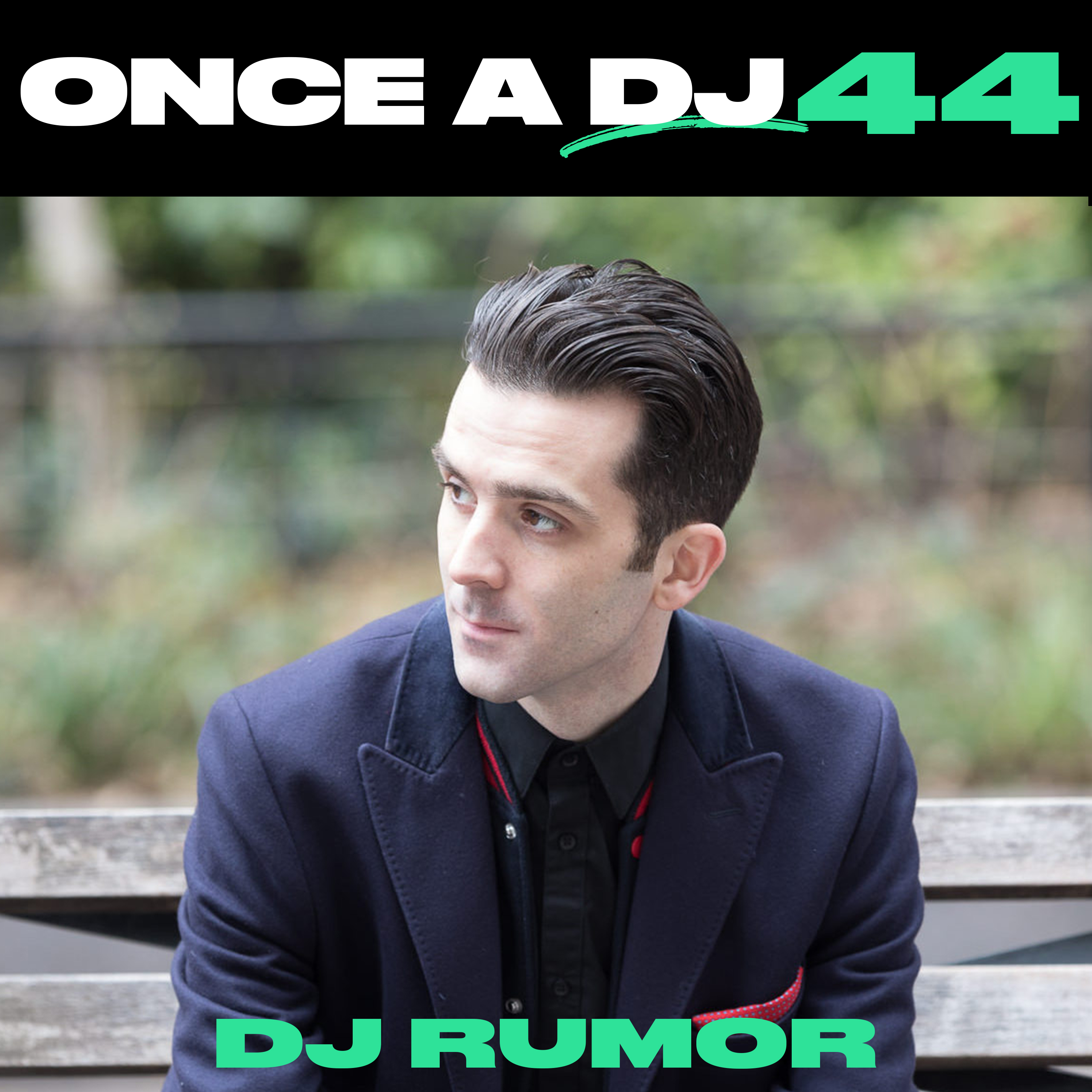
DJ Rumor takes a trip to the Once A DJ studio to discuss a background and love for breaking, and at the same time, New Wave music, and shares his journey through DJing which lands us at his current main gig which is as musical curator and Knicks/Rangers Dj at Madison Square Gardens.
Rumor shares a load of insights into lessons he’s learned and give some great advice across many areas of professional DJing, including how to DJ for sports, the importance of professional conduct and much more.
Transcript
Welcome back to another episode of Once A dj. Today we’re here with resident DJ at Madison Square Garden for the New York Knicks and the New York Rangers. D.J. Rumer, thanks for coming on the show.
Speaker B:Thanks, Adam. I appreciate you having me.
Speaker A:How are you doing today?
Speaker B:I’m doing well. Yeah. Here in New York. Yeah, Things are going well.
Speaker A:Awesome. So, as we tend to do with most guests, let’s just get into it.
Let’s get into your story and if you want to tell us where you got into DJing and music.
Speaker B:Yeah, absolutely. So born and raised in White Plains, New York, which is in Westchester county. So it’s suburb of New York of the city just north of the Bronx.
And so born and raised there. Youngest of five kids. So I was influenced from a very early age from a lot of different music. My parents were into.
They loved the Beatles, they love Sinatra, jazz, like Dave Brubeck, stuff like that. And so they were, they were into music. But then of course, my siblings, my. My three brothers and my sister, they were, they were older than me.
Not only was I the youngest, but there was like an age gap even between, you know, between me and the next oldest. So having a. Oh, like seven and a half years between me and the next. Wow.
Speaker A:Okay.
Speaker B:Yeah, yeah, yeah. So like 80s music from a very early age was huge. I mean, I love Prince. I love anything from that era. 80S new wave, like just. It runs the gamut.
I mean, Stevie Wonder, I was. I loved at an early age.
And so I was learning about a lot of different music just from absorbing it from listening to tapes and CDs from my brother’s and my. And my sister’s music collection. And then of course, watching mtv, things like that. And then as I got older, I was. It was like early 90s.
Like, I was probably like 8 years old, 9 years old. And one of my brothers in particular had Low End theory. Tribe Called Quest. Yeah. So that was.
I mean, I still remember hearing excursions for the first time and just like. Right, right. Track one, you know, from there. And so that was very.
It was, it was so jazzy and funky and obviously I was very young, but it made an impression and I still feel it to this day, like, just like what that was like to hear Tribe and then that De La Soul. My brother loved Digable Planets. Just a lot of New York based, you know, Pete Rock and see how smooth. Heavy D, nice and smooth.
A lot of that early 90s era, the golden era, as it were.
Speaker A:Yeah, I feel like over here, I don’t know that digable planets get enough appreciation.
Speaker B:Yeah. Oh, that’s, I listen to that all the time. My brother was a huge fan.
Speaker A:Yeah.
Speaker B:And, and, and it’s funny because like that was pre Internet. Like you just, you, you found out about things, you know what I mean? Like whether it was from one of his friends or what have you, I’m not sure.
But yeah, you just kind of absorb it as you go along. Yeah. So like that was, that was kind of like the early stages of me really getting into hip hop.
But yeah, so as I got older, probably like 12 years old, that’s when I was getting in.
Yeah, that’s when I bought Nas, Ilmatic, Biggie and like all like the main, like that whole era of whether it was, well, Mobb, Deep, Gangstar, I mean that’s then eventually, a little later, Big L and, and stuff like that. Then I got into like underground hip hop in the late 90s, but I’ll get to that. But yeah, so I was, but this is all before I was even DJing.
So I was just, I was just getting into the music as, as a fan.
Speaker A:And can I just ask then, do you think that when you’re living in the thick of the epicenter of kind of where it’s from, do you think that that music at that time resonates differently?
Speaker B:Yes, I mean, 100%. 100%. I mean I was not in New York City itself, but I was very close. I mean it’s literally a 30 minute train ride.
If you take the express train from White Plains, it’s right there, it’s like 20 minutes from the Bronx, I mean, and my parents are from the Bronx and I had a lot of family growing up in the, in the Bronx. And so there’s a very, there’s a New York City connection in my family, like very deeply rooted.
And I was going there all the time as a kid taking the train down with my parents or just me and my mom and I just loved it.
Like I was, I mean everything about the energy of the city and, and so that translated very much so to being into so much of music that was created there. So it made sense. I probably wasn’t as aware of it at the time being, you know, just during that, that time period.
But in retrospect, for sure it was, it played a role. Yeah.
So like I was getting into all that music, but again, simultaneously, I love, like, I remember one of my really good friends, still a really good friend, was a rock like 90s rock Alternative grunge fan. So he was into, you know, whether. Whether it was Stone Temple Pilots and Nirvana and all that stuff, but even more avant garde stuff.
So I was absorbing stuff from him. I mean, I was more of a hip hop fan than rock, but I was still very much aware of that world. And R B, I love 90s R&B. And so I was really.
It was a, it was a great time. The 90s were really truly a great time. I mean, obviously it’s when I grew up, I’m going to say that, but. But that was really cool.
in:Speaker A:Yeah.
Speaker B:And final. Yeah.
Speaker A:Do you think that the. Because I, I mean I’m what, a year older than you and I feel the same about 90s music. I think there’s so much amazing stuff like over here.
It was so say like late 90s Brit pop and indie were absolutely massive.
Speaker B:Yes.
Speaker A:The country was doing quite well economically as well. So you just. There was this kind of all around sort of good feeling. I think maybe that’s just because of the age I was.
And you’re starting to get disposable, no responsibilities. Yeah, but yeah, it does seem to me. I don’t know if it’s as well because there was just lots of money in the industry as well.
That there was the opportunities.
Speaker B:Yeah.
Speaker A:For all this, you know, sit like the profit margins on CDs and CD sales were huge. Maybe that was something to do with the, the sort of quality and the money that was spent on production and stuff like that.
Speaker B:that last era, I guess, early:You know what I mean? Like and, and, and how we consume music and those, those kind of things.
Speaker A:Yeah. I guess what seems from my sort of point of view, it seems like happening.
s, early:But it seems like at that point, like the advances that were thrown at hip hop artists, sort of commercial sort of rap artists and stuff at the time were huge.
Like the money that was going around, sort of Bad boy Neptunes, that sort of world, in particular G Unit, there was just so much money in rap at that time as well.
Speaker B:Yeah, yeah, definitely it was. Yeah. And then of course there Like I was saying before about the underground hip hop and that was, that was kind of its own thing and.
And I was just such a huge fan of like the Raucous records.
Speaker A:Yeah.
Speaker B:And Most Def and Farrell Manch. So like me and my friends were getting into that. But that was, that was around the time when I started DJing.
So when I once I bought turntables and so it kind of went hand in hand and in terms of loving that music and then buying the 12 inch singles and getting into it in that, in that way.
Speaker A:So being in kind of like a satellite of New York City, was. Was it hard to start getting gigs and things like that or like did, did you go into.
It was the sort of access point through school sort of stuff or like how did DJing sort of evolve?
Speaker B:Yeah, so at first it was. I was a bedroom dj, just scratching, trying to make.
I was very obviously like every, every dj, not very good at first, but started buying records all the time and going into. I’ll never forget getting my first turntables at place called Music Factory in the Bronx on Fordham Road.
And I still remember it like it was yesterday.
I was like, I remember going down these steps and where, where, where they sold the equipment and the records and it was just like a whole, just a whole other world that I was like really excited about getting involved in. So from there, once I was started buying the records, it was again, I was really just trying to hone my craft and learn.
And then eventually, yeah, I would do little parties here and there, local stuff, nothing crazy. And then so eventually what some of my first. I guess some of my first gigs were, but certainly kind of past that point.
Once I started at least getting a little bit better in terms of actually mixing. I got into the B boy breakdancing scene.
Speaker A:Right.
Speaker B:So as a, As a. As a dancer. So I always loved to dance like as a kid. But then I started getting into breaking and you know, I just got into the scene. I.
We would go down to the city and go to battles and like this whole. It was a. It was an underground thing.
And so that whole world definitely impacted my understanding of the samples and the funk and soul and disco and where.
And jazz and rock and you know, whether it was just runs the gamut where that opens up a whole lane of different styles of music from the 50s, 60s, 70s, 80s and a lot of avant garde music. So that’s what got me into heavily into. Because of the B boying scene. Because they would dance to the break beats.
Yeah, that emerged from that time in the Bronx and that whole the classics Jimmy Caster bunch has just begun. Give It Up, Turn It Loose, James Brown Apache, Incredible Bongo Band, plus like a whole bunch of other lesser known records. And so that was.
And I would watch VHS tapes of breaking battles from all over from Cali and England. Actually, there were some, some ones from, I remember had a VHS tape from there. So that’s. That’s what kind of propelled me into that world.
And then I started actually DJing battles. Like breaking, breakdancing competitions.
Speaker A:That’s an interesting one.
Speaker B:Um, yeah, because.
Speaker A:aking battles probably around:Speaker B:Okay.
Speaker A:And what I found with it is I was going to them and my assumption was I would just be playing the, you know, the classics. Like you say the Apaches, the Jimmy Caster bunch, Babe Ruth, things like that.
Speaker B:Yes, yes.
Speaker A:And when I came to the battles I played at, that stuff wasn’t that well received. Okay, it was to an extent, but. But those ones, those guys just wanted like really hard, sort of 130bpm.
And it was this kind of comes into something that I think is really interesting now about breaking with it becoming an Olympic sport. Because we’ve talked on this with a couple of people about how it’s kind of maybe shifted where people dance less to the music and more to the tempo.
Yeah, I found it really, kind of really hard to know how to DJ for B boys. Like, were you good with the classics or was it kind of evolving when you were doing it?
Speaker B:ing some battles, it was like:Around that era. So, yeah, so the classics were very much still a part of the vibe that they wanted. And plus me being a B boy and I was always into like top rocking.
I wasn’t too much into like doing crazy acrobatic stuff. I could. I couldn’t do much of that, but I just loved the actual dancing.
Like, so that lended itself very well in terms of just knowing those, those songs and trying to find like, I remember LTD Love to the World. I remember finding doubles of that. And it was. If. I’m not sure if you know that record, but it’s. It’s such a.
It’s a great breaking record and it has a break beat that you need doubles of because, you know, you got to rock it back and forth.
And so that kind of got me into Finding those kind of, those kind of records and that eventually, I mean, that’s still to this day, that whole vibe is still some of my favorite music to spin.
Speaker A:Did it make you think about arrangement in a different way, do you think? And like it must be interesting like being a breaker and thinking about how rhythm goes through, through someone as well.
Speaker B:Yeah, that’s a, that’s an excellent question actually. I mean it probably was a factor without me even knowing it.
Just because if I wanted to keep a certain tempo from say 110 to 120 because it’s not too fast where you’re going to throw the dancers off by playing something, whatever 140 beats per minute or going too slow at something 85 beats per minute. Now granted, that was still. Those are still very early days of DJing for me. So I wasn’t as much into BPMs per se.
But that came a little later when I started arranging things more by bpm. But I just, it was more of a instinct, like a feeling, okay, this is a. I can, I can dance to this. This will work for them. Yeah, yeah.
Speaker A:Like almost like an empathy.
Speaker B:Yeah, for sure.
Speaker A:So where did you move on then from the break in?
Speaker B:Yeah, so eventually I. Well after graduating high school, I eventually moved to the city.
I moved to Manhattan, went to college down here, graduated Hunter College in the city. And yeah, so my early years in the city trying to find like I didn’t have like a set plan. It really was.
ing in, but certainly by like:This, this is before social media and things like that. Like I eventually just hit the. Hit the ground and went to different venues and gave them mix mixtape, mix CDs. And I would introduce myself me.
Like, hey, like I only knew. I mean I knew a few people in the city, but like I was, I think I was the first out of all my friends to move to the city. So it was kind of like.
It was definitely. It was different. I mean, obviously growing up near it is. Is not exactly the same as living in the middle of the city. So it was definitely.
I had to network and eventually some of those things panned out again. Bringing vinyl. I was on the fifth floor of a walk up my first apartment.
So I was lugging three, four crates of records up five, five flights of stairs. And yeah, I don’t. In retrospect, I don’t know how I did that, but I somehow I just did it.
And I started doing some weekends and down in the Village, eventually landed a residency at one venue. And it was great. I mean, so many of the venues during that time were. I mean, granted it was 20 years ago, but it was very.
They were so musically open. It was kind of like the last remnants of the 90s New York. Even though it wasn’t the 90s anymore, you could still. You. You had to know the classics.
I mean, not necessarily like B boy classics, but I’m saying like playing Luther Vandross and playing, you know, Teddy Pendergrass and like Chic and Roy Ayers and just like really good vibes like that. And, you know, Maze and Frankie Beverly records like that. Then of course, playing the current hip hop or playing some 90s hip hop and then house too.
I mean, we didn’t even talk about house, but house music, of course, I’ve always had a passion for 90s house music and the masters at work vibe like that. That’s definitely what went in, what got me into a lot of that realm. So doing these venues, doing these.
There were more lounges that I was doing at that time and bars. And then eventually, just whilst we’re on.
Speaker A:This and just going back to the sort of networking in the sending mixes, did you have a kind of strategy where you focused on the Village specifically or were you looking at new bars or were you kind of naive and like, I’ll just go anywhere or like. Because I. I would imagine, and I may be well wrong on this, but I imagine I could see it being quite a clicky sort of thing.
These are the guys that are DJ in these bars and it. And it’s kind of hard to get in there.
Speaker B:Oh, for sure. Oh, for sure. Yeah, yeah. And that’s. Yeah. I mean, it’s something you have to contend with. It’s just you. It was.
even the early days of Serato:ld say all the way up to like:I keep saying that, but really before social media. And that whole DJs have always there’s always been a kind of a cool factor, if you will, with DJs, but it wasn’t as prevalent as it is today.
I mean, today it’s like, it’s completely different. So I think that that was an advantage because there was just. There was that much less competition and. But also you just, you try to.
You just be yourself and you, you play the music that you think fits. Right. But still incorporating your own style and what. The music that you’re passionate about. So that’s what I tried to do. And.
And yeah, it was definitely clicky to a certain extent. But. But that’s the other thing. I started meeting a lot of other DJs and it was great.
It was, it was a good time to be involved in something like that. Yeah.
Speaker A:And looking at your website, there’s a lot of kind of corporate stuff in there. Was that something that you consciously tapped into?
Speaker B:Yeah, so once I got into the. The club doing some clubs, I was also getting. People were reaching out to me to start doing some corporate events, private events, and that could be.
I mean, I was handing my card out. You know, obviously these things happen. You network and eventually you get an email or a call. And it was a.
It was a different type of DJing for sure, because you had to. You were still using your music knowledge and your skills as a DJ and reading a crowd. But first of all, it wasn’t as late. It was like.
And much shorter hours because that’s the thing. In New York, it was 10pm to 4am for all those years of. Yeah, so I had. No wonder I had to bring so many. That was bars and clubs.
I mean, that was kind of the going. I mean, give or take. Maybe it would be more like 11 to three, but certainly within that timeframe of five to six hours where you’re DJing. And.
But I liked it and I still like it. I still like doing a full night, not necessarily having an opener. I mean, if there has to be an opener, that’s fine, that’s cool.
But in those days you just learn. And that’s how you learn how to play so many different genres. Because you had to, you had.
Speaker A:Yeah.
Speaker B:In the open format World of DJing in New York at that time, you had to know how to play classics and play some R B and then hip hop, house reggae, back to classics, you know, and it’s like. It runs the gamut.
Speaker A:So something. I’m at some point gonna do a big postmortem on the things that stops me progressing more as a dj, because there’s loads of them.
And one thing that I’ve probably always been aware of is that my energy levels will steer what my music selection is. So say I’m playing somewhere and there’s kind of an hour till closing or an hour till kickoff. Kick out time if I’m tired.
I’ve definitely had a habit where I’ll start playing slightly more mellow stuff kind of subconsciously. Would you ever find those times where you just. Your body’s against it?
Say if you’d say if it’s 3am or whatever and you’ve just had a really long day and you’ve just got to try and keep the energy levels up or could you kind of separate and be like, no, this is what the people need.
Speaker B:Yeah, I’ve always been able to just kind of just get it done. Like, even if I had that lower energy, I mean, I mean these days I’m not doing as many of those late, very late nights.
I mean some, a lot of my, my work these days is, is much earlier in the, in the evening, but in that time and plus I was just that much younger. But yeah, you just, you kind of, you just get it done.
And, and sometimes all it takes is, is a group, say a new group of people who come into the club and they’re really energized and they just got there at 2:30 and you’re playing, playing something where they haven’t heard it in 20 years and they’re going crazy and then you, you feed off that energy. So that’s, that’s something that I usually try to look for.
Speaker A:Yeah.
Like as in the era when I was DJ more and I was doing local bars and doing it all off vinyl, I would be concerned about getting a load of requests for things I didn’t have. So say like I love Momo, Nemo Problems, amazing record.
But I would hold back from playing it because I wouldn’t want to get a load of shiny suit requests for things that I didn’t have because it’s like a gateway into that sort of world. Because I remember getting just told I was shit before because I didn’t have certain tunes like Yin Yang Twins.
This girl was like, oh, can you play this? I’ve not got it. She’s like, oh, you’re shit, aren’t you? And I’m just like, yeah, what else can you say?
Speaker B:Yeah, well, yeah, because if you play one song from that deviates from what you were playing before. Yeah, it can, it can, it can definitely change things up for sure, yeah.
Speaker A:Yeah. What have the crowds been like? Sort of over, sort of working around sort of New York. They’re generally all right.
Or do you get some quite rude people?
Speaker B:I mean, it’s. It’s a mix. Obviously, it depends on so much, but I would say. Yeah. I mean, there’s no perfect kind of situation.
I mean, or at least it can get close to that. But you have to be ready for anything. Whether it’s. It could be like the night.
The beginning of the night might be not going the way you want it, and all of a sudden it gets so much better. Kind of like what I was saying, whether it’s. It’s a group of people who are really responding to the music in. In the way that you want everyone to.
And that can change and it can be infectious because then other people are getting into it as a result. And then the opposite can happen, too. It starts out great, and then all of a sudden it kind of takes a nosedive. But you have to. That’s part of.
That’s part of the job, you know?
Speaker A:Yeah. I remember, yeah. When I used to DJ more.
And every now and again you’d get a request for something really good, and if you had it, it’d just be like, amazing.
Speaker B:Someone.
Speaker A:For me, it’d be like, oh, someone gets it.
Speaker B:You know, because sometimes you get quite.
Speaker A:A few horrendous sort of requests that just don’t fit the mood at all. But then when you get the good ones, you’re just like, yes.
Speaker B:Yeah. Oh, no, no, definitely. Definitely. And that’s. And that’s the thing you were asking about, the corporate events.
I mean, that’s the really cool thing about a lot of those, because I was getting hired, and I still get hired to do a number of those kind of things because of the fact that I know how to play music that’s not just the top 40, like, not just predictable whatever, like just cookie cutter kind of music.
I’ll play New Order and I’ll play Blondie, and I’ll play Depeche Mode and the Cure and Tribe and De La and, like, you know, so it’s like, that’s what they want. And sometimes it’s more background music. It’s not necessarily dancing, but per se, or it could be background. And then maybe the last hour will be.
They’ll try to get a dance floor going. But when I do those events, I definitely think the music nerd in me has helped. Being such a music nerd, being such a.
Like, just being so into the classics has helped Me, because people can know that I do that and it’s not going to be a predictable time type of set.
Speaker A:So something that I find quite interesting now is about consumption of music and how it’s so different. People don’t get handed tapes and there’s not a lineage. People go on YouTube, Instagram, whatever, and it’s odd, it’s their algorithms.
Everyone gets such a unique sort of musical journey, musical spread. If you like, have you done any corporates where it’s been like loads and loads of 20 year olds?
And if so, is that like a really hard sort of crowd to play for or can you kind of still just do this?
Speaker B:No, I mean, a majority of the events that I do are more mixed. It’s not just one, one demographic necessarily. But yeah, I mean, thanks to Serato, that’s the great thing about that.
You have the music on there and you read the crowd and if you have to play, cater to that audience of like, of that kind of demographic, then you got to do what you got to do, you know what I mean? And you’re there to do a job. So you don’t want to get too artsy about it either. Like, oh, this is the, you know, this is the.
Even though I may think that the best music is this certain sound, not just because I like it, but I think it, it plays well to the room. But at the same time you have to do what you have to do. So it’s, it’s kind of, it’s a, it’s a balancing act.
You really, you have to know how to, how to navigate that. And it’s not easy. That take, that’s, that’s experience. Like you need to just.
You just need to be in those situations multiple times to know how to navigate it. You can’t just, you can’t just do it out of, out of, out of nowhere.
Speaker A:Yeah, it’s so my old boss in my last sort of office job, she used to say I was good at reading a room and I wonder it with that.
It would just be like, even if I’m just on like, like a multiple person group sort of dialing phone call, like a conference call, I’d still kind of be able to gauge how much I could have a laugh with people and what tone I had to take and stuff like that. And I wonder if that, if. I wonder if kind of part of that is coming from.
You’re in the middle of DJing somewhere, someone comes up and talks to you and you’ve just got to immediately gauge where they’re at. And process. If they’re coming to you with a request, you’ve got a process.
Say if it’s at a wedding, for example, you’ve got to kind of process and try and work out how important this request is, because is it going to derail everyone else? And you’ve got all that. You’ve got to kind of almost be a bit of a. Is a politician or like, you’ve got to be like bureaucratic.
I don’t know exactly the right word, but you’ve got to make these kind of like reading between the lines sort of decisions.
Speaker B:Yeah, definitely. And you need to make them quick.
Speaker A:Yeah.
Speaker B:Especially these days where it’s like the whole quick mixing thing and where you’re playing some DJs or. I mean, I’m not. I quick mix, but I try to. I try to let songs breathe when I can. So you don’t.
That’s another balancing act where you want to keep it moving and you want to keep the vibes going. But you. You don’t want to play 10 seconds of a song and then people turn around, say, oh, why’d you. Why’d you. So, yeah, so.
So trying to do that and play a song that someone really wants to hear without losing the crowd. You have to make those decisions in real time. It’s like.
Speaker A:Yeah. And you don’t have time to explain to them that it’s not necessarily going to be the next song because you’ve got to get it in context.
Because you’re too busy.
Speaker B:Yes.
Speaker A:Even if you’re not quick mixing, you just. You’ve got to kind of have your area. You’re trying to kind of get your beat matching right. And then you’ve got to get to the right mix point.
And at the same time, you’ve got to try and kind of talk to this person and manage their emotions and their wants and their needs.
Speaker B:Oh, yeah.
Speaker A:Pretty difficult stuff.
Speaker B:Yes, for sure, for sure.
Speaker A:So from there, then, did the corporate stuff build up to the MSG work? Like, how did you. How did you get that? And just. Sorry, just.
Just for any listeners that don’t know, when we say msg, we’re referring to Madison Square Gardens.
Speaker B:So this is like still in the:Like, I was actually dj, like a couple fashion shows in the city. And so it was a whole world. It was. There’s just so much work to be had outside of just clubs. At least in New York. There Is So I was.
I was definitely open to those. Those experiences and working in that realm. And then eventually I was doing a lot of mixes.
s, early:But then eventually obviously on SoundCloud and MixCloud. But yeah, like there was a certain era where I was just pl. I was creating so many mixes and they’re still. They’re still there.
Most of them are still up there on SoundCloud.
Speaker A:Yeah.
Speaker B:And so I was doing like. I did like a whole Stevie Wonder mix. James Brown, 80s New Wave James Brown.
Speaker A:One’s had over a million plays, hasn’t it?
Speaker B:Something like that.
Speaker A:Yeah.
Speaker B:Yeah. And yeah. And like again, that’s like totally just from my B boy days, like learning about the breaks and.
And some of his just everything, all the classics plus lesser known records by him. And yeah, and I was doing like. I was. I did it. I was doing yacht rock mixes way back in the day. I know that’s kind of. Yacht rock is like a thing now.
But that was still kind of like early days of that being a thing is like 11 years ago. I think I put that out. I love all that stuff. Steely dan and Michael McDonald, you know, it’s just so good.
So, yeah, so basically me playing all this kind of music and I was putting mixes. I also made some mix CDs. So I had a mix CD that I would just hand out to clients or. Or whoever, prospective clients.
And eventually, yeah, eventually I got an email, I believe someone heard it that was associated with the Garden. And then they. They were doing guest DJ spots at that time. So essentially to do a halftime set or a pregame and a halftime to rev the crowd up.
, so this was like the end of:Speaker A:Is to go in there live, right?
Speaker B:Yeah, go in there live. And I had like a turntableist angle. I was doing a lot of scratching and a lot of kind of live blends like acapellas over different beats. And.
And this is also very much the kind of mashup, the height of the mashup era. So playing. Yeah, a rock record and then into 90s house into back into hip hop, like kind of all over the place.
I mean that still exists today, but this was early, relatively early days of that being on that level. So yeah, so I did. It went great. It was great. It was surreal obviously, because I’m a life, lifelong fan of both teams, Knicks and Rangers.
And this was a Knicks game.
Speaker A:And okay, so, so just there. Can I just ask then?
Speaker B:Sure.
Speaker A:What would have been the biggest typical audience you were playing to before that point?
Speaker B:Oh, like how many people?
Speaker A:Yeah, yeah. Say like I don’t know, a thousand, Couple of thousand.
Speaker B:Yeah, if that. Yeah, something like that.
Speaker A:So yes, at a Rangers game. What’s the sort capacities? About 18, 20, something like that.
Speaker B:Yeah, it’s around there.
Speaker A:Yeah, that’s a big increase.
Speaker B:Yes.
Speaker A:Like.
Speaker B:Yeah, for sure, for sure in that.
Speaker A:But you just kind of, kind of blur into one or are you like, oh shit, there is a lot of people here.
Speaker B:No, I mean definitely it took, it took me a little while to fully get used to it. But this was again, this was, this was just a, a guest DJ spot. This is just to.
ould come along at that time,:And then in:There’ll be those times where I’m featured, but more often than not it’s behind the scenes work and I am curating the music but in coordination with everything else that’s going on with the video screens and announcements and what have you. You know, it took me a while to really get used to that and understand the nuances of everything.
Speaker A:So are you kind of, are you programming the music then along and is that like part of a bigger team?
Speaker B:Yeah, so it’s, it’s a mixture of like when the door is open and I start DJing, that’s just DJing. Like I’m, I’m spinning for half hour, 40 minutes. But as the game goes on.
Yeah, we, there’s, there’s just certain things that I’m taking a director’s lead to come in. I’ll tell you what, it’s a lot of music beds, a lot of instrumentals. I mean, yes, I’m playing a lot of songs as well, but I’m saying.
But I have to be ready with a lot of instrumental because different, there’s an announcer making different announcement. This is like between different points of the game, whether it’s between the quarters or halftime or what have you. So.
And I’ll Play like, classic funk, you know, instrumentals or DJ Premier Pete Rock instrumentals and things of that nature. So that’s. That’s fun. But in terms of the actual songs that I’m playing. Yeah.
I have to be aware of what’s going on in the game to get the vibe if it’s a celebratory moment or if it’s more of a. If it’s a moment that’s kind of a critical point of the game. And it’s. It’s more dramatic, if you will, so it’s not as celebratory.
So I have to have all these different ways to go into and different playlists that I’ll set up beforehand. And then in real time, I’m making decisions.
Speaker A:Yes. So rather than reading the audience, you’ve got to be reading the game.
Speaker B:Yeah, pretty much. Pretty much, yeah.
Speaker A:So you’ve got to kind of know your sport, then.
Speaker B:Yeah, yeah, definitely. I mean, that. It doesn’t hurt for sure.
Speaker A:Has it. Has it opened up any sort of unexpected doors for other types of DJing that you. That you would have never thought of?
Speaker B:Yeah, I mean, it’s. It’s definitely. I’ve had the opportunity to work a lot of different events.
I’ve done some other, like, I’ve worked the US Open, tennis and things of that nature out here in New York and a few other kind of sporting events. But, yeah, I mean, it definitely. It’s a very specific lane. But you’re still utilizing your music knowledge. It’s not as different.
I mean, yes, it’s different, but it’s not drastically different in terms of utilizing, like, just the years and years of consuming music. You can. You could do it in that. In that. In that way, yeah.
Speaker A:So how does the music differ for a tennis crowd, then?
Speaker B:Not. It’s just. It’s, it’s. It’s just like upbeat, you know, pop, and then playing, like some 80s classics. Pretty similar. Pretty similar, yeah. Yeah.
It’s not. Not too different.
Speaker A:When you got that sort of assignment, as it were, would you have then been like, sort of going to. Have you got people that you’d go to. To go, what sort of stuff do I need to do for tennis? Or do you just get. Get there and you just have to read it?
Speaker B:It’s a combination of things.
I mean, I try to, basically, before any event, I do, whether it’s something in the sports realm or if it’s just something private event, corporate event. I mean, I. I’m One of those DJs that I prepare a lot I know, I know. It’s kind of like the cool thing to be like.
I just, I just read the room and that’s it. Yes, I read. Yes, I read the room. But there’s a lot of planning that goes in beforehand.
I mean, I make playlists that I think will work with certain events, but then the event itself that I’m working, I try to work with the client and know not only what they’re looking for, but what they’re not looking for. And certain John, I’ll be like, is there a certain genre that you want to stay away from? Please let me know. And I’m happy to accommodate.
And I always like to have more information than less. And yes, it’s still great to all of a sudden think of a song at the last.
While you’re, while you’re DJing in the middle of it and oh my God, I never even thought that that would work. That’s great and I will do that. But I still like to. I still like to have a lot of things prepared because that’s just the way.
Even in my vinyl days, I was doing that. Like I was. I’m still getting a lot of records. I put them. I’d have the BPMs labeled very clearly on the, on the upper right hand corner of the vinyl.
And as I’m going through and oh, this record, I have doubles of it. All right. I’m gonna, I’m gonna have to put two records on and now go back and forth.
So I just think that kind of, that comes with years of experience.
Speaker A:So, yeah, it’s another. When it comes down to my big post mortem, that’s going to be another thing I never really, I’ve never really practiced.
I never really sort of beyond sort of selecting my records to go off and play somewhere. I didn’t really think about it too much beyond that.
I know like John first, who I had on here, he talked about, like he would think about the D, like the running order of a night and who’s the DJ that he’s coming in after and how he’s going to kind of mix out of what they do and then how he’s going to set it up for the DJ that comes after. And that’s like a level that I just. I was far too like tunnel vision for that sort of awareness.
Speaker B:Yeah, yeah, yeah. No, it’s, it’s, it can be, it can be daunting because it’s like your mind is going in a million direction.
You’re trying to, like, you’re trying to do a lot of things simultaneously and.
But again, you just, you do it each, each event that you do, every party, it all, I think it accumulates, whether you know it or not, it’s all helping you as you go forward. No matter what kind of event it is, it’s like it’s, it’s all going to be helpful. Even the gigs that don’t go well, you learn from it. Yeah.
All right, well, I’m gonna, I’m gonna fix that for next time.
Speaker A:Yeah. And I mean that, that sort of same thing lends itself to experiences in life, doesn’t it? Within reason, yeah.
You know, a lot of things that don’t go as well as we’d hope, we still learn something from them, even if it’s just not to let yourself get in that situation again. Yeah. So day to day then. So also week to week, what’s your kind of split of doing the sort of MSG work versus going off and gigging?
Is MSG effectively like a full time job?
Speaker B:It’s. Yeah. I mean, it’s not a, it’s not a full time job, but it’s definitely during the season.
So between September and, you know, the summertime, it definitely, it takes a lot of, a lot of my time for sure, but I still work a lot of other events and completely outside of the garden and mixture of doing some nightlife here and there, but certainly more of a focus on the private events and the corporate events. And so it’s a nice balance. I mean, definitely depends on the time of year.
I know December is always very big because I’m doing like holiday parties and it’s the middle of the season, so there’s a lot going on in, in months like that. Yeah. But this.
Speaker A:Yeah.
Speaker B:And then so it just, it kind of, it’s, it’s all over the place. I mean, it’s, it’s definitely a unique type of schedule, for sure. But yeah, it works out well.
Speaker A:I guess it must be nice knowing that you’ve got that kind of summer break where you can just kind of. Well, I don’t know. Unless you end up, end up doing loads of sort of summer parties and festivals.
Yeah, but just like having that break from that specific sort of side of DJing must be good.
Speaker B:Yeah, no, for sure. It’s always, always nice to have some time off and kind of recharge the battery, as it were.
Speaker A:So amazing. I think we’ve covered a lot of stuff there.
Have you got any one piece of key advice that might be something that people might not necessarily think of which is a key to kind of operating as a full time DJ around corporate and events and that sort of thing.
Speaker B:Yeah, I would say to show up on time, it’s the little things. You show up on time and being respectful and being courteous and responding to emails.
I mean this is all like non music things, non DJ things, but it goes a long way. And just being professional, that’s kind of says it all, being professional.
And then on the music side, like, like I was saying before, being prepared, knowing your music, I mean that takes years and years obviously and not everyone’s gonna have that. That like the lane that I’m in, I’m kind of the last of that generation to learn on vinyl.
And of course, yeah, I’m from New York, so I definitely come from that school of classics and R and B and funk and soul and like all that stuff. And so not every DJ is going to be exactly in that same, those same genre, working with those same genres.
But no matter what you do, no matter or if it’s.
You just play whatever, whatever kind of genre, just being prepared and being confident with what you can bring to an event and all those things combined I think help. They help out a lot. And of course networking and all those things help, I think, and they matter for sure.
But it’s one thing to network and meet people, but in order to keep working events and having multiple things going on, it’s important to have some of those other things going too.
Speaker A:Amazing. Where can people find you online?
Speaker B:Djrumor.com jrumor on Instagram, soundcloud, mixcloud. Just search dj rumor, dj r u mor. Yeah, yeah. And yeah, you just. Yeah, all those, all those places.
Speaker A:Amazing. Awesome. Well, we’ll let you get back to your day and thanks very much for your time.
Speaker B:Adam, thank you so much for having me. I really appreciate it.