
Paths of Rhythm is brought to you with support from vinylunderground.co.uk – take 10% off your next order with the code POR10 and free UK shipping on orders over £100
Paths of Rhythm is a Remote-CTRL production. If you’re looking for audio or video production, then check out https://remote-ctrl.co.uk to see how they can help.
Other ways to support the show
- Follow the show on Spotify or Apple Podcasts
- Any feedback or questions? Hit up https://www.instagram.com/pathsofrhythmpodcast/
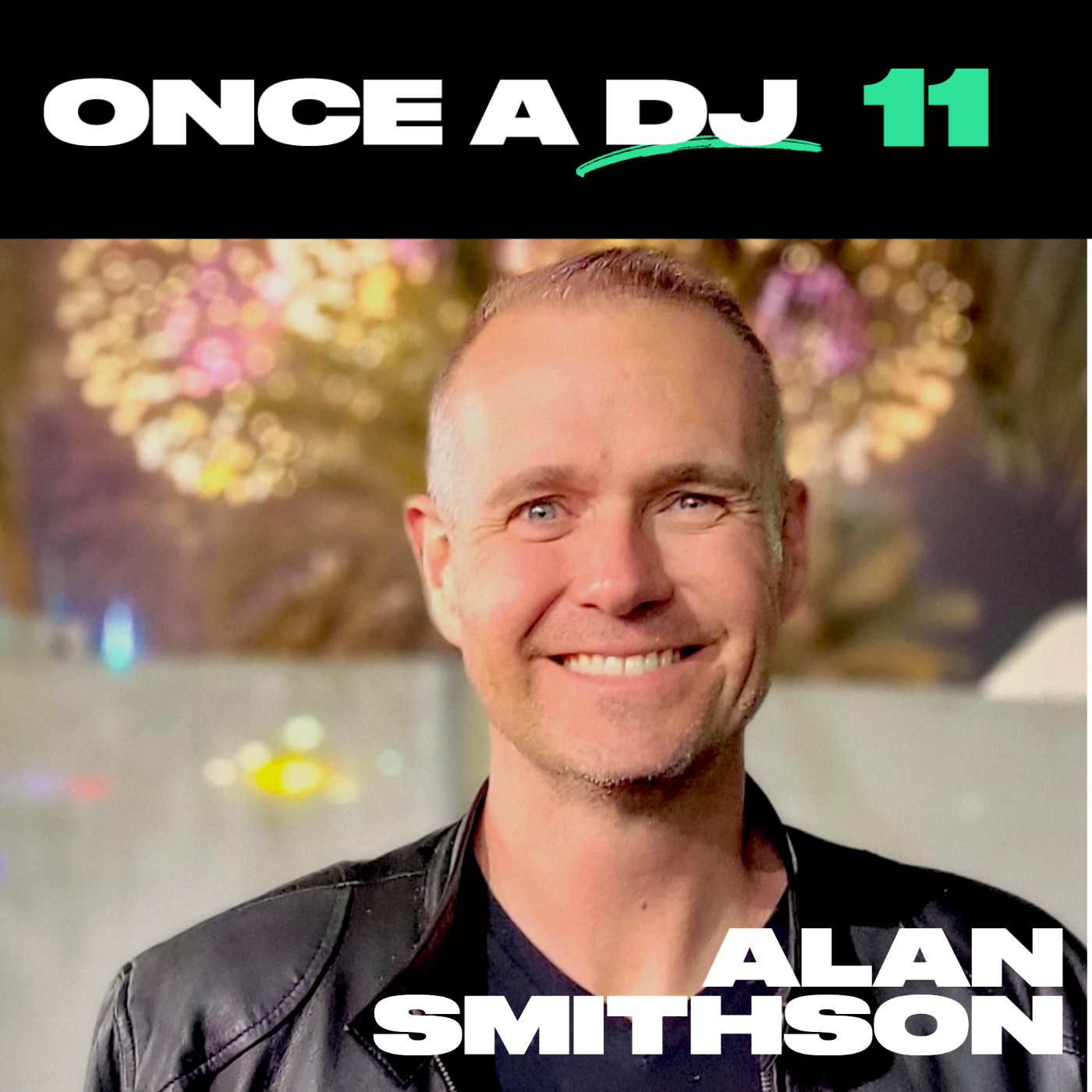
This week we talk to Alan Smithson, founder of MetaVRse about his journey through DJing, into tech, and everything in between. He’s played the biggest clubs on the planet, and developed hardware for the biggest DJs. We look at how the state of AI and how it can benefit DJs, and why we should be kind to robots.
Find Alan online at: LinkedIn/Instagram/Twitter
Got feedback or suggestions for the show? Get in touch on the Once A DJ Instagram page.
Transcript
Welcome back to Once A DJ.
I’m here today with Alan Smithson, DJ innovator, entrepreneur, and founder of tech futurist company MetaVRse.
We’re going to look at how he built a career DJing and had some of the coolest gigs on the planet, and then how tech, business and DJing have all benefited each other along the way.
So thanks for coming on today, Alan.
Alan Smithson:Thanks so much, Adam.
I’m very excited.
You know, life after DJing is, is interesting.
You know, my whole life was tied up in DJing and even when I got into technology, it was DJ technology.
And so when I abruptly ended that and moved on to a different world, I mean, little things that you don’t think of, like I have to go buy a suit because I’m dealing with business people.
I didn’t even own a suit.
So that was a challenge.
Adam Gow:Yeah.
So how did you get into DJing in the first place then?
And we can have a look at that sort of timeline.
Alan Smithson:Yeah, I mean, it goes way back to high school.
I, I used to have a cassette player with two cassettes and I used to record the radio show overnight.
And then I would record its one cassette and then I would dub it over to the next one and try to get rid of, you know, try to get it as close as possible to, to seamless and try to make a mixtape for people.
And, you know, take me, oh my God, it’d take me hours and hours and hours of trying to go tape to tape to try and make it seamless.
And I’d get rid of all the ads and rid of the spam and the talking and then make a mix and then I would, you know, once you have one, you could just duplicate it, right.
So I’d make a bunch of copies and I literally hand drew on it like Star Productions, you know, and I put the, I’d make a little case for it and I would hand draw all of these things on a Maxell, you know, cassette tape.
And so that was like back in high school.
And then I started DJing, like lunch hours at high school.
And then when I went to university, I was a, I was a drummer in high school.
And then when I went to university, I was kind of like, oh, well, I’ll just keep DJing.
And I went into the bar, the local on campus bar called the Keg, and I got a job as a bouncer.
And I did that for like, oh my God, not even 30 days.
It was brutal.
I was definitely not the right person to be a bouncer, but One night I was very fortuitous the DJ didn’t show up.
One night just didn’t show up.
And they had all the music there and all the DJ stuff and they’re like, does anybody know how to use this stuff?
So I jumped right in.
I mean, I didn’t really know how to use it.
I just guessed and I made an impression and played some really great music and threw a party and they offered me the job every Friday.
And I started doing ladies 80s night at university.
And then I was good at that and drew a crowd.
And then on the Thursday, gave me the Thursday night, which is the pub.
Adam Gow:Night with the cross.
Alan Smithson:Crazy, like crazy night.
I mean we had, I think our capacity was 400.
We’d put like, I don’t know, thousand people in the place.
It was crazy.
It was nuts.
Like the things we did back then, I don’t think you could do today, but.
But I ended up DJing Thursday, Friday, and then there was an on campus club as well called the Bullring.
And I went to the University of Guelph.
And so I DJed at the Keg on Thursday and Fridays.
And then I ended up moving in with two other DJs in a house.
There was, there was four of us in the house, but two, three DJs and one other guy.
And the one DJ who owned the house, he was, it was like really good at hyping people up and playing the right songs and getting, you know, getting the crowd going.
But man, he couldn’t mix two songs together to save his life.
Like he just did the crossfade like it didn’t matter.
One was a house music and one was hip hop.
He just slid it over and didn’t care.
The other dj, Rob, he was like a technical phenom.
He could mix any two songs together, make it sound seamless and perfect Beat mix.
He taught me how to beat mix.
So I kind of got this hype, man, you know, being able to pick the right songs the right time and talk on the mic.
And I got the, you know, the skills of being able to meticulously mix two songs together in any genres.
And so I ended up DJing Thursday, Friday, Saturday in university.
And I continued doing that until I graduated to dj like their weddings and their, you know, school parties and their corporate events and ended up doing that.
And I was, I got a real job for a couple, you know, like two years I was a pharmaceutical rep, but on weekends I was just DJing as well.
And then one day I just realized I was like, holy Shit, I’m making more money on weekends, having more fun.
Let’s just do that.
And so we turned it into a full time thing and we did that for almost 20 years and we DJ’d.
I personally DJed over:Yeah, it was all, it was a lot.
Adam Gow:So what sort of music were you doing?
Alan Smithson:Well, I guess back in, you know, in university it was like Thursday night was pub night.
So it could be anything from house music to hip hop to rock music.
Didn’t matter.
It was a wide range of things.
Friday night was 80s night.
And then I did, I did a whole bunch of 80s, like ska nights and 80s nights and retro nights and stuff like that.
I even did a funk night, which was pretty cool.
I did a ska night.
I even did a big band event where it was like a big band party.
So I had to go and figure out what that was all about.
And I went, you know, it was back in the days of CDs.
So I went to the CD shop and bought a whole bunch of big band CDs and did that.
And then the club was like, at the time, it was right around the time where house music was kind of fading out and hip hop was coming in.
So I kind of started off with house and then it, you know, you go with kind of the demand of what the people want.
So we moved over to hip hop primarily at the club.
And that lasted for like a decade.
sic came back in like kind of:And in:You know, people may have seen it, if you’re a dj, you may have seen the Emulator, the big see through glass touchscreen DJ controller.
It was a giant MIDI controller.
And we invented that, brought it to market.
And it was right at the kind of the peak of the EDM explosion.
So we went to EDC, you know, New York, EDC Las Vegas.
We went to Ultrafest.
We went to Winter Music Conference.
We traveled all over the world at all the different DJ conferences promoting the DJ board, the Emulator.
And I, you know, I got to DJ at all these clubs.
So I kind of made a list.
In:Adam Gow:Yeah.
Alan Smithson:And in:It was so depressing.
I got to the end of the year.
And I was like, oh my God, what have I done with my Life?
But in:I played Ministry of Sound, I played the, you know, the Box in Ministry.
I played, I played Drai’s After Hours in Vegas.
I played a couple other places in Vegas.
I played in Miami, I played ESP space.
It just, I checked off all the list.
Right.
Adam Gow:Yeah.
Alan Smithson:I spent a summer in Ibiza in:Adam Gow:And so was this all through the, through Emulator then?
Alan Smithson:It was, yeah.
So I went from kind of doing like corporate events and weddings and like, you know, just anything that would come along, really.
We had a DJ business.
We had, at one point we had, I think 15 DJs working for us doing, you know, different events around the world, around, mostly Toronto, but then across Canada.
And then we started doing global stuff and then we introduced the Emulator and that kind of opened up a whole new world for us.
It was incredible.
Adam Gow:That was.
For anyone that’s not seen it, it’s a wild, wild sort of departure from everything that was.
Yeah, if you could Google Emulator DJ, it’s a big departure from what had been before.
What did it take to bring something like that to market?
Alan Smithson:Oh, man, it took everything I had.
When I, when I say everything, I mean like we took, we borrowed money against our house.
We, you know, it took everything and we just were all in on it and we thought this would be the future of DJing.
And, you know, it was pretty awesome, to be honest.
I mean, a giant 46 inch see through screen that the audience could see what you’re doing.
And as a performer, you could actually prepare your decks however you want.
You could have a two deck set up, a four deck setup.
You could connect it to Traktor, Ableton, Pro Tools if you wanted to, and you could perform live on a touchscreen that is of your own making.
We actually worked with Linkin Park, Infected Mushroom, Morgan Page.
We sold a bunch in Vegas, sold a bunch in the UK.
We ended up selling 500 of the units around the world to big DJs around the world in clubs and stuff.
It was used at the Emmys, it was used by Flo Rida.
It was used at ADE, Amsterdam Dance Event, A couple years.
I actually presented, I DJed at the dove Party at ADE.
I keep wanting to say AWE, which is the Augmented World Expo, which is the business I’m in now.
And before it was, you know, it was ADE, Amsterdam Dance Event.
So, yeah, I ended up playing in a place called Air, which was this crazy club in Amsterdam in the basement.
And Amsterdam’s like above or like right at sea level.
So they had to, you know, in order to go into this deep basement, they had to pump things out.
So when you went to the bathroom and you flushed the toilet, it was like a toilet in an airplane where it was, you know, sucked it out.
And they called the club Air because of that.
Oh, my God, man.
The sound system in that place was louder than I’ve ever seen.
They had a 36 inch subwoofer, so normal subs are about 18 inch and they usually double them up or whatever.
They had a 36 inch sub right underneath the DJ booth.
And they only used it for one night.
And it made people sick.
It was not meant for music.
It was actually meant to test helicopters.
So they had this big, huge.
I mean, 36 inches, 3ft.
It’s a massive subwoofer.
And it pounded so hard in such low frequencies that it would make people throw up.
So they had to scrap.
It seemed like a good idea on paper.
Adam Gow:So, I mean, yeah, you’ve DJed some incredible places.
Is there one place that’s the absolute favorite that you’d kind of go back to in a heartbeat or that you’ve just got the fondest memory?
Alan Smithson:I mean, guys, Ibiza.
There’s nothing in the world like it.
You know, Miami during Winter Music Conference is great because, you know, every DJ in the world is kind of there.
Yeah, EDC.
I never got to play EDC.
I got to play kind of backstage and show demos and stuff, but I never got to play a stage.
But if you ever got a chance to play EDC, it is.
It’s like Disneyland for adults.
It’s really, really magical.
There’s 300,000 people that go.
It starts at 7pm and then it’s in the NASCAR Speedway in Vegas.
And that goes all night.
Another one that I never got to go to was Tomorrowland.
But Ibiza for me was the ultimate highlight.
I got to play at Eden at a club called Eden.
It’s not there anymore, but it was like a.
You know, it was a super club.
It was 5,000 people.
I also played at Government in Toronto.
Government was voted best club in the world a couple times.
It was special.
It’s not there anymore.
It’s now condos.
Ministry of Sound was.
Was interesting.
Wasn’t my favorite gig.
The Box is super loud.
If anybody’s ever been in the Box, it’s like really fucking loud.
Like, when you’re standing there looking at the dj, the two walls beside you, the entire walls, top to bottom, are speakers.
Front to back, top to bottom.
Like, it’s so loud.
And what happened was because we’re on a glass touchscreen with a projector, it was shaking the out of the screen so you couldn’t.
It was impossible to dj.
It was like every time the bass hit, I couldn’t see the screen.
So I was just kind of guessing on a lot of it.
Adam Gow:Yeah, because the screens must be really sensitive as well with the movement.
Alan Smithson:Yeah, well, the movement didn’t cause any touches or anything.
It just blurred it.
Right.
Like, imagine the vibrations of a screen and there was no isolation between that and.
And actually the interesting thing about the booth in the Box is it’s made it a poured concrete.
So the booth is like 2ft thick across and like the whole booth is separated from the club by a big concrete barrier.
And your decks are on this giant poured concrete system.
And the sound system for the booth is probably the equivalent of most, like, club sound systems.
It’s got five speakers above you and then subwoofers all underneath this concrete thing.
It’s just the sound system in the booth is louder than most clubs.
It’s wild.
Adam Gow:So what was next then, in terms of Emulator?
What.
What do you think it was that stopped that?
Becoming kind of like a high street kind of mainstay of DJ tech.
Alan Smithson:Couple of things, I think one, DJs love physical knobs and faders.
I mean, we love tweaking stuff.
And a touchscreen is a totally different interface.
It’s a different thing.
And we were really early.
ke, we launched that thing in:Yeah, so like, you know, we were really early.
We were, I would say, inexperienced would be a good way of doing it.
I mean, we knew about the DJing world, but we didn’t know about distribution and, you know, manufacturing.
We had to make the software, the hardware, and distribute it around the world.
Imagine we shipped 500 units around the world of a giant glass touchscreen and none of them broke.
We brought it up, bringing on an investor who, unbeknownst to us, only had one motivation, to kind of steal the company and take the company hostage.
And so he ended up doing that and we lost the company and everything.
So that happened.
And yeah, that sucked.
I wouldn’t recommend that.
Adam Gow:So what was next after that then?
Alan Smithson:Yeah, so I guess in:It’s in a Boy Scout camp.
You gotta drive for like an hour into this camp, and there’s no Wi-Fi, no cell service kind of thing.
And the interesting thing about it was, it was, you know, it was a tech conference, like an unconference.
So you go there, there’s no technology, but you’re with a bunch of tech people.
So there’s entrepreneurs and investors and researchers and just really smart people building tech platforms.
And I performed, did my thing.
You know, people.
You know, I got people to draw on it.
It was super cool, right?
Because, you know, everybody wants to touch the big giant, see through touchscreen.
So what we did was we built a drawing app into it so that, you know, when girls came by, I wanted to write on it.
They could let them draw on it, and they draw little hearts and, you know, put their name or whatever.
So I let people draw on it.
And then after that, my buddy’s like, listen, you got to come and see this thing.
It’s crazy.
And we went into a little tiny tent in the middle of this forest, and they were doing a demo of this new thing called virtual reality.
And it was an Oculus DK1, which is a giant box that you stuck on your head.
It was like.
It was like literally taking a book and sticking it in your face.
And it had big headphones.
And I remember sitting there, and he put me into it, and then all of a sudden it turned on, and I was like, whoa.
Oh, my God.
I was.
I was standing in a concert, and Beck, you know, the guitarist Beck, he was standing on stage playing, and I was in, like, this giant, you know, venue, round venue, but I was up in the crowd, and I was like, holy crap.
And then I remember the moment where somebody pushed my shoulder and turned me around so I could actually see behind me and around me.
And it was that moment in VR where you’re like, whoa, I can look everywhere.
And then they pushed a button and put me on stage, standing next to Beck, like, right next to it, next to him.
I’m like, Beck’s standing there.
I’m looking out in the crowd, and.
And I had this kind of aha moment where I was like, this is going to be the future of human communications.
You know, we had radio.
Well, we had telegrams, and then we had radio, and then we had television, then we had the Internet, Then we had phones.
And VR just seemed like the natural progression to me.
And so, very shortly after that, like, that was in June, and it’s September, I got fired from my own company and decided to build a company in VR.
And the first thing we ever shot was the Groove Cruise, which is a giant floating festival.
If anybody gets to play the Groove Cruise, that is, like, I’d say that’s better than every other festival because you’re on a cruise ship for three days or four days with the artists.
Like, you know, you’re standing in line at breakfast in the morning, and, you know, Data Life is standing there next to you, and you’re just like, hey, what’s up?
You know, there’s no egos, there’s no hey.
There’s no fandom.
It’s just like, oh, wow, it was a great set last night.
Pass me the bacon.
So it’s a super cool thing.
We got to film it all in VR.
And then we called the company Shock Creative at that point.
And then a year later, we changed the company name to MetaVRse.
M-E-T-A-V-R-S-E.com and we changed the name to MetaVRse, and we just kept building VR and AR solutions for businesses.
And that was kind of our.
That was the path over to it.
I saw VR in a small tent in the middle of nowhere, had this kind of epiphany, got fired, started a company, and here we are seven years later.
We just celebrated seven years at MetaVRse.
Adam Gow:Amazing World.
Alan Smithson:Last year, once Meta changed their name, kind of adopted the Metaverse as the future of the Internet.
So it was kind of like calling your company Kleenex.
Now everybody says, pass me the Kleenex, but I’m saying, pass me the soft tissue.
So, yeah.
Adam Gow:ook at is you wrote a book in:Alan Smithson:DJ Profits was written before then, actually.
Yeah, it was written.
Yeah.
Maybe:Somewhere on there.
Yeah.
Anyway.
Adam Gow:Okay.
And.
And that’s really good.
I mean, I just finished it, and I think just there’s so many good points in it about the business end of being a dj.
Alan Smithson:It’s like people don’t talk about it.
It’s like, you know, if you talk about the business, you’re not a real artist kind of thing.
It’s like, wait a second.
Yeah, wait a second.
Adam Gow:It’s like.
It’s like there’s an assumption that you’re just a capitalist, but even.
Even a DJ’s got to eat.
Alan Smithson:Yeah.
You got to make money.
And look, the really, you know, the super high end people get it.
Like deadmau5, for example.
The guy spends enormous amounts of money researching, building, developing his new stage shows.
Right?
Like, those stage shows don’t come cheap.
You think a giant LED cube just came out of nowhere, that probably cost him a million bucks to build that whole show.
Adam Gow:Yeah.
Alan Smithson:And then, you know, you, of course, you got to tour it to make your money back.
So a lot of DJs just see it as a paycheck and not really investing in their brand and not investing in the show itself.
You know, even people like Kygo, for example.
Kygo is huge.
And my other buddy made all the visuals for him.
And, you know, Kygo, you know, kind of hit it off.
But I remember seeing him at Coachella and the visuals were incredible, but they didn’t come cheap, you know.
You know, like, people need to invest in their brand, they need to invest in themselves.
And, you know, as a starting dj, where you’re just like trying to get gigs for free, even, you know, you’re just trying to get out and perform, it can be hard to kind of think of that bigger picture and build a business plan around your brand, your personal brand.
Adam Gow:Well, something that stuck out for me in the book I was saying to someone yesterday about it is when you talk about when you’re doing corporate gigs, making sure that your gear looks clean, your equipment looks like a professional setup.
I’ve never thought of that.
I took a supermarket shopping bag out with records the other day and I just thought, yeah, that doesn’t really.
I mean, no one could see it, but you just think it doesn’t really.
Alan Smithson:Give a massive thing, especially in the corporate world.
I mean, look, you know, when you’re.
When you’re at a house party and you got all your cables hanging off the front, nobody gives a shit.
Right?
People are just there to party.
But when they’re corporate, I mean, the difference between you getting paid, you know, $500 and 5,000 could be something as simple as just making sure that you’re neat and tidy.
And you show up, you look the part, you’re not, you know, you’re not showing up late.
You know, I was up against DJs, that they were great DJs, but they showed up late, they didn’t listen to the client, they were messy.
They showed up in, you know, in, you know, running shoes at a business meeting.
Like little things like that where you kind of had to just think outside the box.
It was like, dress for the way you want to Be, you know, paid, made, really.
And so, yeah, I took a lot of pride.
We actually made a custom.
Before the emulator, we made a custom DJ booth.
It was sick.
It was two:So we made it all custom.
And it had a curved front to it.
That curved front was super hard to make, but it was like we’d roll it in on wheels and then, you know, everything was in it.
You just rolled it in and, you know, everything was hidden.
All the cables, everything was underneath, plugged it into the wall, ran your speaker cables to whatever sound system you’re running, and you.
Voila.
You had a beautiful setup that was brandable.
So on the front we had this light, this kind of light up thing that you could put any of the company brands.
The one thing I learned about doing corporate events is that people love to see their own brand.
I don’t know why, it just is a thing.
So even when we had the emulator we used to put.
If we’d go do a corporate gig, we’d put the company’s logo into the image picker, right?
And then the middle of the gig, you could swap the image out and just put their logo up there.
And I don’t know, they just love to see it.
So, you know, once you figure out that.
And the other thing that really stuck with me, and I think this is an old guy gave me some advice.
He goes, look, you’re not there to DJ for you.
You want to DJ in your basement, go right ahead.
You’re a DJ for.
You’re there to DJ for the people paying you.
So whatever they want, you do it.
You make them happy.
And it doesn’t matter if their music selection sucks.
It’s not your party.
Who cares?
Now, obviously, you kind of have to use some sense of reasonableness because some people will request dumb shit, as you can imagine.
Adam Gow:So, yeah, and something else that really kind of stuck out for me is.
And even how you were talking about doing the pause tapes when you’re at school, it’s user experience.
So you’re.
You’re going to distribute these tapes and you want it to be the best possible listening experience for your end user.
You’re trying to make them perfect.
You’re not like, well, they can live with an advert.
You’re like, no, I want this to be the best thing for them to consume.
Alan Smithson:It was even to the point.
It was to the point, Adam, where if the beat wasn’t perfectly synced up, I would Redo it again, the whole cassette.
Because, like, I couldn’t handle that.
I couldn’t have music that was offbeat.
It was driving me crazy.
So, yeah, like, when I go to a club now and if I hear a DJ who’s playing great music but can’t mix, man, it’s so frustrating for me.
I sit there, I’m just like, I don’t even want to be there.
I want to leave.
And I’ll never forget, I went to see Avicii once in Vegas.
And, man, the concert was incredible.
Incredible, like, energy, the crowd, everything was just going.
And the DJ who came on after, there was no break or anything.
It’s not like they said, hey, goodbye.
And then, you know, it was just like, the DJ came on.
And I’ll never forget the first song he played.
He must have been his own song.
He maybe wanted to promote it or something.
But the song was made out of key.
Like, the bass was out of key of this.
Of the synths.
The synths were out of key of the vocals.
It was awful.
And I remember standing there going, oh, my God, I feel uncomfortable.
Like, and just be the song being so out of key.
And it was a long song, was like seven minutes.
It cleared the dance floor, people.
The energy in the room just dropped.
And people left.
Because it wasn’t that, you know, Avicii’s over.
We’re gonna leave.
There was still a party going, raging party.
But the music was so out of key that it was uncomfortable for people to be there.
And, you know, I learned that lesson and the really importance of key.
And actually, after that day, I used Mixed In Key for everything because, you know, if.
I don’t even know if it’s built into the stuff now, but Mixed In Key, you used to put your tracks in, it would tell you the keys, and then you could mix based on key.
And BPMs, of course, obviously.
Adam Gow:I mean, that sounds like is more.
Alan Smithson:Important than BPMs, in my opinion.
Adam Gow:Yeah.
I mean, that gig that you just described, that sounds like a really, really poor judgment call on either the promoter or the DJ to not be mindful of the.
I mean, Avicii is massive, right?
I don’t know a lot about edm, but I know of Avicii.
And to follow up with someone that’s gonna be that irresponsible, it’s pretty crazy, probably.
Alan Smithson:Honestly, what it seemed like is, like, okay, he’s the local dj or maybe the opener or whatever, you know, is the local guy.
And it seemed like he wanted to play his own song.
Or something like it just.
But maybe nobody taught him to make music that was in key.
I don’t know.
It was terrible.
But I’ll never forget that moment.
That was.
The moment was like, key is important.
Adam Gow:Well, this comes into another thing I really liked in the book, where you.
Another place that UX comes in, I think is where you’re talking about the ways to create relationships with record labels.
You’re talking about making, like, the most frictionless way for them to click and listen to your music.
Things like the file naming convention so that it’s easily retrievable.
They can know who did it as quickly as possible and things like that.
Alan Smithson:Well, you got to think back then, I mean, people were still playing on CDs.
Some people had moved over to Serato and stuff, but it was mainly CDs.
And then, you know, we kind of pivoted from CDs in Serato and Traktor to the ability to have all your music on a USB stick.
It was right around that time, and I remember, you know, DJs were still giving out, like, CDs.
And I was like, guys, you know, what am I going to do with a cd?
You know, it was starting to get to the point where computers didn’t even have CD players anymore.
And, you know, you’re like, okay, everybody’s moved on to USB sticks.
Use that.
And actually, I made.
I’ll show you.
One second, hold on, I’m gonna grab something.
I made this mixtape.
Anyway, what I did was.
You know those business card USB sticks?
Adam Gow:Yeah.
Alan Smithson:So what I did was I.
This one’s not it.
But one of the USB sticks like this.
And I had it made.
Look, it looked like a cassette and it said mix tape, whatever, you know, on the back.
And then, you know, I could write on the back of it and.
But then I could just hand these out.
I could keep them in my wallet or my pocket little.
And what I’m holding is a.
Almost like a business card with a USB stick that folds out of it.
And we use that for promo for, like, years.
And we used to make like one long mix and then we put our tracks on there.
And being able to get your music into the hands of promoters and get them to play it and listen to it is hard.
I mean, there’s millions of people vying for the label’s attention and time.
And I just read something yesterday from.
I can’t remember the guy’s name.
He works for.
Works with deadmau5.
Anyway, they’re talking about how kind of community is more important now than labels.
Most DJs are not trying to get a label, they’re trying to build a community.
And I think you have to keep with the times.
to build a community back in:No, you just went for the label and the label did your marketing and did all that stuff.
Right.
So as an indie dj, it was very hard for you to break in.
But now, you know, with NFTs being able to kind of directly connect with your, with your fans and build communities, I think that’s the future of this.
And now I don’t know how many record labels there are on Beatport, but there’s got to be thousands of them now.
And you know, and it’s not like when you used to sell a cd, you got paid, you know, a buck or whatever it was.
.:You know, even the top, top streamers in the world are not making that much money on Spotify.
So you kind of have to be there and your music is almost, it’s almost free to give away so that you can get a paid gig.
Yeah, so we’re in a different era than I, you know, that I was in before.
Adam Gow:Yeah, Communities and influences are a massive thing.
I mean, I was talking to someone the other day who he’s MD for a fairly big social media agency and we were talking about the concept of good enough because we’re not, listen, we’re not sitting in a studio right now.
You’re sitting at your end on your laptop, on the microphone.
I’m at my end on certainly not a massively professional microphone.
I’m in my dining room surrounded by washing that’s drying and some that I’ve still got to hang up.
And we’re doing this thing and it doesn’t have to be us two sat in a studio anymore.
I call the concept kind of good enough.
Alan Smithson:Yeah.
Perfection is the enemy of, of done.
And when you’re, you know, this is a problem with all artists and myself included.
You know, you write something or you build a track or you.
Whatever, it’s never finished, it’ll never will be.
But you have to ship it.
And especially I make software now.
So like eventually you got to ship it with its warts and with its bugs and with its weirdness.
Right.
So as an artist, your music will never be perfect.
And that’s okay.
And that has to be okay.
Otherwise you’ll never ship anything and you’ll never put out any music.
You’ll just be caught in this, you know, self loathing hatred of, you know, I don’t like your music.
And to be honest, good enough is good enough.
Get it out, ship it.
Yeah, and there’s a software term.
If you’re not embarrassed by the first iteration of your product, you release too late.
Adam Gow:It’s, that’s really interesting.
I mean what I was just going to mention about the guy with the social is he’s convinced certain clients of theirs to drop the investment in production and to increase the investment in like influencer partnerships because that’s really where the value is now because production is getting cheaper.
Alan Smithson:Like we have tools now that we can do joint production.
Like there, there are, you know, tools where you and I can make a song together from anywhere in the world, real time and we can work on that song together, we can master it online.
There’s mastering tools, there’s you know, online tools now.
Shit, I don’t even have to make songs.
I can just use AI.
So you know, the tools get easier and easier and more, more effective.
So the tools to create music and, or the barrier to entry to create good music is lower now, way lower.
I can go and chat, ChatGPT, get it to write me a pop song, give it, get me to write the chords.
I can go over to another program and I can have it, you know, play out the chords for me, put the song over, I can put it in any style I want and I can literally have an AI create a novel song to the world and have it done in probably.
I could probably do it in a day if I.
And that’s like when I say a day, I mean a day from not knowing any of the platforms and researching everything to a published track in 24 hours.
I’m sure of it actually maybe that, maybe we’ll do that on the weekend.
But you know, the barrier to entry is not in the creation anymore, it’s in the marketing and community and you know, getting found, getting found is harder than building the track or making a song.
Adam Gow:So this is something that I think you’d be a really good person to ask because I’ve been talking to someone quite a bit about AI recently who’s using it a lot for software development type of tasks.
He works in kind of technical sales for a software company and he’s been able to use it for loads of database scripts and things like that.
So we’ve been discussing it quite a bit and something I’m interested in is with AI, it’s kind of how it can do this sort of creativity.
There’s not much it can’t do.
So do you think that soft skills are going to be ever more increasingly important or do you think AI are going to get those?
I mean, I saw something the other day saying that for, I think it was for the NHS or for some sort of medical questioning.
There was medical professionals answering questions versus AI and even the empathy levels were voted higher in the AI.
Alan Smithson:Way better in the AI.
Yeah.
Because it, you know.
Yeah.
So my, this is a hard question to answer or even address to be honest.
,:And I believe, you know, as much as we have pre Covid and you know, hey, oh, that happened before COVID or after Covid?
Covid was a massive influence in the globe, you know, for about a year, year and a half, let’s say AI will dwarf that a thousand times over.
,:When ChatGPT came out, it changed the game and you know, it’s only six months old and it’s just really good at everything.
So I don’t know where we fit in this.
And this is one of the main challenges that we’re gonna face as humanity is what do we do when really good mid paying, you know, like that middle class job of accounting or lawyers or doctors, you know, everybody says, oh robots, robots will take our jobs and you know, we won’t be any manufacturing and there won’t be any this like, well, AI doesn’t go for those jobs, it goes for high paying executive jobs.
And we’re already seeing a mass layoff with technology companies because they realize the potential of AI is astronomical.
And if you can do the same amount of work with 500 people than you would have with a thousand people, economics dictate that you do it with 500 people.
And so we’re in a real interesting world where capitalism has served us quite well over the last, you know, 100 years or 200 years or whatever it is.
But we’ve kind of reached a point where capitalism is only being used really to make more profits.
And if capitalism, the only measure of successful capitalism or successful businesses is profit and you have a tool that increases your profit dramatically, but it makes all your employees gone and puts everybody out of work, where do we draw the line and is there a line to be drawn?
And I don’t know the answer to that, and I don’t know that anybody does.
Now, there will be a net gain of jobs over the next two decades.
But what those jobs are, we don’t know yet.
I mean, if you look back, even if you look back five years, let’s say three years.
Metaverse creator was not a job three years ago.
You look back 10 years.
App creator, well, I’ll call it 12 years.
App creator wasn’t a job.
App developer wasn’t a job.
You know, AI Prompt Engineer six months ago wasn’t a job.
So.
And we didn’t even think about it.
Like these are, these are jobs that are now full time positions that were never a thing previous and we didn’t even contemplate it until it happened.
So what are the jobs of the future?
I don’t know.
We don’t know yet.
Adam Gow:Okay.
Alan Smithson:I don’t know if I answered your question or skirted it.
I’m sorry.
Adam Gow:No, no, no, that’s fine.
It’s not an easy question to answer.
Alan Smithson:It’s not.
And I study this stuff a lot, so I don’t know the answer to a lot of it.
And you know, the world is seeking answers to these questions.
What do we do in an age of AI?
And the answer is we don’t know yet.
And you know, we don’t have government regulations even regulating it yet, so it’s going to be an issue.
Adam Gow:Okay, so for me as a dj, how do I need to consider AI?
How can I leverage it or how should I be concerned it’s going to come and take my job?
Alan Smithson:Well, one, I think there’s really cool creation tools coming out.
So where I would use it immediately is like, okay, maybe I don’t want to use it to make the whole song, but maybe I want to have AI develop a new chord progression that’s never been used or something that maybe a new beat or a new rhythm or something that has never been used.
Right?
So I think AI in the song, in the music creation side is going to be a big thing.
But then also in the promotion marketing side, you can literally go into ChatGPT, type in write me a business plan for a DJ in XYZ and put in what you want it to do.
And it’ll create your business plan, it’ll create you a marketing strategy.
It’ll do all of that.
Now it’ll be very generic.
You got to fill in the blanks.
Then you can also go over to Midjourney or Stable Diffusion or one of these companies kind of text to graphics and you can make graphics for your album art for your, you know, for your website, for your YouTube, you know, snippet.
You can use Stable Diffusion to make a whole music video.
You know, you can now leverage these tools to create a much bigger Persona than you with one person, than you could with a whole team before.
So, like, I, as one individual, can make a website using AI.
I can create graphics using AI.
I can create, you know, let’s say some, some music.
I wouldn’t use it to create your music because it’s not that good, but it will get better.
But I can use it to maybe inspire some of my music and get me to the point where, you know, because sometimes you sit in front of the keyboard and you’re just like, I don’t know, man.
You start playing random shit and you’re just like, this doesn’t work.
So AI kind of spawning your ideas.
I’m using it to create visual art.
A lot of I’ve been using Midjourney to create some really cool visual arts.
My next phase is like, how do I take the still images and make them visual, like make them move and stuff.
So, working on that now.
I think you can use it to create social media plans.
There’s AI now that can connect all your social.
Like there’s a program called Buffer.
It’s not really AI, but Buffer will allow you to put your posts in series and let’s say on Saturday you kind of sit there and make Sunday, let’s say, sit there with your coffee, put all your posts together and Buffer will send them out to Twitter and Facebook and Instagram and TikTok and everything automatically for you.
Over the schedule of the week, you can start to use these tools to make yourself look way bigger.
Like you have a team of 10 people, but really you’re just using AI.
Why not?
Right?
I think the promotion side is definitely already there.
Adam Gow:cause back in the mid to late:And you know, I learned to develop, learnt to code so that I could develop a website.
I learned very, very basic Adobe Illustrator, very basic Photoshop was doing all my old social media.
I remember being on MySpace and just spending days just connecting to people and spamming them and things like that, rightly or wrongly.
Alan Smithson:Come to my party.
Come to my party on Friday night.
Here’s the link.
Come to my party.
Individual messages to everybody.
Adam Gow:Oh, yeah.
I don’t know if you’ve checked my mix yet.
It’s really good.
Alan Smithson:Yeah.
Please play My mix.
Adam Gow:And it was always, people don’t have.
Alan Smithson:Time to listen to your whole mix.
Sorry.
Adam Gow:Yeah.
And it was that thing that I thought was a real difficult quandary was how much time do you spend creating and how much time do you spend doing everything else?
And I guess from what you’re saying, you can be really streamlined with the everything else now.
Alan Smithson:Yep.
And that’s, that’s actually the, the one thing that can, this technology can just lift you, lift you up because, you know, artists are supposed to be using most of their time either creating the, the music or the art and then either performing it.
Right.
All.
If you look at any successful artist, they don’t do their booking, they don’t do their, their billings, they don’t do any of that stuff.
They’re never sitting there with the promoter asking them for money.
And it’s all dealt with somebody else deals with.
They show up, they perform, they, you know, they do what they do best.
And no serious, like top thousand artists in the world really does any of that stuff on their own anymore.
They have a whole team.
But as an up and comer, you don’t have that luxury.
You got to just grunt it out and everybody has to do that from the beginning.
Like there’s no way around it, I don’t think.
Unless you’re super rich and you can hire people and then, you know, you can be Paris Hilton.
So.
Yeah, I think that’s, that’s a hard one.
Adam Gow:There was just one more thing in the book that I really liked reading.
Well, there was a load more stuff in the book I liked reading in particular that kind of the rules of a DJ Girlfriend, for example.
Alan Smithson:It was written by my wife, by the way.
Adam Gow:Yeah, it’s super interesting stuff and just things I would have never thought about before.
Alan Smithson:I don’t even remember what was in that.
But yeah, it’s.
My wife wrote that because she had to put up with me traveling a lot.
Adam Gow:Yeah.
I think I’ve discussed this with a few guests that there’s, there’s a lot of.
Behind every good, Behind Most Good DJs is a very supportive, patient partner.
Alan Smithson:Yeah.
Who’s at home taking care of, you know, like in my case, Julie was running our business.
She was our COO.
So she was back at home building the, you know, Emulator units and shipping them and dealing with the, you know, logistics and sales and all these things.
And I was just out there promoting the hell out of it.
And so I, you know, I had that and I had a small team of people working on that.
But, yeah, you know, you really.
If you’re going to date somebody as a dj, there has to be an insane amount of trust because you’re literally gone for weeks on end, you know, at some points during the kind of heydays of it all, I mean, I was sleeping four hours a night, like, maximum.
It was crazy.
I remember I slept eight hours in seven days once.
And we added it up, I was like, holy shit.
I don’t think we’ve slept this week at all.
And you’re constantly on planes and trains and flying around.
You don’t know where you are half the time.
So having a supportive partner that can be there for you is invaluable.
Adam Gow:And I think it’s not just a question of fidelity.
It’s.
It’s a question of, okay, I’m kind of here in the wilderness doing everything myself.
You know, is this gonna pay off for me in the end?
I think.
Alan Smithson:And I think that’s another thing you have to realize is who cares if it pays off in the end?
Like, nobody I know is doing the same job they did when they started university.
Very few people.
And, you know, as maybe some DJs, like, Carl Cox has been doing it his whole life, right.
But is like, my whole thing was, if I’m not enjoying it in the moment now, I must be doing something wrong.
And so I always was striving to enjoy every moment of it because, you know, are you gonna get rich being a dj?
Maybe, maybe not.
But it would really suck if you didn’t get rich and hated it at the same time.
Like, that’s the point.
You may as well go get a banker job or something.
So I think always having fun when you’re doing it, and if it ceases to be fun, do something else.
And that for me, I actually lost.
When I lost the company, I really lost my passion for DJing.
Like, to the point where I didn’t DJ for three years at all.
Didn’t even look at it.
I just completely went the opposite direction.
And that was more of a personal thing.
It was hard for me to Even think about DJing after losing my company.
You know, it was a personal.
Adam Gow:Is that because of association of the experience?
Rather.
Rather than thinking negative things about DJing, it’s more.
This reminds me.
Alan Smithson:And also, it was a couple things.
I’ve been doing it for 20 years.
Like, I retired after 20 years and I lost the.
I used to get butterflies every time I’d go on stage right before I’d get all nervous and like, oh, My God.
You know, and I’d go on stage and I’d, you know, and once you kind of play a few songs, you.
The nervousness goes away.
But it got to the point where it was just like a job.
And I didn’t really get butterflies and care.
I was just doing it.
I was just doing on autopilot, right?
I can DJ with my eyes closed on my elbows.
So by that point, I just didn’t care anymore.
And when you don’t care about it, it shows, Right.
The audience picks up on that.
You’re not fully into it.
And that’s when I decided I just got to stop this because I’m just not, I’m not into it.
It’s not good for me and it’s not good for the audience.
And really the only reason I’m there is to entertain them.
So if I’m not doing a good job at it, then it’s time to stop.
Adam Gow:Yeah.
So in terms of MetaVRse, how have you found that experience in the growth of that business?
Alan Smithson:Oh, my God, it’s been a wild ride.
So we’ve been doing it seven years.
Well, eight years.
Seven years as MetaVRse.
And we have built over 190 projects in the space.
So we’ve done AR apps, VR apps, we’ve done training, marketing, sales, retail.
We’re building the world’s largest virtual mall.
We’ve done, we built a VR photo booth for Samsung, we built an AR sandbox.
We’ve done countless projects in the space and, well, I guess we could count them 190.
But it’s been great, honestly.
It’s a whole new world.
And, and when we started in XR or Virtual Augmented Mixed Reality, there was only like maybe a thousand people in the entire industry.
It was no industry.
It was just a bunch of nerds getting together, talking about, hey, these glasses, look at this thing.
And you know, I just got in with all the nerds and now all of those people that were, you know, I went, I remember going to actually this conference, the Silicon Valley VR meetup.
I’m wearing this shirt today.
Silicon Valley VR meetup.
When I first went, there was 500 people.
And now it became, you know, actually that conference is gone and the new one popped up called AWE, and it’s.
Thousands of people show up to it.
Right?
So, you know, I’ve been in this industry since the grassroots where, you know, we were just a bunch of people sitting in a room talking about, you know, VR and geeking out and hey, look at my thing, look at this.
And now it’s grown into a global phenomenon where there’s millions of headsets in the world and you know, billions of dollars being made already.
So I’ve watched from, from a front row seat of an industry growing from zero to billions and it’s been super exciting.
And I mean it’s not without its challenges, for sure not.
But I just really love what we’re doing and my ultimate goal is to build a new education system.
So everything we’re building is in service to that.
So we built a whole web based game engine on the web that is completely drag and drop.
It’s low code.
So anybody can now build a metaverse world or a virtual experience.
Whether it’s in training or if it’s in retail, it doesn’t matter.
We built it so that it’s all super easy to do.
And in doing that, I think we can unleash education that, you know, with AI and some other technologies as well.
But I think we can really unleash education on a global level like never before.
Adam Gow:Amazing.
Very exciting.
So the other thing that I just wanted to ask about in relation to your book is there’s a really good point made about self awareness.
So you talk about how people can put loads of effort into seamlessly getting their, their songs to record labels and if you’ve tried five, then try another five and then if you’ve tried that 10 in total, maybe your music’s just not good enough.
Do you think that sort of self awareness is something that will, that, that is or will be present in AI?
Alan Smithson:Oh, interesting.
Oh wow.
That’s the billion trillion dollar question.
Will AI become sentient?
Will it have emotions?
Will it, you know, and I, I.
Adam Gow:Mean is it critical?
Alan Smithson:I guess, is it critical to AI?
No, I think AI is, is a tool like any other.
It’s, you know, we have calculators now, we have phones that do pretty much everything, but it’s just another tool that we have to create.
Adam Gow:Sorry, I mean, is AI, will AI think critically about its output?
Alan Smithson:Oh, it already does.
Oh, if you go into ChatGPT and you say give me whatever, write me an article on this and then you say no, no, this article is not good for these three reasons.
Change it and it’ll like, or you can even ask it critique your own article that you just wrote.
Right?
So yes, it can critique itself when it has an emotions and feelings.
That’s when like, you know, we’re like, hey, you know, Siri, do this or Alexa, do that or whatever.
I’m trying to be quiet.
So it doesn’t set it off.
But, you know, I think we should say please and thank you to the robots because who knows when they start to feel.
Adam Gow:I do.
I’m quite polite to Siri, just in case.
Alan Smithson:Just in case.
Adam Gow:Right.
Alan Smithson:Like, you know, you watch this when they had the robots, right, the walking robots, the Boston robotics, and they’re hitting it with a hockey stick and knocking it over.
I’m like, you sure you want to do that?
That thing has a memory, it’s going to remember you knocking it over.
Adam Gow:Yeah.
I like to think my approach is risk averse.
That’s probably the way I put it.
Alan Smithson:So one thing that I’ve noticed that, you know, we talk about AI kind of going off the rails and stuff like this, where, you know, people are able to prompt it to say, you know, racist or horrible things, but it won’t do that without the input of a human prompting the crap out of it and forcing it to go down those rabbit holes.
So I almost feel like we need more responsibility or regulation around the people prompting it, less around the AI.
Because, look, if I can make it say racist shit, who’s to blame, the AI or me for making it do that?
And I think the user has to have some responsibility on what the output is.
Because if you prompt it to do things that, you know, let’s say, for example, I used it, maybe you can use it to prompt, hey, make me some code that does X.
But what if I use it to make code that is nefarious?
Maybe I make code that, that is, you know, crashes a major government website.
Is the AI responsible or am I responsible?
The AI just made the code, I used it.
Right.
I prompted it.
So I think we had a.
We have to find some balance there.
And I don’t know what that is.
It’s probably some government regulation or something.
Adam Gow:Yeah.
That makes me think about Staffordshire Bull Terriers in England.
There’s quite a culture around them about them being quite an aggressive dog.
But I’ve known of some absolutely lovely Staffordshire Bull Terriers.
And it’s.
It’s the characteristics.
Yeah, exactly.
Alan Smithson:If you, if you have a dog, any dog, and you beat it and you make it angry, any dog.
I have a cocker spaniel, he’s the most passive thing ever.
But if I were to raise him aggressive, I can raise him aggressive, I can make him angry, I can make him growl at people, I can make him bite people.
Like, that is a, that is a training thing.
And if you train your AI to be horrible and racist and, you know, bad to humanity, then you should be held responsible, not the AI and not the platform.
And I guess, I guess it comes back to the platforms do have some responsibility to protect us from ourselves.
So for example, Facebook and YouTube, there’s laws, especially in the US.
I don’t know what they are in Europe, but the laws in the US basically hold the platforms completely non responsible for any of the content that’s published because they’re not the publisher of the content, they’re just the platform in which it’s published on.
So if I, you know, want to publish horrible things, you know, beheading or something, it’s up to the platforms to remove it, but they’re not responsible for it.
Yeah, and I don’t know what regulations we need around AI, because AI, you know, is that kind of next level.
Adam Gow:So I don’t know, I’m sure we’ll have some horrible things going that make us realize we need some sort of regulation, be it around people or AI.
Alan Smithson:I hope we get to the regulations before the horrible stuff.
And I mean, look, prime example is NFT market.
nitial coin offerings back in:And then it happened again with NFTs last year.
So this is what happens when you have unfettered capitalism with no regulations.
People get hurt.
And you know when I say people get hurt, like people lose their life savings and it’s gonna happen with AI.
I read something yesterday, or not yesterday, last week, where a guy was able to create a voice avatar, I guess, and trick his bank into letting him in using the voice prompt.
Using AI.
Adam Gow:Wow.
Alan Smithson:Yeah, right.
Like, okay, he did it to his own account.
But it shows you the vulnerability of some of the things we, you know, banks have voice recognition to recognize and let you into your bank account.
Well, that technology has to be canceled because with one minute of training data, the AI can do it.
Adam Gow:Now I’ve got about one hour’s worth of your voice recorded now.
Alan Smithson:And my, oh man, I have hundreds of hours of my content on the Internet.
People, people could easily pick my voice, no problem.
You’ll need one minute of voice.
Adam Gow:Yeah, so just a couple more things then.
So in terms of you mentioned cryptocurrency and NFTs, crypto’s kind of being up and down over time.
Do you think that’s going to kind of continue to boom or do you think it’s stabilized or what would you anticipate for someone like me who’s a layman.
Alan Smithson:Yeah.
Have you ever seen the Gartner hype cycle?
No.
So the Gartner hype cycle is a, is a cycle of technology and every technology goes through it.
And what happens is you have this kind of increasing curve and it kind of goes in like giant, a giant wave, right?
You have the curve going up where it’s like new technologies.
So for example, quantum computing would be on this, not quite ready.
It’s, it’s in the, you know, it’s in the ether and it’s like, okay, you have quantum computing and maybe you have a, you know, advanced AI and some robotics, a lot like really esoteric stuff that’s just, you know, just being invented.
So that’s on the initial curve.
Then it goes up and gets a bunch of investment, right?
Now, you know, we saw this with NFTs.
We saw a bunch of investment, billions of dollars going in, going in, going in and it reaches the peak of expectations.
And then people realize, well, there’s not, you know, it’s a bunch of hype, right?
So the bottom falls out and it crashes down and then it crashes into what’s called the trough of disillusionment.
Meaning, you know, NFTs people are like, is, you know, your prime example are NFTs gonna be thing is crypto be a thing.
It’s in the bottom of this thing where like it was such a big hyped up thing and now it’s kind of crap and people are questioning it.
It’s the trough of disillusionment.
And then what you have is what’s called the slope of enlightenment, meaning you’re coming out of this trough and there’s actually real things like Starbucks introduced an NFT wallet where they’re giving real value through the loyalty program.
We’re doing a loyalty program with Starburst right now in the, in the juicy verse.
If you go to starburst.com you can check it out.
We call the juicy verse.
So building real value using those technologies.
So yes, there’s a hype wave and then it goes crashing down and then there’s real value.
And what happens is you come out of the slope of enlightenment and it becomes what’s called the plateau of productivity.
And what that means is now you have, it never will match that original peak.
It’ll come, you know, come, come out of it.
But at least it’s real value being created.
So I think yes, there’s a massive value for NFTs and blockchain and crypto to serve humanity in amazing and fun ways.
But I think the hype wave really jaded a lot of people and bankrupted a lot of people.
NFTs lost 95% of their value last year.
Adam Gow:Yeah.
Alan Smithson:So, you know, that’s, that’s not good.
This happens with unregulated technologies every time.
Adam Gow:Do you think there’s going to be good opportunities for DJs to leverage NFT technology?
Alan Smithson:I think there already are.
I think, you know, the stuff that PixelLynx is doing, which PixelLynx is a partnership with deadmau5 and some other people Inder Phull is running that.
They’re starting to do community building using NFTs and allowing artists to sell their art or their music or directly to people.
Instead of having to go through labels and, you know, having ownership of a song, let’s say that also gets you into a concert.
Like, you know, you flash your, your nft, they scan your QR code and they’re like, oh, you’re a member of our fan loyalty program.
I think there’s huge opportunities there to, to bypass the traditional marketing efforts and go directly to your community.
That was the whole promise of NFTs.
It just unfortunately got hijacked by a bunch of douchebags that wanted to make a lot of money without doing a lot of work.
So that happens with technology sometimes.
Like, I went to put in Perspective, I went to NFT New York and it was all about the art and community and everything.
And then I went to Consensus, which was all about the money.
And so you have these factions, same technology as Blockchain, but two distinct factions.
One’s, you know, artsy and community driven.
One is just how do I squeeze money out of these people?
And they are conflicting.
And so until we kind of work that out and we come out of that, you know, plateau of productivity, you know, we’ll be challenged.
But I think there’s definitely opportunities for artists to use this technology, for sure.
Adam Gow:Awesome.
Are there any tips for DJs that you think we’ve not covered in our discussion today?
Alan Smithson:One thing that it’s not really just for DJs, but in general, I think a practice of gratitude is important to be a healthy human being.
And unfortunately, we just don’t.
I don’t know why we don’t teach this at school in a kind of like a formalized way.
But one thing that I do every day is I practice gratitude out loud.
You know, I walk down the street, I’m like, oh, I’m so grateful for the trees in bloom.
You know, I’m Grateful that it’s not cold outside.
I’m grateful that my dog is here.
And you know, I just constantly am practicing gratitude.
And for me it’s just inherent in my daily practice.
You know, I do meditations and stuff, but I think for somebody starting out, it’s best to write down three things you’re grateful for every morning.
And if you do that at the start of your day, it’s really hard to be in a bad mood.
It’s really hard to kind of, you know, be angry when you’re, when you’re grateful.
It’s hard to be sad when you’re grateful.
It’s hard, hard to be upset when you’re grateful.
And so practicing a daily gratitude.
And then of course, if you’re into it, I mean, I don’t, I don’t recommend it to anybody because people are not into it and you have to kind of find your own way.
But meditation is a great way to kind of clear your mind and also open yourself up for new experiences that can contribute to your art creation.
Even if you’re just playing music for people, you know, you just silencing your brain, getting into your own headspace, maybe setting some intentional goals.
This whole mindfulness movement that’s happening right now I think is a direct result from overstimulation of, you know, social media.
The, the doom scrolling that we do all day, you know, like, yeah, you know, sitting there at 2 in the morning, you’re just like scrolling, scrolling, scrolling, scrolling, scrolling.
The mindfulness and the gratitude and the meditation really helps kind of set you for the day.
And I think those are things that I wish I’d known back in the day.
It would have given me that time to reset myself and find yourself a quiet corner, put on, you know, put on binaural beats or something and just kind of just, just get away from the noise for a minute and turn off your phone for a minute and just take a couple deep breaths, reset yourself and that few minutes by yourself.
And in the gratitude practice, those things will create a life of really a lot more peace in what you’re doing.
It will help.
Adam Gow:That’s interesting what you raised there about.
I would class it as kind of having healthy boundaries with technology.
Talking about doom scrolling particularly, I think most of the time I’ve heard people talk about that is people that do work in tech.
I think they’re just very aware that this is great stuff, but too much of a good thing can be quite bad.
Alan Smithson:I actually had to delete TikTok off my phone and I’m not an addict.
Well, I guess I’m a slightly addictive person.
But I had TikTok for seven days on my phone.
And you know how he gives you the report of how long you used it?
My report said I used it 24 hours in seven days.
One full day of my week was used on TikTok.
So that was it.
I was like, delete, delete the app amount.
Adam Gow:Yeah, I’ve tried posting on it, but I’ve not scrolled it one second because.
Alan Smithson:If I did, buddy, the problem with the scrolling is their algorithms are so good.
It will just.
If you like something, if even if you hover on it for an extra second, it’s like, oh, you must like that.
Here’s more of that content.
And you know, for me it was girls, watches and cars.
Cars.
You know, like literally, it was so predictable.
Girl watch car, girl watch car.
Adam Gow:Yeah, I’ve heard people discuss that.
It kind of.
The TikTok algorithm can tell you who you are to the point that you don’t really want to know who you are.
Alan Smithson:There was just a thing released Yesterday where the TikTok employees were able to see anybody who was accessing LGBQ content.
So, yeah, you know, they, I don’t know why they were accessing it, but they could tell that you’re doing that.
So I mean, even if you don’t know you’re gay, your, you know, the algorithm does.
Imagine, I mean, the algorithm knowing that you’re gay before you do.
Adam Gow:Well, that’s, that’s kind of like.
There’s a book by Charles Duhigg where he talks about, I think it was Walmart.
They, they were kind of seeing the patterns in pregnancy purchases and sending pregnancy related marketing information to households where it might be someone’s daughter that’s pregnant and they were getting complaints.
It’s like, there’s no one here that’s pregnant.
It’s like there is terrifying.
Alan Smithson:Why am I sick in the morning?
Adam Gow:Yeah, because, because it wasn’t, it wasn’t the obvious stuff.
It was, it was more subtle things like vitamins and things like that.
Yeah, it’s absolutely fascinating.
Thanks ever so much for your time today, Alan.
That’s been, that’s been great.
Is there anything else that you’d like to mention that we’ve not covered?
Alan Smithson:I just want to tell everybody that, you know, whatever it is you’re doing, whether you’re DJing, playing, you know, mixtapes or playing parties, or building your own, you know, brand or doing that, just remember that, you know, you have full control over your art and believe in yourself.
You know, nobody’s going to believe in you like you believe in yourself.
So, you know, make.
Make your goals big and audacious.
Like, you know, I want to go play the Ministry of Sound, or I want to play in Ibiza.
Whatever your goals are, write them down on a piece of paper, put them in a drawer, review them every month and go get them.
Because they’re your goals and you can attain them.
Now, one piece of advice that somebody gave me that stuck with me.
You can do anything you want.
You just can’t do everything.
So make your list.
Maybe you’re going to cross some things out, that’s okay too, you know, even though you maybe have a hundred things in your list and maybe, you know, 10 of them happen this year, maybe they’ll happen next year.
Don’t be time bound as well.
That’s another thing that’s really important.
Don’t get caught up in, oh, I didn’t achieve this, or I didn’t just do it, you know, it’s okay.
You had a long life.
You know, we’re.
You’re probably going to live to 100 years old.
Enjoy every minute of it.
Adam Gow:Beautiful.
Thanks so much for that, Alan.
Alan Smithson:My pleasure.