
Paths of Rhythm is brought to you with support from vinylunderground.co.uk – take 10% off your next order with the code POR10 and free UK shipping on orders over £100
Paths of Rhythm is a Remote-CTRL production. If you’re looking for audio or video production, then check out https://remote-ctrl.co.uk to see how they can help.
Other ways to support the show
- Follow the show on Spotify or Apple Podcasts
- Any feedback or questions? Hit up https://www.instagram.com/pathsofrhythmpodcast/
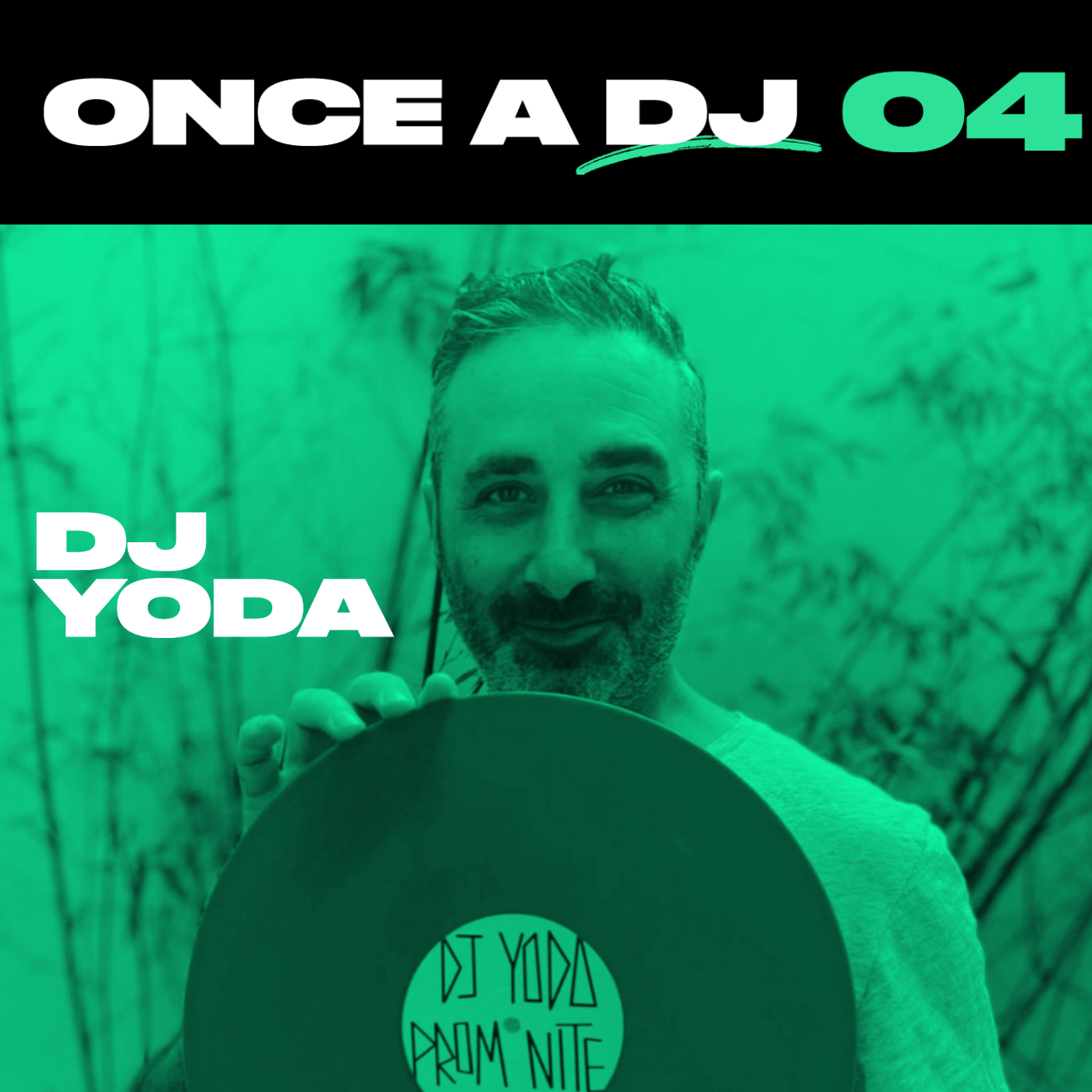
In this episode we’re in conversation with UK hip hop/mashup/VJ/Producer/Legend DJ Yoda about being authentic and developing your own lane. Whilst authenticity is the key message across the episode, the questions are at times a bit in the weeds, just due to the level of influence specific elements of Yoda’s work have had on me.
You can find/buy some of Yoda’s expansive body of work through his bandcamp page, or follow him on @djyodauk on any of the main social channels.
As always, I hope you enjoy the episode, and if you have any questions or feedback, hit up onceadjpodcast@gmail.com or instagram.com/onceadjpodcast
Transcript
Okay, so I’m here with turntablist party DJ VJ producer and much more DJ Yoda.
Thanks so much for coming on today.
How are you doing?
DJ Yoda:I’m doing good.
It’s my pleasure.
And hello.
Adam Gow:So let’s get cracking then.
So as I may have mentioned the other day, what we’re going to look at on this is the before, the middle, the later life of DJing.
Obviously later life’s relative, but basically where it sits in these different parts of our lives.
So the first thing for me is just looking at how you got into DJing.
DJ Yoda:Yeah, sure.
I feel like I’ve told this story many times, but I’ll tell it to you again.
Let’s see if I can add a different twist on it.
My parents were both in the music industry.
My dad was a manager of pop acts and my mum worked for various record producers and my dad literally kept his record collection in my bedroom.
So I was surrounded by records and I was at gigs and music video shoots and all this stuff as like a six year old, seven year old.
So surrounded by Top of the Pops and everything.
But as soon as I was old enough to kind of develop my own tastes in music, the first thing that I kind of latched on to was, well, at the time in the late 80s, there was this kind of trend of most pop songs having a kind of hip hop remix.
And that inevitably meant a lot of kind of samples from kind of kitsch old movies or cartoons or 50s stuff, scratching it and stuff.
You would get it with like.
Well it was the likes of like S’Express and Bomb the Bass and Coldcut and all these people that were working in that kind of bass world.
And that’s the stuff that really jumped out to me.
The sound of scratching and the sound of samples coming from all disparate sources.
So I started to try and make my own tapes at home.
I kind of mess around with my parents hi fi and broke it eventually, like trying to learn how to scratch.
This was obviously like pre YouTube and Internet and even pre VHS videos teaching you how to DJ.
So I was really out out there on my own trying to figure this stuff out.
I didn’t even have friends that was into it really.
Adam Gow:I mean, I remember being around at my mates and he had Fog on the Tyne and Turtle Power with the 245s.
I remember him having.
DJ Yoda:Yeah, I had Turtle Power 45 for sure.
Might have even had double.
Adam Gow:Thinking in the right way already at that age.
Love it.
So I think we were just trying to scratch Turtle Power.
What were you trying to scratch?
DJ Yoda:Roll and rap.
Rap.
Rapping, yeah, just like a lot of kind of comedy, hip hop stuff and just like pop, basically whatever I could get my hands on at that time.
And it was just trying to kind of like trying to work out how to sound like a dj.
And it meant getting it really wrong for a long time.
In fact, like, I reckon I probably waste, not wasted, but like a good year or two of doing totally the wrong thing because no one was showing me any better.
But I kind of still maintain that that is useful and a good way to go about things because it’s not useless.
You learn what sounds bad, which is useful.
It’s important to know what not to do.
Adam Gow:Yeah.
And I think if you’re not learning in an academic way, you probably learn to trust your ear more.
Like, I noticed that when I learned guitar, I knew a little bit of music theory.
I learned a certain amount of guitar and didn’t really push on from there because I couldn’t be asked to learn any more sophisticated scales and things.
DJ Yoda:Right.
Adam Gow:And I didn’t really want to put the work in.
But equally, because I’d done a little bit of theory, it was damning as well, because I knew too much to just forget it and just trust the sound.
DJ Yoda:Yeah, I think that, like, you know, there’s various ways of going about things.
You can do it whatever way fits you, but I’ve always found the same thing.
Like, I tried to learn harmonica at one point and had exactly what you just described with guitar.
I just reached a point where I was like, the theory is ruining this for me.
It’s not the way that I want to go about doing it.
So DJing?
Yeah.
I just kind of like felt my own way and then I think because of that came up with my own way of doing things.
That’s.
That’s just me, you know, that’s my style.
And that really helped me to kind of like.
Because I think if you try to learn now off YouTube and from DJ courses and all these kind of multitude of ways that, that are out there to teach people to dj, they’re going to teach you the way that they do it and then you’re going to be like them.
I mean, it seems pretty obvious out loud, but if you figure stuff out your own way, you’re going to have this like weird way of doing stuff that will make you.
You.
So I think that there was some benefit to that.
Adam Gow:Have you seen that guy who’s like a clone of Q-Bert?
He dresses like him, he Scratches like him.
And obviously being able to scratch like Q-Bert is incredible, but it’s also a bit like, I don’t know, like, what’s the point?
DJ Yoda:It’s also like one of the.
One of the kind of like basic fundamental, like, things about hip hop is you don’t buy, you don’t like, you don’t copy anyone else’s style.
You do you.
Adam Gow:Yeah.
DJ Yoda:So, you know, that’s, you know, it was a good way to start, I think.
And then eventually I kind of met people locally that the DJ and people that I still know now managed to kind of like have scratch club with friends and practice together and make tapes and everything.
So, you know, having that first bit alone I think was valuable.
And then I made up.
I made tapes at home and kind of copied them up for mates and everything.
And I was like copying up 10 tapes and then 20 tapes and then 50 tapes.
And by the time it got to that level, I was like.
I took him into record shops in London and then started sending them to record shops around the country.
Adam Gow:Where was it London that you grow up in?
DJ Yoda:Yeah, I grew up in.
In North London.
So I was in Soho.
At the weekends at the record stores when it was Mr Bongo and all the other ones around there.
Adam Gow:Nice.
DJ Yoda:All those places would sell my tapes and then, yeah, I’d kind of start to figure out, oh, you had like this.
This shop in Bristol was a good one, this shop in Manchester was a good one.
And I would start sending tapes everywhere and that’s kind of what started me.
So it was really like making mixtapes that started me, rather than DJing in clubs or anything like that.
Adam Gow:Right.
Because I always thought it was like the uni days.
So how old would you have been when you were doing the tapes?
DJ Yoda:Teenager, pre university.
So like, yes, 17, 18.
Then when I got to university where I went to Warwick in the Midlands, that’s where I really started getting my experience, DJing in clubs.
Because there was a.
The Thursday nights there at that university was like a kind of.
At the time it was acid jazz night, which really dates it massively.
But I would.
I was a resident at that.
And there was.
I think that being a uni like Warwick, which wasn’t very cool, actually meant that there was no competition for me in terms of, like, other hip hop DJs.
So if I’d have gone to Brighton or Bristol or Manchester or somewhere, I think there would have been a lot more people trying to do what I was doing, but because I wasn’t really competing against anyone.
I had that space to be a resident at that Thursday night and I would be warm up for all the guest DJs and just basically like learn how to play in front of a crowd.
But that was a really good three year learning experience.
I learned more doing that than I did doing my uni course, so.
Adam Gow:So were you very much strictly hip hop at that point?
DJ Yoda:Yeah, I think at that point up until certainly the 90s, I didn’t want to know about anything other than hip hop.
I was really, really narrow minded.
I was like, if it has guitars, I don’t want to know.
If it has like a electronic house type beat, I don’t want to know.
Just blinkers on only hip hop.
Towards the end of the 90s when I felt like hip hop started to drop a little bit in terms of quality, I started to kind of explore other types of music and then work my way backwards with a lot of different types of music as well.
And that’s when it all kind of opened up to me.
And yeah, since then I kind of like, I consider myself the hip hop DJ in terms of style in, in other words like quick mixing and scratching and like, yeah, using turntable tricks and everything.
But oftentimes I won’t play any rap music or I can play, I feel like I can play any kind of music but like in that hip hop style.
So I do like, I go out of my way in fact to play like as wider array of music as I can.
So I will do a whole set of:But that kind of like the fundamentals of the way that I play is like a hip hop music.
Adam Gow:Yeah, because I think that comes through with your mixes as well.
Just your style within the layering and everything.
DJ Yoda:Yeah, I just, I try and play anything that I love and try not to label it in terms of like, oh, I should play this kind of thing, I shouldn’t play this kind of thing.
I just try and stay authentic.
If I love something, I’ll play it.
Adam Gow:Yeah, that can really get in the way, can’t it?
I even find it sometimes if I’m doing mixes, I’ll.
I’ll think, right, I’m gonna do a mix of X or Y.
And then it, if you, if you.
DJ Yoda:Are kind of quite open format in the way that you dj, it is helpful to theme various mixes because then it gives you some kind of boundaries to work within and that’s cool.
But in terms of like, stuff that I would play as a dj, that’s where I try and stay completely open in my mind in terms of like, you know, I think there’s probably stuff that I play that other DJs might not because they would worry that it’s not cool.
Whereas my thinking is like, if you like it and it’s cool, doesn’t matter what it is, and there’s no such thing as a guilty pleasure or.
I hate that idea of guilty pleasures.
It’s like ridiculous.
Just if you like something, you can own that and like it.
Adam Gow:Yeah, I think I feel like between around 16 and 25, when you find in.
I think that’s a big part of when you find in your own identity as a person.
I think that’s when a lot of these kind of guilty pleasure concept is really prevalent because you do feel ashamed about saying you like a certain thing.
It’s only when you get to late 20s that people go, now I like Girls Aloud or whatever it is, which is a hip hop Eddie gonna go,.
DJ Yoda:You know, pop is.
Pop is pop.
It’s popular.
You know, it’s really obvious stuff, but like, you know, some.
It was really interesting watching the documentary that’s been on Channel 5 recently about Stock Aitken and Waterman, because it’s kind of.
I feel like there’s like a reassessing going on of the stuff that they made in the 80s, which at the time was very much dismissed by kind of musos as always cookie cutter as they just do the same thing again and again and again.
But, you know, given some space and some time, it’s like, well, hang on a second.
How many hit records did they write how that wasn’t without skill, you know, like, yeah, it’s.
It’s not to be sniffed at.
It’s pretty impressive.
And I loved a lot of that stuff and still play a lot of that stuff.
But yeah, I’m sure that a lot of people sniffy about it.
Adam Gow:Yeah.
Because didn’t.
Didn’t Pete Waterman kind of earn his stripes as a soul DJ?
DJ Yoda:Yeah, they were all.
They all came from that background and they all came from a background of respectable good music.
And, you know, I just, you know, I. I find it hard to kind of like, I think if you’ve got negative thoughts about anyone doing something creative, you should just shut up about it and keep it to yourself because it doesn’t really help to put that out into the world.
You don’t.
Not everything is for everyone.
If you don’t like something you can just shut up about it and find something you do.
Like,.
Adam Gow:I’ve had the day job of marketing and advertising and you can look at campaigns that another agency’s made and you can rip them to pieces, but can you do something better yourself?
So way different.
Ask.
DJ Yoda:And it’s the same as social media.
Like, social media can get tiring, especially Twitter, because it does seem like a bit of a venting place for people to be like, this is rubbish, that’s rubbish.
Yeah.
Whereas you could just be the absolute opposite of that and the world would be nicer.
Adam Gow:Yeah.
So what.
What years were you at uni?
DJ Yoda:Oh, God.
To do maths.
or:Adam Gow:You were writing for Fat Lace, weren’t you?
And Hip Hop Connection.
When did that start?
DJ Yoda:Yeah, that was all around that time as well.
Yeah.
I would just go to all the kind of big hip hop gigs and that’s how I fell in with the Fat Lace guys and the Hip Hop Connection guys.
And I was always thinking about writing as something that I wanted to do anyway.
So I did a lot of music journalism, wrote for a few different magazines.
So that was all happening at the same time.
Adam Gow:Yeah.
Awesome.
So, yeah, so I got your Cut and Paste Volume one and I’ve been listening back to it today and it’s so tight, like the.
The scratching on it and.
And just how the mixes are put together.
DJ Yoda:I don’t ever.
I’ve not gone back to listen to any of those things.
I don’t ever go back to listen to anything that I’ve done.
But I’m sure that it would pain me to do that because I’d probably think the exact opposite of what you just said.
I’d like be dissecting the scratches and thinking, oh God, this is not too tight.
And also the way that that was recorded that I’m.
The next two Cut and Paste mixes were pre computers, pre me having a computer.
So I didn’t.
I did the whole thing on a four track cassette recorder.
Adam Gow:Really?
DJ Yoda:Yeah.
There’s no like editing on a screen and like tidying things up and everything.
It was all just like on it, recorded onto cassette and just play and record same way that you would make pause tapes with cassettes, which is really a very old school way of doing it now.
Adam Gow:Yeah, I can’t imagine doing that.
DJ Yoda:Yeah, I mean, just whatever works for you and you just get used to whatever, you know, equipment you have at your disposal.
And that was.
I Got faster than four track tapes.
Like that’s just.
That was the flow that I worked with.
Adam Gow:Yeah.
Format’s interesting.
It’s like when, when there was this revelation when 9th Wonder was making beats in Fruity Loops.
Just kind of looked down upon.
But it’s like it’s making great beats.
DJ Yoda:Whatever works for you.
Yeah, yeah, whatever works.
Adam Gow:Yeah.
So yeah.
So my first touch point was, was the Cut and Paste Volume one.
And what I loved about it as well as it being tight because that was just when I was getting into scratching.
I just got my first turntable and my first mixer.
I didn’t get two turntables.
Who needs two?
And yeah, it was really tight and it was really varied, but it’s also really fun.
And I think we talked before this and you said it was never anything kind of intentional to bring that sort of fun and the nostalgia because hearing you like doing things like playing things like the A team theme, things like that for me were just so on point at the time because this is when I’d just gone to uni and.
And you’re taking this step into adulthood, the first step into adulthood, I guess.
And at the same time universally re releasing all the A team on video and stuff.
So you’ve got this way to cling on to your childhood a little bit and then you had things like that coming on.
You know you’ve got that on with like a big electro beat under it.
And it’s just all this fun thing that’s.
That’s really, really bringing a lot of fun into hip hop.
DJ Yoda:Well for me I was just try to do fun stuff, you know, and there’s.
There’s really no more overthinking it than that.
I was like, is this fun or is it boring?
If it’s boring, what’s the point of doing it?
So yeah, totally make mixes and use samples that would bring a smile to my own face.
So it was enjoyable to make them.
And I just.
It sounds like deceptively simple I guess, but that’s.
That’s all it was.
I would just try to do funny stuff and stuff that amused me.
At the end of the day, like you’re making music for people, playing music for people.
It’s supposed to be entertainment.
It’s not supposed to be like po faced.
It’s not supposed to be an education.
You’re supposed to be like having fun with it or helping people have fun with it at least on one level.
And certainly making tapes like that.
It was like what stuff would be cool to hear.
And a Lot of the kind of humor comes in, comes in juxtaposing things.
So stuff that you might not consider to be very hip hop in its essence and then mixing it with something that’s very hip hop.
Like putting those two things together is funny to me and still is, you know.
Adam Gow:Yeah.
And, and I think it’s.
I think it’s good because it flies in the face of a lot of.
A lot of the sort of hip hop attitude where it’s got to be, it’s got to be serious or braggadocious or something like that.
DJ Yoda:Yeah.
For years I did think that I looked at a lot of people in the world of hip hop and thought, why are you so serious?
It’s probably important to point out that, like, I come from a white middle class background, so I look forward to, you know, to, to most of the people working in hip hop, it means something way more serious to them.
Adam Gow:Yeah.
DJ Yoda:And I’m kind of aware of myself within that.
You know, I don’t think I can look around at other people, say, why are you so serious about hip hop?
Perhaps because you grew up around like violence and drugs and guns and sure, it can be very serious for a lot of people.
It can be a lot of things to many different people.
But it is a luxury to have grown up, you know, in a safe, nurturing, loving environment and not be like, have major problems with police or anything that I can be like, let’s have some fun with it.
But, you know, so I think it’s, you know, it’s important to note that be aware of myself in the grand scheme of things.
Adam Gow:Yeah, definitely.
DJ Yoda:But that said, you know, like a lot of my, you know, my favorite rapper growing up was Biz Markie, who was like the comedian of hip hop.
You know, there’s this Facebook comedy in hip hop and this space, you know, hip hop’s big enough that it can incorporate everything from like, you know, militant, like political stuff to religious stuff to sex stuff, to whatever it is.
But the stuff that appealed to me was the people that took themselves with a sense of humor and brought some personality and fun to the, to the game that I always liked mcs like Redman or just people that had big personalities and, you know, good punchlines and were just, you know, kept it interesting and entertainment.
Adam Gow:Yeah.
So.
So then with, with the Adventures of DJ Yoda album on that, you know, you get to work with Biz Markie and Jungle Brothers and people like that.
And this isn’t, I think nowadays it feels like people are easier to reach, celebrities are easier to reach, if that’s the best word to use for it.
What was it like trying to organize working with someone like Biz Markie at that time?
I suppose it’s before Yo Gabba Gabba and stuff like that, but still, it’s Biz Markie.
DJ Yoda:Yeah, that was.
So this was my first production album.
I’d done a lot of mixtapes up to that point, but I was like, okay, now I’m gonna make my own music.
And I had a list of people that I wanted to work with.
And part of the most of the mission was just tracking down everyone on that list, getting to speak to them, talk about music and get to that point.
And so that was the kind of.
The task was as much that as making the music.
And there was a different story with everyone that featured on that album.
But for Biz, we kind of connected over really specific kind of collections of stuff.
Because he was really big into his breakfast cereal, which collected breakfast cereals, which.
Me too.
Like, just like, on a level with him on that and that he also kind of like, he was really into the mixtapes that I was making and would, like, call me up and asked me questions about parts of tapes that I’ve done and stuff.
And was also really into kind of, like, kids records, like 70s kids records, sesame street and stuff like that.
So we had a kind of.
In the Venn diagram of stuff, like the stuff in the middle, that was.
That was where we met minds and really kind of.
So we ended up on the phone quite a lot just.
And then swapping records and tapes back and forth in the post.
And so I did get to do two songs with him.
One was inspired by breakfast cereal, and the other was inspired by Fat Albert, haunted house kind of Halloween vibes and, like, kids cartoon kind of thing.
So, yeah, that was definitely, like, it was a dream come true.
Because, like I said, he was my favorite rapper growing up.
And it was just once I’d done those two songs with him, I felt a little bit like, I don’t know what to do now.
Like, that’s all I was ever trying to achieve out of music.
So it was.
It was an incredible thing to have happened.
For sure.
Yeah.
Adam Gow:Because do you think that that time that you had when you were around Top of the Pops and things like that, did that get you used to seeing.
Seeing famous people and.
And then did it mean that you had a bit more cool about yourself when you were first connecting with Biz?
DJ Yoda:Yeah, I think that’s probably fair to say, because I think that if you haven’t had that experience and you don’t know better.
To be fawning over people or driving them mad is like exactly the wrong way to be dealing with them.
And I probably did have that kind of attitude of just like being cool with people rather than annoying them.
So.
Yeah.
Adam Gow:Yes.
It’s a hard one.
Just as a note, on that album, the track that really stands out to me is the Princess Superstar one.
DJ Yoda:Oh, yeah.
Adam Gow:I just think it’s.
It’s different and it’s just.
It’s really cool.
I just really like the.
The angle of it.
DJ Yoda:Yeah.
nto, like very old jazz, like:But that song is all about, like being into hip hop and becoming an old age pensioner.
Yeah.
And some are from that era.
And she was really good fun.
But that exact same reason that I explained, just like she seemed to be someone that had a really good sense of humor about herself and made me laugh.
And she did on that song too.
God, I haven’t heard that song for a long time.
Adam Gow:Give me a listen.
DJ Yoda:I won’t.
Adam Gow:Get some.
Get some of that Spotify money.
DJ Yoda:Yeah.
0.003.
Adam Gow:Yeah.
But, yeah, that was a really good one.
So around that time as well, there was a DJ battle in Derby that you came and judged at.
That’s where I’m based, by the way.
DJ Yoda:Right.
Adam Gow:And that was where DJ Angelo won that.
I don’t know if you’re aware of Angelo.
DJ Yoda:I’m aware of Angelo, yeah.
Adam Gow:Yeah, he was the winner of that one.
So a good bit of judging and I was just there in the crowd watching.
It was the first time I’d seen Angelo as well, so I was really taken aback.
DJ Yoda:He’s super talented.
Super talented.
Yeah.
Adam Gow:Really good.
I’m hoping to get him on in a few weeks.
He said, he’s said he’s keen.
He’s just a busy, busy man.
DJ Yoda:Yeah.
Adam Gow:But in that.
Yeah, that was another one where for me, I saw you, you did like this little medley sort of routine of TV themes.
You had like Blue Peter and stuff like that.
And at the time I was just like, ah, it’s like mind blowing.
DJ Yoda:Just love tv.
I love movie and TV themes because, I mean, okay, if you want to take it like, zoom out and get a bit kind of more existential about it.
For me, the thing that’s good or valuable about music and films is that they can take you somewhere, like in your mind you can be taken totally out of the place that you are.
And if you listen to, like, gangster rap, you’re in Compton.
If you listen to, like, cumbia, you’re in South America.
You know, like, it takes you somewhere.
And so that kind of, like, use of music in film and tv, it immediately takes you to that place of that TV program or that film.
So it’s like a shortcut.
Like, it will fast forward you to that, and it’s a good way of doing it.
So I love soundtracks, and I love including stuff from movies in DJ mixes and with the video stuff that I do too.
Like, just clips from movies using samples from films in the same way that you would sample bits of music.
Adam Gow:Have you got any real favorite TV themes that people might not know?
DJ Yoda:I mean, it’s a deep question for me.
My favorite TV theme is Twin Peaks.
Adam Gow:Right.
DJ Yoda:That’s.
That’s definitely my number one.
But deep ones.
Oh, yeah.
It goes on forever.
I love.
I like a lot of the 70s and 80s stuff.
That’s Mike.
Adam Gow:Yeah.
A massive revelation for me, which will probably be no surprise to you, given some of the things on your mixes.
Is Angela.
Bob James.
DJ Yoda:Oh, yeah, yeah.
Adam Gow:That.
That was one of my first.
One of the things that first revealed to me the whole sort of smooth jazz, jazz, funk.
DJ Yoda:Yeah.
Adam Gow:CTI sort of side of things.
DJ Yoda:And have you ever heard Cab Fare by Souls of Mischief?
Adam Gow:Exactly.
Yeah.
DJ Yoda:Yeah.
It’s just samples that.
But Bob James is amazing.
Massive.
Bob James fan.
Adam Gow:Yeah.
He’s got a really weird relationship with sampling, hasn’t he?
DJ Yoda:Well, I think he just came around to it.
I think.
I think he didn’t understand it for a long time.
And then someone finally sat him down and explained to him his importance.
It, like, is unbeknownst to him how important he’d become in a whole different genre of music than what he was working in.
Adam Gow:It must be strange just realizing that you’ve got this incredible legacy that you didn’t quite, quite know that you had.
DJ Yoda:Yeah, it must be cool.
I mean, it’s probably must.
Yeah.
I would have thought it would be cool to find that out.
Adam Gow:Yeah.
Do.
Do you know.
Is it WKRP in Cincinnati?
DJ Yoda:That sounds.
Yeah, Yeah, I do.
I’ve got the.
I’ve got a.
A record with all TV themes on, and it’s on that.
I just can’t kind of hear it in my head.
And I’ve got it.
Adam Gow:It’s.
Give.
Give that a listen.
It’s pretty good.
Yeah, that’s someone’s kind of someone’s journey of growth.
But, yeah, with a Bit of a Love Boat esque sort of disco shuffle to it.
DJ Yoda:Yeah, nice.
The other Here’s a random TV theme that I sometimes play when I’m DJing in clubs is the IT Crowd.
Right.
Adam Gow:Okay.
DJ Yoda:Yeah, it’s a good one.
If you go back to it, you’re like, wow, this is pretty funky actually.
You wouldn’t expect this to be good, but it’s.
Adam Gow:Yeah, I’ll have to check that out.
At volume.
DJ Yoda:Yeah, that volume.
Adam Gow:Because.
Yeah, that’s when I would not expect.
DJ Yoda:Yeah.
Adam Gow:So while we’re on films and things then is.
Is that what led you to then go into the.
Into like the VJing and down that route?
DJ Yoda:Yeah.
Well, I think the thing is that those mixtapes that I was making, pre Cut and Paste, they all had audio samples of films over the beats.
And that’s what I was doing, like getting bits of Star Wars and Scarface and just anything that any movie that I watched and enjoyed and finding the good bits and putting them over beats.
And then the technology evolved that you could actually mix and scratch the movies themselves.
It was from DVD originally.
Yeah.
So as soon as that came out I was like, wow, I can do exactly what I’ve been doing, but you can be seeing it as well.
So it kind of made sense for me to.
To do that.
And then the technology only just kind of advanced and got better and better.
And now when I dj, I can DJ with exactly the same setup that I would have for an audio DJ set.
But if there’s a screen in a venue, then I can make it all video as well.
So when I’m loading up my computer with the stuff that I’m going to play when I’m DJing out, I’m as much thinking about music videos or bits from films or TV programs or any YouTube or any kind of like viral crap that we all see every day on social media.
Yeah, I’ve got a different part of my brain that’s like, that would be good to play in a, you know, a festival.
Adam Gow:So it’s about mid to late:DJ Yoda:On dates, as you’ve probably worked out already.
Yeah, whenever thing to come out with.
The DVJ is the Pioneer DVJs.
That was the first thing that allowed you to scratch a video right.
As soon as they came out on it.
Even before that, I was doing shows where I kind of re soundtracked movies so they show the whole movie and I would work out a DJ set that worked behind the whole film.
Adam Gow:Oh, Nice.
DJ Yoda:So I did that with Ferris Bueller’s and The Goonies.
Adam Gow:So who, who approached you to do those then, if you don’t mind me asking?
DJ Yoda:I don’t know, like whatever venue it was that I did that in.
Adam Gow:So.
So it was, it was cinemas that were asking you.
DJ Yoda:Yeah, yeah, yeah.
Adam Gow:I remember doing oh Nice.
DJ Yoda:Liverpool maybe.
My, my memory is dreadful.
I’ve got no idea.
Adam Gow:Yeah, yeah, yeah.
But you must have done so many gigs in so many different places.
DJ Yoda:I’ve got a Word document.
I don’t know why it’s a Word document, but a Word document with every gig that I’ve ever done listed.
Whenever I get booked for a gig I just type it in that Word document and it’s like.
Yeah, getting them for 60 pages long of just.
So if you, yeah, if you were to say where did you do that, that width, that Ferris Bueller’s thing, 22 years ago?
I feel like I don’t.
No idea.
But it’s probably on that list.
Adam Gow:Yeah.
I guess for you these sort of touch points that are in my mind are so, probably so insignificant in, in yours relation to your journey.
DJ Yoda:Well, judging a DJ competition in Derby, I’ve got zero recollection of.
Adam Gow:I thought it would be one of your top three.
What could be better?
But so, so how, how did the gigging develop then?
Did it, did it become a lot more about festivals than hip hop nights for example?
DJ Yoda:Eventually, but that took a long time.
I mean after university the first thing I did was set up my own club night in London and that ran for a good few years.
It was called Spread Love and I did that with James Lebens Rob who, you know, DJ go, there’s a bunch of us.
And it became like the underground hip hop, like central London thing.
So every week we’d have guests and in that era of kind of independent rap, whoever was in London from the States at the time would play there.
So we had everyone from that scene that you can imagine.
Adam Gow:So did that give you some of the connections for say like People Under the Stairs and people like that?
DJ Yoda:Exactly, yeah.
Yeah, that’s exactly what it did.
And it was.
Yeah, it was great for that, for like building a community around people that were DJing and doing hip hop stuff.
It was really hard work promoting though.
I always found that a really like impossible to understand skill.
It just felt like the more effort that I put into it, the less people turned up and vice versa.
I just couldn’t get my head around it.
I’m not a natural business person or promoter like that.
But anyway it was plenty of more of the 10,000 hours of just putting in your time in front of crowds and understanding what works and what doesn’t work.
And then from there I would get booked for other hip hop clubs all over Europe.
Everything, you know, like I just got busy from that point.
There was like a lot of student union type stuff at the time that I was doing and then it took years to the kind of like.
Because the festival kind of scene that we know now that really developed over the last 15 years or so, I reckon it didn’t really exist at that point but you know, I would have done the first few festivals, all those kind of like small festivals that became big.
Yeah, that was, I was there right from the start of that and now it’s like, you know, 500 festivals every summer in the UK and it’s, it’s just, it’s a whole industry that kind of came out of nothing.
And that’s most, most of my work now, I would say.
Yeah, I mean I still do all kinds of stuff.
I do a lot of more things like film festivals or food festivals or you know, more cultural kind of events than I do clubs because the kind of music that I play now is probably less suited for 19 year olds at 2 in the morning and more suited for like 40 or with kids at 6pm so you know, that like the, the niche that I found for myself and very happily so.
Adam Gow:Yeah, I think as you get older sometimes it can be nice for your body clock.
I was speaking someone the other day who does like two afternoon gigs, you know, like Rob does his afternoon gigs on a, on a weekend.
And I thought, yeah, that sounds all right.
DJ Yoda:That, yeah, I just couldn’t do it.
I couldn’t.
Yeah.
At age 45, I couldn’t be out there at 3 in the morning playing at clubs.
But also just because it’s not my, that club music isn’t my passion, you know, I, I couldn’t fake getting excited about the kind of music that people want to hear in that situation.
I just want to play music that I love and it’s.
Luckily that’s kind of chimes with the people that want to come and see me play and the kind of places that they do.
So it’s all very organic.
I don’t think you can fake any of this stuff.
Adam Gow:Yeah, I think people are a bit more almost forever young now.
Like when our parents were the age we are now, they probably wouldn’t be as in that same mindset of going out to see A band?
DJ Yoda:No.
And I think, yeah, I think it’s like, it’s unprecedented to have DJs that are 60 years old, you know, but now we.
We live in a world where that.
That is the case and.
And that’s cool, you know, that’s great.
Great for me.
Adam Gow:Yeah, definitely.
And so, something else I meant to ask about earlier when I was talking about the Cut and Paste is, like, the branding.
Were you doing, like, the graphics and things for that?
Because that really adds into, like, it’s really cohesive with the sound.
DJ Yoda:So it wasn’t me, but it was Barry who worked on Fat Lace, so it was all within the Fat Lace crew, and Barry totally understood what I do and we.
We talked about it and tried to get across visually what I was doing in terms of the music.
It’s montage, basically.
You know, it’s collage and montage, literally cutting and pasting.
And I was.
Yeah, I was happy with the look of the Cut and Paste mixes.
I felt like they did get across the sound of those mixes, for sure.
Adam Gow:Did he help in any way when you started getting further down with the VJing.
DJ Yoda:No, I found all different people to collaborate with for that.
And I constantly do as well, work with everything from, like, animators to graphic designers.
And the way that I’ve always worked is just reach out there, like, meet as many people as possible and exchange skills wherever you can and get bits and pieces from everywhere.
And it is like a great big glorious mess.
All my video stuff have just, you know, I met this one guy 15 years ago in Argentina who helped me, like, do this one bit of graphic and then, you know, and so on and so forth.
So, yeah, it’s all bits and pieces in that true cut and paste way.
Adam Gow:Awesome.
So then something we mentioned when we chatted the other day was about lockdown and.
And you quite quickly said, like, lockdown was a pretty terrifying experience.
DJ Yoda:Well, when you like it, when DJing becomes your sole source of income and all the life stuff stopped, it was scary in terms of, like, well, how am I actually going to, like, make any money?
So that was.
And also just to have lived that lifestyle for over 20 years of traveling every week, you know, just physically being somewhere in a different city every week without a break, really.
And to suddenly stop and be still was.
Was.
That was terrifying in itself.
Just catching up on all the crazy places that I’ve been and stuff that I’ve done in that last two decades, that was.
I remember just sitting in the garden and just taking a trip down the around the world in my head, just like.
Because I hadn’t done it.
Just like thinking, oh, I was in China and I was in South Africa and I was in Brazil.
And like, when you.
When you don’t stop, when you carry on week after week, you don’t have time to process any of that.
So lockdown was bad.
But then I got into, like, streaming and, you know, I couldn’t stop DJing, like, at all.
And the fact that there’s this kind of, like, culture doing it to people, streaming online was really great.
So I did that.
Did a lot of stuff that I’ve been meaning to do for years, like selling records that I didn’t want and, you know, just sorting stuff out.
So we got through it, thank God.
Adam Gow:So we doing Discogs.
DJ Yoda:Oh, yeah.
Still am.
I, like, I put.
I went through all the record collection and kind of sorted the wheat from the chaff, and about a third of it went up on Discogs and is still drip, drip, drip selling week by week.
Adam Gow:Yeah.
DJ Yoda:As we speak.
Which is satisfying.
It’s really nice to just cut down the record collection to just the stuff that I actually won.
Adam Gow:I did it a few years ago and.
And I cut down from.
Obviously, it’ll be nowhere near your record collection.
I probably had about 2,000, and I probably got it down to about, say, 200, if that.
About 200, yeah.
DJ Yoda:That’s impressive.
Adam Gow:And it was very much like, I don’t really cook, but for some reason I was like, well, I bought a lot of stuff for sampling that I’d never got around to sampling.
I’d more or less stop DJing, which I’ve kind of gone back into now.
But I just thought, would I put this on when I was.
When I’m cooking?
DJ Yoda:Yeah, that’s.
That was my criteria too.
I was just thinking, is this a record that I want to play when I’m, like, sat on my veranda when I’m 70 years old?
s I got for free in the early:You know, stuff like that.
So it was.
Yeah, that was really satisfying.
Also, like, even in the last couple of years, for the first time, I’ve got a record player in my lounge at home.
Yeah.
And it’s totally changed my idea of a record collection.
I’m like, well, all this.
All these records that I built up are like, records for use, you know, like for using for DJing.
None of them were bought for Playing just from start to finish on both sides.
And then I start to think about like, well, what records do you want for that?
That’s a totally different record collection that I need.
So it’s just.
Yeah.
Adjusting the whole thing.
Adam Gow:Yeah.
I’ve started this little wants list now and it, and it’s quite small.
It’s not necessarily cheap but it’s not super expensive.
But yeah, it’s very different.
It’s things that I wouldn’t necessarily use for DJ, but then some things you get and you think, I got a really good deal on this but do I really want to take it out of the house to DJ with it?
DJ Yoda:Yeah, it’s a different thing.
And not that I’ve even taken records out particularly in the last few years.
I mean I get booked to the odd kind of like all vinyl set and I’ve got a box of records that I like to take with for that.
But the records don’t leave the studio, you know, they’re just, they’re all there.
Adam Gow:Yeah.
So do, do you still buy with a view to sampling?
DJ Yoda:Yeah, not like in a big way, just every now and then.
And it’s just fun to have a dig if you’re somewhere that’s good for that.
But I don’t go out my way to do that anymore and I only ever really buy records if it’s like something that I can’t find online.
Adam Gow:Yeah, I don’t, I don’t buy too many online.
I like, I like going.
And it’s the unknown.
DJ Yoda:Yeah.
Adam Gow:Like I just, I find different music when I go into a shop.
DJ Yoda:It’s.
It’s rare that I’ve got the time because really to dig is a very time consuming thing.
You really got to spend hours.
Adam Gow:Yeah.
DJ Yoda:And I don’t find myself with that much time very often but if I do and I’m somewhere weird where, you know, I’m interested to see what they’ve got, it does happen.
I just, I was.
Where was I?
I was somewhere in.
I was in Portugal last year and just had a day and just, you know, found some good record stores and I was like, oh, that was satisfying just to found that time and like come back with some bits.
That was cool.
Adam Gow:Yeah, awesome.
So how, how are things now?
Now that locked.
Now that lockdown’s kind of been and gone and, and things are in some sort of normality now.
DJ Yoda:Yeah, good.
Yeah, I just, you know, if I’m back in my groove, you know, like it’s always the way that summer’s much busier than the rest of the year.
But there’s like, you know, I’m DJing the amount that I want to be DJing.
Winter tends to be quite dead and I use that time to recording and I was really productive this winter, so that’s been really satisfying.
And now we’re just getting back into busy season again.
So, yeah, things are good.
Yeah.
Adam Gow:And you’ve got that podcast record as well, haven’t you, with the.
It’s a really interesting concept that I’m going to get a copy with the.
The kind of golden ticket sort of approach to it.
DJ Yoda:Yeah, that’s all through.
Well, my record label is Lewis Recordings and through them that’s that they released the podcast on vinyl and also did my last two albums.
And it’s.
It’s like a comfortable home for me for releasing stuff.
It’s definitely the right place.
Adam Gow:Yeah.
Because just.
Just for anyone who’s listening, it’s effectively.
It’s a podcast that’s been pressed onto vinyl and there’s a few different editions with the opportunity to win some pretty cool collectibles like gift bags, things like that.
DJ Yoda:Yeah, exactly.
There’s action figures and all kinds of stuff.
I put all my old mixes on USBs as well, so you can now buy them from my Bandcamp on a kind of cassette shaped USB.
So just finding like cool ways to have collectible stuff, you know, that’s like, that’s what I would want.
So that’s the way that we do it.
Adam Gow:Yeah.
And I think it’s a tricky one now because people are just so used to.
Right.
I spend £15amonth on Spotify.
I’m contributing to artists, but I think if you can find other ways to do something special that can pay the artists, I think that’s really good.
DJ Yoda:Exactly.
That’s the thinking.
Totally.
Adam Gow:Because that must have been a thing for a lot of artists as well during lockdown.
Just knowing how many people are just investing on Spotify to listen to the music as well.
DJ Yoda:Well, I just, you know, I know from someone that’s got like five or six albums out of the money that I see from Spotify is not in any way significant or relevant to my life.
It just doesn’t.
Doesn’t pay for.
For living life.
Yeah, yeah.
It’s not a way to make money.
Adam Gow:Yeah.
Cool.
Well, I’ll let you get off because I’m sure you’re probably pretty busy.
But just before I do, can I just ask, are there any key bits of advice that you’d give to anyone who’s looking to DJ or any key learnings that you’ve taken from it that have just been really valuable outside of DJing.
DJ Yoda:Yeah, I mean, I’ve probably kind of touched on this as we’ve been chatting anyway.
But like, to me the main thing has always been to stay as true to yourself as you can, which means not jumping on bandwagons like, whatever.
I’ve seen so many people in a 25 year career of DJing who’ve just kind of latched onto something that was cool at the time that then renders them completely irrelevant three, four years later.
So I’ve done a, I think a good job of like navigating between all these different kind of trendy scenes that pop up and just being my own thing.
I feel like a bit of an island in the world of everything that goes on.
I’m not particularly allied to a certain crowd within music or even a certain sound.
So that would be my main thing is like, if you can just be yourself, then you are a unique snowflake.
Adam Gow:Okay, that’s just made me think of one more thing actually.
DJ Yoda:Go ahead.
Adam Gow:Do you think it’s easier or harder for a DJ starting now because people have so much access to so much different music?
Does a DJ have to have a further spread of musical knowledge, do you think?
Or do you think people are more receptive to a DJ that’s in a specific lane?
DJ Yoda:Everyone can access everything now.
The technology is so much better and they’re like access to different music that you want to use as well is completely changed to when I started.
So I think you have to balance that with like quite a clear vision of what you’re trying to do if you don’t want everything if you like.
The two things you’re trying to avoid are one, sounding like everyone else and two, just sound like a hot mess with no, with no focus.
Because it’s one thing to be like, okay, well I’m not going to do what everyone else is doing.
I’m just going to play this random thing, this random thing, this random thing.
But if it doesn’t all make sense together, then it’s a hot mess.
So yeah, I think really like the thing to work on if you are a DJ starting now is like, what am I trying to achieve here that no one else has done before?
What’s my idea?
What’s my focus?
What am I trying to achieve with all this?
So I think that is a good valuable thing to be spending time thinking about and then you can do your best to try and kind of like realize that in whatever way works for you.
That’s not too vague?
Adam Gow:No, that’s absolutely great.
Do you want to just give a shout out to your social handles where people can find you online?
DJ Yoda:Yeah, it’s just DJ Yoda UK on everything, so whatever you want to use.
I’m J Yoda uk.
Adam Gow:Simple and consistent.
Awesome.
That’s great then.
Thanks very much for your time.
DJ Yoda:Thank you, man.
That was a pleasure.
Adam Gow:Awesome.