
Paths of Rhythm is brought to you with support from vinylunderground.co.uk – take 10% off your next order with the code POR10 and free UK shipping on orders over £100
Paths of Rhythm is a Remote-CTRL production. If you’re looking for audio or video production, then check out https://remote-ctrl.co.uk to see how they can help.
Other ways to support the show
- Follow the show on Spotify or Apple Podcasts
- Any feedback or questions? Hit up https://www.instagram.com/pathsofrhythmpodcast/
https://www.hiphopat50.co.uk/
https://www.facebook.com/djcutmasterswift
https://www.instagram.com/cutmasterswift/
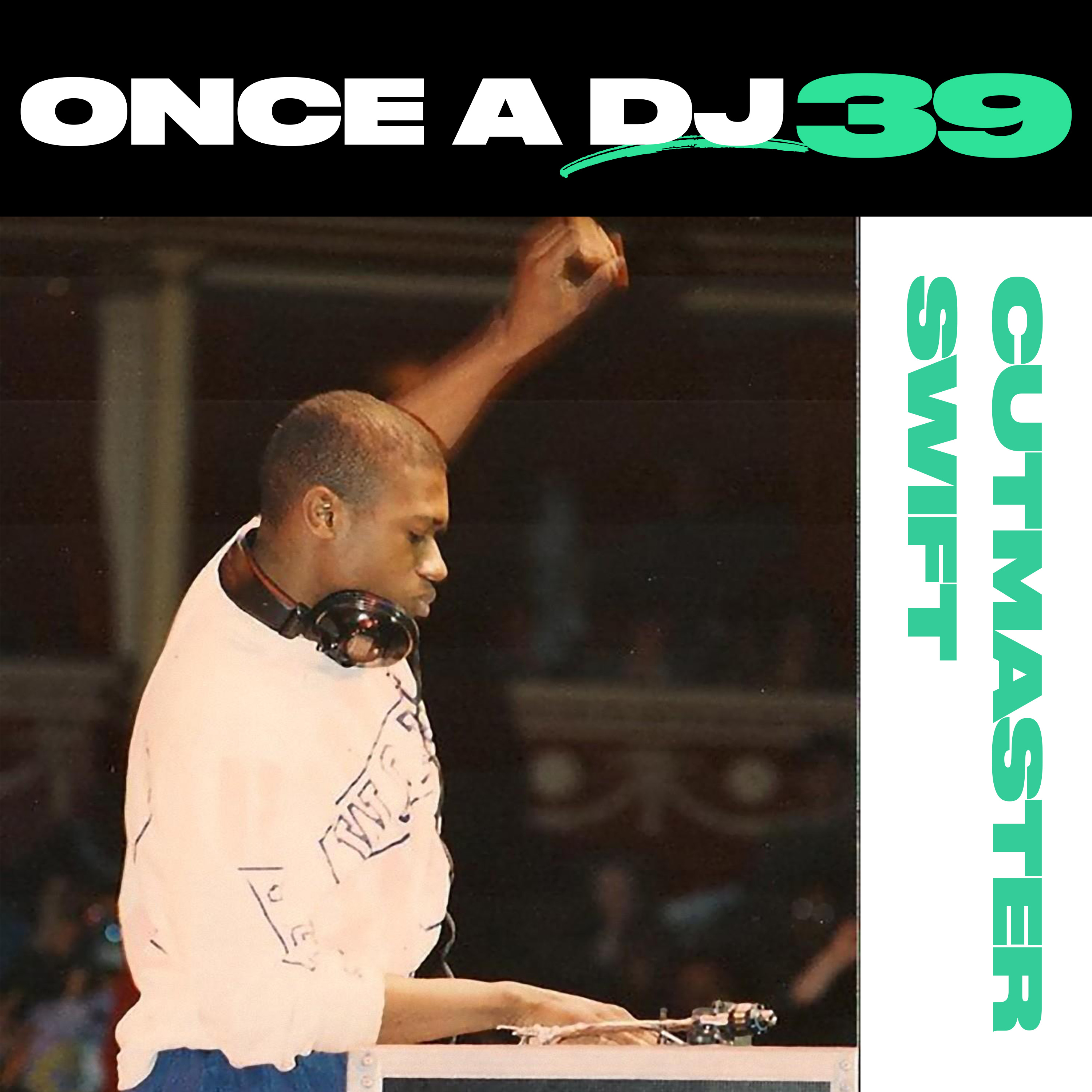
This week we sit with 1989 World DMC champion, life long turntablist and DMC ambassador Cutmaster Swift.
The conversation covers the early exposure to music, DJing, and hip hop, the evolution of turntablism, and the development of the hip hop scene in London. It also delves into the funding and organization of hip hop events, the business side of the industry, and the growth of the scene in other areas like Leeds. Cutmaster Swift shares his journey as a DJ, from battling and competing to evolving the craft of turntablism. He discusses the competitive nature of DJing, the influence of American DJs, and the evolution of techniques and routines. He emphasizes the importance of individuality and creativity in DJ performances.
Keywords
hip hop, DJing, turntablism, music exposure, London scene, hip hop events, business side, Leeds scene, DJing, turntablism, competition, battling, routines, techniques, evolution, individuality, creativity
Takeaways
- Early exposure to music and DJing in the context of family influence and childhood exploration.
- The evolution of turntablism and the impact of influential DJs and events on the hip hop scene.
- The development of the hip hop scene in London, including the funding and organization of events, the business side of the industry, and the growth of the scene in other areas like Leeds. The competitive nature of DJing and the influence of American DJs.
- The evolution of DJ techniques and routines, emphasizing individuality and creativity.
- The importance of confidence and comfort in one’s own style and the ability to introduce new music to the audience.
Transcript
Cutmaster Swift, welcome on to wtdj. How are you doing today?
Speaker B:I’m feeling great and excited to be part of your plan, Adam.
Speaker A:Amazing.
We’ve had quite a few turntableists and Londoners on, but I think what would be different about getting into your story is you were there at the start of it all.
Speaker B:Thank you for reminding me how old I am.
Speaker A:There’s no kind of nice way of saying it, is there? I understand the feeling old now. Time’s catching up with me being stuck at a desk all the time. So, yeah, let’s just get into it then, really.
I’m really interested in. In learning about how you were kind of exposed to. To music, to DJing and to hip hop, because you were at that time where hip hop and.
Or you came about at that time, I should say, when hip hop and DJing and turn, turntablism were all properly kind of one, whereas they’re a little, quite a bit more disparate now. So, yeah, if you could give us a bit your background.
Speaker B:Well, coming from a Jamaican family, father was a carpenter, mum was a nurse. You know, the typical household, they say back in the day, I’m a 60s kid, end of 60s, going into the 70s.
So you’re talking about, I don’t know, I’m first generation UK because my parents are from Jamaica, like I just said. So pretty much it was always a reminder of home from the food and the music.
And basically my dad, pretty much you’re talking about no clubs, no provision of music for you at that time. So obviously he had a record collection and basically I wanted to interfere with that music collection that he had.
So he put me on my path really, from around the age of five and six, we had a gramophone. That’s your multimedia today, people. And it was one of Those stack systems. 7 Inches and they all fall down.
My dad, I suppose, gave me some old seven inches for me to explore and destroy. But what do you do when you’re a kid? You get your own things. You don’t want to touch that stuff. You want to touch what the adults are touching.
You want to, you know, mess around with their stuff. So I always got myself into trouble playing around with my parents. Hi, Fi. So, yeah, that’s how much I print, how I pretty much got into music.
The initial stages of hip hop, it kind of crept in really, because there wasn’t a distinctive hip hop sound, if that makes sense. It was a collection of everything. And that’s what people tend to forget.
So today when people talk about open format DJs, being able to play everything. Hip hop was initiated from that.
That’s its blueprint, you know, and obviously the, the important part is finding that instrumental section on whatever that music genre was. Again, growing up, I was pretty much coming from the UK into a lot of pop culture and obviously being schooled on reggae from my parents.
But to fit in at school, you. You follow, you find out about pop culture. So, you know, growing up at that time, you was exposed to everything.
And we’re talking about black and white TV and three channels. So we was exposed to everything old school, and you was the remote control to change the TV channels and so forth.
But getting older, you then try and identify, get your own identity, you know, so you, you try and discover other things that most times your parents do not police. So you keep it on the hush back in the day.
So my really first, earliest remembrance of being exposed to hip hop was probably Rapper’s Delight, just through the Pop Top of the Pops type thing. Yeah, it’s funny because the whole poetry rhyming style, I kind of knew that as a twang or a slang that they used to talk in America anyway.
And coming from Jamaica, they’ve got their own slang as well. So you, you try and learn and adapt the words as quick as possible.
So when I heard Rapper’s Delight, I recognized the rhythm, but I really instantly knew that’s not the original vocals to that track, because I had. My parents had chic good times. Yeah. So, you know, that’s what I identified that rhythm from.
But my really identification of it all being part of the hip hop and culture of hip hop would have been Malcolm McLaren’s Buffalo Girls, because that got media attention very quickly. Malcolm McCarron was a punk rocker, pop guy, and he was always on the cuff of something new and adventurous.
So when he exposed the B boying and the rapping and stuff from the Bronx, New York, it was something that got instant media attention. So when I saw the acrobatic dancing and the, the turntable being manipulated in certain ways, I wanted to know more. I wanted more of that.
And you got to remember back in those days, you’re on your own, you did your own. There was no Google, no YouTube. You’d even be lucky if you found other people that were similar to that.
You know, obviously somebody says it at school and everybody’s in on whatever the latest thing is. So seeing that and being exposed to it, I was very excited. But again, I was in my own bubble.
Didn’t go anywhere, didn’t know where to go, didn’t know where to see it. You know, not everyone didn’t just all of a sudden go and buy a windbreaker, buy some lino and start breakdancing on the street.
It didn’t go that way. You know, you was very isolated. Funny enough I would say people who know me knows that I was like one of the first B boys at school.
So I wasn’t just the first DJ. In generation terms of the UK there was DJs before us, but they were more sound system based like your Mastermind and Rap Attack.
And then obviously the reggae sound systems like Saxon and Coxon, these are the people that did the part jams that used to be privileged to go to and see and hear tapes. So when it came to our calling with hip hop, you kind of just had to investigate things and find out more.
And like I said, people used to just identify. You do that rolling around on the floor thing, you know. Yeah, if, if anything, who got me into B boy and was my brother.
He picked up on it really quick and was doing all the moves and stuff. I wasn’t really, I was never a dancer. Funny. Ironically, I’m known for dancing but it wasn’t my, my real forte.
And basically, yeah, we formed a B boy group at school and then you start hearing things like obviously blondies rapping on Rapture and all the other pop styles of rap. But we’re talking about still no uk, Sorry, no uk, let alone American rap records. That all came much, much later. It just started trickling through.
I went to, I was in my teens and literally I went to a community center and I saw for the first time somebody DJing in the hip hop American fashion. That guy was by the name of Cosmic Jam. And I met him and a guy called Rodney P. You obviously know he wasn’t called Rodney P at the time.
They told me about this place called Covent Garden and that’s where you needed to go to see other people like yourself into this whole new craze. Because that’s what it was, it was called a craze. No one actually thought it had any longevity.
They just thought it was just the newest thing for the kids to get involved in. And the whole advertising was that it kept us out of trouble. We were no longer fighting and doing all sorts of mischievous things.
We were now dancing and you know, that’s the way it was portrayed. So yeah, I pretty much got down to Covent Garden in my teens without my parents permission and knowledge of. Did bunk off school a couple times.
As well.
Speaker A:So was it the Covent Garden stuff that was. Was it Jazzy B that was DJing or organizing it?
Speaker B:Right. So Jazzy B came to my line of vision way later. You know, obviously there was a place called the African center that was based around Covent Garden.
That is much later. We’re talking very, very early 80s. So we’re talking 82, 83.
Speaker A:Okay.
Speaker B:Most people said. Some people said they were at conference from 82, I’ll be honest. And I wasn’t. I was definitely there from about 83.
That’s when I initially went there. And Covent Garden, if you know it is a spot where performers and people busk. That’s what it was. And somehow it got raided by hip hoppers going there.
And it was the Mecca for London, I would say. And it didn’t matter if you was from the south, west, north or east.
We all went there and we exposed ourselves to each other and we got to know each other at that place. So that’s why I saw Beatboxers. That’s why I met MCs.
That’s where I met a hell of a lot of dancers and where I kind of got my initiation and got recognized. Around that time, I was.
I adopted the name Swift from the legendary Prince Ken Swift of the Rocksteady Crew, because they came over in 82 to perform at Earl’s Court in part of the Panasonic, some thing they were doing at the time. And the Rocksteady Crew were like. Were the crew in Buffalo Girls. So it made sense to get there and go there. I don’t know how.
I think I had a paper around. I must have saved some money and just went and saw them, and I saw them three times. Funny enough, they had a DJ by the name of Africa Islam.
He called himself the Son of Bambata at the time. And he did a mixtape called the Zulu Beat Show. And we got privy to these little tapes coming out of New York being dubbed about a billion times.
So when you actually had your copy, I don’t know what generation copies I had, but they were my blueprint bible to what was going on. And that’s when we heard about people like Jazzy J, obviously.
Africa Bambaata, Grandmaster Flash and the Furious Five, you know, cool DJ Red Alert, all these people on these tapes. And some of them that were really good quality, obviously Grandmaster Flash and Grand Wizard Theodore.
Speaker A:When.
Speaker B:When you heard the actual live ones, like Live at the T Connection and other ones like the Death Mix, then you had your kind of like, what is that record? Because you just remember you’re just hearing portions of a record, parts of a record.
We didn’t know what these records were, so we then self entitled them ourselves. So if we heard for example of a very popular classic B Boys break called Assembly Line by the Commodores. Yes, the Commodores had funky records too.
Not the Easy and like Sunday Morning and hello and all that stuff that Lionel Richie done, you know, I’m talking about raw funk soul records. Most of these artists, Earth Wind and Fire, Cool and the Gang, they all came from that raw pot of funk and boogie.
These were the music that we grew up on.
So either we had those, our parents had those records and we recognized them, or when we went back from the commercial success of these bands, we realized, wait a minute, this is the same music that these guys have. Oh, that’s where that came from. Oh my God.
Speaker A:Yeah. Early Earth, Wind and Fire is pretty hard as well, isn’t it? Oh like compared to this stuff?
No, but I mean like hard sounding, it’s really sort of tough funk that most definitely.
Speaker B:This is the thing about it, Fat Back Band, the whole lot of them, very funky, very. And they’ve all got an individual sound because again they’re not all from one place, they’re not from New York, they’re from wherever.
You know, Philadelphia had a sound, everyone, you know, labels had a sound. Back in the day, you know, whether he was on stacks or you was on Motown, they all had an individual sound.
And hip hop, if you remember, especially in the early days of the record recording stuff, the labels again had their own original sound to them. So the, the early records that I bought as hip hop, then when it started to creep through was definitely the electro phase.
So we’re talking about 83 onwards and literally I’m talking about having records that were like that will fill a milk crate. This is the original storage of your records. Not record boxes, milk rates. And it was hard just to fill that.
And then you found out more as books appeared, say David Chupe I believe did one and it had like a break bit list for Grandmaster Flash’s favorite records. And you bought that book and sold those records and literally also went back in back catalog of of music.
So like I said, I came out as a DJ buying the electro stuff, the imports. And they were very cheap at the time, although they were probably expensive to in reality terms.
Yeah, I went back and I bought the Enjoy records which was I believe run by Bobby Robinson. And obviously Sugar Hill was the label that rapper’s Delight was on.
And they Had a catalog of records and then you had Paul Windley, he had early records as well.
So these were the records that you went back on after being initiated from, you know, the, the, the electro stuff to find out more about these groups and what they were rapping on and you know,.
Speaker A:Where were you learning about what to go back to then at that point?
Because when I got into DJ and I was, I was quite late getting into DJing, so I was just able to sit and like, I was lucky I had a job where I could just sit and do not do a lot and I would just read about music all day, downloading albums all day, sort of rare funk and jazz and stuff like that. But for you to even just find out, okay, go get this label.
Because I’m guessing magazines wouldn’t have been like in the 90s, you know, you had like Wax Poetics and things.
Speaker B:Yeah, literally what actually really happened, we’re talking about the whole thing moving very, very quickly, you know. So all of a sudden, like I said, I went to Covent Garden.
Then I discovered a whole universe of hip hoppers, you know, which became known as B Boys and B Girls. And again people took positions. So some people became DJs, some people became graph writers, some were dancers.
And really it was the radio DJs, the pirate radio DJs. Most importantly the, that led the way. They found those records and interviewed the people that we sourced our information from.
So, you know, you’re talking about Radio Invicta, you’re talking about lwr, which Westwood was on originally, you’re talking about Jazz fm. All these stations had specialist shows and you would then find that DJ and that was your source for, for the rest of your entire.
That was the most important thing to you in your life, you know. Yeah, you, you, you play that. You, you, you, you literally followed that DJ religiously.
And, and then, then these DJs would tell you where things were happening.
They would tell you the late, the next hip hop gig which they started doing, which was daytime as well, because remember we’re in our teens so we, we started going to a club called Spats, for example, which was in the West End on off Oxford Road, Oxford street, sorry. And a hip hop group called the Family Quest started running that. Later on, Westwood took it over and then I believe they took it back.
But yeah, it was daytime stuff. And then we used to go from Otford street down to Covent Garden and then we’ll go from Covent Garden and go record hunting.
It was, it was literally a day out of you Know, just mayhem and madness and. And that’s how the scene grew and became familiar. People would introduce themselves by their skill, you know, what are you? I’m a B boy. Really?
Let’s see what you like. Okay. Yeah, yeah, yeah, yeah, you’re cool. Yeah, well. And you see the same people at the same places.
You go to the record store, there they were the same people. You go to the hip hop jam. You dare miss anything. Because like I said, no one knew how long this was gonna last.
It was an exciting and forever evolving thing. So you just listened to everything and didn’t miss anything. You just couldn’t afford to miss anything,.
Speaker A:I suppose, at that point, because now kind of fashion takes from here, there and everywhere. But back then, I guess you would have been able to spot your tribe pretty quickly. Oh, there’s someone over there in a Nike Windbreaker.
Speaker B:Yes, and whatever.
Speaker A:You know, a pair of Pumas. It’s pretty safe assumption that they’re. They’re a B by B girl, right?
Speaker B:Without a doubt. I mean, everybody tried to be as fly as possible. And if you watch a lot of.
If you ever watch anything from the 80s and they show you some gangs, people have these caps on, they had puffer jackets, they had fur fox for hanging off them somewhere or some kind of bandana, that was the look. It was quite funny because it was kind of an east coast, west coast mix that we got from the uk.
You know, I was, I was definitely heavily influenced by the east coast, but the, the G funk stuff, you know, people call it gangster funk, but, you know, it was just funky. You know, the whole history of the west coast, from Hawaii Players, all that stuff has got that funk to it.
And this is what the west coast gurgitated on and brought as their samples. But on the east then you had, you know, obviously, like I said, the Fatback Band and. Or whatever kind of bands with that more lipstick funk.
And obviously James Brown was like the blueprint for it all. He was the thing that everybody liked, you know, whether he was west or east. So, yeah, you.
You identify people by their looks and, and the ones that were really showing off had some relation in the America coming back with a name belt, you know, the Adidas shell top, trainers that. Remember, we was very limited. I mean, when I started out getting decent trainers, I had a pair of something, a pair of trainers called Gola.
You know, it wasn’t Adidas and it wasn’t Night Night actually was just coming on the scene when I was at school, you know, I mean, and it was the night Wimbledons that people remember and added a Samba’s and Adidas Gazelles were the. The trainers that people kind of always had or were the real fashionable, expensive trainers.
So, yeah, identifying B Boy look was pretty much a goose jacket, which.
Which is an old big puffer jacket with fur around it, gazelle glasses, the Kango cap, you know, and that look was definitely the East Coast New York look. So anybody who had that style back in the 80s, you knew they’ve been to New York. They are serious B boys.
You know, rest of us had these windbreakers, Adidas, windbreakers, obviously. And what other brands? Puma and Adidas were really the two focal ones at the time. Some people had Slasinger. There was all sorts of brands.
But, yeah, you know, Adidas and Puma were the brands to have at the day in those days.
Speaker A:And you’ve. You kind of mentioned the Swift part of your name. And something I’ve thought about before this conversation is just how good a.
Like, I always think I’m going to talk to people more about the DJ names than I do.
Speaker B:Yeah.
Speaker A:But Cut Master Swift, you kind of struck lucky there because sometimes people will have a DJ name that as time goes on, they’re like, oh, I wish I’d gone for something else. But Master Swift’s just like, it’s about as good as it gets, you know, I mean, you kind of fell lucky there, I guess.
Speaker B:Some people say, you know what, funny enough, originally when I told people my name was Cut Master Swift, they went, I never seen you dj, that name’s too long.
So they just called me Swifty or Swift, you know, and it was quite hard and difficult to be taken seriously as a DJ by other dancers because they saw me B boying and I was quite popular at a move called Windmill I pretty much mastered back in the day. And I won’t tell everybody how many carpet burns I got to do it, to learn it. That’s why it was that good.
Because, you know, if you get carpet burns when you’re learning, you know, about pain, you know, and wall marks. So, yeah, the name Swift really stuck with most people because they didn’t identify me as Cutmaster Swift. It was.
It was literally after becoming more seriously taken a bit, not even when I was in a group called the Imperial Mixers. So I initially, I never had any gear of my own. Professional gear.
n those days was a pair of SL:And the very first person I met who had one was a guy called Robert Forjaw, a drummer for Courtney Pine, he’s drum for Courtney Pines, professional drummer. And he had one and a Tandy mixer. And then we met another guy called the Imperial Mixer and he had two and a phonic mixer.
I had a battery built phonic mixer and I had Jarrard belt driven decks. So equipment wasn’t. Was definitely the last thing on my radar to acquire. So I got good by going to other people’s houses.
Realistically, my strength became knowing music. And that’s how I got down with a lot of DJs like Cosmic Jam and all these other DJs because I knew music.
That’s the one thing no one could deny me of. And I, I was that guy that you’d say, what’s that tune? And a week later or two weeks later, I’d have it. Somehow I had it.
And I was even telling people, oh, you should probably buy that record, you know, because that record looks really good. People said, wow, thanks for that. And I’m like, really? And I went back, damn. Oh, is that what that is?
Because I just, I was quite, I don’t know, I just somehow found breaks by looking at record grooves. Notice that the darker, that’s where the instrumental breakout part would be.
And just going by record labels, you know, and I never did it, but the obvious thing is to read the credits of records. You read the credits of records and study the, the musicians in those records.
Nine times out of ten they would lead you to the next decent record because they would feature on the same stuff.
So for example, a drummer like Bernard Purdy, if you look at the things he’s featured on, nines out of 10, he’ll have a solo, he’ll have his little part, you know, James Brown’s drummer and so forth. So if you, if you saw a record by James Brown, knew that sound, you knew you saw a record produced by James Brown.
It was the same sound, you know what I mean? The same band, the same members and so forth. So that’s how we used to dig and find our, the records that we never had on the list after a while.
But yeah, going back to the original question about the name Swift, no, that wasn’t a name that was accepted very quickly.
And it, I suppose really the name shows my age in my lineage in hip hop because at that time there was grand masters, grand mixers, random wizards and so forth and cool and this and that, but not that. Many Cut Masters. So when I came across the name, I thought, ah, Cut Master. Okay, Cut Master Swift. Yeah, yeah, it works. And I’m quite a hard head.
You know, someone say they don’t like something about me, what I do or what I’ve got, and I will make, I’ll work hard to make you like it, accept it. You know, people, people know me know that I’m a very determined guy. I always, you know, where there’s a will, there’s a way. That’s my philosophy.
And you work hard, you deliver harder.
Speaker A:So how were you first exposed to turntableism then, beyond the kind of mixtapes that you mentioned? Like, how did that come about sort of in person for you? Was it through the b boy DJs or was it elsewhere?
Speaker B:Well, the very first scratch mix I heard was Grandmaster Flash’s Adventures of the Wheels of Steel. And I instantly got it. I got, you know, I’m like, okay, that makes sense that, that, you know, I can, I can understand what he’s doing.
You know, it’s rhythmical and stuff. And I rec. Identified the music, but because of no equipment, I, I started doing something called pause button mixing.
And that taught me about patience because you’ve got to have patience to do pause button mixing and try and get a seamless loop. But I think I mentioned earlier, the very first DJ I actually saw was Cosmic Jam. And that was at a community center in Patmore.
And that was the first person I actually saw with a pair of turntables and the mixer physically in front of my face. Again, you know, there wasn’t that much exposure to it otherwise than going to hear Mastermind play in events like the Notting Hill Carnival.
Because Mastermind was a sound system. Mastermind, fantastic blends and mixes with a bit of scratching and so forth.
And then they started really delving deeper into the hip hop stuff because that’s, you know, they just used to break music as well. And they started bringing over a guy by the name of Wizkid. And Wizkid is the DJ from a track called Play that Beat.
If you think I could say it’s the most successful record. People could probably identify this guy.
Now, Wizkid, if I was to really try and describe him, he was like the Q Bert that everybody probably know if you know about scratching or. This guy looks really good. He’s enjoying it. It makes it look so simple. He’s got so many techniques. He looks really, you know, he’s a Guru Ali.
He’s a master. That was Wizkid Whiz Kid is the guy who evolved the whole pattern structure of scratching.
To my knowledge, Grand Wizard Theodore invented scratching, obviously by queuing and then becoming rhythmical with it. But Wizkid, I always saw him as somebody who played the turntable like an instrument.
So when people talking about the turntable being an instrument, I was like, really? I thought about that long time ago, you know. But that’s how my mind works. It’s always that imaginative way.
I always would say these really outstanding things and people like, nah, that don’t make no sense. How’s that gonna be that? And like, it is, trust me, it’ll be that way. That’s the way I always visualize things.
So when I saw Whiz Kid, now the first American DJ who just put this stuff together like art, break beats, he used to pull them out all sorts of music. He was the one introduced me to Dave Matthews, Star wars, you know, Africa Islam, introduced me to the Pleasure Boys by visage.
All these DJs introduced me to different types of records. I think Grandmaster Flash obviously must introduce me to Apache because he cuts it in the Wizard Steel.
But, yeah, so these, all the records I kind of identified from these DJs. And then literally, I think I used to stalk the guy personally because I used to be at all the kids and always try and talk to him. And I was a B boy.
And I actually said to him one time, I said to him, you gotta watch out one day for the name Cut Master Swift, because he’s gonna be, he’s gonna be this dj. And you know what he, he said, really? He go, he goes to me, well, I look forward to it. I would love to.
You know, he gave me encouragement, you know, that’s amazing. And unfortunately, he passed.
By the time I finally made my marks in the UK ranks of DJing, because there was people before me, like I said, Cosmic Jam, There was Quick Cut J, who was a Break Beats Master. Streets Ahead was a master. Cosmic Jam was a, was an all rounder. He was a very determined battle dj. You know, he was quite aggressive with anyone.
He, he, he’s the one who kind of gave me my stripes to say, you don’t bow down to anybody. It doesn’t matter if they’re American, because a lot of UK people bow down to the Americans. They were the architects. They were the masters of it.
It came from them. So they, you know, you gave them that respect of level. But they, this guy, he was like, I don’t care if you’re my Mum, my cousin or blah blah, blah.
You all get treated the same, you know what I mean? And one time some Americans came over. Jazzy J, Jazzy Joyce, Africa Bambata, Red Alert. And they did a workshop in Houston, London.
And yeah, Mastermind Max and Dave, probably aware of those names, were part of my mastermind. And they basically brought Streets ahead in and they did this showcase there.
And Cosmic Jam somehow talked himself into the jam performing and outdoing. He was intimidating, Jazzy Joyce. He was DJing and doing body tricks and he was laughing, you know.
So this is the type of mentality of the DJs that I was taught from, you know, and gave me my energy and how to adopt things. As well as being a B boy, you. It’s a. Hip hop was very, how can I say it was, it was quite aggressive and it was quite.
And if you had skills, you live to fight another day. That’s basically how it was. Everybody showed their skills and were trying to outwit each other.
So, you know, some B boy battles are still going on today that started in the 80s. That’s how, how aggressive it can be. But yeah, just, just one thing. Sure.
Speaker A:hat had happened in the early:Speaker B:Yeah.
Speaker A:So who would have been arranging and booking something like that? Because that must have been a big deal. Yeah.
Speaker B:You know what, I don’t know if you remember, there was a, an event that happened back in the early 80s and what basically happened when we started going to Covent Garden, we started going to this place called the center, which was a place for down and outs to, you know, get a meal, have a shower and stuff and be sent on their way. Well, we started congregating there and literally it became our haven to B boy because the police were moving us on from Covent Garden.
People going down to Charing Cross, breaking down the, on the, on the, on the, the, the, the tiles and stuff. And we wasn’t wanted anywhere, you know. Yeah, he’s youths and so forth. So what actually happened, the center, they, they saw it for what it is.
It’s an art. It’s. It’s. These kids are so talented and they gave us the opportunity. They said, what do you guys want to do with this? Where’s it going?
And we, we talked to them and we said, you know, yeah, we, you know, we get these tapes from America and so forth.
And they, and they, I think they put a petition in on our behalf to get a grant through the Arts Council, the GLC back in the day, the Great Thunder Council back then. Ken Livingston was the mayor, I think, and they got us funding to put up an event in Covent Garden and it was called Freestyle 85.
And that event to me was a, A true hip hop event because it was actually. People in hip hop actually create an event with the aid of people who had connections and saw it as talented. It was.
And then, and around then as well, movies started creeping out like Wild Style and Beat street and it. And if you look at, if you ever watched wildstar, it is the blueprint of how we kind of did what we did with freestyle 85.
You know, somebody saw the talent, gave us the opportunity to do this event. So yeah, we put on B boys and so forth.
And then later on again, the, the same DJs that were now putting on hip hop events, there was obviously a guy called Ricky Reynolds as well called that formed a union called the Hip Hop alliance, again to help kids with talent go in the studio if they’ve got talents to go in the studio if they’ve got design talents, can design stuff and so forth, Graffiti artists, all these things. So there was people that had knowledge of the business side of it because again, you got to remember we were kind of kids.
We just, yeah, you know, if someone told you you can be on stage dancing, you didn’t ask them how much ask them, you know, is there. At the very most, we got rewarded with a little bit of a prize money.
Now I, I remember winning a B boy competition at spats for 50 pound and I bought drinks for me mates, you know, and bought some records afterwards. That’s how it was, you know, so there was no real business structure as such.
I would say that all came a bit later as we grew older and then we all started developing other traits. So obviously I moved into DJing. Some people moved into MC. Him like MC Mello was a B boy. Was a B boy. He was a very brilliant popper, you know.
And Melo then moved into MCing, so. And MC Duke, rest in Peace, was a B boy. That’s how I knew him originally. And he then became an emcee.
So literally people started carving trades for themselves.
So someone, you know, you always had somebody who used to talk a lot, so you used to make him be your manager and talk all the talk, you know, and take his little chair and yeah, we used to travel a lot. So Things were, were coming around. They just came around because I suppose that the idea was you sell it on the back of the.
You know, we’re keeping these kids out of trouble. They, you know, these. There’s talent kids everywhere. You know, you had a windshield and you’re walking down the road, excuse me, mate, can you dance?
Yeah.
Speaker A:All right.
Speaker B:We’re sticking this personal habit, things like that, you know, it just, it just happened. So the scene blossomed. I’m obviously always talking from a London perspective, but I’m.
I know because of this tour I did, I went to Leeds and I met this guy called King Monk and he had a museum up there. And he showed me the whole history of Leeds and where certain people came from that came down south to London to develop their career.
And they originally came from Leeds. And the detail in this museum he gave was fantastic.
You know, it just schooled me on other areas because, I mean, we used to go to other areas, but we used to go there to have battles and dance offs.
So, you know, we used to go down to Nottingham and meet up with the Rocks City Breakers, Respect to Rest in Peace, to Sly and the guys that are around still. You know, these are the guys that we used to see. They used to come down to London as well.
So we used to go to Nottingham and then obviously, through being a DJ and digging, we’d go to. We’d go out of London and go find all the record shops that nobody had went to. Yeah, go and raid all those areas for music.
So DJ Pogo, aspiring partner, partner of mine, an Infosys member, used to go up to Manchester and buy a whole heap of breaks and raid there, you know, and leave this, the, the, the, the reminisces of whatever he didn’t want and then let some locals know that he knew at the time. Yeah, there’s a couple records there. You could go there.
They used to hate us when we used to come into other people’s towns because we used to really go for records. You know, some people go for the women or the men, whatever, that rocks your boat. But we took the records DJs for life.
Speaker A:Yeah, so when did you start battling then?
Speaker B:Okay, so being in the Imperial Mixers, it was, like I said, it was very competitive, especially with music. And, and, and, and knowledge of music was your greatest asset, really. You know, equipment you could get by, really.
So the main focus was having:Funny enough, the. The only real battle I had back in the early days was, well, it’s. I had one battle and everything else was a competition.
So the battle I had was with DJ Undercover and DJ supreme from Hijack. And that came about from DJ Pogo having a battle with Undercover, his house. And Pogo apparently this destroying Undercover in his house.
And then it got sidelined into the event that happened at Battersea park. And I’m from Battersea at the time. And you can’t ask anyone coming into your territory. It’s just a hip hop rule.
You don’t have outsiders coming into your territory and running a ruckus, you know, So I got roped into that battle there. And yeah, so we, we.
u know, as long as there were:You know, they’re not the fake butter faders you got nowadays. These, these faders moved with, you know, you probably need two hands and a lot of biceps to push the fader across, you know.
But it’s what was known as the, the professional mixer. And that was the mixer that was used on the world famous Supreme Team Buffalo Girls video. You could see on their 12 inch cover as well. So.
And again, we’re talking about a console that was 45 degrees angle probably, you know, with basting felt. And the Technics decks were about two miles apart from each other. So this is what you had to deal with back in the day.
So the only thing you had was your records, your needles, your headphones, and some decent slip mats that you made cut in plastic and whatever else to craft your art. So that was the very first battle I. And the only battle I had. Every other confrontation I had was really a competition battle.
Speaker A:Yeah.
Speaker B:So I entered one with DJ Ron, who was a drummer, who’s now a famous drum and bass dj. But back in the day he was again like people call it open format. People played everything and mixed everything. So he had some DJ skills.
And that was run by Rebel MC Mike west run that competition. And I went there and entered that and won that. You go to people’s houses and have freestyles, but they were battles, you know, they weren’t recorded.
They were, they were never documented. So I used to go to obviously, Cosmic Jam’s house. I went to Streets, his house.
A few people came to mine, you know, making a lot of noise until our parents said, turn it down and they need to go home. But yeah, that was my, my, my earliest battles really. And pretty much as soon as I.
When Coven from 83, there was always a battle whether he was B boy in some kind of competition. So you didn’t really document it, you didn’t really think anything of it. But yeah, you know, the, the undercover battle was, was, was recorded.
Westwood played it on, on the radio at one point as well.
Speaker A:You can’t imagine them playing a DJ battle on the radio these days.
Speaker B:Oh, it was hip hop. It was just, you know, anything that could be. I don’t know if it made news. It was exposed, I suppose, you know. Yeah.
And Pogo always used to walk around with a recorder, so he had recordings of live events, whether it was an Americans visiting or whatever altercations or whatever goes down. He used to always record stuff. He was. He’s a very good documenter, Pogo. He used to.
He’s got a bunch of flyers that he pulls out and I’m like, oh my God, I can’t believe you kept that. You brought that back, you know.
You know, I’m envious of him because if I had that vision, I would have a better collection than what I’ve got now, if that makes sense.
Speaker A:Did you guys meet through the sort of Covent Garden and the bee buying then?
Speaker B:That’s right. I met Pogo through Cosmic Jam. Cosmic Jam was the type of person that everybody was aware of.
He was that centered, you know, the universe, the world of evolved around him and he was always into something. So he used to buy breaks and sell breaks onto people. So I met Pogo through him. And supreme apparently knew him very well as well.
He was South London based up in Clapham somewhere. I was more down in Battersea near the park. And yeah, being from South London, there was a. A lot of people around.
The Cookie crew were from South London, Junction area. Moni Love was in the next block from me. So he, you know, but it’s not like you could hear everybody rapping and something’s going on.
Let me go down there and there. You just, you just later on found out this stuff when we all met at Covent, you know. Where do you live then? Yeah. Oh, we’re getting this bus.
Yeah, I’m getting that bus. Where you getting off? Oh, really? I’m only down here. I live down here. Yeah, you live up there. And so forth.
And then, yeah, used to then go up, I used to go to Junction and. But Boogie Bunch was up there and Cookie Crew.
When I met the Cookie Crew, originally there was 10 female outfit gang of girls and they were called the Warm Milk and Cookie Crew. And yeah, Debbie, Susie Q and Remy d became the MCs and they were quite shy at it.
And it was Robbie, who’s a member of the Imperial Mixers that introduced me to them. And yeah, we kind of said, yeah, you girls are quite good, you know, you should take it up seriously.
And then next, you know, they entered some competition at the Wag Club, which Westwood was hosting, and they put us in the rhyme and everyone recognized our leads and they were going mad. And hence the Cookie Crew blossomed and went. Did their own thing and yeah, got became recording artists. So it was, yeah, it was a, a fun time.
And again I saw the initiation of the original London Posse. DJ Billy Business, Zepo, Rest In Peace, a beatboxer, Jeff Bionic, that is.
And Rodney originally was known as Roddy Rock, hope he forgives me for mentioning that. And had an American accent when I originally met him. Mc.
And then he, you know, they developed their own personalities and the rest is history as such. So, yeah, it’s, it was an interesting time. A lot of us originally all mimicked the American thing.
And the way I explain it is because people say, oh, you’re not trying to sound American. No, we just tried to sound authentic. That’s the way I saw it. You know, you don’t.
For example, when being British and people developing their Caribbean cultures, they’re not from the Caribbean, but they ate the rice and peas, they taught the slang, they taught the accent, they adopted the culture. They were comfortable with trying to be authentic. And that’s the way I saw it.
You know, I’m glad we’ve evolved to a stage now where we’ve got our own identity, the maximum respect to drum and bass, jungle grime, the whole lot that these guys have, have come off from our initial stages, you know, of rhyming and doing their thing, developing and pioneering their own art form and culture. Great. That’s what it’s, that’s what you do.
But when you initially get into everything, you, you, you know, you study the craft of the, of the, the, of the music you’re trying to emulate, to master it, then you’re ready to move it on. And that’s how I believe it was for me, for DJing.
And why I’m still, I still feel I’m still relevant to the scene because, you know, I learned the craft from the DJs I’ve mentioned. And then I then put my twist on it, my story onto it. I didn’t just copy them, be a carbon copy of them and then, you know, think that, you know, I’m.
I’m very fortunate. It was crafted, it was thought through and, you know, a lot of blood, sweat into it. Tears, as they say.
Speaker A:So when you met Pogo then, did you guys just instantly hit it off and just start practicing together a lot or. Because the two of you formed the Enforcers, right?
Speaker B:That’s right. We’ve. Pogo initially put the name to all of us because we’ve been around each other for quite a long time.
Covent was our common ground of meeting each other, but no, all the way up to the UK final in 88, we was pretty much just adversaries to each other.
So don’t get me wrong, we respected each other’s grounds and we met at the same places and we, you know, for example, if Pogo found a certain break, I’d have to find another break. So it was always competitive between us. Yeah, you know, and. And literally it was around.
Yeah, around the UK88 when Pogo decided to enter the DMC, because I initially never had an interest in it at all.
Speaker A:Right.
Speaker B:Imperial Mixer originally entered it in earlier than that, I think 86. And was 86 or 87.
And literally it was a lot of club DJs that was in the DMC mixing competition, because if that’s what it was, it was a mixing competition, so they weren’t ready for hip hop as such. So when Pogo entered it, he. He literally flipped it on its side. And then I was like, in two worlds about now, I’m not really gonna enter.
I’ll see how Pogo does. And everyone’s like, well, what if he doesn’t win? You should enter as well.
So then I saw Pogo after he won the London heat in Ealing Broadway, that Carl Cox and a guy called D entered. Very popular drum and bass dj. I’ve got his name might come a bit later, but Carl Cox was in it. Like I just said. DJ Hype. That’s it. Yes, that’s right.
He was called Dr. Something at that time. He wasn’t called Hype, though. But basically that was 88.
And when I saw Pogo with this jacket, regional jacket, saying the Technics DMC Regional Champion, I said, you know what? I think I’ll enter just to win one of those. So I. Because I missed the London. I had to go to Birmingham and that’s why I entered.
And I met the Scratch professor for the first time. A young, very young dj. Again, people getting all hype about these kids scratching and that it was happening back in the day, it was nothing new.
Scratch professor was a beast. He’s Omar’s younger brother and a very talented dj. Yes. You know, again, every time I saw him, he was just hot on it. So that was my drive, really.
People like Scratch professor and Pogo, because anything I knew that I saw, I learned it and mastered it. And it was the same for all of them. So you had to keep evolving, keep inventing, keep being, you know. But yeah, me and Pogo was very good friends.
Just respect out of it all.
And then literally we did actually practice, did practice together at some points where we used to go around this guy because our lives were very similar. We never had turntables, he never had turntables, I never had turntables.
So we used to go around everybody else who had turntables and that’s how we used to practice and so forth. And we met. He had a partner called by the name of DJ Delight and he was somewhere out in Croydon. And we used to go.
used to go there. And he had:He used to be sleeping and me and Pogo be up all night scratching and just go for it. Because we never knew it was going to be like this again. So that’s how we really bonded. And then, yeah, pretty much.
It was around 97, 98 that Pogo put a title to us, really. Me, him and DJ business. And we called ourselves the Enforcers.
Speaker A:87. Oh, 97.
Speaker B:Although we was always together, we wasn’t actually a crew. You know, there was only one crew I was originally in and that was the Imperial Mixers. And then we was just solo adversaries.
But we did actually unite together through MC Mello’s Debt Incorporated. Determination Endeavor equals Total triumph. And that was our unit, so that supposedly had myself and my group no Parking.
Pogo was just bad with Melo Moany Love. So forth. Rodney P was in London Posse.
And yeah, Melo collectively called us Debt Inc. We, we all kind of all did shows together and went to the same places and so forth. So we all, you know, and we from South London and so forth. Although Poga was East London originally.
When we got on trains and ventured to Other places outside of London, we was all one unit then. Definitely. Because they’re strength in numbers. Yeah.
Speaker A:Did you win that Birmingham heat then?
Speaker B:Oh, yes, I did indeed. Ricky Reynolds took me up to Birmingham and DMC heard about myself because Pogo said, yeah, he’s one of, he’s one of the north.
You know, he’s one of my DJ friends. He’s very good, he’s very popular. I. I had initially made a name for myself mixing for Westwood on Capital Radio.
Speaker A:Yeah, I was gonna ask about that. Was it, was it both of you that used to do that?
Speaker B:Yeah.
So Westwood used to have features and because we were coming up and definitely making for ourselves, Westwood used to give us opportunities to, to do mixes on, on his station as well as other DJs. Obviously I, I started bonding with Tim a lot more because I actually knew him prior through the Imperial mixers.
Imperial was doing mixes for him before and we used to advise him about DJing and stuff. So because of that, he gave me the opportunity to feature regularly on, on Capital, on Capital Radio, doing mixes. And he used to challenge me.
He used to say, swifty, I’ll give you a pair of these records, see what you can do with them. And that what really allowed me to evolve my style because with a record there’s only so much you can do with it.
And then you’ve got to think creatively out the box and then you’ve got the challenges of radio where people can’t see what you’re doing. So then you have to be musically on point in your mixes and your creatives.
So, yeah, it pushed me to blend a lot more better and be more creative with the music and definitely drop some pioneer feats that people didn’t understand at that time.
Which, you know, now is normal turntableism, for example, my copycat technique, people use it and it’s a fundamental part of beat juggling that people call all sorts of other names.
But, you know, I’ve got the video evidence, I’ve got the, definitely the tapes to show the lineage of when I brought it to even New York in 88 and did it in the New Music Seminar battles, which was a total different battle type from DMC’s showcase type battles.
Speaker A:So just, just staying on the DMC of this was 88, wasn’t it?
Speaker B:Yes.
Speaker A:And 87. That was Roger. Did Roger Johnson win 87?
Speaker B:Roger Johnson won in 85.
Speaker A:85.
Speaker B:So that was the initial DMC live mixing event because DJs were mixing obviously through editing of reel to reel. And so Forth, there was only a small portion that you could do live, really, which was like all the blending type stuff.
And obviously with the initial in the creeping in of scratching, people like Roger were the first to be on the airwaves, doing it and doing it in clubs and breaking those barriers because they’re older than me.
So they were going into clubs and bringing it into that environment which they were, you know, not always appreciated on, but they opened those doors for us and that’s why we felt very compelled, Roger, rest in peace, to do a. A big tribute to him while he was still here with us.
Speaker A:Yeah, because he. He passed recently, didn’t he?
Speaker B:Recently passed? That’s right, yeah. Him and Duke.
Speaker A:Yeah. So was it cheese in 86 and did Chad win?
Speaker B:That’s right, yeah. So Cheese was 86 when Roger done it. It was not really a world championships to the meaning that only Europeans and UK cats were in it.
Yeah, originally. And then DMC obviously must have felt this has got some legs because of that competition.
And then they invited Cheese because Cheese was the New Music Seminar champion and Tony Prince used to go over to the News New Music Seminar to again talk and meet up with record heads and so forth. And DMC used to play a pivotal role at the Seminar. So he met Cheese and invited him into his championship like he did with Cash money.
When Cheese brought a full entourage of scratching into the competition, more than mixing, then people started to question what is going on with dmc? Because we thought it was a mixing competition.
Yeah, you know, a lot of the Europeans were mixing and doing a little bit scratching like that, you know. But Cheese came on with no mixing, total scratching and the whole turntable drumming, scratches, spins, body tricks, all that stuff.
And yeah, Cheese was a very competent dj. He was. He. Yeah, he. He evolved the art to a certain form. Because before then it was.
It was a lot of the old school DJs, and I think Wizkid, Africa, Islam won it. I think Wizkid won it the most times. But, yeah, when Cheese then came on, he was a new generation of scratch mix DJs.
And then after Cheese, in New Music Seminar terms, came Jazzy Jeff.
Speaker A:Yeah.
Speaker B:Who again flipped it again on its head. But in the DMC lane, it was Roger, Cheese, Chad and then Cash and then me. So, yeah, I’m an 80s DMC world champion, which sounds so archaic now.
Speaker A:Yeah. So, yeah, because I was just trying to.
I was just trying to get in my head how long it had been more of kind of a quote unquote, hip Hop mixing competition rather than a say, open format blend sort of thing.
Speaker B:Yeah, well, definitely CHEESE brought in the hip hop elements. But again, it was very hard to get into DMC because you really had to be a member. That was the initial way it was called.
And it was called the Disco Meets club. That’s what DMC stands for, Disco Mix club. And. And it was still known as that when I entered it.
So because of credibility, I was able to get over those boundaries of not actually being a DJ. And when myself and Pogo as street DJs had entered the following year, the door was kicked toe open.
It was just everybody who’s now a street DJ going into it, you know, we will. If you saw us in 88, we were the only two street DJs amongst clubbers. That’s why when I mentioned Carl Cox, he was a proper club DJ.
Yeah, to my thing. And Dr. No may have been, or DJ Hype may have been a bedroom DJ. I can’t really say I knew about his history prior to then, but we were.
So that was the thing about me winning it.
When I won it, I changed the dynamics of it because I was a street dj, you know, he wasn’t some guy that just no one could recognize or identify with, you know, not that I’m taking anything away from any of the others prior because, you know, they were older than me so I wasn’t going to the same clubs as they met. Anyway.
Speaker A:When you were entering then, something that, that came into my head a few minutes ago is when you were saying about the kind of everything was a battle, be it the B boying, be the DJing, by the time you came to doing things like DMC, did you get any nerves or was. Was it kind of second nature to you being in that kind of environment?
Speaker B:Oh, without a doubt. Always nervous. You’ve got to be, you’ve got to feel the moment.
The thing about performing is that you always want to be at your best and not at your weakest.
So I put on these Personas and these attitudes, you know, because anyone who knows me knows I’m a nice guy when it’s only around a pair of turntables. I turned into a different type of creature. But yeah, you, you, you adapt an attitude.
And in all honesty, because of the way the DMC was, and I always felt I was bringing something new, I could adopt a cocky, confident attitude. And that’s really where the entertainment stuff shone because that was just to show how I’m nervous. I really was.
It makes sense, you know, so, you know, at the most outrageous things I did, I was probably my most nervous, but that if people could open up to that type of stuff, then I knew everything else would be a breeze. Just performing what I’ve crafted and should know by heart. There is a different dynamics when you perform live.
And DJs today just don’t know how lucky they’ve got it now because whether they can turn a recorder. Don’t get me wrong, you’re always nervous when you’re going for the real thing, even if you’re recording it.
You know, when I record a tape, if the record skips, I’m upset, I’m gonna start the whole mix again.
Even in today’s technology, where I know I could just pause the damn thing and just re record and then edit it later, you know, it gets up my goat when I make mistakes. But funny enough, ironically, I learned the most from my mistakes. So I used to always record myself doing something and then go back over it to.
Because I got a poor memory, honestly, I have. And. Oh, how did that come about? Okay, yeah, right, okay, right, I’m gonna master that now. Focus on that.
And by the time I showed it to people like Pogo, I’ve already evolved it five times over to make sure that they didn’t get it. Work out how I got it in the first place anyway. But yeah, the DMCS is.
You was nervous entering it, you was nervous performing, because again, I was putting in environments that I was never familiar with. You know, the Royal Albert Hall. Come on now. I’m a street kid. When did I ever think I was going to be in there?
You know, I used to pass that place and think, snobs, I’m never going to be in there. That type of place. And then all of a sudden, I’m representing the country. I’m in the Royal Albert Hall.
So you know what the lesson there is just live the moment, live the moment, enjoy it all. Because everything is historical, everything we do.
Speaker A:You were UK champ in 88, weren’t you? Is that right?
Speaker B:Originally, yeah. That’s the first time I won it. Yeah.
Speaker A:So then did you.
Speaker B:Were you runner up in the Worlds in 88? I came fifth. I didn’t place in the, in the world.
And it’s funny because I enter the world championships and I had a clear vision of wanting to win the UK when I, you know, obviously qualify for the final. And all of a sudden I found out this DJ Cash Money is going to be in it. And I’m like, oh my God, Cash Money.
Now, Cash Money was one of the DJs that I initially heard of when I was in the Imperial Mixers. We met this guy from Philadelphia called Lightning Lee, and he schooled us on the philly style of DJing, which was definitely the.
The blueprints of turntableism. The amount of turntable manipulation this guy did at the speed and accuracy was ridiculous.
And he was the first person I saw turn the turntable into what we call battle style. The turntables, if you notice me, in original videos of dmc, were always in the traditional way. It’s built to me with the right.
With a turntable, I’m on the right. Yeah, that’s the way it’s supposed to be. So he turned the turntable around at Imperials. Imperial’s phonic mixer didn’t even have a crossfader.
And the things this guy did were incredible. And he left us a tape and he. He pre warned us of two DJs we need to look out for in the future. Jazzy Jeff and DJ Cash Money.
And then all of a sudden, this record came out with DJ Cash Money scratching on it called Scratching to the Funk. And he obliterates every scratch I thought I knew because I was aware of chirping because of Lightning Lee. He dropped it for us.
So I had chirping very early on, and I showed it to Pogo and I gave Pogo the tape of Lightning Lee. And from then on, I. Like I said, I just pretty much had to make up my own stuff to keep myself advance and keep myself interested.
And when I heard Scratch into the Funk, it was just music. I forgot about the guy scratching. It was just flow and it was poetry. It was patterns and patterns that most people couldn’t identify with.
The whole drags was the first time I heard that. And when he was doing the drags and the fluidness and the smoothness of it, I was, like, blown away.
And then obviously later on, we heard Jazzy F come out with Girls Ain’t Nothing But Trouble. But Jazzy kind of played it safe. There was nothing groundbreaking on it. It wasn’t until the magnificent Jazzy Jeff.
Speaker A:Yeah.
Speaker B:That I really witnessed the awesome of him as a recording artist, DJ per se. But in fairness, he did this tape live tape came out of him live at Union Square with Fresh Prince, and he drops Dance to the Drummer’s Beat.
He’s cutting Apache, he’s cutting Cheryl Lynn’s To Be Real and transforming it. But the transformer he was dropping on that record with Dance of the Drummers, Beat. Everybody couldn’t believe it.
And Will Smith is the perfect orator MC for Jazzy Jeff. They are the dynamic duo, you know, that Will Smith understood his DJ and was able to communicate that to the audience.
So if they didn’t understand what the DJ was doing, he could get it out of the dj. Oh, no, Jazz. No, Jazzy. Break that down. Break that down. Do it. Do it like a bird. Do it like a bird. He do that, you know, and he. He knew his.
His DJs capabilities that well, and that’s what was so dynamic about them, you know, Jazzy Jeff and Will Smith, or the Fresh Prince as I originally know him as. But Cash Money, again, dynamic dj, fantastic dj. He was more daring than Jazzy to me.
Cash Money just pulled things out of the ether for me, you know, where Jazzy’s was to me, very well rehearsed, very polished. He knew what he could do and delivered it. Cash Money will pull something out and you. And you like what?
That doesn’t even make sense where that came from.
And that’s what inspired me to be like, that person that can pull things out, you know, whether it’s accident or on purpose, and always be teaching myself as I go along. That’s how I Pride myself on DJing. Today is very, very set in its way.
So someone would develop a routine, and they will deliver that routine that way a hundred out of 10 times. At 10 times, they’d probably do it 100% today, all the time deliver that way. Perfect.
However, because of my time, the whole craft was evolving as I was going along. So the whole laboring, labeling records that people didn’t.
Don’t have to do now, the whole making markers on the record so you can cue without headphones. These are the things that I was part of the whole evolve, evolution of. So we were learning and constantly pushing limits and breaking barriers.
What to do, what not to do, you know, needle dropping. Grandmother Theodore pioneered needle dropping as well. But I try to push it a step further, further, which I call vinyl surfing.
So with needle dropping, you lift the needle up, you drop it in on cue. I’ve worked out if, depending on the. How the record is cut, you could actually skate across the record and still hit the same cue points.
And it will sound rapid, like. Like a stutter. So these are things that, you know, I pushed it. The limits I pushed it to.
Out of the original art forms that I interpreted and try to evolve.
Speaker A:So after. After that, 88.
Speaker B:Yeah.
Speaker A:And coming fifth and seeing cash Money, did you come away from that, like, right, I’ve got some work to do. I’ve. I’ve had a taste of this now and I want to come back for more and I want, I want to get the crown next year. Did you have that sort of mentality?
Speaker B:I. Yeah, I, I originally came back to say, I want to prove that I am better than what I was actually rated to be.
Speaker A:Right.
Speaker B:And funny enough, I met up with Cash Money again the same year in Amsterdam, and he was obviously the champion.
And it’s, it’s documented in the DMC Mix Mag at the time that what I did, people, if you could believe what I was doing, it was literally the early days of unexpected turntablism.
So I was doing all sorts of things, needle dropping, like I mentioned, the copycat, chasing, all that type of stuff, and people just didn’t believe what was going on. And, you know, I think I honestly know I outshone cash money at that performance.
And people said to me, wow, you, you’re definitely going to be the next World Champion.
So for that rest of the time, I just had to craft a routine that I felt comfortable with, having to defend a UK title as well as go for the World Final. And I knew the hardest bit would be that UK title because I’m going against people that know me very well at that time.
Speaker A:Was it easier to have one routine that was for both?
So by that I mean, say if you did the Nationals nowadays, when everyone gets to see everything so quickly, or you did the onlines, once you’ve done your sort of national thing or whatever, or your heat, it might be that people can see your set.
Speaker B:Yeah.
Speaker A:So that you’ve kind of maybe got to have the mindset now of I need to keep something back so that what I’m doing in the final is, is fresh. Like, did you have that challenge then? Or were you able to just be like, right, this is my six minutes?
Speaker B:Well, yeah, people, we, we definitely all still got tapes of people and, you know, everyone was kind of aware what used to happen, funny enough in the dmc is that when you won a championships, you got to tour the back of winning that championship.
So you literally go to the countries that were definitely high into it and they will be DMC branches and they’ll fly you over to then see what you’ve got in the flesh and not on an audio tape or video, so they can study you then and there. So that’s how it used to work. The champion used to torn the back of winning.
Now, for me personally, I always knew that you know, you’ve only got a certain amount of techniques, so it’s, it’s what records that technique really shines its full strength in. So because of the amount of records I had and the amount of practicing I did, I actually dropped them.
I’ve got routines that are 30 years old that I could play today, and people will never believe they were 30 years old. They just wouldn’t, you know, I mean, and then some of them, I just don’t do them because I can’t remember them.
I just gotta find the tapes to remember them. But, you know, not blow my own trumpet. But that’s how prolific I practiced. Yeah. So I would always have a. The, the.
If you watch my routines, there was.
The format is a big, A big massive beginning that people that would open everybody up, get them, get them on your side, that’s the audience, and hopefully wreck the nerves of the DJs that aren’t ready anyway. So they’ll be like, oh, my God, I ain’t gonna compete with that. You’ve already beat them even before they’ve even turned, touched the equipment.
So that was that, really. And then it’s then, then it’s the, the techniques that people can look at. And again, DJs are always in fear of.
Of what they don’t know or can’t do, you know, I mean, so again, you’ve got to be comfortable with your, Your style and your environment. I mean, back in them days, everyone was like, oh, you got to watch the Americans. You got to watch the Americans because they were.
They are the architects of it. But I, by then, I didn’t really care because I had a bit of cosmic jam in me.
And he had that from way back, if you remember me saying, you know, those. Just be confident in what you are. You can only do you.
You know, some DJs nowadays, I tend to find DJs are confident with their styles and techniques, that they will do them five times anyway. And the DJs that compete sometimes just know they’re not gonna beat that unless they have a fault, you know. So that’s how it kind of.
Kind of works nowadays. But for me, no, I had roots. My routine from the UK Final is totally different from my World Final.
In fact, people said my UK Final routine was better than my World Final. Why didn’t you do the same routine? But why would I do the same routine when I’ve got so much stuff to give? You know, it’s not a pa.
I’m not performing a song, I’m showing my Mixing skills and my capability as a DJ to introduce music. You know, you don’t just play the same music all the time, you break music.
You manipulate the ones that everyone knows better so they can appreciate your skill, hopefully. And you introduce something to them, you break new music. Everybody should get something out of that DJ performance. And that’s how I saw it.
Speaker A:do like a watch along of your:Speaker B:that mixer? It’s the Gemini MX:Speaker A:Yeah. Something I noticed really quickly is like just how animated you are.
Speaker B:Because I was nervous as hell, right?
Speaker A:Because. Yeah, because you’re like really getting into the dancing and I thought that’s an element people wouldn’t think to do now.
Like they’ll gesture a little bit. But was it, was it a thing of like, I’m in this big venue, I need to hype the crowd up.
Speaker B:Right. It was premeditated and it happened in my house. I’ve got a group called no parking MCs. And how do you engage with your audience?
Yeah, so a comedian normally picks on somebody in the crowd or picks out a moment and I’m in this big place and the focus has to be on me. How do I do it? Now this is the thing that makes me laugh about the actual what I was actually dancing to.
It’s pre hip hop with R and B and I totally flip it on a very big hardcore break. King of the Beats by Mantronics. Mantronics was the producer back in them days and the mix is near enough perfect to dance to.
So I just flipped out and they said keep that in the routine because I actually did it in the UK final in 89 as well, my defending title. And I did it with a house acid tune. Yeah, I’m manipulating the acid, making it go up and down in scales. But not everybody gets the technical stuff.
I was juggling there, by the way. But people don’t understand how I flipped that intro of a scratch into a whole rhythmic routine.
And I’m doing it with body tricks because again, like I said, I like to over complicate.
Speaker A:Yeah, because the complicated thing, what was the level of body tricks elsewhere at this time? Because you’re, you’re fast and kind of agile and flexible, aren’t you? The way you like kind of getting through those Body tricks.
Speaker B:Ironically, beat juggling is not back queuing where people back you really quick. But that’s how I developed the Copycat. I developed the Copycat, which is what you’re hearing now. Bad, bad, bad, bad, bad. Nobody goes at that speed.
And I was determined in traditional moment movements of left to right decks, of getting to that speed. It’s not possible. Nobody does it. Although some people have got very close to it in bits of their vacuuming.
Speaker A:Yeah.
Speaker B:So then I worked out, if I to get quicker, I had to make the movement smaller. And I just worked out what if I just stopped the record and let it follow itself. Then I’m moving, obviously, smaller. Smaller movements.
Speaker A:Yeah.
Speaker B:And that’s how I came out with the Copycat. And then the reason why it’s called the Copycat is because there was an instrument called the Watkins Copycat.
And it was a unit that had three heads and one head played back and two heads recorded. And this would emulate echoes. And depending on the speed of the recordings, you’d either get quicker reverbs or slower reverb echoes.
Speaker A:Yeah.
Speaker B:And that’s why it’s called the Copycat. Just made sense to name it after an instrument because back then we actually emulated technology. Technology didn’t emulate us, do what we could do.
So. And then that rhythmically just changed the timings between behind it. And that’s why I did it on here. Rob. Rob Bass.
And you could hear me now do it with my mouth again. I showed that I could do with any way I could do it.
Speaker A:Yeah.
Speaker B:I could do it as a trick. I could do it normal. I could do it with my eyes closed. Could do it looking up in the air. I could do it with my hands behind my back.
Speaker A:How many times would you have practiced this routine?
Speaker B:I practiced it enough times that when my mother told me that was enough. I didn’t need. I didn’t practice it anymore. But the mix was all built in sections. You build your routines in sections.
So you just keep going over something of that section until you got it to aware you was happy with.
And again, every part of the Copycat I’m demonstrating here, even when I’m demonstrating it here, people was like, what are you trying to do with the chair? The chair wasn’t the relevant thing. The relevant thing is the rhythm I’m trying to do in Public Enemy.
Speaker A:Yeah.
Speaker B:And people, if you listen to it, you hear me trying to make the. The hits make a rhythm. But I couldn’t do it with a chair. So then I gave it up.
And I said, let me do it with a mixer on the side, which I made that on the fly on the spot. Again, people thought it was a routine. No, I just did it that way because I couldn’t do it with the chair, which was something.
The chair statement was really to show that Cash Money did something with a chair, but he didn’t do this with the chair. And that’s what that was. I mean, the people that people just saw the mistake. They. And the focused on the chair.
They weren’t focused on the rhythm that I was doing. Copycat with my cheek and the mixer on the side.
Speaker A:I guess that’s the challenge in that era because I think particularly say with like Cheese and Chad before you, there’d been things that were used, weren’t they? Like, was it like American footballs and snooka cues and little BMX bike wheels and stuff?
Another question that I’d ask you about that is, like, how knackered do you feel after that?
Speaker B:You feel relieved that it’s over, but if you actually watch the ending of it. I start hitting the mixer and I wasn’t applauding it. I was upset because there was the mistakes.
Weren’t mistakes that I of that ever came into play when I was practicing at home. But then again, I didn’t have that console. I didn’t have those monitors. I didn’t have the. The. I didn’t even have the chair thing.
I didn’t even actually do that at home. It was just something I improvised on to like.
I said catch Money was judging to show him, look, you did use the chair, but look, you didn’t do this with it. And yeah, it was. It was those things. So I, like I said, I’m a. I am a dynamic dj.
I learn on the fly because I’ve always had to take up advantage of what’s in front of me then. And there’s. And yeah, I’m just that crazy enough to take those type of risks. I. No routine if I. If I play that record again.
And even when I do play again, it’s never the same.
Speaker A:Just before we go on, I spoke to Woody the other week and he gave me a few points of things that he’d really want to know because it’s kind of like your DJs DJ sort of stuff. And the one thing really that we’ve not really covered is the new music seminar.
So he asked if we could find out a bit more about your first new music seminar with Pogo and what that was like.
Speaker B:Wow. To Go to New York and finally be somewhere that you’ve listened to on tapes and you’re in the belly of a whole heap of talent, you know.
Speaker A:Was this before or after the DMC89?
Speaker B:This was definitely after the DMC fat sponsored us to go to the New Music Seminar.
Speaker A:Oh, wow.
Speaker B:So dmc, like I said, had involvement in the New Music Seminar. And we said to them, yeah, we want to go in there and we want to do what we do in the Music Seminar. Actually, we went there to win it.
We didn’t go there to just take part, we went there to do damage, you know, and we was that confident. And when we got there, it’s a very American thing, you know, it’s like, you know, they have the super bowl and they call it World.
Everybody else is around that. And to see artists that you’ve got recordings of just right beside you in the, in the venue, just chilling, you know, in your.
And they, they are people, they are normal. Yeah, we made a good impression for ourselves. So I, I dropped needle dropping in. In the New Music Seminar because basically I had a hard time.
I went up against this west coast DJ by the name of Battle Cat. And I tried to do the copycat thing. And I was.
Something I was doing then, it wasn’t working out because they actually had a rain mixer, which is not the rain mixers we were blessed with today. It was a big old thing. It had the. The crossfader was between the. These knobs that will. So you can change where the crossfader operated.
And we couldn’t do our. We couldn’t do our thing and everybody had this disabled thing with it. Luckily, DJ Scratch was able to persevere and that’s why he won.
So I dropped needle dropping against Battlecat and literally they said, oh. I said, look, I’ve got a problem with the turntables. And I was getting booed. I was the outside the town guy. I wasn’t from New York.
And they announced me England’s champion cut Master Swift. And the crowd is hardcore, hard, hardcore booing. So I didn’t decided to do needle dropping of LL Cool Js on bads.
And while I’m doing it, I’m doing it with two turntables. Both turntables are needle dropping.
So I’m emulating four decks back, queuing on the beat and I’m making it go, ah, no one could do this yet I ain’t met a mother that could do this yet that could do this yet but what you don’t see and you hear is the actions. I’m looking at Battle Cat and I’m laughing at him while I’m doing this, because I said, I know no one that could do this yet.
I’m looking at him, Llama. I’m going, you know, I’m just laughing and go, yeah. And that just tore the whole seminar apart. I’ll send you a link of it. It’s recorded.
Mike Allen was the host there. And once they heard that, Red Alert came to me and personally said, if you do that for the rest of the competition, you’ll win.
And I was like, don’t worry about that. I got this new, other new thing. This is much better. I got this much better thing.
And I got taken out by dj, the name of all dj, All Star from Amsterdam. And he mixed Plug Tuning by Dilla Soul, which was a big tune then.
And if you got the right tunes to play to a crowd that love certain tunes, you pretty much got it in the bag. So I’m dropping Public Enemy, doing the Copycat. Yes, yes, yes. And nobody is making any noise. They don’t even understand what the hell I’m doing.
I’m making it look easy. I’m not struggling with it. I’m getting a spiel on this big equipment that don’t make no relevant sense. And yet they went for plug tuning of a guy.
Just back you in plug tuning and doing some spins.
Speaker A:earing in mind that it’s like:Or raps being global really for about three years, four years, sort of run dmc, Public Enemy, so on and so forth. Della Soul, were you kind of swept up in that? And did you have a load of opportunities created on the back of being the DMC champion?
Speaker B:Definitely. When we went back in 89, we was just in the foyer and I met a DJ by an mc, sorry, by the name of King Sun.
And King sun was signed to PO for our records. He was the next big, big thing to. To roll out. You know, he would have been like the special ed Nars type, prolific mc.
Speaker A:Yeah.
Speaker B:You know, because before then it was all your eyes up. What I was in the cold chilling camp with Big Daddy Kane and all that Master Ace and all those great guys. Or you was on the BDP Bronx side.
So you was on the KRS one. I think Chuck D gets a raw deal. He doesn’t really get acknowledged as a great mc. I. I love Chuck D’s. Stuff. It’s inspiring.
And that’s where we were going with it at one point. Cool G Rap. Another fantastic MC that I don’t think gets enough. Enough props.
And definitely a guy by the name of Chill Rob G. He was in the flavor camp side. Fantastic MC Queen Latifah, Chill Roll G, Larkin, Shabazz, they’re all part of the 45 King branch.
Rest in peace DJ Mark 45 King and yeah, but fortunate for me, I love music, so I love it all. You know, there is no step children in my way.
I look at hip hop, so, you know, one minute Rakim will be my favorite, next minute he’ll be Large professor, you know, or Pete Rock, my favorite producer or DJ Premier or even Dre. That’s how I am. I’ve got all those records, so why am I gonna single anything out if it’s in my collection? I love it, you know, and I.
And if I play it, obviously I do really love it. But King sun basically said to me, you’re. And I’ve got it on video on my YouTube channel. He goes, you’re a dope DJ.
If you ever want to come to the US, I want you to be my DJ, blah, blah, blah. And yeah, some US people blow fundamental you to big you up as such. But I genuinely. But that guy was genuine to me and he.
And I genuinely believed it. But I had my own MCs and I wanted to try and do it from the uk. I wanted to stay here and, and make a difference from here.
You know, Moni Love had that opportunity as well and she decided to do it her way and go to the States and blew up over there and, you know, that’s great, great for her. But yeah, I suppose I was a bit more scared. I wasn’t as brave as her to make that final decision. But yeah, we got treated with big respect out there.
When we was out there by Ultra Magnetic, they looked out for us. Mr. C definitely looked out for us. Rest in peace, Mr. C. He used to hang out with us in the Marriott. And yeah, we, we had a ball. We had a ball.
You know, people, you know, when you’re. When you’re. The kid in the bigger town, you know the. You get your little stripes and. Oh, speak English. Speak English. Say something funny.
Can you guys swear? All that type of stuff. So, yeah, we were the Brits in New York.
Speaker A:At what point did you start working with dmc? Was that quite soon or was it quite a bit later?
Speaker B:I joined DMC in 97 after regaining the UK title for the third time because I came back and I simply came back because I was a bit. I was quite disappointed with the level of the UK DJs. I just felt they were very complacent. So this is pre Scratch Perverts.
You know, the only other DJ that seemed to be making a bit of noise was a guy by the name of First Rate who was a Scotch bervert as well. But yeah, it was before a lot of DJs and the whole, you know, with definitely the evolution of flaring and stuff that revitalized it.
And a lot of people came in and the new group of school people came up and Woody and so forth. Great.
But prior to that, you know, I was quite disappointed with the level of the, of the, of the UK’s thingy and I, I felt I should come back and defend and make a difference. And yeah, again, I came back and I won the uk. It wasn’t easy, but I won it. And some.
Those that weren’t happy with me winning it, I put a mix out for them to, to settle their beef because they always, you know, like I said, people take it out on the DJ and not the judges. And once I put this mix out, a lot of people just shut up. They didn’t have anything else to say because the mix was.
Was from the heart and they knew it, you know. And it’s funny because the mix was put out quite quick from me winning.
If I put that mix out in the first place, there would have been no question about me winning because nobody confronted what I put out as a diss to anybody who felt I didn’t, Wasn’t worthy of winning.
But I joined DMC in 97 because I actually said to Tony Prince, look, yeah, I can tour and I can, you know, do exhibitions and stuff, but I actually want a job at dmc. You know, I think I can make a difference here. And I was that bold to say that to him. And he was like, okay, Swifty, what are we gonna get you doing?
I said, well, I always consult with you guys anyway, but there’s loads of things we can do, you know, and we did that. You know, we. They gave me challenges. One thing about Tony Prince, he’s a visionary. He’s always thinking about new things. So that we.
We started doing a. I started doing a Battle Break series.
Speaker A:Was that through DMC then?
Speaker B:That’s right. The initial cut, Master Swift Battle Breaks was through dmc.
But really what was gonna happen was I was gonna do the original first volume and then A and R for other world champions to do their volumes as well. For whatever reasons that didn’t really happen.
But yeah, I ended up doing five volumes and then literally also what Tony Prince used to make me do was go and approve the videos.
So I’d go to, is it tone bridge, I think somewhere like that, and watch these videos while they were editing them and come back with a master for Tony Prince to look over and, and approve. So yeah, I gave because it was filmed in certain segments and different camera angles obviously.
Yeah, you want to see that bit more, you know, and so forth. And that’s how I started learning video editing and stuff like that.
And yeah, pretty much again, whether it was slip mats, I came out with a name calling it the Speed Mat, wanted to call it the Swift Mat, but that would have been too monopolizing. I call it the Speed Mat and yeah, things like that.
So, yeah, DMC definitely allowed me to develop and were patient with me and gave me challenges, you know, there was lots of challenges.
And the funny thing about dmc, everybody has this vision of it being this enormous company because they, they did very big things and did them very well, you know, but it was a very true team to it. You know, everybody did it because they were passionate about it and they believed in the cause.
And you know, I saw Sally come along, which was that Tony Prince’s niece, and she furthered it on and took it into another light in the under her vision and got involved with a lot of other promoters and so forth and kept changing. A lot of people always felt that dmc, you know, how, how is it managed and stuff and DMC, in fairness to them, allowed the DJs to manage it.
And that meant that if the DJs wanted to use technology, they would allow the DJ to use the technology. As the art form evolved, technology was evolving too.
And they acknowledged that, you know, and, you know, they, they was always trying to make it sure that it was the right time to bring that stuff in, fairly meaning that obviously the US and the UK and probably high tech countries could have the advantage of all sorts of things first.
But because of the franchise and allowed all, any country that had a true DJ following and wanted to join the DMC franchise and family, because that’s what it was. We all respected each other’s boundaries.
DMC wanted to make sure that any country coming in were allowed and given the equal privilege of not feeling weaker.
Speaker A:What DJs have you seen over the years, sort of from the judging side, where you’ve just gone Jesus Christ.
You know, where they’ve kind of, they’ve done something so mind blowingly different, like say, I don’t know, seeing Q Bert for the first time, was that like, mind blowing?
Speaker B:first time I saw Cuba at the:Speaker A:Was that when he was runner up today?
Speaker B:Yes, that’s right. Yeah. He was very energetic, very energetic, you know, and the whole scratching, it was, it was literally controlling noise.
That’s how I perceived him.
He was being able to control noise, you know, and some bits were erratic and energetic and some bits were subtle, you know, but he, his personality was entwined with it. So, you know, you can watch Cuba and you just enjoy it for what it is.
And for me personally, a lot of DJs followed my route with A Copycat and then Cash Money. So DJ David was a mix of that. He used the same kind of records and then went bionic with it, basically.
So he, he pushed it to the speeds, to the, to the levels of too fast. It’s funny because when I tried to defend and I was still gonna be the world first world champion to defend, and I was more focused on doing beats.
If you watch my:If you listen to the rhythm, it’s drum and bass, because I’ve got to rhythmically make it flow. And it was. And you hear it, it was very short, but if you looped it, you’d hear drum and bass.
You know, only certain people picked up on it before it was known as drum and bass, but that’s how, like I said, I think on the fly. Going back to your question about DJs, without a doubt, Craze was the pinnacle of it all. He.
He again took it to another level where he took elements of sounds and made them into masterpieces in front of your face. So you hear and then he make. And he rhythmically integrated with that and the personality and stuff.
And if you watch, if you’re able to get the reaction from a judge to go, which I’ve been a judge and go. I love that. You know, I didn’t expect that. I love that. And you see us jamming with you, we’re with you, we’re following you.
You know, we’re not sitting there marking and being you know, that’s painful judging. I want to see, I want to be inspired. I want to be reminded that was me 30 years ago and stuff like that. That’s what I look for.
That’s the energy I look for in DJs, you know, and if I’m given that from any DJ, regardless if they win or not, I mark them down as future potential. You know, that they’re different and, and, and that’s what I like. I like DJs to be different.
If everybody’s going singing from the same hinge him she. I get bored. You know, I’m looking for individuals, people that.
It’s funny because DMC is a showcase and I think yes, it’s about finding a winner, but there should be an award and an acknowledgment for those that push it technically further as well.
Speaker A:It’d be really good to just to talk a bit about the hip hop is 50 tour that you’ve done recently with a whole host of important people from the community within the uk. How did that come about?
Speaker B:So this was a brain child of dj279, a very long time friend and believer in just the culture of hip hop. You know, he’s very observant to it. And yeah, hip hop had reached its age of 50 and recognized worldwide.
But what seemed to be happening when you watched footage of hip hop celebrating its 50th if it was just rolling out performances, you know, so a performance of Grandmaster Flash, great. He’s the pioneer. A performance of LL Cool J and a host of all sorts of MCs that were, that’s contributed to hip hop. Great.
But one of the missing things we always felt was the actual knowledge of it. And 279 wanted to tell the story of the people that are actually involved in hip hop that we never give credibility credit to.
Like, okay, we give credit to a radio presenter like Tim Westwood, but we don’t give credit to the programmer or the person that discovered him on the radio that gave him his break. You know, we don’t give credit to the record shops that we always to buy all the records from. We accept that they’ve gone.
We accept that it was a great era that we’ll never capture again. Obviously there is a little bit of a resurgence in vinyl, but it’s not what it used to be.
You know, I used to go out to a record shop and I might have in mind of a record I would buy, but it was the records I didn’t expect. I was prepared to buy.
You Know, I mean, and probably walk home because it’s worth spending my travel money to walk home because I’ve got a record I didn’t expect to buy.
And if you caught the import van as it came, you didn’t know you was going to get something really special because again you met, you had a relationship with record shops and they will put records aside for you because they have an idea what you’d want to buy.
Or, you know, I wasn’t One of those DJs that went in the record shop, said, have you got Westwood played it or, or Max Dave played it or 279 or Shorty Blitz and MK, whoever was on the radio. So we’ve kind of now alienated again elements of different types of dj, like the radio DJ now does.
He has a, have a valid purpose today that he would have had back in my day where he used to break the tunes, break play promos of records that would even demos that never came out and put on nights, you know, where now you’ve got Spotify.
If I want to tune, I can just go on Spotify, find a thousand tunes that nobody’s playing and probably regardless of it’s old or new, there’s no chart anymore to follow and keep in touch with.
You know, I mean, so we’re kind of at these, these situations now where we need to give people their flowers while they are alive and not because they’ve passed. You know, that’s a tradition.
But the history of hip hop, we’re fortunate to still have key players still around to tell their stories and yet we’re getting stories of stories from other people that weren’t there. You know, so that’s what the hip hop top 50 concept was with 279.
He wanted to go to certain places around those countries and as well as having myself and some other established people hosting these certain panels, we wanted to also dig into the local talent as well and, and give them an opportunity to share with us their, their trials and tribulations. Until the tour in theory was a success.
However, there is a big barrier between the generations of hip hop because the bat, the, the baton got past only a certain levels and then it cuts off when obviously drum and bass grime and that came around. So those that follow hip hop now without doubt are genuinely into it. But there’s a disconnection with elements of the art form.
So for example, I can go to, I do appearances at Tone’s Coffee Shop and I drop my levels of turntablism in its infancy. Again now, which is party rocking. So you’re manipulating records that everyone knows in a, in the fashion that was the birth of turntableism.
You know, you, you try not to go too far with it, but you show the skill and drop breaks because now you can find out samples, you can shazam them, there’s who sampled and you can find out any record to a certain degree, you know, so you, you, you try and re educate people to this stuff, you know.
Speaker A:So you were saying earlier that you’re just going through and editing the videos at the moment of the talks that you had. And it was, it wasn’t just MCs, it was dancers, graffiti artists, all of the elements, right?
Speaker B:Yeah, there’s three panels.
One’s Respect the dj, which is what I hosted with and had DJ Woody on the tour and Excel came down and we talked about the DMCs and the elements of the DJ and what’s, you know, what’s the blueprint of a DJ? How do we communicate? How relevant is social media? Why don’t we do mixtapes anymore? Is technology taking over? Do we have to worry about AI?
All those type of discussions, you know, the discussions like we’re having now, you know, in front of a panel. I did, I tried my best as a host. I’m not really a host, I’m not Michael Parkinson.
And I learned as a host you’ve got to dictate the pace and make sure you’re person you interviewed doesn’t go on a while. Yeah, a wild story. You got to bring it back on track. You know that you probably did it with me now. But yeah, that’s what we did.
So that was Respect the DJ and no one was called A different Perspective and that was again getting the stories of the people that were instrumental in the makings of the people that made it to the forefronts that we always, yeah. Look at first and never look at in the background.
So we have producers, we had radio people on there, pirate radio people, MCs, all sorts of elements, dancers as well, all the elements discussing from a different. Their perspective. And then obviously we had the.
Another one, the final one, saw your rapper that was hosted by Funky DL and again they discussed the elements of how they put their rhymes together and MCs they’re inspired by and why they got into MC.
It’s quite clear that lots of MCs obviously have a voice and they put together their lyrics to be heard and acknowledged of whatever topics they, they choose to talk about.
And one thing that is definitely obvious throughout all the elements of hip hop, when you become an authority figure in it is the responsibility you’ve got in it, you know, and with power there is responsibility and we’ve got it.
Me as a dj, you know, I can’t just go out there and start playing anything I want to, even though I’m, I can feel entitled to, but I’ve got to be aware of the crowd, whether it’s through age or content or whatever, you know, I’ve got and most importantly one wanting to make them move, make them enjoy the experience, enjoy the party. I’m not one of those egotistical DJs where you can’t approach me and say can you play this right now? Because I won’t do that.
But you know, I always try and explain to people when I’m playing music and someone comes up and gives me a request if it doesn’t fit with what I’m playing at the moment. You know, it’s like having a meal. You don’t just go from the starter straight to the dessert.
You have the starter, you have a main course and then you have the dessert. You know, you don’t, or you don’t start with the dessert and work your way backwards. So I try and explain it like that.
And you know, you’ve got to be aware of timings and most times when you dj as you know we’re five records ahead of what’s being played.
You know, you’ve got an idea of where you’re taking that party, whether you’re doing the warm up set, whether you’re doing the middle part or where you’re doing the ending when you’ve got to bring it down. You, you, you, you structure your, your sets and MC structure their verses and whether it’s.
Is the hook line gonna sell the record, is the verse going to sell the record? I think we’re, they’re in, they’re in trouble at the moment. I think MCs now because people’s attention spans are so short. Records now are.
I’ve have to have a hook. They’re very short, you know. Yeah, two minutes of record.
Speaker A:I saw a stat earlier on because I’m going to be going to be hosting a round table myself around AI in sampling and music in a couple of weeks. In a couple. I think we’re recording next week. So yeah, keep an eye out.
I’ve got some, got some people who know a lot more about it than I do, I’ll tell you that.
So someone’s been doing some research on it for me and and they found a stat about something called like the waterfall implementation or something that basically I’ve only like read the headline and taking some assumptions, but basically labels want artists to be releasing new music every four weeks. Yeah. And, and if you think that saying that saying you’re putting an album’s worth of material out a year at this.
Speaker B:Well, even albums have changed now. They’re not, they’re not, they’re not 10 and 13 tracks anymore. They’re like six tracks. They’re an EP an album.
Speaker A:It’s crazy. We’re gonna have to wrap up here.
Speaker B:No problem, mate. It’s been a pleasure.
Speaker A:Could you just tell me what. When the talks are done for hip hop is 50s is the best place for people to find out more. If they follow you on Instagram.
Speaker B:Yes, they can follow me. But there is a dedicated website called hiphopat50.co.uk and that’s gonna have. Yeah, we’re looking to, like I said, edit these panels.
10 August is the plan to have a party in London. So it’ll have a paint party again which was an element of the, the art side of it.
We’re gonna premiere parts of the, the screen in the Ritzy in Brixton.
So it’s gonna be on a big screen for people to see the panels and the, the in depth discussions and we’re gonna try and have a party because we never had a party in London. We did have it in some other areas but we didn’t have it in London. So yeah, if you’re free from in Derby, come down to London.
Speaker A:Yeah, yeah, I would absolutely love to do that if I’ve, if I’ve got.
Speaker B:Your link as well.
Speaker A:Yeah. If I’ve not got childcare duties, family matters and stuff. Any links that you have. Yeah, pop them in the show notes.
And what’s your handle on Instagram?
Speaker B:It’s cutmasterswift. It’s simple as that. Cut masterswift. I’ll send you them. I don’t all know them all by heart because there’s whether there’s an underscore.
But I’ll tell you what, there’s no misters in front of my name. It’s always Cut masterswift. There’s only one other cut, Master Swift and he spells his name differently.
Speaker A:Thanks ever so much for that. It’s been a great conversation and yeah, take care of yourself.
Speaker B:You too, sir. I look forward to whatever else you’ve got to share with me later as well.