
Paths of Rhythm is brought to you with support from vinylunderground.co.uk – take 10% off your next order with the code POR10 and free UK shipping on orders over £100
Paths of Rhythm is a Remote-CTRL production. If you’re looking for audio or video production, then check out https://remote-ctrl.co.uk to see how they can help.
Other ways to support the show
- Follow the show on Spotify or Apple Podcasts
- Any feedback or questions? Hit up https://www.instagram.com/pathsofrhythmpodcast/
Personal IG: https://www.instagram.com/babyjbiz/
Label IG: https://www.instagram.com/thesystemdontwork/
Baby People: https://www.instagram.com/babypeopleuk/
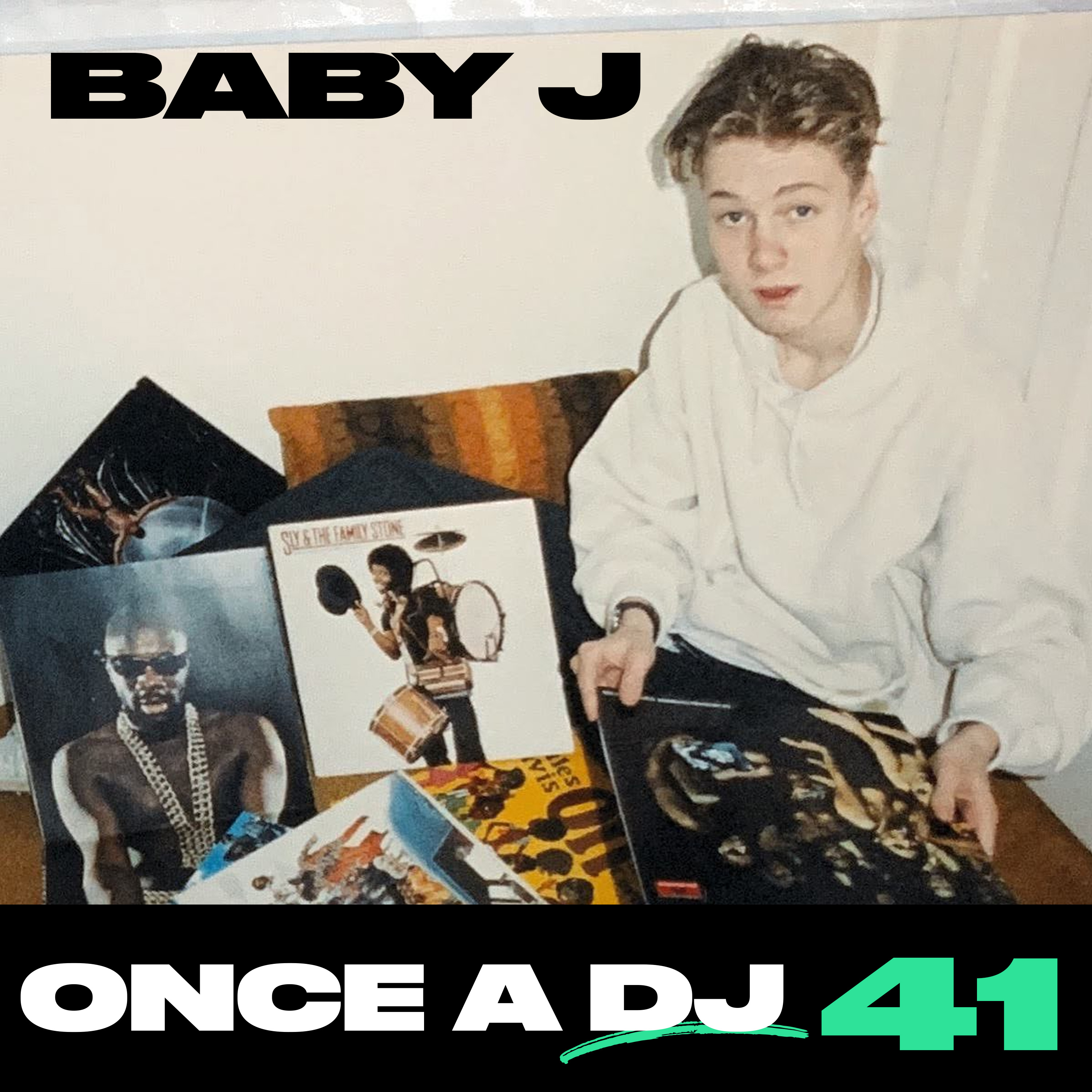
In this show we speak to UK Hip Hop legend Baby J about his early discovery of black music, his exposure to people’s struggles and education in societal issues, and much more.
We get into his unique approach to production, and how he managed to build a career firstly in the US, what made is sound stand out, and how he formed lifelong bonds with some of the artists he worked with.
There’s a lot to get into with J, so I hope you enjoy this, as there’s a part 2 coming in a couple of weeks!
Transcript
Baby J, thanks for coming on the show. It’s been a while.
Speaker B:It’s been a while and it’ll be.
Speaker A:Good because I don’t think we’ve ever had this chat before about what your background is or anything because you were just kind of there on the scene when I was working around.
Speaker C:What you’re trying to say is I’m significantly older than you. By the time you hit the scene, I’d already been there a decade or something.
Speaker A:I was a late starter. But yeah, it’d be really good. Good to kind of start off by looking at how you first got into music, into DJing. Yeah.
Speaker B:Okay, so music.
Speaker C:So I shouldn’t have got into music or black music.
Speaker B:There’s no rationale for it really.
Speaker C:So, you know, grew up in a middle class white family. Neither my parents especially into music. No uncle that played an instrument or was in a band or anything like that and.
Speaker B:But just kind of got exposed kind of through pirate radio and listening to.
Speaker C:Bits and bobs on the, you know, mainstream radio and whatever to black music. And just straight away just thought this is amazing, and really liked it.
And then kind of gravitated to a couple of mates at school that were into hip hop when hip hop first came out. So we’re talking, you know, kind of, well, not first verse that came out, but you know, when probably there’s first an awareness over here.
So it’s kind of like early 80s, late 70s, that kind of period and really kind of early population, Public Enemy,.
Speaker B:Eric Being Rakim, that kind of stuff,.
Speaker C:Bdp, first album, all that type of stuff. So I had a couple of older friends that were listening to that and also funk and soul, Parliament, Funkadelic, all that type of stuff.
So I kind of gravitated to a couple of friends at school that were into that type of stuff and they were a bit older than me, so they were putting me on different types of music. There was heatwave pirate radio in Nottingham, which you could get just about from Derby. So we used to tune into One step ahead show DJ.
One Step Ahead was one of my first DJs that I really kind of learned a lot from and just so.
Speaker B:Just kind of really got into kind.
Speaker C:Of black music and music. And basically those days you didn’t.
There was no Internet, obviously radio was very limited and certainly like mainstream radio wasn’t playing the sort of music.
So we would kind of find out about these bands and you’d save up your pocket money and you go to the record shop and you’d flick through the Soul and R B section and kind of pick by cover. So if there wasn’t a band, you know, you kind of look at the COVID and kind of go, that looks like the sort of thing I’ve been to.
Speaker B:Or we used to go to the.
Speaker C:Guildhall Market and then there was a shop in the old kind of where Derby and is now used to have independent shops and there’s a record shop upstairs there and you just go troweling through the. These boxes of 50 pence, 20 pence records and anything that had like a woman with an afro on the COVID if it was cheap enough you’d buy.
But bearing in mind what I’m talking about is you probably had the money to buy like one or two records a week max.
Speaker A:Yeah.
Speaker C:And you go home and some of them would be trash or some of them be com. A lot of times it’s complex because essentially the math is this, right, you in Derby.
So what was really strange to me is when much later in my career when I started going to the States,.
Speaker B:You can go to like thrift stores.
Speaker C:In the States or a record store in the States and you’ve got all these old records that are really cheap, but you’re buying them from the generation of people that grew up in the Bronx or in Brooklyn or wherever you are, you know, 10 years ago, they don’t want the records anymore. Yeah. So the stuff they were buying was, you know, amazing.
Speaker B:I mean, Derby.
Speaker C:So a lot of it is kind.
Speaker B:Of like, you know, you’re going through and, you know this, you’re flicking through these things and it’s kind of like.
Speaker C:Sounds of the Derbyshire Railways, brass trombone.
Speaker B:Sections, you know, it’s like that. But occasionally you’re gonna get this soul.
Speaker C:Record, but the soul record you’re gonna get is like Motown hits or covers or, you know, it’s like, yeah, you know, some kind of string. What’s it love? String orchestra.
Speaker A:Oh, Jeff love, Jeff love.
Speaker C:There you go. String orchestra. Covers of Bond, you know what I mean?
Speaker B:So basically. But it was that.
Speaker C:So you’re just buying what you could, trying to get hold of kind of some soul music on R B.
And then basically all your mates would be doing the same or my little crew and then we’d be taping everything and swapping stuff and you kind of, you know, you’d find out about Parliament Funkadelic, Sly and Family Stone, Herbie Hancock, Donald Bird.
Speaker B:And Blue Note was something you could get. You could buy Blue Note, but that.
Speaker C:Was more traditional jazz.
Speaker B:So we’re probably listening to Jazz more than we would, just because you didn’t.
Speaker C:Have access to the funk and the soul and the rare grooves and all that.
Speaker B:So that was the thing. So I was buying that and then.
Speaker C:Obviously all the new stuff. So my earliest stuff was like early Public Enemy, Booger Down Productions, Eric B and Rakim.
And then the next wave was like Jungle Brothers, Tribe Called Quest, Dela, Soul Gangstar. That stuff was like the new hip hop to me when it first came out. So I was up on that.
Speaker B:And I think really what happened was. Well, no, the first part of it was DJing.
So DJing happened because we used to go to the clubs in Derby, you have Blue Note, and they would split it between indie and hip hop and soul.
Speaker C:So literally they’d swap over every hour or half hour, and all the indie kids would go upstairs, their DJ would come off and we’d all come downstairs and Russell or V Brown or Soul Syndicate, these guys would go on and DJ and we’d listen to that music for an hour and then you switch over. But it was basically all the cool kids in the city, but there wasn’t enough of us to make a night for just hip hop or a night for just indie.
So we’re all in one space on a Thursday night for the Blue Note.
Speaker A:So is that Russell from Progress?
Speaker C:Russell from Progress, he started off as kind of a soul and reggae dj.
Speaker B:And Russell, Russell was a good dj. But the main thing about Russell, he.
Speaker C:Was always very entrepreneurial. He had connections, he was good at dealing with people. So he get the clubs, he broke the deal. He wasn’t the best hip hop DJ or soul DJ.
In fact, I think it took him about 20 years to learn to mix. But he’d get us through the door.
And then, you know, like Pui and Mikey D and all those guys that was the original Soul Syndicate, those guys would be in there. And then some of us younger kids.
So there was G Force Rags, myself, kgb, some of the guys that were doing hip hop, we’d occasionally get a little slot.
Speaker B:So me really what would happen is when you wanted to do a party, so a lot of those times you’d.
Speaker C:Have your regular Thursday night at Bluenote. And the only other things was someone would have a birthday party and book a dj.
And that was the other time there’d be a hip hop night or soul night, right? And when there was a party on, you go to Russell or Soul Syndicate.
If you were kind of, you know, more black, you go to Soul Syndicate, if you’re a bit more mainstream you go to Russell and you book them to DJ and they’d be able to get a venue and blah blah, blah for your birthday.
Speaker B:But what started to happen is because I was buying this music and I was just literally every bit of money. So I left home really young.
Speaker C:So I left home at like 16, right?
And my doll check would come and immediately what I do is I go to the record shop, go to BPM and spend most of my doll check on, on records and then spend two.
Speaker B:Weeks trying to work it out around.
Speaker C:Food and electric and all the rest of it. All my money went on music.
Speaker B:But people knew I had this record collection, right?
Speaker C:So when they wanted to have a party and they couldn’t book a dj,.
Speaker B:They come to me. And that’s how I started getting my first gigs.
Speaker C:It wasn’t because they wanted me because I was a good dj, it was just because they couldn’t afford, you know, the other broke people around me that wanted, you know, having the 19th birthday or whatever couldn’t afford to book a proper DJ, so they booked me.
Speaker B:And then through that people started to.
Speaker C:Know that I djed. And then Russell started giving me a couple of slots. So he gave me my first little, okay, you can do the half hour warm up or whatever.
And the thing that was different about me than the DJs because I was coming from a hip hop background and.
Speaker B:Through buying records, I was buying hip.
Speaker C:Hop and I was buying soul. And the big thing was I’m buying hip hop records, but because I’m into the, we called it rare groove at the time, right?
But because I’m into the old soul.
Speaker B:And funk, I’m hearing these breaks and I’m like, I’ve got that record and all they’ve done is looped it up and put drums on it. Like, I know that I’ve got that.
Speaker C:One at home, right?
Speaker B:So I, I kind of had this understanding of how hip hop was being.
Speaker C:Made because I had the original breaks.
Speaker B:So when I started DJing, I would mix the records, yeah, because I knew.
Speaker C:About, you know, scratching and mixing and blah blah, blah, that my generation, so me rag certain other DJs we knew about that the older guys weren’t mixing records.
Speaker B:So when I went on the my.
Speaker C:USP for derby at that point in time, as I was probably the only black music DJ that was mixing and trying to scratch and stuff like that, these guys were just so, you know, you’ve got to think that most DJ culture in this country black music comes from reggae sound systems, not from hip Hop. Hip hop was an American thing. People liked hip hop music, but they came from sound systems.
And your original sound systems, if you went to a blues party or whatever, they had one turntable.
So basically you had someone with the mic, he’s going to play a 7 inch, then he’s going to talk a little bit and he’s going to put the next seven inch in. And when you rewind, you rewinding that one. Are you pulling the needle back on that one thing? There wasn’t even two turntables.
Speaker A:Yeah, I remember playing on. It was one of the local reggae sound systems. And I was taking two turntables and.
Speaker B:They were like, what?
Speaker C:Yeah, it was just.
Speaker A:Yeah, it was just totally alien to them because of that. And.
Speaker B:Yeah, and it was weird. There was like. There was almost a bit of backlash, like, because the DJs were looking at me like, what are you doing? But probably a little bit of a.
Do we need to know how to do this? And I remember what. I always remember one time being in the club when I was playing UK soul, right? So R and B type stuff.
And I had this track that everyone, you know, was big track at the time.
Speaker C:And I had my other track on and I’m dropping the track in and.
Speaker B:Pulling out and then dropping it because I’m mixing it, right? And I remember there was this older.
Speaker C:Black woman, she probably was older, but she was older than me because I was like young teenager at the time.
Speaker B:And she was just there going, stood near me dancing, and she was like, just play the fucking record, you know, I was like, but people didn’t understand. They were like, why aren’t you. Because you drop the bit in and everyone would recognize it and go, oh.
And then you pull it out and then you drop the bit in. But she was like, just play the fucking record, you know, because, like, they didn’t understand, you know, that DJ thing.
So I think when I started, the thing that made me different as a DJ in Derby is no one was really. The kids that were mixing and scratching weren’t getting gigs. So I was probably the one of the first, like, certainly playing solo and.
Speaker C:Hip hop that was actually mixing and scratching.
Speaker A:Would they have been maybe coming more from like an electronic sort aside, the ones that were scratching and stuff?
Speaker B:I think. Yeah. So the hip hop kids, obviously they would have been listening to electro and then early hip hop and then.
But if you were listening to hip hop, you were always aware of mixing and scratching because it was on some.
Speaker C:Of them, you know, Grandmaster Flash, it was on Those records. So you, you know, and the bits we’d see from yo MTV or just on record, you know, it was part of the culture, right? So he was aware of it.
But a lot of the guys, the black DJs that were older than myself or DJs playing black music or coming from a reggae background or soul background or whatever. So there wasn’t that thing around. It was just. You just played a good record, you know what I mean? And you, you usually had a, an mc.
Speaker B:You know, the DJ in reggae sound.
Speaker C:System is the guy that holds the mic, you know, and the selector is the guy that plays the records, right? So you know, the DJ really is the guy with the charisma that’s going to talk over the mic and the select is just the one who’s picking the next tune.
Putting the record on wasn’t a big deal in reggae sound system culture. And that bled into.
Speaker B:So the way we DJ’d like it.
Speaker C:Was different to America, do you know what I mean? Like and the rock and I still think that’s had an impact on how we produce music and make music and everything.
Speaker B:Because we’ve come from that reggae sound system.
Speaker C:Because most of the first people over here that was doing black music was from Jamaica as opposed to. They’ve been, you know, like America was different, you know what I mean?
Speaker B:So, and then from that really the.
Speaker C:Production thing was me producing really started because I used to that.
Speaker B:So nowadays if you’re into an art,.
Speaker C:If you’re into music, right, they’re gonna, there’s gonna be someone dropping something every other week. There’s no shortage of music.
Speaker B:But back in the days, firstly to hear the music, unless you was in.
Speaker C:London or Birmingham and the pirate DJs were playing stuff all the time, you had to buy the music. So you’re buying a cassette or you’re buying vinyl, that’s expensive. So you’re only going to buy maybe one thing a week of a new release, right?
Speaker B:And the other thing is these artists, there was only like a handful of.
Speaker C:Artists you had like Gangstar, BDP, EPMD, Eric BNRK.
Speaker B:So really you might have 10 artists really that are dropping, you know, that are decent or dropping hip hop across a year. And these guys are putting one album out a year. So if you, you into, let’s say you like Eric B and Rakim, Booger.
Speaker C:Nan Productions and Gangstar, they’re your three groups that you’re really into, right?
Speaker B:Those guys are only going to drop three albums.
Speaker C:I mean one album a year.
Speaker B:So you Might only have an album. You can even go and buy every. And so you’re gonna buy every 12 inch and everything, because there’s nothing coming out. Do you know what I mean?
So I really wanted new music, but at the same time, I’m listening to these hip hop records, sampling music that I’ve got the soul records off. And I’m like, if I start making my own music, I haven’t got to wait for new music to be released because I can produce my own.
So I’m like, I could do this. So I could just.
So basically I bought a friend of mine, this guy Carlton, who was like this black guy I knew from Derby that produced house music, right? Early Chicago, Detroit sounding house music. And he had this drum machine he was selling.
Speaker C:So I bought this drum machine from.
Speaker B:Him and I was like, how’d you use it? And he was like, no one showed me. I’m not showing you.
Speaker A:Yeah.
Speaker B:That was my introduction to music production. It was like, you’ve got to learn for yourself. It was the best advice of probably, you know, best thing anyone ever done for me.
Speaker C:So I went home.
Speaker B:I remember I had a really bad cold. I’d saved up to buy this drum machine. Had no idea. I just not only did not know how to use the interface, but I think it was a boss doctor rhythm.
It was called like a. I think it was a 330 or 550 or something like that.
Speaker C:And.
Speaker B:But I didn’t even understand the basis.
Speaker C:Of, like, the kick goes on the one and the snare goes on the top. I just didn’t know anything about anything.
Speaker B:I’ve never played any music.
Speaker C:I just know how to DJ at this point. Right.
Speaker B:So basically I had sound labs which are then like the belt drive turntables. Oh, yeah, those. And a DJ mix on this drum machine. And then I had a couple of tape decks. So what I realized I had to.
Speaker C:Do because all this, yeah, I’m gonna get two copies of the same record. You’re not buying two copies of nothing. You’re struggling to buy one copy. So what I used to do is.
Speaker B:I’d play a program, a drum beat. That was terrible. And I’d play the drum beat into the mixer and get my turntable and I’d drop a break in and then I’d wait the. You know, the two.
One bar, two bar. For the. For the length of time that that break was, I’d leave that gap and.
Speaker C:Then I dropped the break in again. So.
Speaker B:And I’m leaving the gaps. Then I’m Playing the tape back through into the mixer and in the gap, I’m dropping the same break in again.
Speaker C:So then the continuous loop, right?
Speaker B:And then I’m playing that tape through again and I might drop a horn stab or a vocal sample or something like that, and then I play it through again and drop other sounds. So that’s how I was making thing.
Speaker C:There was no sampler.
Speaker B:So basically that’s how I went from like DJing to producer. And when I started doing it, it’s just because I wanted to hear more hip hop, but there was nothing coming out. I didn’t have money to buy stuff.
So I was like, if I can learn to produce, I can have an endless supply of music because I can create my own. It was never about. I wanted to be an artist at that point.
Speaker A:Yeah. So at what point did you start to take production seriously? Or at what point were people showing interest in your music?
How were you sharing it to people?
Speaker B:So the first thing really was. So there was a local crew in Derby called Posse. In effect, there was a couple of reggae sound systems.
Speaker C:And then there was Posse Effect.
Speaker B:And like, I didn’t really know those guys, but they were like, we used to go to 20th century, which is another club in Derby, and I used.
Speaker C:To see those guys and they were just. They were the ones that had Kangols and the trainers and. Do you know what I mean? So to me, I was like, these guys are just so fucking cool.
Speaker B:This girl I knew who I was friends with was friends with one of the guys from Posifect. And I knew they were like, they.
Speaker C:Break dance and they rapped and DJing bits and bobs. And at this point, I’d started making beats. I maybe had 10 beats or something that I’d made. And I was like, oh, I need.
Speaker B:I thought to make this. Take this further, I need a rapper. Do you know what I mean?
Speaker C:But I didn’t really know anyone that rapped.
Speaker B:I knew a few friends that kind.
Speaker C:Of messed about, but they were whack and they weren’t cool. So I didn’t want that.
Speaker B:But I wanted these guys because they.
Speaker C:Were Posse Effect and they were like, super cool, right?
Speaker A:Yeah.
Speaker B:So I asked this girl, like, oh, speak to your friend, see if he, you know. So he came and I met him, this guy Koki, and he was like, you know, yeah, I might do some bits.
So I played him some of the beats and then me and him started working together.
Speaker C:Then there was this other guy at NYT that he was good friends with.
Speaker B:And he was A rapper as well. So they were my first rappers. And we started making these little demos very slowly because they were super lazy. Not so much Koki, but nyt.
But yeah, to me, that was it then. I’d landed.
Speaker C:Everything I wanted to achieve in life was there.
Speaker B:And then I suppose it just kind of grew from slowly making demos with him, then sending out some demos. Nothing really happening with them. It was just all super local at this point.
And then I started working with Yogi, who, you know, Yogi was young at the time, so there was Yogi and Shade 1.
Speaker C:Shade 1 was still at school, so he was like, literally came first time. Shade One came to my house. He was in his school uniform and.
Speaker B:Yogi was like, even, you know, like, he was. He was out of school, but he.
Speaker C:Was like a young dude. And Yogi had come up on the reggae sound system. So he wasn’t.
Speaker B:He was a rapper, but his first.
Speaker C:Thing was chatting on sound systems.
Speaker B:So he was from that background, but he could rap. And everyone was like, this young guy, Yogi, he’s nice.
Speaker C:So me and him started and we just clicked. I think we was into the same hip hop. And Koki, so Koki’s older than me,.
Speaker B:So Koki was into like the old school hip hop.
Speaker C:Very much a purist, but Yogi was kind of into the stuff that, like, you know, whether it’s gangster, but, you know, like the slightly younger stuff. So I was producing more. This was around the time, I think Wu Tang was just about to come out.
Because when Wu Tang came out for me, everything changed. Like, the sound just shifted all of a sudden, like a notch.
Speaker A:Just before we go on, was there much of a relationship through the time that we’ve discussed between Nottingham and Darby with the sort of hip hop scenes there was?
Speaker B:Because what would so tender. What you’ve got to remember, like, rewind. Back then, like, the hip hop scene was tiny, right?
Speaker C:It was like this really underground micro thing. It was a bit of a cult scene.
Speaker B:So there was a thing that if you. If I was in a hip hop.
Speaker C:Crew in Derby, like posse, in effect.
Speaker B:In Derby, what would happen is there.
Speaker C:Will be a hip hop jam, whether it was in London, Birmingham, Sheffield, Manchester, wherever.
Speaker B:Yeah, and everyone, every hip hop crew from around the country would go to that jam and you get to know who everyone was. So if you look at someone like.
Speaker C:Goldie, drum and bass Goldie.
Speaker B:Yeah, I knew who Goldie was because he was part of the West Midlands, Wolverhampton hip hop crew and he was a face on the scene, you Know.
Speaker C:Like in the mod culture they talk about faces on the scene. Like you just. You knew who was who.
Speaker B:So I know who say Colin Carruthers.
Speaker C:Was from Nottingham or some of them Nottingham guys would just. Because you go to the hip hop jam and they will be there and it wasn’t like there’s like 500 people in the.
You know, there’s like 200 people there or 100 people there, but everyone was.
Speaker B:Like they were from their scene. So you’d go and you’d represent your area, do you know what I mean?
Speaker C:You probably get on a coach or travel up together or whatever. And so everyone knew people from. But largely at the time it was.
Speaker B:Like there was a bit of rivalry. So there was rivalry anyway. It was kind of like a thing that if you went to an area and someone thought you were soft, they.
Speaker C:Were going to try and rob you.
Speaker B:And he could easily kick off.
Speaker C:So it wasn’t like now, do you.
Speaker B:Know what I mean? I suppose, yeah, this stuff still happens. But it was like you had to.
Speaker C:Be on it and you weren’t going to go to one of them areas on your own. Like, you know, like you had to.
Speaker B:Go with a crew of people because, you know, people would try it with.
Speaker C:You, you know, like you could be in problems. So like when you went as Derby,.
Speaker B:You went together as Derby, when you went as Nottingham, so you. We kind of knew those guys and I’m sure some people have relationships, but there was.
Speaker C:It wasn’t like a super friendly thing and it was like there was kind of a rivalry of like which, you know, which crew is the flyest, who’s got the best clothes, prettiest girls, you know, best breakdancers, best rappers, blah, blah, blah, blah, blah. And whether that’s. And the other times you saw people was at carnival, West Indian Carnival.
So you go to all the carnivals in the region and again you go with all your boys because it could kick off sort of thing.
Speaker B:So I mean, I’m a white kid, so I’m. And nowadays it doesn’t matter. Then it did. So you almost had to you.
Speaker C:It was almost, you know, like I was on the outskirts of it. Like I could kind of roll and you know, I was kind of. The fact that I could even go with some of my black friends and be in these environments was a.
Was a kind of a badge of honor because most white kids that were into hip hop wouldn’t even have been allowed to go to those places or they would have had problems if they were there. So the Fact that I was even there with people was a thing. Whereas nowadays it, you know, like, it doesn’t matter. Hip hop’s. Yeah, you know, past that.
But at the time, yeah, so there was a scene.
Speaker B:That’s how I would say everyone from Derby knew.
Speaker C:Not the Nottingham crew and all the Nottingham people knew the Derby crew. But we probably weren’t friends.
Speaker A:Yeah, yeah.
Speaker C:There might have been a mutual respect at best.
Speaker A:Yeah. So, yeah, sorry, just going back to where you were with Yogi then.
Speaker B:Yeah. So me and Yogi started working on stuff again slowly for a period of time.
And then we started sending out some demos and then we used to like send stuff out to labels and we just thought that a label was gonna like ring up one day and be like, you know, hey, we’ve got your thing and here’s the check and we’re.
Speaker C:Sending the limo down.
Speaker B:She has no idea, you know. Cause we’re from Derby.
Speaker C:I don’t know anyone that’s ever done anything in music, you know, I’ve got no uncle that knew someone that was in a band in the latest Derby. Like no one’s ever been successful.
Speaker B:Nothing’s happened. Do you know what I mean?
Speaker C:So there was like one studio that was in the city for black music and that made reggae music. They weren’t interested in us having around. So we were just doing stuff in our bedroom.
Speaker B:And then I sent out some demo.
Speaker C:Tapes and the way I used to work it out is I’d buy records and I’d be like, okay, so Gangstar’s on this label, so I’m going to send them a demo tape because I like Gangstar. So when they hear my stuff, they’re going to like it because they like Gangstar.
What I don’t realize is whoever’s signed Gangstar in New York and then it’s been licensed to whatever label in London who probably don’t just know the sales in New York were X. So we could probably get sales of Y.
So we’ll pick it up and the guy that’s probably licensed there or the label that’s picked it up is probably into flipping dance music and doesn’t give a rubbish about, certainly about the nuances of east coast hip hop at that time. So they’re not going to give a rubbish about what I’m sending them. But I don’t know this.
So I’m just sending out tapes, waiting for the phone to ring when I say I’m sending that tape. It’s not even like I’m sending out a demo with A press shot and a bat. I’m literally old TDK D60 from the back of my sofa with probably like.
Speaker B:Two tracks with Yogi rapping, because that’s.
Speaker C:All you got around to doing. And the rest is just full of instrument.
Speaker B:My instrumental beats.
Speaker C:And I’m sending a 60 minutes worth of music, thinking I’m going to get a record deal. Like just waiting for the letter to.
Speaker B:Come through the door and then. But one of them. So when Wu Tang first came out,.
Speaker C:I’m on about Protect your neck.
Speaker B:The first signal, there was a mailing address on the 12 inch, right? And I sent out one to Wu Tang Records in Staten Island, Shaolin and.
And the A and R. This guy called Class heard my demo and I remember there was a track. There was like three Yogi tracks and then some instrumentals. And he called me up like little old me and Darby and was like, really like your stuff.
Speaker C:Want to do some work with you.
Speaker B:You need to come out here for a meeting. And I’m just like, whoa. My head was just blown. I was like at the time, like, Wu Tang, they weren’t big at this point. Like meth hadn’t dropped.
I don’t know whether I think 36 chambers was out and Protect yout Neck was like a big track at the.
Speaker C:Time for underground hip hop.
Speaker B:But I was like, wow, stuff that Tim Westwood’s playing or 279’s playing, those guys have heard my stuff. So I was like. So they wanted us to come out for a meeting.
Speaker C:I’m on the dole, I ain’t got no money.
Speaker B:So I went to the local neighborhood guy who was like into hip hop.
Speaker C:He funded the local pirate race. So at this point, I’m playing on pirate radio in Derby as well. Well, so there was two.
I played on Star FM and then Power 99, which basically playing on pirate radar and Derby, right? You filled your. A milk crate up with vinyl and.
Speaker B:You walked across Derby to wherever the.
Speaker C:Radio station was, which was usually like in a squat or in like upstairs in someone’s house, and you played.
Speaker B:And we, because we were playing hip.
Speaker C:Hop and we weren’t big DJs, we got the graveyard shift. So we’re playing like two in the morning when you finish, you don’t get paid when you finish your shift. You walk home with your crate of records.
Speaker B:If the police see you with your records walking through, they know what you’re doing. So they’re probably going to try and take your records. This is all everything I’ve got in life.
Yeah, you know, all my money’s gone into these records. So you’re literally like ducking and diving.
Speaker C:Into doorways if you hear a car coming and all this. And.
Speaker B:And again, if you get, if you get raided while you’re on air, they.
Speaker C:Can lock you up, they seize all.
Speaker B:The equipment, they take all your records, and the person that owns the equipment is going to have an issue with you because it got raided on your shift. And you get paid nothing to be on pirate. But we were desperate for a slot, do you know what I mean?
And so we used to, me and this guy called Kingy, we used to DJ together and have this lot. And then. Yeah, so we started doing pirate. What was the name before that?
Speaker A:You went to that guy to see if he could fund you?
Speaker B:Yeah, yeah, yeah. So he funded the radio station. He always said, if I can help you in any way, let me know. So he was the only guy I knew with any money.
So I went to him and I’m like, listen, I’ve had this phone call. They want me to go out there, blah, blah, blah. He’s like, you and me, we’ll go. And he bought. And this is back in the days.
Speaker C:Like, it’s not none of this 700 pound, 600, 500 flight to New York, they didn’t exist.
Speaker B:So he bought two, two plane tickets and me and him flew out to New York. Neither of us have been before. Got there, the guy was meant to meet, didn’t turn up. I’m in New York.
Eventually I managed to get hold of someone on the phone. We took, got ourselves out to Staten island, went to the offices, the guy isn’t there. We’re sat in the offices.
This guy called Mook, who was like part of the management team, he’s there. So he brings us in. He doesn’t really know who we are, why we’re there. So starts trying to pitch to us.
Speaker C:About what we, what services they could sell us. Like. And I’m like, nah, like your guy told us.
Speaker B:And I’m like, oh, it feels like we’ve come all the way out here and we’re getting hustled. But like, Rizza was there, you, God, was there various other people that we met and blah, blah, blah. And then eventually class turned up and.
Speaker C:He was great, you know, he took us around, we stayed with him, was.
Speaker B:Out there for a few days before the flight back, and so we had that. And that just gave me, like, at that point I was like, this is.
Speaker C:Possible, this could happen.
Speaker B:But then nothing happened.
And then Class left Wu Tang because around that time, Rizzo got this new deal with Sony and taken his kind of key staff with him and not taking Class. So Class had got the Sons of Man deal, the old Dirty deal and.
Speaker C:Various other bits, and he felt a.
Speaker B:Little bit slighted, so he set up his own thing. And then I was kind of. It felt like in limbo at that point.
Speaker C:And then Class rang and he’s like,.
Speaker B:Right, I’ve left and I’ve set up my own thing and I’ve got this artist, Nitty Gritty, and I want you to come out here and produce his album for him maybe. And that’s it. Look at this.
Speaker A:The exact record. I got that from your collection.
Speaker B:Oh, there you go.
Speaker A:Feel like Nardwa, you know, when he’s.
Speaker B:Got all the, like, token stuff, I even think I’ve got this.
Speaker A:I think it’s one of the only things I’ve got with an acapella on it.
Speaker B:Yeah. So, yeah, Nitty Gritty, True Grain Entities Entertainment. Class set up that. So I went out there for three months again.
My friend helped me fund going out there, moved out there and was producing for him. He never ended up coming. Well, that came out and everything else got dropped. He had some of the best music I’ve ever heard. It was amazing.
But he just. He ended up falling out.
Speaker C:I think the story goes that he ripped off the investor and something, something. So it just didn’t happen.
Speaker B:But he was from the same.
Speaker C:He was from Queensbridge, same blocks as.
Speaker B:Havok, so he grew up with Havoc,.
Speaker C:So knew all those guys and Naz and blah, blah, blah.
Speaker B:So. But during that trip, Klass used to take me around with him everywhere. And Klass was really well connected.
So prior to doing Wu Tang, he’d done Onyx, he’d done Busta Rhymes. So he knew a lot of people. He knew Nas, Da da Da, all these different people. So he’d take me to, like, DD Studios, Premier would be there. Wow.
Group home. And at the time, Klaas was working on Shabazz, the Disciples project with Lord Jamal from Bran Nubian.
So he used to take me over to there, to Lord Jamal’s house while Shabazz and I was like, a massive Shabazz fan.
Speaker C:Like, out of all the Wu Tang.
Speaker B:Artists, Shabazz was one of my favorite. He had definitely the Penalty at the time, which was one of my favorite records.
So at the time, probably my two favorite records were Death by the Penalty by Shabazz, which was, to me, like the most underground. Woo. Track. And Dead Prez had the red tape out, which had Food, Clothes and shelter, Happiness and another track, Can’t Remember.
And Lord Jamal was involved with both of those projects. And when I met Lord Jamal, I was like, I love these tracks. So Shabazz came through and I’m like, you know, I love your stuff.
Gave him this, like, again, 90 minute D, 90 beat take full of tracks. And then he introduced me to M1 from dead prez.
And then M1, we went out to this club night, introduced me to Stick at Dead Press a few weeks later, and me and Stick got on. So then I came back to the States.
I don’t know whether I recorded with Shabazz before I came back, but I stayed in touch with Shabazz and stayed in touch with Stick. And I’m sending them out beat tapes all the time, and Stick, like, some of my stuff. And then I got this.
I got this single deal from these kids in Manchester and to do. To do a single. And I spoke to Shabazz about doing it.
Shabazz was like, yeah, so we got airfare to go out there again to record that, and went out and recorded a track with Shabazz, which was called Ghetto Disciples.
Speaker A:Is this about 95, 96.
Speaker B:Yeah. So I think the first time I went to New York was 96. So probably at 97, maybe 98 now.
Speaker A:What was it like when you were over there and you’re, like, going to D and D Studios? You’re just, like, pinching yourself, just like, what am I doing here?
Speaker B:Yeah, I mean, it’s. Yeah, 100%. And then it’s like, but I’m so young and naive. I was just like, yeah, this is to happen. I can be part of this.
But D and D now, to me, is not what D and D. When I went there, it was just like, we’re in D and D Studios, but I didn’t know. Like, I’d heard of it, but it wasn’t like, now D and D is legendary status. Yeah, Like.
Like, meeting Lord Jamal was, like, really special because it was like, Brand Nubian,.
Speaker C:And I’d been listening to Brand Newbie for five years, you know.
Speaker B:But, like, I remember, like, Class saying to me, like, I was like, yo, I love Naz’s album. He was like, naz ain’t no. You know, like, you’re gonna see Nas.
Speaker C:When you’re out here. Like, you know, I’m basically kind of saying, like, I’m a more important person than Naz. Like, Naz has speak to me with respect.
You know, like, you’ll see when you see him, like.
Speaker B:Because Naz was new then, so, like, D and D wasn’t a big thing at that point. Like, premiere was because I’d grown up on, like, the first gangsta album, then step in the arena and blah, blah, blah.
Speaker C:So it was like.
Speaker B:But certain people, like, their prayers, they weren’t even signed yet, or maybe they’d just been signed aloud. So it was like. There was a lot of people that I was meeting that they weren’t, you know, like. And I remember meeting. We met Finstrom Bundy. Who this?
Yeah. So I met those guys in DND and I was like, yo, I really like your 12 inch because they had 112 out. I was like, here’s my beat tape.
And afterwards, class was like, you don’t have to be on those guys. Like, they’re no one, you know, like. But there was a lot of people that, like, weren’t that big yet. Do you know what I mean? When we’re meeting.
Speaker A:Just a side note on Fins to Bundy, I think I got a 12. Finster Bundy, 12 out of your collection. I sold it for about 30 quid.
Speaker B:Yeah, thanks. Yeah, I was going to say you’re going to buy it back, but. No, but, you know, when you.
A lot of that stuff got sold when I eventually moved to New York and I couldn’t take my records with me.
Speaker A:Yeah.
Speaker B:So there was like the big. The big sale that you got some of that stuff from then. But.
And what’s interesting, just going back to that, digging through the crates in the market hall is later on, when I spoke to. When I’d speak to Shabazz, like, years later and stick from their prayers, he’d be like, what I liked. What they’d say.
What we liked about your beats is they said, oh, because you were from the uk, you had a different sound to the producers, where a lot of the producers that were sending them stuff, it was similar because obviously we were influenced by the music at the time. But your stuff always sounded different because you were from the uk. Now, I think there’s a grain of truth in. In why they think it was different.
Because I think growing up with the influence, when I got into hip hop was hip hop, and then those guys.
Speaker C:Were into reggae sound systems.
Speaker B:So that even the way you’d listen.
Speaker C:To music, you go around someone’s house and they’d have a tape deck going.
Speaker B:Into an EQ, going into another EQ, going into an AMP in speakers, right? And those EQs would just be set with the bass all the way, like mids all the way down, bass all the way up and a little bit of treble.
So you literally be listening to something. You could barely hear any lyrics, you just hear bass. And that was because they came from reggae sound systems.
They weren’t listening to music like that in the us. Yes, bass is an important thing, but not like for the Jamaicans, do you know what I mean?
So I think when I produce even now, my stuff is bass heavy compared to US stuff. Like if you listen to Dr. Dre, like his stuff, there’s. The bass is very thin compared to anything that’s going to come out of the uk, right?
Because we grew up around reggae sound systems, so.
Speaker C:Oh, I didn’t grow up around them,.
Speaker B:But I grew up around kids that.
Speaker C:Grew up around reggae sound systems.
Speaker B:But the other thing is that the American guys that were producing, so if you look at Diller, you know, the Legendary or whatever or Premier, those guys would go into digging the crates in the, you know, wherever the local cheap records were. And they’re getting old, you know, soul records and Latin soul and jazz records and jazz funk.
Because that’s what the generation before them listened to. Didn’t want the records no more. They’re in there. I didn’t get those records. We got Jeph Love and his orchestra, right?
We got, you know, soundtrack of the 70s film scores.
So the stuff I was sampling was different because when you, you know this when you go back in the days and you went to the market stores to buy records and you’re flicking through, there’s this soul R and B section and everything in there is going to be £5 or £10. Then there’s the £0.50 section. That’s where I had to go digging from. I can’t go and buy the Isaac Hayes thing because it’s ten pounds.
So I’ve got to get Jeff Love and his orchestra and get my samples from that.
So what I was sampling was different because the music that you could get for cheap was different, you know, and the stuff that was £10 in the solar and R and B section in the UK was in the thrift 50 cent section in New York. So when I went to New York, I’m like, oh my God. I remember going to the Alights guys when I was working with them.
They were like, oh, they were staying in this old lady’s house in the basement that she rented to them and she was like, I’ve got all these 7 inch singles. You can have them. And they were like filthy, like Dusty Crackly. But there was great stuff in there, but it was valueless over there.
But in the uk, they would have been of worth because it was sold. So I think there was something about the sound that I developed that was different to the US because of the thing.
The other thing is, as well, is when I was so you. Because I didn’t have that peer thing, right. So when I started sampling, I would listen to Premier tracks and going, right. Or Rizza tracks and going.
He sampled this piano stabilizer, another piano stab, and put it together. Or he’s played the piano stab across different keys. So that’s how I thought he was doing it.
So what I was doing was sampling individual notes from different records and joining them together to make a piece of music. Later on, much later, when you get access to this music through, you know, people making breaks, tapes.
Speaker C:And then later on Spotify and all.
Speaker B:The rest of it, you start hearing the loops that Premier took, RZA took whatever. Whatever. But the time I didn’t realize they were loops.
Speaker A:Yeah.
Speaker B:So my style of sampling was different to a lot of the American producers. Not trying to compare myself to Premiere, Rizza, whatever. But these were my. The people I was listening to. These are the people.
But the way I learned to produce was I was sampling little. Like my first album, the Birth. If you listen to that, most of that, there’s no. There’s probably one or two tracks where there’s a break.
Everything else is a sound where I’m sampling a chord and I’m playing on different keys, or I’m sampling different bits from different records and putting them together. There’s not those loops because one, I didn’t have access to the records with dope loops on.
And then secondly, I just didn’t think that’s how they were making music.
So, like, you know, a lot of the Premiere stuff, the Chops and stuff from the same record or the full loops, I just, you know, like California Soul, Molly and Sure. And stuff. I didn’t realize that was a loop. Do you know what I mean? I thought that was him taking different sections.
So I almost was doing like the chops before. A lot of the producers were doing the chops because I thought that, you know what I mean, that’s how music was made. Yeah.
And I didn’t have anyone around me to go. Now we’re just getting a good quality record in the first place and taking the whole section, you know. So I think all that kind of gave me a sound.
So when I went to the States that. I wouldn’t say I had an advantage. I don’t think I did. But it gave me something that was unique.
So when people listen to my music, the idol were going, yeah, this is different. I like this. Or they were like, this is different.
Speaker C:It’s whack. You know, it sound.
Speaker A:Yeah, official.
Speaker C:So I kind of got those two responses.
Speaker A:So when did you do your first album then?
Speaker B:So the Birth came out in:Speaker A:Yeah.
Speaker B:Battle of the DJs, that type of thing.
I didn’t really know the label, but when I went to start doing bits with Wu Tang, they said, there’s this guy you should hook up with who does a lot of some of the artwork. He’d done the Sons of Man logo and different things for different Wu Tang artists. And his name’s Darius and he’s from London.
So I was like, okay, there’s a UK guy doing stuff for Wu Tang. So when I came back to London, I touched base with him, meaning metal. We became friends, and he randomly met RZA at this thing.
He was a graphic designer. He was like, I love hip hop. I like what you guys are doing. Showed him some of the stuff, and Rizza had given him some bits to do, right?
Some artwork bits to do. So he did my Baby J logo, you know, the baby with the things. Darius did that for me and quite a lot of designed for me in the early stages. So.
But Darius did all the artwork for Dave Paul, who ran Bomb Hip Hop. So he was like, I think Darius had told Dave about me. Dave really liked my stuff. And he was like, I want to do an instrumental album for you.
And like, a Baby J instrumental album. Because he’d done basically turntable stuff on instrumental albums. That’s what Bomb did. And I was like, cool.
But I was like, I want a. I want to do a proper album, you know, with rappers on, you know, like. And Dave wasn’t sure because he’d never done that.
But to me, I just wanted to be like the people I was listening to, and they weren’t doing instrumental albums. So I was like, I want to do a proper album. And I was like, look, I can get the MCs. Like, I know some US guys. I know some UK guys. It could be dope.
At the time, I don’t think anyone had done that. Like, where it was like, A producer album with rappers on, like now. It’s, yeah, quite common. But I. I can’t think of one that happened before that.
And it wasn’t like I decided I.
Speaker C:Wanted to do that. It’s just no one had put me on their projects, you know, And I.
Speaker B:Was the first one who got the break out of the people around me. So we’d done the Shabazz 12 inches. I’d done two 12s with him, and then Lamb’s Blood and Ghetto Disciples. And then I got the deal from the Bomb.
And it was like there was a. I think it was a tiny advance, but essentially what they did is they were paying for studio and they were.
Speaker C:Paying for airfare to get back and forth.
Speaker B:ole Red Hook projects in like:So they were seeing me walk through there and just be like, who is this crazy white dude who thinks he can walk?
Speaker C:They were like, come here.
Speaker B:And best Oliver Twister accent. Oh, mate, how you doing? Apples and pears. And they were just like, wait, where you from? I’m like from England. Why are you here? I’m here with Shabazz.
And Shabazz’s uncle was a big dude in the project, blah, blah, blah. So I ended up being like the mascot, hey, the crazy white kid with gold teeth, you know, So I was kind of saved.
But it was like, yeah, the projects were highest murder rate in America at that point. So, yeah, it was a crazy place. So I’m out there staying with Shabazz and recording.
But through that, you know, I’m meeting different rappers and I’m quite good friends with Em And Stick from Dead Prayers, they did a track for the album. And then I was like, em, I really need some other rappers. So he was like, I know some people. So he started bringing.
He brought through a likes who Obviously I did two tracks with them. I really got on with those guys, started working with those a lot.
And then there was another girl Fire that I met through aolites and Bless, who was Shabazz’s cousin, and Bang, who is one of em’s friends and different people and Nimrod, who was, you know.
So basically at the time, their prayers were part of this thing called People army, which was like a political movement that had a lot of music artists in it.
Speaker C:And so you know, a lot of.
Speaker B:The artists on the Birth album, People.
Speaker C:Army artists and the I Ching tattoo.
Speaker B:That they have on the neck, that’s and Dead Press logo. That’s the People army logo. So this is before it was rbg which kind of moved on into just.
Speaker A:Just on that then. Because I’m sure we’ll kind of touch on politics and things as we go on. I think we’re going to need to do a two parter.
Speaker B:Yeah, we may do.
Speaker A:Because you are quite kind of politically aware and driven, aren’t you? Like, is that something that had been. Been in you from being younger then or was that kind of through osmosis of these guys or.
Speaker B:I think a bit of both.
So there was no political education as such and I didn’t grow up in abject poverty or anything like that, but I think I always had a bit of a sense of certain things was wrong. So, you know, like, you know, I think my mum. So my mum, like it was kind of in the background, like it was never mentioned as a thing.
But like my mum fostered kids a little bit and she, she used to.
Speaker C:Look after this disabled couple all voluntarily, you know, like.
Speaker B:So I used to just get taken around to this couple’s house, Catherine John,.
Speaker C:Who was like this, these two disabled.
Speaker B:People who lived in West End and.
Speaker C:She’d just go around and you know, do a bit of shopping for them and clean the house and she wasn’t paid for. It’s just something she did.
Speaker A:Wow.
Speaker B:So I was never aware that anyone else didn’t do this, do you know what I mean?
Speaker C:And like when I was growing up.
Speaker B:There was this this black kid, Robert that we fostered for a while. He wasn’t, he didn’t live with us full time so I think he was in care.
But he used to come to with us like three or four days a week for however many years. And I again, I didn’t know that other people, like it was just like, yeah, this black kid lives in my house, you know, he’s cool, I love him.
He’s like older than me, but I just didn’t know any different. So I just thought. So I suppose it was a bit of a social thing. And my mum’s dad’s families were from Grimsby originally.
So it’s quite working class, you know, they’re quite poor families. You know, the docks in Grimsby. Grimsby is a dump of an area still. So, you know, I suppose there was a bit of that in my psyche somewhere.
And then I got into like black music, which is A music of especially hip hop revolution is a music of resistance and fight the power and all.
Speaker C:That type of thing. So I’m listening to this stuff.
Speaker B:I didn’t get on well with school, so I wasn’t interested. I loved school, but I hated lessons and I hated. I just. From an early age, it was just this thing of someone would be like, you got to do this.
And I’d be like, why? Whether it’s my parent or a teacher or whatever. And they’d be like, you’re not meant to be asking us why, you’re just meant to be doing it.
I’d be like, nah, you would explain to me why I’m not interested. So I was always pushing back then I got to a certain age, like a young teenager, and I was like, you can’t wait what you got?
If I actually tell you it, what are you gonna do?
So I kind of realized that it was all bullshit, you know, like, whether it’s school, religion, work, all these things, I’m like, there’s all these things I’m meant to follow, but actually I don’t think I want to, you know. So I just started being very. I was a very difficult teenager. So I was like in school, but I wasn’t in any classrooms.
So educationally I did really badly. And then I found music and I.
Speaker C:Was like, I’m just doing this hip hop thing. Like, this is what I’m interested in.
Speaker B:So this kind of think bit like I’d already dropped out, you know, I moved out of home at 16.
Speaker C:I was having my first child at 17, not planned, you know.
Speaker B:So I was like, I was already.
I was around lots of, you know, hip hop was connected to street life somewhere around a lot of street life, a lot of criminality, a lot of poverty, you know, it was rough, which wasn’t what I grew up around, you know. So I think I just saw I’d grown up in Derby. I went to, you know, middle class, largely white school.
And then all of a sudden I’m around hip hop culture and black communities in Derby and Normanton.
Speaker C:And I’m like, there’s these two worlds.
Speaker B:That don’t know each other exists. And it just gave me a different perspective.
So I think and that it’s interesting now because as a young kid that really wanted to be down with black culture, black music, you know, would dress black, talk a little bit black, you know, you know, was around lots of black friends and white friends, you know what I mean? But at the time I didn’t know why. Now as an older man, I can look back and go, I was rebelling against capitalism.
I was rebelling against, you know, capitalist values and white society and what that stood for. But I didn’t know that at that time. I just knew that I hated.
Speaker C:I didn’t want to get a job in a bank, wear a suit and toe the line.
Speaker B:I didn’t know why, what I was.
Speaker C:Angry at, or I did, but I couldn’t articulate it.
Speaker B:So I think the politics of socialist politics, communist politics, came later. But certainly Dead Prez and People army when I met those guys, because Wu Tang was more, 5% was more.
You know, Shabazz was a lot of references to religious studies and that type of thing, whereas Dead Prez was socialists.
Speaker C:And I wasn’t at that point.
Speaker B:Do you know what I mean? I didn’t understand what that was, really. So I remember sticking and putting me onto certain books like Assault A Shakur’s Autopilot Biography.
Speaker C:They had.
Speaker B:They had the Chairman Mao Red Book because the Black Panthers used to sell the Chairman Mao Red Book, partially because it was a socialist book, but partially just because it made a raise selling it to students and it brought in some money for them to do their programs, right?
And I remember that in my dad’s garage, he had Chairman Mao’s red book in a box from my uncle, who was a sailor, because we’re from Grimsby, and he used to be be on the boats, and he brought one home and he was in a box somewhere. So when I was like, I got some. So then I went home and found in my dad’s garage this red book.
And I start reading every page of Chairman Mao’s comment and I’m like, wow. You know, like I’ve found. Do you know what I mean?
And certain things just started slotting together between me hating English, British capitalist, ruling class, royal family, that whole thing that I knew I already hated but didn’t know why. And this idea of socialists and communist politics and the connection between that and hip hop and where hip hop fitted in that.
So that’s where that came from. And Dead Prez, you know, that’s from family to other stuff.
I think Stick was involved with, you know, kind of revolutionary stuff from a school age, you know, strikes and school. And I think M1 was around old school panthers and political activists from a younger age. So he was aware of all that stuff from a much younger age.
So I started meeting people that was around that kind of politics and being exposed to that through them and then coming back and then I Was like, who’s a Socialist Worker party? Let me meet with them and find out what they’re about.
And we settled this little thing in Derby called Ant Militia, which was like people army, but it was like a derby version of it. And, you know, me and some of the guys I was around set up this little thing which was a political street organization. It wasn’t about hip hop.
Speaker A:Yeah.
Speaker C:But we was all into hip hop, you know, So I think the music.
Speaker B:So that’s when. When Yogi set up AMP Records, it was through, you know, because we was interested in that stuff and bringing that into.
But we were learning, you know, we didn’t. Wouldn’t understand it. So, you know, and then I became more involved with the movement at the same time being involved with hip hop.
So I was like meeting with. Going to Socialist Worker Party meetings and meeting. Going to their events nationally in demonstrations.
So I’m getting a political education at the same time doing the hip hop stuff and kind of trying to see where it all fits.
Speaker C:And through that, I did the love music, hate racism stuff because it was.
Speaker B:A natural connection between socialist politics and. Yeah, so I guess it’s already been there. But I think being around their present People army, like, fast tracked that for me.
Speaker A:Yeah.
Speaker B:Because they would deeply. Especially M1. M1 is a revolutionary.
I’m not saying stick isn’t, but M1 was very involved with the movement more broadly, whereas I think it was more an ideological thing, personal thing.
Speaker A:So did it all just kind of feel like everything was coming together and. And write when you get the album?
Speaker C:Yeah.
Speaker B:And I. There was always this slight thing in the back of my head that I’m a white kid and I’m around, you know, it’s hip hop culture.
And, you know, it’s kind of. I’m interested in kind of politics and revolutionary politics, but a lot of that is to do with black revolutionary politics.
Speaker C:But I’m a white kid from, you know, a largely white country, and how does that fit?
Speaker B:So there was that question in the.
Speaker C:Back of my head, but it. I felt like I found my identity. I was like, hip hop music, revolutionary.
Speaker B:Culture, all this thing kind of connects. And it kind of made sense to me. Do you know what I mean? So I suppose I really felt like I’d found my identity. Do you know what I mean?
And now I can look back and I kind of go, well, obviously there’s.
Speaker C:A connection with black culture because black people have been the most oppressed historically. African people, and wherever you go around the globe where they are they still, historically and currently, the most oppressed communities.
So their cultural forces you’re going to have a natural connection with.
If you kind of think capitalism is a bad thing and white imperialism is a bad thing and you want to overthrow these things, there’s going to be a connection with black culture because they’re the most oppressed group throughout history and currently. So now it makes sense to me. By the time I was kind of.
Speaker B:Like, am I just trying to be black?
Speaker C:You know, know, there’s that, you know, your white friends around, you be like, what are you trying to be black for? You know, so you. You have this thing.
Speaker B:Whereas now go, no, no, no. I’m passionately interested in getting down with black culture because white culture sucks, you.
Speaker C:Know, like, yeah, I hate Oasis, you.
Speaker B:Know, and classical music and everything in the world and all that stuff. You know, I’m not ever going to fly the British flag and I’m really comfortable with that.
And this is why, you know, there’s a political backdrop to that. But at the time, you know, you got you on that journey, right? Yeah. So you’re working out.
Speaker A:So when it came to releasing the album then, was it largely the focus on the us?
Speaker B:Yeah, it’s a funny one because I’m from here, so I wanted to be big. I wanted to kind of have be known in the us, but I wanted to be respected here as well.
Speaker A:I think we’ve talked before about this, where I think we were just briefly chatting a little while ago and you were saying about how you were getting all this attention in the US, but you couldn’t get any sort of MCs, say, down in London? Yeah, on your beats.
Speaker B:I had to go full circle. So I remember before ever sending out.
Speaker C:Demo tapes in the us, I used to go to like a caveman gig or a blade gig or whatever and just try and hand beat tapes and people at one, I’m not from London, so you ain’t from anywhere important.
Speaker B:Secondly, I’m white.
Speaker C:And then times, you know, it’s like, if you’re white, you’re not anyone important.
Speaker A:Yeah.
Speaker C:So people were just looking at me like, yeah, whatever, and no one ever wanted.
Speaker B:No one ever got back to me.
Speaker C:No one ever wanted to work with me, couldn’t make any connections. But all my local kids in my local area, you know, posse and effect.
Speaker B:Yogi Shave one those guys, no one.
Speaker C:Wanted to know when I started doing bits in the States.
Speaker B:So what happened is, when I first went out to the States for that three months and I met Lord Jamal, Dead Prayers, Shabazz. I was like, I can, because this is pre Internet, right? So I’m like, I can promo your stuff for you back in the uk. I’ll take some.
So they gave me, like, you know, copies of promo tapes, cassettes and flyers and stuff like that. And I came back here and so I’d go to like, 279, try and go to Westwood and various DJs, and I’d be like, oh, I’m promoting these guys in the uk.
And because they knew who they were and they were interested in them, they were like, okay, come and see us. So that was an in with the UK guys, right? So I’d go and have a meeting about Dead Prez and give them the latest, you know, Dead Prez tracks.
Nitty Gritty tracks, you know, Shabazz the Disciple stuff. And then I’ll be like, oh, there’s Yogi, There’s Moorish, Delta 7, who we’ve.
Speaker C:Had connections with MSI Asylum, I was working with.
Speaker B:These were Birmingham groups. So it’s kind of like I had an in for the guys that we were working with because I had this US stuff.
And then when the album came, the album was exactly that. It was Dead Prayers, Shabazz, the Disciple Alikes People Army. But it was also Yogi, Moorish, Delta 7.
So it was like the UK guys and the US guys all on one album. So. But then I was like, I think I was the first producer from the UK that was working with established American artists.
Speaker C:So all of a sudden, then I was taking seriously.
Speaker B:As soon as that album came out.
Speaker C:Then uk, you know, like, it was like, who’s this guy from England that’s working with, like, Wu Tang and Dead Prayers? And so then, yes, I’m going to be able to have a conversation with Skinny man or Rodney P or, you know, the new guys that are coming out.
Speaker B:Because I’m official, because I’m working in the U.S. yeah, okay. But, you know, like, I wanted to be respected at dnd. I wanted Premier to know my name,.
Speaker C:But he still doesn’t, I’m sure.
Speaker B:But I also wanted, you know, to.
Speaker C:Be able to go to, you know,.
Speaker B:Deal Real or Dark and Cold in and them guys to know who I was. And in some ways that was more important to me because I wasn’t here. Do you know what I mean?
Speaker A:So, yeah, there’s been quite a few people I’ve had on where the sort of local, as it were, sort of seems to overlooks the mad Newmark from J5 on. And it was like we only got taken seriously in the US when we come over to Europe and started. So it’s kind of almost like the opposite in a way.
You can’t see the wood for the trees sometimes.
Speaker B:Yeah, yeah, yeah, yeah.
Speaker A:Was there much pushback from David Bohm about having sort of Morris Delta 7 and people like that on the album? Well, the UK contingent?
Speaker B:Nah. I think for him, I think once he agreed to have MCs he was just kind of like, like, let’s see where.
Because I was kind of like, look, we’ve got these UK guys, we’ve got, you know, us guys. And I think the only person that we had to pay for front, I think Poetic got some money from Gravediggers.
Speaker C:Because, you know, he was. He had to work Poetic before that. And Gravediggers, I think their album had just come out so that. That came out not long after 36 chambers.
So having him on it was a big thing. None of the dead president wasn’t a big artist at that point in time.
Speaker A:Yeah.
Speaker C:And Shabazz, you know, had a single.
Speaker B:Out, but that was it.
Speaker C:So having Poetic on it. But I think essentially we didn’t.
Speaker B:Dave. All of it was an experiment for him.
Speaker C:So he didn’t know whether he was going to absolutely flop because he’s got rappers on and he’s doing something different or whether it was going to be his biggest selling thing either ever because he’s got, you know, rappers on it and us and uk. So I think the fact that it had UK so it had another market, it was something he was interested in.
Speaker A:Yeah. So what was life like after the album came out and like how did it do in the UK and in the us?
Speaker B:The album did okay at the time. So obviously it wasn’t massive. It was. I think we made a dent in New York. We did a lot of work.
So we, we got these little kind of 50 pence size baby J stickers,.
Speaker C:The ball thing, my logo.
Speaker B:And we plastered New York.
So we got those and then we’ve got 12 inch, the all 12 inch artwork and me and like Alix and Shabazz and some of the guys are on it because we’re all grafting at that point.
Speaker C:No one was making any money. Like we plastered New York.
Speaker B:There were more baby bore stickers up in New York than any other promo. Because the interesting.
When you lift up a handset in New York, there’s the size of the little thing that had the insert at the information on was the. Just the right size. You can Put the sticker on. So we put them on every payphone. And we was travel.
We was all over, like, a lot of guys, if they were from Queens, they were in Queens, if they were. But like, Aolites and them guys, they. Ness was from Philly originally. Shabazz is buckling, but he was good. He could go everywhere.
You know, some guys, they’re not really coming out the neighborhood, but we was all over Manhattan, Brooklyn, Queens, whatever. So we were. And then. And then the other thing is that they’re on. On the subway trains.
They have a sticker that says, you know, don’t push to hold the doors open. And there’s a little circle thing with a line through. And the sticker was the right size for that.
So we just walk through a carriage, put it up next door, put it up, open the door into the next carriage. And we do every train we ever went on. And we basically lived on the. You know, we on trains all day, every day.
So we plastered it and, you know, like, fat beats. We had a good relationship there. So they, you know, put loads of posters up.
And then Beat street in Brooklyn was like the big store that everyone went to. They did a big promo thing. So they were like, you can put them up. So we got their staple gun and we did the whole ceiling. Like, they were like.
So at that point in time, if you was New York and you was buying hip hop, you were seeing the thing. And then we tried to do our thing in London as well. So, yeah, it got about. It did okay. It didn’t do amazing numbers.
I think it was a producer album, and that wasn’t really a thing. And I wasn’t famous. There was no one on there. That was massive. You know what I mean?
Speaker A:Yeah. And I suppose, like, I would guess with bom, that they probably wouldn’t have had huge marketing budgets.
Speaker B:I don’t think there was a marketing budget. I don’t think there was any marketing spend as such. So literally. But I mean, what Dave had.
Well, Dave had the money to put me in the studio, and you couldn’t do it free. We got went in the New Yorker Hotel, the building, and we’re a couple. A studio in there.
And we worked with Carlos Best, who engineered the first Wu Tang album. So she passed us in with him. So that was an amazing learning curve and experience. He was a great guy.
But again, I could never have done that without Dave’s support and investment. So I’ll always be grateful to Dave for that.
Speaker C:So, yeah, there was that.
Speaker B:But I don’t think there was money.
Speaker C:Spent on marketing as such.
Speaker B:But what Dave also had is a network to distribute. So he had distribution deal and got it out into the stores, I think. I think it did okay.
You know, I don’t think there was really anything in the way of royalties afterwards. So whatever we got up front we.
Speaker C:Probably made a little bit.
Speaker B:But essentially that was it.
Speaker A:Yeah. So what came next?
Speaker B:The next. I mean what that did was gave me a bit of kudos. I had an album out, I was working with artists, especially in the uk. It gave me a bit of space.
So then I’d say we got opportunities for yogis to stuff. So there were more people. You know, I had it in at radio around this time. One extra just started and you had like Rodney P and Skits Excalibur.
Do you know what I mean? Those guys. Rasquamay. So we were kind of starting to put out. You know, Ruckus is. I can’t remember exactly the orders but Ruckus had let it go.
Yogi had ymushu moishe, Delta 7. We had stuff with. So we were just regularly servicing one extra 279 at Church Choice.
Westwood wasn’t really sporting so we didn’t really have that radio one thing. But we were just pushing that stuff.
And between that stuff and the us stuff, especially on One extra we went for a good few years where we had stuff on the playlist like every week.
Speaker C:So we.
Speaker B:They were really kind of supporting our music.
Speaker A:Were you independent?
Speaker C:Yeah, yeah, yeah.
Speaker B:So no label behind it.
Speaker C:The bomb thing that stopped there.
Speaker B:I’m trying to think around that time if anyone had anything on our label. I don’t think so. And then I kind of met Skinny. So we were talking a little bit and then he. He wanted to work.
So we recorded some stuff, some of the singles with him. He got locked up so that didn’t happen. Then he came out. So he was on Talking Loud and I think we recorded I’ll be surprised and no big thing.
I fucked the hook. And then he got locked up. When he came out, Talking Louder dropped him. But he got picked up by lowlife Brain Tax and.
But they had to re record the song so we went in and relayed them and then that came out and that was kind of. The wave broke then. So basically UK hip hop went from being just us in the scene to being like white kids in uni were into it.
Speaker C:All of a sudden it became this cool. So you had like, you know, your fire life cyphers and roots maneuver and all Those guys, you know, around the.
Speaker B:Same time we were doing off the Hook. Yeah, it became a thing that wasn’t just. You were black and from the hood,.
Speaker C:So you was into hip hop.
Speaker B:I guess people were listening to hip.
Speaker C:Hop way before then, but there was no collective space. So you didn’t have things like Kung Fu or Off the Hook or those type of things.
And all of a sudden it was like, you go to a hip hop night and you could have kind of white kids that were into the culture and they could be there and they weren’t gonna get robbed.
Speaker B:And do you know what I mean? It was like. It just became bigger and Radio 1 started playing bits.
Speaker C:So skinny stuff came out on Lowlife.
Speaker B:And no one knew it was gonna blow. Like it was just another. At the time, it was still kind of. But he. It was just the right time and it was really good.
And he was an interesting guy, you know, that showbiz thing. Not because he was showbiz, just because.
Speaker C:He was, you know, character. Do you know what I mean?
Speaker B:So it just. The stars aligned and his stuff ended.
Speaker C:Up on Daytime Radio one.
Speaker B:Lowlife had no idea it was going.
Speaker C:They weren’t prepared at all.
Speaker A:Yeah.
Speaker C:And that album ended up charting. It was like.
Speaker B:And actually, if Lowlife had it stuffed.
Speaker C:Together and could have delivered that album,.
Speaker B:Probably would have been a top 10, top 20 album. But he just didn’t have the product.
Speaker C:To put in the stores into. He didn’t have the infrastructure there to do it.
Speaker B:But that was like Daytime Radio one. And then all of a sudden, you know, we’ve got Yogi Ymushu and there’s like labels trying to sign that. And so there was just. And those times.
So we were pressing up our own stuff. We’d record our own albums in house, sometimes in studio, sometimes in the bedroom, but with reasonable equipment. Equipment.
Speaker C:And then we press stuff up and,.
Speaker B:,:Speaker C:You were getting paid a couple hundred.
Speaker B:Pounds to do shows. So there’s a bit of money coming in, but you were spending most of it.
I was starting to get some remix work and production fees for doing stuff for other people.
Speaker C:So I was getting little bits.
Speaker B:So at that point it became a.
Speaker C:Business, as in, I could pay the rent with it.
Speaker A:Did you still have the same love for it?
Speaker B:Yeah, absolutely. I’d say I became influenced for the first time by what’s going on in the scene.
So prior to that, I was just like, I was listening to records going, these guys are amazing. I just want to do this.
Speaker C:And I was trying to do that and kind of make doing it wrong. So therefore, I had my own sound. Do you know what I mean?
Speaker B:Whereas by the time UK hip hop became big, I was like, what is getting airplay within my lane?
Speaker C:What stuff has done well and what hasn’t?
Speaker B:So, for instance, I didn’t make Let It Go thinking it was going to be a big track, but when it was a big track, I was like, I need some more stuff, like, Let It Go. So what was going on in the business started to influence what I was doing a little bit, which. And I don’t think is a good thing.
But it’s like, you know, because I was like, I’m on the. There’s always artists that are bigger than you. So I was like.
Speaker C:I could see what say Dizzy Rascal was doing.
Speaker B:I was like, I want to be at that level.
Speaker C:Or I was like, I want to.
Speaker B:Get placements on the next Raekwon album or the next Ghostface album and blah, blah, blah, and those things that I was kind of. So Ray Corner picked two tracks from me at that point.
Speaker C:I’d met his manager on a trip.
Speaker B:Out to the States and, you know, you know, he. He wanted to work on some stuff. So I was kind of on the cusp of. On the edge of lots of stuff. And in this. In this country, I was probably one.
Speaker C:Of the biggest UK hip hop producers. So, like, there was, you know, anything that was going on, I was kind.
Speaker B:Of at the forefront. You know, I was kind of connected to.
Speaker C:It wasn’t like there was anything untouchable.
Speaker B:Here and in America. It felt like I was. I was on the edge.
Speaker C:I could go to certain parties, meet.
Speaker B:Certain people, you know what I mean? Get certain meetings.
Speaker A:Yeah. And then you did that remix for that Amy girl.
Speaker B:Yeah, Amy Somebody Win House or something.
Speaker A:Something like that. Yeah. How did that come about?
Speaker B:So that came about because the guy that worked promo on Skinny’s album is a guy called Harvey. He’s from Manchester originally, I think Manchester or Leeds.
And he had a promo company called Zonkt, and he’d been brought into work the radio promo on Skinnies, and he’d seen how well it had done. So they’ve done a.
It was actually Mark Ronson’s album version, and it was cover versions, and Mark’s obviously worked on Amy’s album, so he brought Amy out and Amy in to do the Valerie cover. Right. And because they knew Amy was starting to blow up.
So because they knew it was going to be a really big single, they wanted loads of different remixes. So Sony was a label, they’re going to edge the bet. So they’re not just going to put it out.
They’re going to have a dance mix and a dubstep mix and a trance mix and a. So that every different, you know, type of genre, every different DJ is playing that track. So the track itself ends up being massive.
And they had all the mixes done and they’d gone to all the local London guys, as they always do, for all of those mixes, and paid them a couple of grand. Do the mix. They needed a hip hop mix. So they went to Harvey and they said, we need someone to do the hip hop mix.
He’s got to turn it around quick, he’s got to be cheap, he’s got to be reliable. And he goes, baby Jay. So he came to me and says, jay, there’s this thing.
Absolutely, yeah, I want to do it because I’m like, I know people that are into black music, like, ain’t really like Amy Winehouse, but they’ve never really heard her. Like, she’s never really done anything with. And this time I don’t think she’d done the Nas and the Ghostface stuff.
So I was like, she’s not done anything hip hop yet or reggae yet.
And if people heard Amy over a reggae thing or a hip hop thing, because, you know, I’m growing up around that music because I’m from the uk, I’m like, they would lose their minds in this country, right? So I’m like, I want to do that. So I already knew what I wanted.
Speaker C:To do straight away.
Speaker B:So we got paid the fee and all I’ve got to do is do the remix, send the remix back in and that’s it.
And I’m like, this is a massive opportunity because at the time, you know, like, my name’s ringing bells, I’m doing really well, especially over here. And I’m like, this is Amy Winehouse. Like this, you know, this is a massive opportunity. So we basically.
I knew straight away what to do with the track. I was like, it’s gotta have a reggae feel. It’s gotta put rappers on it. So I said to Sony, do you want one with rappers on or do you just want.
No, like, nah, just a remix, right? And I’m like, hell, no. So I rang up, I was like, who’s reliable? So I rang Malik, Rukus, Preacher and Warrick.
Alex Blund wasn’t in the I love him, but he wasn’t in the first list because Warwicker was hot in Nottingham at the time. And everyone was like. I was like, listen, I’ve got this call. You’re only going to get a change out of it because there’s next to no money.
In fact, I don’t even know whether I actually offered him any money. I was like, you need to be in the studio tonight. You need to write your verse tonight. I’ve got to hand this in in a couple of days.
And, you know, they might not even use it because Sony have said they don’t want a version with rappers on, but I’m going to try and force their hand and give him one anyway. Malik was just like, yes, I’ll be there. Preacher. Yes, I’ll be there. Rook’s like, yes, I’ll be there. Warriko was like, oh, I don’t know, man. No money.
I’m not. Not sure, because, yeah, it might burn me if it does something, bro. It’s your shout. No pressure. He’s like, nah, I’m gonna leave it.
But thanks, though. I spoke to him since then, years later, he’s like, yeah, I regret that so much because that track ended up being so big.
So then I went to Alex, actually. He’s probably got my favorite verse on the thing. And he’s like, yeah, I mean, so those guys all got in the studio.
I’m still making the beat at this point. I’ve got my idea because I can always hear it first in my head, right? So I know what I want to do. I started building it.
Those guys came through, penned the thing, did the mix, then did the mix with the rappers on. Everyone smashed it. So then I go back to Sony, I’m like, oh, I’ve done the version, but I’ve done a version with rappers on.
And they were like, okay, well, we just need our version at that point. I’m gonna get my chat. I don’t need to do any more work. But I’m like.
I was like, look, I know a few hip hop DJs, underground guys that will probably like the version with the rappers on. Is it cool if I send the hip hop version out just to these underground pirate radio DJs and stuff?
And they were like, yeah, I suppose it’d be fine if you want to send it to your friends, you know, like this, like, whatever, small little boy. We don’t care. So what we did is we pressed up these CDs, right? It was a yellow with big black. You’ve probably seen at the time.
Big black, bold thing and it said Amy Winehouse, Valerie Baby J Remix. Mort Ronson’s name was small underneath. And then I put the Sony logo on it. My logo. And my manager Thad, his logo too, right?
So it looked like it was a Sony release. And the version just had the version with the rappers, then the version without, then the instrumental, that was it.
And we pressed up like 5,000 of these CDs, yeah, and mailed them to every D. And this time, this one, we know every dj, we’re connected, we’ve got links. And Thad, me and him had a radio promo company, so we used to get paid to promo all the artists.
Speaker C:So.
Speaker B:So we’re doing this day in, day out. We know every DJ around the country, right? So we mailed out hundreds of these things, emailed out hundreds of these things, went round.
Every radio giving them out, every event giving them out. We swamped the music industry with them. Right by that weekend, yeah, this track with the rappers on is getting rinsed on every radio station.
The only one that’s playing Ronson’s version is Radio 1. Everyone else, one extra. Mine’s on the A list. Galaxy Choice, Mine’s on the A list. Kiss. Mine’s on the A list.
So they’re all playing our version of the song. The only person that’s not. That’s playing Ronson’s version is. What’s it? And it’s Carnival weekend. This happened during the week.
That was one of the biggest tracks at Carnival. That track was massive. And Ronson, he knew, so he was like.
So he’s run me and he’s like, yo, I really like the mix, man, so a couple of things I want you to change. He’s like, but. And he goes, yo, thank you. Like, the track’s been really big at Carnival. That’s down to your version.
Because I’ve got Amy Winehouse, you know, black people love them, love her music, but she’s on a reggae hip hop track now. Do you know what I mean? So that was massive. And that’s it. That’s all I have to. Then Sony’s panicking going, where’s this version from?
Blah, blah, blah, blah, blah. So then Ireland have got involved and gone. We’re going to do a cease and desist. We don’t know about this chat. We haven’t even heard it.
No one got our permission. Then Dark as it was, A and R, he was like, hold on, hold on, hold on. This track’s doing really well and it’s actually dope. So everyone just chill.
So everyone back down. My manager’s talking to people and then we go to him, look, so Sony’s ringing us like, what the hell’s going on? I was like, I don’t know.
I just sent it to a couple of DJs. They must have sent it around, blah blah blah. So that died down then. Then he started doing really well. So they were like, okay, actually this.
Speaker C:Is a good thing.
Speaker B:I was like, can we do a video for it? And they were like, well, I don’t know. Can Mark shooting his video and da da da da da. So it’s all set. And I was like, look, let me do a video.
If you don’t want to use it, that’s fine.
But it’s just like for a couple of underground stations we know whether into the hip hop stuff, just one with the rappers on and they were like, okay.
So we basically got Jimmy Nott, who we had the video company with the time he went and shot the video and he did this thing where we got footage of Amy Winehouse singing. And we, because we couldn’t, because it was the wrong song she was singing. We couldn’t do like a close up.
We found some footage of her holding the mic so you can’t really tell what she’s singing. So we did it as these. We had this idea to do it as like a pixelly poster thing so you couldn’t really tell that she wasn’t singing the right song.
And then we got all the rappers and did the same thing with him. And I was going around putting up the posters. So Amy Winehouse is in our video because we’re obviously not going to get Amy Winehouse.
Speaker C:Yeah, in a video. We’re not even meant to be doing this video.
Speaker B:So we did this video, best one we could do, and then went to Sony and I emailed him a link to the video and I said, we’ve done the video, let me know if you don’t want me to use it. I gave him like 6 hours to reply to that email. Didn’t hear anything because they don’t care about me. So we sent that video to everyone. Mtv.
MTV based the box. And we know all these people, we, we send it everywhere, we put it online. Next thing you know, the video’s on all the playlists.
Our video’s getting Amy Winehouse didn’t turn up to his video because she’s obviously in problems at that point. So we get end up getting we’ve got Amy Wine on our video. The official video hasn’t our video is getting twice as many plays as Marc’s.
Again, the big TV stations, they’re using marks, but everyone else is playing ours. Ours was massive. So that track by and then Sony, Ringle, what the hell’s going on? I had no idea how they got the video, blah, blah. But we just.
This is too big and we’re hip hop, you know, we have to take our opportunities. So then they were like, that died down a bit then. Mark’s about to do the tour. So we were like, mark’s coming over to do the tour.
I was like, oh, really? Like to go to one of the dates? And they were like, oh, it’s first gig’s in Manchester.
We’re gonna put you on the guest list and you can go and meet him. I was like, cool. So I went down there, went to meet him backstage, met Mark. It’s the first time I’ve met Mark. And he’s like. He’s like, yeah, man.
He was like, thank you so much for, you know, the remix. You know, it’s really helped the song. I said, thanks for the opportunity. I really appreciate it.
And I said, yo, it’d be dope to get the guys on one of the shows to, you know, like, do their, you know, to do the remix. They’d be like, because the track’s doing so well. And he was like, yeah, that’d be cool, man. I was like, well, when’s your next show?
And he’s like, we’re in Birmingham. I was like, that’s crazy. All the guys are from Birmingham. Not true.
Speaker C:Two of them from Birmingham, right?
Speaker B:And I was like, that’d be great. That’s their hometown. Loads of people. It’d be nuts. He’d be like, okay, we should do that. I was like, oh, how do we set up?
He was like, speak to John, the tour manager, and he’ll arrange for you to come down to the next show. So I went see the John. This guy used to TM for like, Rolling Stones and stuff. He’s like, old white guy, didn’t like me from day one.
He’s like, who’s this flipping scrote from Derby? So I’m like, john, you know, Mark says he wants, okay, come down for this time.
Speaker C:This is the address.
Speaker B:I ring the guys. I said, we’re doing this gig. Everyone has to drop what they were doing. We all bowl down there that day because it was the next day, right?
We got matching T shirts done with the logo on everyone’s name in some place in town where you get A.
Speaker C:T shirt printed on day.
Speaker B:So we all turn up in these baby J T shirts with everyone’s name on over the top of the thing, Ruckus, preacher, blah, blah, blah. And then basically we rehearse it with the band and then the song.
So the way stage show works is they go on and do the stage show and every song because none of the big stars are there, apart from. We did wireless and stuff. It’s just they have this girl, Towie, amazing singer, and Daniel Meriworth, and they sing all the songs.
So you basically got the same band, same artist throughout the whole set. When we do the Valerie track, all of a sudden they do start with the normal track, then they go remix, switch it up into our version.
We all come running out on stage, matching T shirts, jumping about, going crazy. And just because it’s visually different and you’ve been watching the same people on stage for 30 minutes, these guys come on and start going crazy.
It’s like, it’s hype, you know, it’s like the most exciting point, whether you like that version or not. Plus, it’s one of the biggest tracks. Like, everyone went crazy. So it went down really, really well.
So afterwards I was at Mark, I said to Mark, yo, that was really good. You know, like, the people loved it. He was like, yeah, it was really good. I was like, we should do that at some of the other shows.
He was like, yeah, that’d be dope. We should do that. So then I went see John. I was like, john, Mark says he wants on the rest of the tour. Mark didn’t say this is a tour.
He was like, okay, the next day is here. So I said to the guys, I was like, we’re on the tour. Like, the tour manager doesn’t want there.
Mark hasn’t given his permission, but I’ve got us on the tour. We’re just going to have to ride and do it. So we paid for us to follow them round. They’re in a tour bus. There’s me and my car.
Driving us lot around the country after their tour bus, doing these shows, sorting out our own accommodation, own transport, own food, no pay, nothing again. I got like a couple of grand for doing that remix. I’ve already paid to do a video, paid to do all the promo CDs.
Now I’m paying for us to be on tour, but it’s just too much of an opportunity to miss. Yeah, so we did the whole tour, then it went really well. Do you know what I mean?
Other opportunity we got all the remix for work and everyone’s career got pushed a bit. And then when, when Jay Z did his tour with Beyonce, he asked Mark Ronson to be the support. Mark’s like, knows everyone and da, da, da.
And because it’s a hip hop thing, Mark called us and Wiley, because Wiley, I wear my Rolex at the time. So we did the Jay Z tour as well, which we did get paid well, we got. I think we got expenses for. Do you know what I mean?
But the point is that we could have just handed in the remix and.
Speaker C:That, but we took that and went all the way derby with it, all the way hip hop with it, and just made it into the biggest thing possible. And that that created so many opportunities, I think, for everyone, do you know what I mean? Like loads of other remix work and.
Speaker B:Production work, stuff like that.
Speaker A:That’s amazing. Apologies for the slightly blunt ending there. We just realized that Jay had to be somewhere. So make sure you tune in for part two.
Hope you enjoyed that. Cheers.