
Paths of Rhythm is brought to you with support from vinylunderground.co.uk – take 10% off your next order with the code POR10 and free UK shipping on orders over £100
Paths of Rhythm is a Remote-CTRL production. If you’re looking for audio or video production, then check out https://remote-ctrl.co.uk to see how they can help.
Other ways to support the show
- Follow the show on Spotify or Apple Podcasts
- Any feedback or questions? Hit up https://www.instagram.com/pathsofrhythmpodcast/
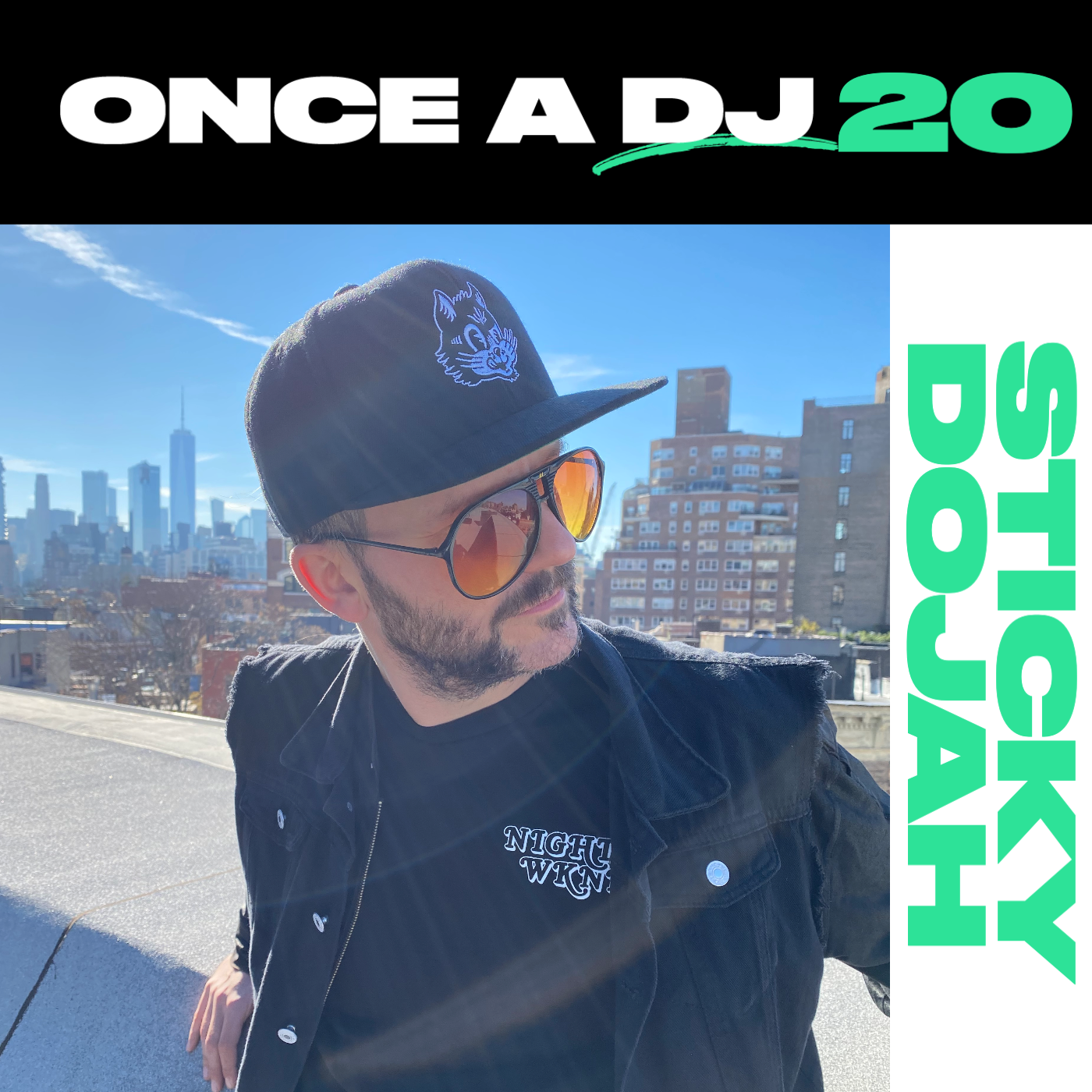
In this fascinating episode of “Once A DJ”, we delve deep into the life and career of Phil Lembke, a.k.a. Sticky Dojah, a Germany-born DJ who made a name for himself in Germany and then New York. Listen to Sticky Dojah share his journey from growing up in East Germany to embracing the first wave of hip hop and Turkish b-boy music. Explore his experiences with the advent of cable television and the importance of radio in his life. We get into the guts of the German hip hop scene in the 90s, the challenges of living away from bigger cities, and the insights from his very first trip to New York.
We then switch gears to his beginnings in the music industry, his early performances, and how his love for music eventually led him to enroll in the Red Bull Music Academy. Get an insider’s view of Berlin’s music scene, the establishment of pirate radio station Loudfm, and the evolution of music in real-time.
As the story unfolds, Sticky Dojah delves into the decision to become a full-time DJ, moving to New York, and how he navigated the industry as a student. Hear about his brief hiatus from DJing, his return on his terms, and how he juggles his other music projects today. End the episode with some powerful advice for anyone considering a career in DJing.
Transcript
Welcome back to Once A DJ.
And this week I’m here with Phil Lemke, AKA Sticky Dojah.
Germany born and raised and now based in New York with a range of gigs across bars, clubs, galleries, and corporates.
He’s also a remixer, curator, and journalist, and a graduate of the inaugural Red Bull Music Academy.
Today we’re going to discuss his early years and the experiences that shaped him into the DJ that we see today.
Phil, thanks for coming on the show.
How are you doing?
Sticky Dojah:I doing great.
Thanks for having me.
Adam Gow:You’re more than welcome.
So, yeah, I’m really excited to get into your story and understand it because it’s going to be quite different to a lot of the other guests that we’ve got in terms of your geographical journey and probably your cultural exposure growing up.
So do you want to start from.
I mean, start from where’s best for you, really?
Sticky Dojah:Yeah.
I mean, I obviously listen to a lot of the podcasts you have done.
I love the series and I’m happy to be a part of it.
And I guess I’m the first one that’s kind of from the German area, but a lot of my upbringing and socialization with music and DJ culture maybe mirrors a lot of the things that other people already talked about.
But then, because where I’m from, there’s a, you know, lots of different things happen as well.
So I try to keep it as exciting as.
Yeah, I think the first.
Let’s start, like, in the early 80s.
I was born in East Germany, but then we moved to West Germany before the wall came down.
It’s a long story.
That’s for another podcast.
Won’t go into that, but, like, it was like I was basically living in West Germany with my parents in asylum houses for refugees, because I was basically.
We were a refugee family from East Germany to West Germany.
We only spoke the same language, but I came from a different, completely different political system.
And then we had the chance to visit West Berlin for the first time, which was November 83.
So because we never made it to the west, and West Berlin was.
Even though it was still located in East Germany, like, West Berlin was, you know, part of.
Of the Western world.
And I will never forget, like, walking with my parents through Ku’damm, which was one of the most famous streets, and seeing these boys just moving like robots and seeing this boombox.
And I was like, what is this?
And that was my first.
When I always say, like, I caught the first wave of hip hop, that’s, you know, when all of this came to Europe, it Was Turkish B boys.
And then they went around with a hat and collected money.
And I’m like, what is this?
So that’s where I kind of was already intrigued.
Okay, what is this sound?
And then living with my parents in these asylums, we had a black and white television.
And then, you know, the early music shows in Germany started.
There was one, it was called Formel Eins.
And you would.
I would see like Phil Collins, Against All Odds, like doing it live and.
Or like the.
I remember the Thriller, Michael Jackson video premiere.
And I was like, too young to watch it.
And my parents were like, you might want to look away.
And then that year I went to a record store in Aachen.
When we finally moved to Aachen in West Germany, where I basically grew up and have spent a considerable amount of time of my life.
I remember, like, it was probably 84 by then when we went to a record store for the first time with my parents.
And there were two albums on the wall.
One had these white gloves, it was like breakdance music compilations.
And the other one was West Street Mob on Sugar Hill Records.
And that was kind of my first record.
And I was just, okay, and now put two and two together.
And I got really into breakdancing as a, you know, tiny young kid.
And that was my first love.
Adam Gow:So was in East Germany then, was it very much kind of Russian sort of cultural influence?
Sticky Dojah:There was, yes, there was.
But obviously we lived close enough to the border that we had access to Western television.
Cause it was all terrestrial back then.
There was a part in East Germany, like the southeastern part, that didn’t have access to Western media.
We had.
And there was also a state owned label called Amiga and they would license Western music.
So when I grew up, Pink Floyd was played a lot in the house.
Like the wall.
Actually one of my first childhood memories is putting the needle onto a record of.
And it was AC/DC’s Highway to Hell.
I’ll never forget, like the first, like, chords, the guitar chord.
So that all happened.
Yeah.
And before we left, like in around 82, early 83.
And yeah, my parents always had records.
So, you know, it was Dire Straits, it was Earth, Wind and Fire.
Best stuff I vividly remember, like Got to Get You into My Life that was always played in the house.
And my mom would dance.
So there was a lot of soul music, a lot of classic rock.
And I remember then, you know, when we went to West Germany, when we were living in West Germany, one of the first things is my parents took me to a concert in Cologne and it was Supertramp John Byers.
And I forgot, I think Santana, something like this.
So there was always.
My parents were always very much into music and then.
But I tried to hold on to these hip hop things.
You know, we’re talking about like this first wave.
,:But now, like, I’m still.
I’m looking for people, like, outside of my house that are also into dancing.
I wanted to dance.
And all the kids were like, well, this happened last year.
Like, this is so.
So:And so.
But I kept it.
I kept this urge to be like, I want to know more about this music and the dancing.
And I was kind of on my own, like dancing in my room and.
Yeah, like a Rock Steady Crew poster on the wall and all of that.
And then obviously, you know, being a kid, I was listening to all kinds of stuff and then also like kids music.
And it wasn’t all like, you know, only hip hop.
But I tried to catch these glimpses of stuff.
And I remember I got really into Miami Vice and they had.
They had.
I think Melle Mel had a song on the.
On the soundtrack.
It was a Miami Vice rap.
So I’m like.
I put.
I’m like, okay, this is connected to now, my favorite TV show, that.
And.
And then I think by 87, my parents had a sampler and there was Beastie Boys on it.
She’s On It.
Adam Gow:Yeah.
Sticky Dojah:Remember that song?
And I went.
I remember we went to a local restaurant and the son of the owner came to me and he’s like, have you heard of the Beastie Boys?
They have women in cages on stage that throw beer cans.
And I was like, what?
Very intrigued.
And then another big thing, obviously was the advent of cable television in Germany.
Adam Gow:Ye.
Can I just ask.
Sorry.
Moving from east to West.
Sticky Dojah:Yeah.
Adam Gow:How difficult or easy was it to make friends and interact with the.
With the Western kids?
Was it.
Were there any sort of difficulties there?
Sticky Dojah:Well, I can.
I can quickly tell the story of like, I basically went to a socialist kindergarten in East Germany where everything was.
There was like.
Everything was Giving order, was given an order for.
So now you sleep, now you brush your teeth.
And it was like.
It was really strict.
It was all kind of military.
And I remember then we lived in Heidelberg, which has a big.
There was big GI bases, army bases from.
From the States.
And a lot of the kids were actually American army kids.
And I remember the first days I was in kindergarten, I was just sitting around and doing nothing.
And Then the kindergarten teacher just went to my par.
Parents was like, something is wrong with your son.
Like, he doesn’t interact, he doesn’t play.
And my parents were like, no, he’s waiting for orders.
That’s how brainwashed I was from the socialist kindergarten.
Then once they were like, you free to go.
You’re free to touch everything.
Like you’re.
You can do whatever you want here.
Basically, then I was good.
But it was definitely a change in the, in the political system for sure.
Adam Gow:That must be a big thing for a kid to readjust to a whole different set of societal rules.
Sticky Dojah:Yes.
And it also, like this whole thing of like leaving a country kind of moving, like, became a thing for my family.
Like we were always moving.
Even within Aachen, we moved, I don’t know, like 15 times or something crazy.
Like I never really had a home for forever.
It was always just a couple years here, three years here, five years there.
Maybe, you know, did music become something.
Adam Gow:That you kind of depended on as a constant then, given that amount of variety and change, that.
Is instability a fair word to say?
Sticky Dojah:Yeah.
I mean, my parents always were looking out for me.
And I wouldn’t say that my childhood was unstable or anything like that.
There was a lot of love in the house, especially because of what we went through, but music was always there.
And just.
I was just intrigued by music just constantly.
And especially this like hip hop and soul music, because that’s what I’ve resonated most with.
I remember like, you know, talking about cable television like this.
There was this show about.
It was a TV show about Vietnam about like some series, I think it was called Nam or something.
And I will never forget, like hearing they played Marvin Gaye’s What’s Going On in the.
In one of the shows.
And I will, I will never forget, like rushing to the stereo boombox that was in the kitchen and trying to tape that song off the television and.
Yeah, just memories like that, you know, just.
That would be something that I would just hold on to forever and just like, wow, what is this?
And I wanted to know more about that.
And then by the late 80s, you know, it was also like the radio became really important.
Just like classic.
Sitting under the.
The bed sheet with the, with the radio on and switching to AM and hearing the BBC for the first time.
And then they had.
Or they had a German radio station, Radio One, kind of similar to the BBC.
And there was a radio show called Graffiti.
And then this must have been like 8:89.
I will never forget, like all of A sudden I hear these beats and it was Tuff Crew from Philly.
So in that radio show, they would play like the newest US rap that came out, like underground rap, but also like death metal.
And then the next song was like Death by Dawn, by Day side or something crazy.
And, and.
But I remember I only had like, like the last 15 seconds of that Tuff Crew song.
And it took me years to actually find out what it was and find the record in a record store.
Adam Gow:Did you find the almost like the game sort of nature of, oh, what’s this thing?
I need to try and find out about it?
Did you find that almost that kind of challenge a lot of fun?
Because I think it can be quite satisfying, can’t it, when.
When you find the satisfaction you get when you realize something like that?
Sticky Dojah:I was actually, I think now thinking back, or maybe I just make that up now in my mind, I was more frustrated that I didn’t have more access because I was still.
I was still young.
I was like 12 years old.
And I remember like going to a skate shop and then the.
The clerk, he had tapes and he was like, okay, listen to this.
And it was like, EPMD, You Gots to Chill.
And I heard a talk box for the first time in my life.
That.
That Zapp sample, it just blew me away.
But I was too young.
And then these older kids were like, hey, you know Public Enemy’s performing in Cologne next month.
You want to come with us?
And I’m like, I’m kind of still too young.
But then by the next year, I think in 91, with a friend from school, I convinced my parents, okay, I want to go to a rap show.
And it was actually Gang Starr and Dream Warriors and some other acts from Canada.
And that was obviously huge for me.
Like, I remember like getting Step in the Arena for my 13th birthday from a friend of mine.
That kind of cemented it.
At the same time, I think early 91 was when I got into Massive Attack, just understanding that there was also like this, the.
The UK as a, you know, something that also makes hip hop.
Or on the trip to Paris with my mom, I went to the HMV store and bought the first NTM, Nique Ta Mère album, Authentique, which is now obviously like a French classic.
I mean, they had.
It’s one of the biggest crews.
And just then I kind of became aware, okay, in every country, this is happening, rap music is happening, and they’re rapping in their own language.
And there was still a time when there was a little bit of German rap.
Already happening also at a pop level, at a major label level.
But the quality was just not there.
And there was still a lot of people rapping in English in Germany.
Adam Gow:Have you seen that NTM program on Netflix, the biopic?
Oh, it’s really good.
Sticky Dojah:Yeah, yeah, yeah, it’s, it’s the, I mean the, the whole thing.
There’s the cinematography and how they like.
I mean French rap was always ahead of the German rap scene.
I’d say by three to five years at least.
And.
But yeah, and then like early 90s is when this whole thing like really blew up for me.
Just going to the record stores by myself and then same time, you know, doing kids parties in someone’s parents basement and like mosh pitting to like Police, So Lonely because we heard it from the older brothers and sisters and like still rock was still there.
Like I remember like finding out about Jimi Hendrix, Voodoo Child and a friend of mine who’s like bringing Led Zeppelin in.
And that kind of stuff also was still around.
Adam Gow:With the people that you were around, did they all tend to be quite sort of wide ranging with their, with the music taste?
Because I know when I was growing up people, people around where I am tended to be quite siloed and I’m into this or I’m into this.
You didn’t get as many people that would kind of cross genres.
Was it quite an open minded society?
Sticky Dojah:Yes, because, because of the fact that we grew up like in a like small town.
There wasn’t much.
There was scenes like the older brothers they were.
Then they got into like Front 242, the whole EBM thing.
But for us like we would literally just sit down like I remember like in 93 just go to a friend’s house and listen to DJ Crystl like drum and bass.
Then became big for us too.
And we’re just blown away by the production and the break beats and everything.
And then well at the same time we would listen to Roger Waters, Music from The Body and laugh at the fart noises on the record.
And like just being kids, you know, like it wasn’t that serious.
We kind of developed this understanding, okay, this is something that we want.
And but this, this whole thing of like being in a scene and just being like this is hip hop, this is not hip hop or this is this, this is that.
That came much later in the beginning it was like everything which I came back in my DJing later on back to that kind of mindset of having just an open mind and anything goes, I suppose.
Adam Gow:If you’re.
If you’re somewhere that’s away from a bigger city, it’s harder to engage in the tribalism of music in a way, because it’s harder to dress a certain way in the kind of uniform of that type of music.
For example.
Sticky Dojah:Well, speaking of that, that was something that was.
People probably don’t understand it anymore.
For example, the whole fashion thing that comes with music, we didn’t have access to that.
And if you talk to people in Germany.
Yeah, you know, the older writers.
By that time, I was also getting into graffiti and street culture.
Just running around in the town, you know, you meet other kids and older kids.
And I remember, like, I desperately wanted a pair of Puma.
Puma Baskets or Puma Suede.
It’s like the shoes, you couldn’t just access them or buy them.
And I remember an older writer friend, he would go to London and he brought back some Pumas for me.
And I was just the king in school, you know.
And then all the other school kids were like, why are you wearing your grandfather’s old football shoes?
Like, what’s going on?
No one had seen fat laces at that point.
For example, in my school, you know, we were kind of the first people to.
And they were like, why do you have these big, big laces?
What’s the code here?
Like, no one understood.
Yeah, but it was.
It was hard in the beginning to.
To get stuff.
And obviously then during the 90s, with the German hip hop scene just growing and growing, magazines started, and then eventually it got into mail orders, like around 96, 97.
But even before that, we were always just trying to get stuff.
And I believe, like, for example, the.
The first official Superstars reissues were only available like in late 92, early 93, all over Germany.
So before that, you really had to know where to get stuff.
Adam Gow:The Superstars reissues, they wrap the Adidas.
Sticky Dojah:No, I mean the shoe.
Adam Gow:Oh, sorry.
Sticky Dojah:So.
So it was, you know, there was a time when, yeah, some people in Berlin, they had specialist shops and they had people, like, flying to New York or Paris and then buying stuff in bulk and bringing it back.
But we didn’t have access to that, you know, because Aachen is a.
It’s really the heart of Europe, which was also good for traveling.
It’s right at the border to Netherlands and Belgium.
So I literally grew up walking distance from the Dutch and Belgian border.
I could just walk across the border.
And I was in another culture.
That was really a huge bonus of living there.
And that’s why we were Also really more drawn to the Netherlands, Belgium and even England, because London geographically is almost.
It’s closer than Berlin to us growing up.
Most Western Germany.
Yeah.
So going to London at the time was, I mean, maybe four or five hours with the ferry and bus and everything.
Now there’s a direct train and it’s like via Brussels is like, I don’t know, two and a half, three hours.
And going to Berlin is like seven and a half, eight.
So, yeah, we were always drawn to that.
And then we also, because of the British forces that were stationed around Aachen and Mönchengladbach, in that area, we had access to British radio.
There was actually a show in the early 90s by a guy called Steve Mason, the Steve Mason Experience.
I don’t know if he was actually famous in the UK as a dj.
Adam Gow:I’ve not heard of him.
Sticky Dojah:Yeah, he was with the British forces and he was traveling around the world and wherever he was, you know, stationed, he would do a radio show and he was stationed in Germany at the time.
And he would play early hardcore and breakbeats in early jungle.
So we had access to that.
And then the other really important person that was on that radio station was David Rodigan.
He had his reggae show.
So, yeah, by that time, like 93, that was.
We were just always religiously listening to that and just getting all this input.
And.
And then the other important radio show came actually from Amsterdam.
It was called Dutch Masters, a hip hop show that I discovered in 93.
I think the first, like just being on the radio, dialing in, and then I think the first song was like Only When I’m Drunk by Tha Alkaholiks, and I’m like, wow.
And that was the direct gateway to New York for us.
And once again, it was terrestrial radio.
So if you were in Cologne, if you were like 70km east, you couldn’t get that station.
But because we were so close to the border, it opened us up for what was to come.
Because they had all the imports, all the new records a week after they came out in New York.
Adam Gow:That’s crazy.
hip hop was big in the early:I mean, for me, I’m more beats than lyrics and I just didn’t quite click with it in the same way as some of my friends did.
But I think also at that time I was getting more interested in samples and sample culture and looking backwards.
But yeah, it Was.
It was quite strange that it was such a prominent scene in my country, but I didn’t really grab onto it.
What was your experience like with the German hip hop, given that you were there and you had such a.
A variety of influences?
Sticky Dojah:I was pretty much there from when the very first records came out.
And it was actually a scene when people identified as hip hop.
And it wasn’t just novelty rap in German.
I was there to see the switch from English language, from bad English records to actually, okay, we need to rap in our own language because other people in other countries are doing it.
And then by 92, 93, you had records.
There was one group called Advanced Chemistry, and they were like, you know, it was like an Italian immigrant son.
It was like half Haitian, half German guy who became later on like a very prominent figure.
His name is Torch in German hip hop.
So, yeah, all of that mixed in with like the drum and bass influence from England.
And then seeing the.
The local German hip hop scene growing, I always felt that, okay, the spirit is there, the people are there.
But there were very few records that were really like, on the level with American productions and even like UK productions.
Because you have to understand also at the time there was this sound called Britcore in the early 90s, mid-90s, that was huge in certain parts in Germany.
Like, really spoke to the German crowd too, like, especially in Hamburg.
And there were lots of people mimicking it in German.
Like really like this fast rap style and just having gibberish English.
Like you couldn’t understand a word.
But we liked the energy and obviously the break beats and everything.
Yeah, and that was also the time maybe like around 95, when I really got into, okay, I want to.
I want to dj.
I want to do something with these records that I already had.
And I remember, like, my friend Frito, also known as DJ Demic, he’s still active.
He also does podcasts and radio.
Now in Germany, he already had two turntables.
And he called me one day and was like, I got it.
I’m able to mix now.
I can mix records in beat.
And I’m like, what?
It wasn’t able to do that.
So I had this competition.
Okay, I need to get into that.
And.
went to his house and it was:And he mixed it with Roxette, Listen to Your Heart, which is crazy, but it’s like it was a mashup essentially, but it worked for like a, you know, for a couple of bars.
And we’re like, oh, this is crazy.
And then I borrowed equipment.
I had a tape deck and a belt driven turntable that had a little pitch.
And I went home and I tried and tried and tried.
And then I remember it was with drum and bass records, actually.
I don’t know which ones it was exactly, but, yeah.
And then it clicked and I was able to mix, and that was a huge thing.
So that was around 95.
And then, yeah, going further into timeline, like, by 96, I had first had my name on a flyer and did my first party in Aachen.
And it was the summer of the Fugees.
You know, The Score was really big.
And I got a first glimpse of this thing as a dj where the requesting, because I was still playing like Digital Underground and playing, like a little bit older records that I had, you know, all these LPs.
And I remember the girls at the party, they were already requesting, like, Lauryn Hill and the Fugees.
And I’m like, all right, I see that because it’s new and I understand.
And by that time, I mean, I came up with drum and bass, as I said, but there were simply too many drum and bass DJs in Aachen for this tiny town.
So I went into hip hop.
And by 95, with my friend Frido and another friend, Jochen, we started practicing.
And we had one guy in our school, he already was part of a DJ pool, and he invited us one day, and he was more into house and electronic music.
But he had Artifacts, Wrong Side of da Tracks.
He had Mobb Deep Shook Ones, all these 12 inches.
And he’s like, I don’t really need this.
You just want to buy them for me for like five Deutschmarks.
And we were like, yes.
And that.
That made me also understand, okay, there’s actually like this DJ service thing, DJ pools, where you can get records sent to you.
It’s amazing.
And with those records, we just practiced and practiced and.
Yeah.
And then finally by 96, I started doing my own little parties and was booked here and there in the town because, I mean, it’s a fairly small town.
It’s like 300,000 people.
So there weren’t that many opportunities or locations even where you could dj.
But by that time, it was also, like exploding.
There was a party called Massive Tunes, which was a pure drum and bass party, but they had a second room where I would DJ and just play, I don’t know, like early Daft Punk and then.
But also like, you know, instrumental hip hop and little bit of rap and just trying to make sense of it not really knowing what I’m doing.
Adam Gow:Did you find that kind of moving.
Sticky Dojah:Round,.
Adam Gow:Developed your social skills in the way that you were good, like, with dealing with promoters and things like that.
Did it give you, like, that sort of confidence?
Sticky Dojah:Not really.
I mean, I was more.
It was a very small scene, and I got to know all the people and was trying to find my way.
And, I mean, in the beginning, I remember, like, for my first party, the guy, it was like in a movie.
Like, he was, like, wearing sunglasses.
Like, I invite you to dinner, and you’re gonna.
Gonna have this great party and you’re gonna have this crazy career.
He was like 18 years old, and he’s telling me all these things, and I’m like, okay.
But I fairly early on realized that, you know, it’s.
It’s that whole promotion game.
I never was really too good at it.
And it’s.
I don’t know, like, if.
If that.
If my social skills developed through that or anything.
But I was always trying to just make it good, good set, and have, you know, people come back.
And sometimes that was difficult, you know, because you have this idea of what you want to present to people, and then they’re somewhere else with what they expect.
But at the same time, I think a lot of the people were in our town were just thankful that something was going on.
Yeah.
Adam Gow:So were you very much pure hip hop when you were DJing at that point, or were you throwing in bits of other stuff as well?
Sticky Dojah:Totally.
Bits of other stuff stuff as well.
The whole hip hop thing came a bit later.
I think by 97, it started to manifest more.
I got out a little bit of the, like, buying drum and bass records because simply, it was.
It was.
The sound was changing a little bit, got darker, more.
More technical.
to New York in the summer of:I just finished school, and that trip just blew everything wide.
It’s crazy because I. I went to the Rock Steady anniversary.
I saw Stretch Armstrong playing at the HMV store.
I met the Beatnuts.
I was just hanging out at Fat Beats for a day, just.
Just up like.
Like a sponge, just, okay, who’s coming in here?
Oh, there’s Crazy Legs over there.
And just.
And then I remember, like, through mail order, we got access to the first Invisibl Skratch Piklz VHS tapes.
We went on trips to Amsterdam because Amsterdam was three hours away, and we went to the Paradiso and Melkweg, big clubs that still exist.
In Amsterdam, DJ Babu was DJing.
All of a sudden Fat Beats opened up in Amsterdam.
So we would go there and buy 12 inches.
And I mean, that was the summer when the first.
When the independent hip hop scene really, like, you know, all these things came out, like Dilated Peoples and, and Mos Def and Rawkus became big.
So by that time it was pretty obvious, okay, this is, this is just what I want to do and what I, what I’m.
What I’m looking for.
Adam Gow:So that trip to New York was the intention just to soak up as much hip hop as possible?
Sticky Dojah:Well, it was kind of like a.
You know, I’ve been to New York.
And then my father, he had a.
He was doing work in the US and he was like, why don’t you come with me and we’ll spend some time in New York in between and I’ll make it work.
And for me, yeah, that was like just soaking it all up.
Just running around and listening to the radio.
I mean, I remember like taping.
We were living in Jersey and always taking the train into New York and I was taping the Stretch and Bobbito show.
Adam Gow:Yeah.
Sticky Dojah:And just, just, I was just blown away by everything.
And I mean, is that the era.
Adam Gow:When they were doing.
When they had all the incredible freestyles on?
Sticky Dojah:Yeah, and just like the shit talking.
Also, like, I remember taping one where LP was there and they were talking about this, what was this, this movie with Kevin Costner, Waterworld.
And they were like, oh, can you imagine if it was.
If it would be like Pork World and everything would be made out of pork and you know that humor.
But then also, like, just being in record stores in New York was just phenomenal.
And I remember this, like, I spent all my money on Fat Beats and went down to West 4th street and there was another small record shop.
I forgot what it was, but I walked in and I clearly had no money and I had no idea what I’m doing, doing.
But I was like, okay, I gotta, I gotta ask a good question.
I’m like, hey, do you have Incredible Bongo Band, Apache?
And, and the guy was like, yeah, we got it.
And.
But I wanted it on 12 inch.
I wanted the 12 inch bootleg that everybody was talking about and they didn’t have that.
But then a girl rolled by on roller skates and was asking for Marvin Gaye Sexual Healing and he just gave her the 45 and she just rolled off to the streets.
It was like a movie.
And I’m like, what is this here?
I need to, to.
And, and I mean, that trip, that energy really helped me for years.
Like coming back to, to Germany, you know, and being like, wow, this is, this is it.
Adam Gow:Had, had you got a plan after school then when you had you got an intention of, I’m going to go to New York and come back and do a certain thing.
And, and if so, did that change through the experience of that trip?
Sticky Dojah:No, it was more so 97, I finished school and then it was like, okay, I have to go to university.
What’s my best strategy?
And there was a really good university just right across the border in a town called Maastricht.
And that’s where I enrolled for.
Adam Gow:That’s Netherlands, isn’t it?
Sticky Dojah:International Business Studies.
That’s Netherlands, Yep, one of the oldest towns in the Netherlands.
And it was literally just a half an hour car ride away.
But you’re in a completely different world.
It’s a different language, different country.
So I enrolled in 98 to study there, but it was very much separated.
I had my DJ life in Germany, which eventually spilled over to Maastricht because I made contacts there and were DJing student parties and stuff later on.
But I kept it fairly.
I mean, not really.
I have to go back and say that we did a lot of trips to the Netherlands and we were also part of a thing called the Hip Hop Cafe in a small town called Sittard, where me and my friend from Germany would go and we would be the only Germans.
e doing my first DJ battle in:It was called Battle of the Highlands.
It was a local DMC battle.
It was just me and two other guys and yeah, I won that actually was practicing a lot at the time, like from 97 to 98.
But the others were also really bad.
And then, and I remember one of the judges was D.J.
Kypski.
I don’t know if you heard of him.
He’s still, still one of the best turntablists from the Netherlands.
Like he does tone scratching and all of that.
Please look him up if you haven’t.
And he, he asked me afterwards and he’s like, did you know that you would win this?
And I’m like, yeah, I did, because I knew who was going on against.
That same year I enrolled for a battle in Amsterdam called Turntable Iced, which was in, in the Paradiso club.
It was in a big club and I was just scared shitless.
And I did not place.
I was just like.
And all the Dutch, Dutch guys were making fun of me.
I was like the, the only German, like battling in the Netherlands.
It was fun, but it was.
It was like clearly getting out of my comfort zone.
And also a testament to the fact that we were always more drawn to the Netherlands or like that border lifestyle than going east into Germany.
Adam Gow:How much of the performance was that?
Your skill level wasn’t as good as theirs and how much of it was, was.
Did the nerves just get to you?
Cause I know what it’s like when you do a battle and you’re shaking, trying to put your needle on and you’re queuing up and it doesn’t quite go over your tape marker in the right way and stuff like that.
If it’s going wrong.
Sticky Dojah:Well, it was.
I remember.
So going back to that New York trip on that Rock Steady anniversary, I met Christie Pabon, who was doing DMC US at the time, and I actually gave her a demo of like little beats that I made and which a year later resulted in.
Me and another friend, we produced a remix for J. Rue, the Damager that came out in the UK, actually on DMC UK in 98.
But she was.
At the time, she had these.
I forgot the name of the DJ was also like.
He was a.
He was kind of like a rock guy.
He was.
I think he was the.
The US DMC champion in 96.
Adam Gow:Swamp.
Sticky Dojah:Swamp.
Yeah.
And Swamp had the Skip Proof scratch tools.
Yeah.
And.
And she would send them to me.
Like I would buy them from her and would practice with those.
And I’m.
I was thinking at the turntable, I sped, okay, at least the needle won’t skip because I have to these skipless.
And I remember actually the other guys making fun of me that I was using that because they weren’t.
And it was.
I mean, it was pretty, you know, the lot of ego and like insecurity.
You know, how these battles were back then.
It was like.
It was gruesome.
Adam Gow:Well, I mean, it’s like when I talked to Dee and she was on about guys sabotaging her needles and stuff, I was mind blown.
But yeah, like you say, I mean, in that world there was a lot of braggadocio and bravado and, and stuff like that wasn’t there.
So I guess it comes with that sort of territory.
Sticky Dojah:Yeah.
And then I think a year later I enrolled again.
And then by then I was more comfortable.
And there’s actually also video footage of that.
And I remember I was.
I got applause after my set and I was.
I felt really great.
I did well.
And I think I Had I was at the same level of points as another Dutch guy, but because I was German, I think they picked the Dutch guy to go to the the next round, which I was fine with.
It was just more for the experience.
But that was like my short lived battle career.
But it made me, you know, practice and get more into that.
And then that year 98, when I did my first battles was also the year I went to the very first Red Bull Music Academy in Berlin.
Adam Gow:What was that like?
Sticky Dojah:That was just incredible.
It was so.
You had to.
So.
So they send out application forms to all the record stores in Germany.
It was national only for the first one.
It was kind of like a test balloon to do it internationally.
And I remember you had to apply to fill out all these questions.
And I got a yes.
And it was like, okay, you’re going to Berlin for two weeks and there’s going to be this house filled with turntables.
And just like a.
It was just like a, you know, a playground for DJs.
And pretty much the first thing that happened was we’re sitting in a room and the first interview that they did was Jeff Mills and then there was Juan Atkins and then it was the X-Ecutioners swinging by.
And then it was some reggae sound system.
Then someone would came and talk about how labels work and it was just.
And then you would go into the house and just find a room with turntables and just practice and jam together with other people and that for two weeks.
And then I actually think I even came back for another two weeks.
They had a second set where I just made it work somehow with my civil services at the time that I was doing kind of got out of that and then just.
Yeah, that was a huge game changer for me too, obviously, meeting all these people.
That’s also when I started to write for Music Magazine, because one of the founders of Red Bull Music Academy was a chief editor of one of the biggest music magazines at the time.
And he asked me to start writing about music and doing interviews.
Adam Gow:What was that based on then?
Was it based on your music knowledge or your DJing skill?
Or was it something in terms of the quality of application that you’d done?
Sticky Dojah:I think it was a mixture of that.
I asked them about my application and then one of the guys told me that, yeah, you were pretty much one of the first that went through.
Like, because I had always had this bird’s eye view.
It wasn’t just hip hop, it wasn’t just because, I mean, it’s Germany.
ke I went to my first rave in:You know, there’s, there’s.
This was always around.
So I had an fairly global understanding of music and reggae and all kinds of things.
Not that I was an expert in everything, but I saw how different things interacted and.
Adam Gow:Yeah, because I, I asked that just because.
I mean, I applied for the Red Bull Music Academy one year and I just remember it was an absolute beast of an application form when I did it.
Sticky Dojah:Yeah, it was pretty.
It took me a couple of nights and then like really like do the, like this half hour mix.
I remember I worked on it for weeks and just like I wanted to do it right and it worked out.
But then obviously it became, you know, I think when you applied it was already on such a level that it was just.
I mean, look, look at who came out of this and who was part of it.
Like, who’s an alum?
What’s the word?
Alumni.
Alumni, yeah.
It’s just incredible talent that was featured over the years.
You know.
Adam Gow:Who is there?
I. I mean, I can’t think off the top of my head.
Sticky Dojah:Oh, I think like, like Flying Lotus was there.
I think DJ Day from Palm Springs just.
And then lots of people that I forgot about probably don’t know who are doing amazing things right now.
Adam Gow:There are a couple of pretty incredible ones though there that you’ve mentioned.
Sticky Dojah:Yeah, yeah.
But yeah, I mean, it was, it was great to have that just being a part of that.
And then obviously, like seeing all these shows in Berlin, going to the Ultraschall and seeing who’s There Company Flow and then you know, just all this music just as an input.
And then by then, you know, coming back to.
I still resided in Aachen, going to uni and just doing parties in clubs in Aachen and doing my own parties.
And then we started also doing open air parties because there was this hill where the three countries meet.
And I had friends that were living in Belgium at the time and we just got a sound system together and we started our party in Belgium and then the Belgian cops came.
It’s a funny story actually, how specific the that that area is.
And we were just.
They were just like, you can’t do this here.
And we’re like, well, how about we go 50 meters left to the German side?
And they were like, well, that’s not our jurisdiction.
So.
So we took the whole thing over to the German side and set up again.
And we’re just partying in the fields.
And then the Dutch cops came actually on the German side.
They were like.
We got complaints from the Dutch side.
But it’s.
Again, it’s not our jurisdiction.
But we’re just telling you we don’t want to call our German colleagues, so maybe turn it down a little bit.
And it’s just, you know, like, just funny parties like that where you just toy around with the cops in that area.
You just.
You can literally jump from country to country up there on that mountain.
It’s funny.
Adam Gow:Did they find it amusing or frustrating?
Sticky Dojah:Both.
There were parties where, I remember I was DJing and a cop would always almost handcuff me because I was not turning down the music immediately.
And they were very aggressive.
And then there were other times where, you know, because it’s borderland, so they were just searching for drug smugglers or human trafficking.
And then I was DJing and I turned down the music.
Cause I saw the cops approaching and they were just like, well, did we tell you to turn the music down?
And I’m like, no, why do you do it?
Almost like wanted to mingle with us.
It’s funny.
So it went both ways.
And then obviously, I think nowadays, I don’t know if that’s still possible.
It’s the same as in England with the.
I mean, I don’t want to compare what we had to what was happening with illegal raves in England, but just similar, like the cops crushing down on it eventually.
Adam Gow:Sure.
Was there ever any sort of temptation to move to Berlin?
Sticky Dojah:Never.
Because what we had was good enough.
I had my university that was half an hour away.
We Even then in 99, started to have our own pirate radio station in Aachen called Loud FM, which then eventually turned into a online radio outfit in.
In the town.
But yeah, even that we had like a little, Little, you know, little glimpse of that, like, you know, had this old radio equipment actually from East Germany, from the old East German army forces.
Someone brought that in.
And then we had a. Yeah, we would be on terrestrial radio for a good summer, like on the weekends, three to four hours every.
Every weekend.
One of the supers in the house was involved and he would let.
Let us have.
Have a go with the antenna on the roof.
And it was a good experience.
So I had all this.
And I was by then also part of a.
The biggest German record pool.
So I would get all these Rawkus 12 inches, Stones Throw.
12 Inches Groove Attack was in Cologne, was closed.
So there was a lot of things happening with.
With.
ties in the town in the early:And by that time I was also working for a German Record label called Put da Needle to da Records.
They were publishing German rap albums.
Quite successful at the time.
The label then also set up a mail order so it would work in the mail order.
And I think by:And then also the company folded.
But I still stayed in Aachen and just did my studies and my parties.
Adam Gow:I suppose that timing comes with when.
When downloads were starting to emerge as well and physical music purchasing was slowing down.
Sticky Dojah:I guess that was a little later.
an, we’re still talking early:I remember just before that all hit.
Like one of my.
As a dj, one of my vivid memories was, you know, when people talk about breaking a record.
Adam Gow:Yeah.
Sticky Dojah:And I had that experience with, with Missy Elliott’s Pass That Dutch, because I had the promo.
I got the promo sent on a Friday.
I was DJing that Friday and I went to the club and I was DJing with a friend who ran the local reggae sound system called Smallax.
And I told him, I have the new Missy Elliott and we have to like, this has to be the record of the night, so how do we do it?
And he was like, all right, let’s.
Let’s announce it.
So we announced it.
I played it once, did a rewind, played it twice, and then I think over the course of the evening, did that five times.
And by the last time, just the whole place went nuts.
And, you know, in the beginning they were like, huh, what is this?
And then it was just like, okay, boom.
And that’s an experience.
I don’t know if people still can have that with just how music is consumed nowadays or how it’s accessible, because at the time I was the only one with that song in the town.
It was funny.
Adam Gow:Was it like, did you listen to it the first time and just go, this is going to be huge?
Sticky Dojah:Yeah, yeah.
I was like, this is.
I mean, at the time, you know, especially for the clubs, this was such a massive club record or I mean, anything that Timbaland did at that time was just amazing.
Like music evolution in real time.
But yeah, I mean, moving on from that.
Like, then at the end of my studies, I did a.
A year abroad, which was in Prague.
So I connected with the local hip hop scene in Prague and got really into connecting there with local artists.
And also then was asked to perform at the Hip Hop Kemp, which is the biggest hip hop festival in central Europe, and started writing for Czech magazines.
Actually, I picked up A little bit of Czech, but I was obviously writing in English because my Czech wasn’t that good.
But yeah, that was also, also really instrumental obviously to, to connect and get another experience of DJing in, in another country and, and then coming back.
By:I was, I was, I mean, I took my time with my studies.
You can see, like DJing was always more important to me, but I, I was eager to finish it.
And it was, I mean, it was a, it wasn’t like an easygoing university.
It was a, you know, big, big thing.
And it took a lot of time as well, next to the music, to.
Adam Gow:Finish what was the course that you did?
Sticky Dojah:It was called International Business.
So it was a lot of business psychology and logistics and I mean anything business.
But the whole study was in English.
That was kind of my thing.
Okay.
At least I get like the business English out of it.
And there was a lot of pressure on, on it as well.
Like I saw people like really having careers early on.
Like my peers, like went to Adidas, work there and that I didn’t have that.
I was still like in my, in my small town and, and doing my thing at the same time.
I had an alumni meeting years later where it was funny because I was then happy with what I did and you know, know turning my passion into my job essentially and still doing what I loved.
And these other guys were like, yeah, I’ve been like, I’ve been through the third consulting agency and like, it just wrecks me down.
And like I’ve, I think I came out well, you know, because in the beginning it was the, was the other way.
I felt like I’m not really advancing in what I want.
Wanted to do and still, I’m still in a small town.
But then you take, take this out of it and just be like, okay, this is actually, you know, you just need to be happy and find something that you really want in life.
And so, but then like, obviously after, after my studies it was like, okay, I really need to, to do something here.
And I started working for a kind of like a cultural agency in Aachen that also ran this online radio station and working on some projects there, but it was never something that I saw as a career.
And then by:And by:And I went full time DJing.
Like, I was like, okay, I’ll make this work.
Adam Gow:When you made that decision, did you have Enough regular gigs coming in to keep you afloat or were you at a certain percentage of what you would have needed?
Because that’s always a challenge with going full time as a freelancer, not just with DJing, but say if you work as a designer or anything like that, it’s like, well.
Sticky Dojah:So what we did was I teamed up with a longtime companion I DJed many years with by the name of DJ Colma.
And he, him and I, we started doing these parties in a club.
He established a thing called Miyoki and we were then the Miyoki DJ team.
I had my other party, which was called Mad Lifted from this old Moex record, which sets music from Mad Lifted.
Beat Junkies.
Beat Junkies was already taken.
So I took the Mad Lifted and.
rty that we did was Halloween:And it was more than a thousand people.
And we had in a town with 300,000 people, so it was massive.
And we then developed a setup where we always had six turntables on stage and we always had a guest in the middle.
We would always invite an international guest or a national, bigger dj and we were the sidekicks, literally.
And that setup kind of became a thing.
And it would also allow you, as a dj, you could just walk off stage or you can come back and just go back into the set of the other person that’s playing.
And we would go nuts.
We would just like quick mixing and just scratching and playing all kinds of stuff.
It was like true open format.
From Chubby Checker to drum and bass to underground hip hop to pop records.
We didn’t give a damn.
And by that time we would, you know, invite international DJs.
I mean, we had Boogie Blind, we had all the.
Lots of fitness.
Rafik, even like people like Miles Bonny who brought his trumpet, or J-Ro from Tha Alkaholiks.
All the Danish DJs very happy.
We had DJ Norman Nice.
He was doing a club set.
Not like a performance or anything.
He was playing an actual club set.
And to get him out to do a club set, that took some, some time because he was already at another level back then.
Like more family and music work behind the scenes.
s a good run we had from like:And that’s when I left to New York, actually straight from Aachen to New York.
Adam Gow:So how did that come about then?
How was that decision made?
Sticky Dojah:So Colma and I, DJ Colma and I, we went with our, like him and his family and friends.
We Went on a tourist trip to New York.
Just like, okay, I want to experience this again.
And at the same time, friends of mine were in town from London, actually from a crew called Living Proof.
I don’t know if you.
Yeah, so DJ Khalil from Living Proof is a long, long time friend of mine.
We actually linked up at Hip Hop Kemp in the Czech Republic.
And they were in town and they introduced me to their New York friends.
And all of a sudden it was like this.
This thing where I meet people, I’m intrigued.
And I just.
I remember coming back and I called my dad and was like, I’m gonna make the move.
Like, this is it.
I was kind of ready.
I was.
I had a. I had these parties in Aachen.
I had a weekly at a student party where I could also play my stuff and, like, play in a smaller room, not in the main room.
But I was, you know, people were already asking me, like, what are you still doing here?
Like, you’re destined to.
For other things.
And I didn’t want to go to Berlin.
It was like either New York or London.
By that time, I already had played Living Proof a couple of times.
I was playing in London a few times with Khalil, and so had a bit of, you know, seen like just this international vibe and just having a city where people come from all aspects of life, and I wanted to be a part of that again.
And that made the decision fairly easy to make it in New York.
Adam Gow:Did you have a set amount of time that you thought, I’m going to give it this amount of time.
If it doesn’t work, I’ll go back, or did you not even have that sort of doubt in your mind?
Sticky Dojah:So in:I kind of hustled my way into the city and I gave it because, I mean, I was going on a tourist visa.
You know, you go on the ESTA visa, so you have three months, and in these three months, you have to accomplish something.
Otherwise, you know, you have to go back.
And through my music writing job, I was actually able to get a visa, a journalist visa, and then later on switch that to a green card.
And because, I mean, I wasn’t really.
Wasn’t really writing about music at that point.
I mean, that doesn’t support you in New York.
Anyway, so pretty quickly went into DJing again and established myself here.
And I know a lot of people try that.
And it’s really hard, but you just.
It sounds so cliche and corny, but you have to believe in yourself.
And obviously, having a little bit of contacts, having people in the beginning, that helps me tremendously.
Was.
Was a big game changer for me.
But then also, like, I wasn’t, you know, over the years, because, for example, we book Boogie Blind so I could visit him in Harlem.
He knew who I was and other people.
I. I think you were on that forum, too.
Like, Soulstrut.
Adam Gow:Yes.
Sticky Dojah:So going back to the forum days, like, I actually met people on that trip.
I reached out and was like, hey, I’m going to be in New York through Soulstrut.
And then met, like, Dr. Ley here.
And he showed me around town, and it was just.
I had a good intro to the city.
And I think I was also.
By that time I was 35, I was old enough to not completely lose myself here and just be like, okay, I’ve got to treat this a little more seriously.
And I mean, don’t get me wrong, I did my fair share of partying and nightlife and just.
Just networking and meeting people.
But, yeah, I was.
Slowly built myself up here again.
Like, slowly build up a record collection here again.
Started doing bar gigs, started doing club gigs, and then eventually a year later or so was like, DJing with Q-Tip and had all these, like.
All of a sudden these things were rolling in.
Record Store here started to.
They asked me if I wanted to start working for them.
And so all these things came into place again.
It was always.
I always believed in myself to be able to do that, but obviously it was hard.
And there were days where I was like, might have to go back.
I don’t know how I’m going to pay rent next month.
But I had this core belief, believe in myself and my abilities.
And, yeah, it worked out.
Adam Gow:Do you think anything from your degree helped with just how you.
How you approach things?
Sticky Dojah:Not necessarily.
Maybe what really helped was, okay, I am.
I know I’m able to converse.
I’m.
I know how to use the English language, and I can make myself be understood.
And I think the language really helped.
And I was quick.
And it was like, okay, I get the humor.
I can be funny, and it’s always something that interests me, like puns and, like, I really like the English language.
I like languages a lot, so that helped.
And then obviously, having this.
This background of hip hop definitely helped.
And which in turn was funny because I Then, once you’re here, I was always.
I called myself an ambassador of the culture in Europe and you know, writing about music, hip hop music, interviewing artists, making sure that what I thought rap is presented in the right way or whatever that was.
I mean I see it a bit more relaxed now, but then coming here and it’s like they, they don’t really need me here as a white guy from Germany representing hip hop.
So I got also got into other things again and started opening up to other forms of music like funk, soul, disco, just house and establishing that for myself.
Adam Gow:I think from what I’ve, from what I’ve heard of your mixes as well, it’s all.
I think some people have a really good sense, sense of just like the right side of house that’s kind of really accessible but isn’t too mainstream.
Sticky Dojah:That was always my, my sweet spot in a sense.
I never had a problem with pop music.
I always loved the deepest underground.
So my spectrum is, is really wide.
I mean I’ve DJed for jazz bands.
I’ve played in electronic jam sessions where it was like really abstract, where people would do scat sounds and like some weird dancing would happen.
You know, just trying out different things and being, not being shy of taking your craft into like out of your comfort zone really helped me to also find what I’m comfortable at.
And obviously when you go full time, you know, know, I mean, I did weddings, I did things that might not have been this cool or where even like the guys in Aachen back, then I remember they were like looking down on me like all the cats from the scene, they didn’t understand that I was DJing the student party and like, this is not cool.
And I’m like, I have to pay rent and this is what I do.
So there’s only so much you can do with DJing in this small area.
So I was doing all of it.
So I encourage everyone to, if you really want to do this and you love it, then don’t be shy.
To also step out of your comfort zone and do things that might seem strange a bit or might seem like artist is not the right fit for me.
You never know what comes out of it.
Adam Gow:Yeah, I mean I had a phase of, did quite a few weddings and if you’d have said to me at a certain point, yeah, you’re going to start doing weddings, I’d have probably thought, no, I’m not.
Why would I do that?
And then when you do them and you can just let go a little bit, they can be really good, fun and really satisfying.
And the times when you can get the 70 year olds dancing to Tribe Called Quest and things like that.
There’s a lot of fun in that because you’re kind of, you’re playing their game, but you’re winning a little bit because you kind of help it to be a little bit on your terms, which is quite a good fight.
Sticky Dojah:Yeah.
And, and it’s, you have to be a certain type of person, I guess there’s, it’s not for everyone.
If you’re more of an artist driven dj, then you want to do yourself and want to have people actually come to see you, then that’s what you need to strive for.
I’m always kind of in the middle of that, so it makes it more difficult to present yourself or establish yourself.
But I want to do this all my life, life in some sort of form.
So your podcast also has opened up myself to, to have other thoughts or like see it a little less stressed.
It’s, it’s funny because I was talking to a friend of mine who just got out of DJing a little bit and he’s like, yeah, I started my own company.
And I’m like, yeah, but, you know, and he was kind of sad a little bit that he got out of the DJ game for it.
And I’m like, well, but you can always come back.
Like, there’s no, there’s.
I think we’re at a point in our lives, in our society where these clear, driven careers are not happening anymore anyway, or less and less.
Or if you want, you can have it.
But it’s also, there’s no shame in coming back to DJing after 10 years.
You just, it’s like if you’re really good at it and you love it, you’re gonna get back into it.
It’s like riding a bike.
It needs some practice again.
Yes.
But if you have it and you still have this bug, like, why not, you know?
Adam Gow:Yeah, like, I like that I spent some time away from DJing, because in the time I spent away from DJing, I kind of developed a career and kind of used a lot from DJing, from the thing of doing your own website, doing your own graphics and album covers and, and again, bits of.
Nowhere near as much as you, but little bits of writing and kind of use these skills to, and experiences to change my career path.
And then with the career path kind of sorted, coming back to DJing, I’ve come back to it on my own terms in a very different way.
And because with the DJing, before I stopped, I got pulled into.
I’d go out with a Serato crate and play this, this, this, this and this.
And I got very samey with what I was doing, and now I’m back at it.
I. I do battle with whether I should get a controller and start doing.
Doing some Serato stuff, but then I’m like, if I do that, it just, it opens up a lot of complications.
And I think having just records having limitations, it’s fine.
I don’t DJ that much.
And if I can just stick to that, I’m still, you know, I’m still going to get enough gigs to keep me going.
Sticky Dojah:Yeah, then.
And you need, obviously you need a structure or something where the stuff that you want to play you actually able to play.
I mean, I’m very lucky and happy that I have residencies now here in New York where I can do what I want and people book me for that.
And it’s not like the whole request thing, for example, is not really a big thing in my world anymore.
It’s more like people coming up and being like, hey, that was really, like, that was something.
And I appreciate you playing this stuff that I didn’t know.
It’s also the audience.
You have to find this type of audience.
And that being said, for anyone that starts, I think you were just mentioning a controller.
Like, I had someone asking me the other night, like, yeah, I want to get into DJing.
And I just bought this controller.
I’m like, fine.
Like, that’s cool.
Like, I liked, as I said, I like the limitations of having only vinyl and having only this, but I think you should be open to anything and just whatever fits.
I mean, right now, for example, I do a lot of video content as well that’s purely based on vinyl.
Just vinyl mixes and quick mixes and just 45s and just playing with it.
People seem to like it.
And it’s something where the limitation actually helps me to focus more and get, get, get other stuff done.
At the same time, I was talking to a friend and he’s like, why, you know, don’t limit yourself.
Maybe add a, add a CDJ next time.
Why not?
And see where this can go, you know, so it’s wherever you want to take it.
And you just have to.
It’s so cliche, but you have to just be yourself and play with it and, you know, take whatever comes out of it and be yourself.
Adam Gow:Yeah, that’s amazing.
Is there anything that we’ve not touched on?
I mean, I know you’ve done some.
You do some musical curation as well, some sort of corporate work, haven’t you?
For Like Adidas and some others.
Sticky Dojah:Yeah, I mean, it’s, it’s.
I’ve, I’ve done that.
Unfortunately, that kind of took a hit with the whole Pandemic thing because all these locations kind of had to close down and.
But I did, for example, I did some music supervision work, music direction work for a company called Spin here in New York.
They’re a ping pong social club.
They have locations all over the US the US and I was also DJing there.
All their grand openings, whenever they had an opening in Seattle and Philadelphia, actually dream come true.
They.
When we did the thing in Philly,.
Adam Gow:The,.
Sticky Dojah:The guy that booked me, like I worked with Matthew, he, He pulled me to the side and he was like, all right, so we have an MC coming right now.
And I’m like, he didn’t tell me before.
Like, I was like, okay.
And then someone showed up and was like, here’s the USB.
Here are the instruments.
I’m like, well, we’re in Philly, who is it?
And he’s like, I’ll let you know in a second.
It was Schoolly D. Oh, wow.
So.
So I actually DJed for Schoolly D. And like it was all impromptu.
I just pulled, pulled the instrumentals.
He let me know what.
And we actually had a good flow going and hung out later on.
It was like a hip hop dream come true.
Adam Gow:Nice.
Yeah, like dj.
Sticky Dojah:But yeah, the whole curation thing.
It’s ironic, I did a lot more before the Pandemic, but then during the Pandemic, picked up the DJing again, the craft, and did a lot of videos and Twitch streams and stuff like that.
And that kind of got me back into more DJing again, which I’m not mad at.
You know, it’s ebbs and flows and.
But this is as, as I said, this is really something I’m.
I’ve been doing my whole life almost like since I was a young kid.
And so in, in one shape or form, it’s always going to be in my life.
Adam Gow:Yeah.
And it looks like you say, you know, you, you’ve managed to do that thing.
And, and I think it’s really interesting what you mentioned about kind of artist driven DJs versus, I don’t know what you’d call it, like sort of non artist driven.
I think that is a really,.
Sticky Dojah:A.
Adam Gow:Really interesting way to kind of separate the two because it’s something where you can go down.
It’s like Santero said about with the having, having the kind of bar work and then having like the Ministry of Sound Residency and having to choose one path to go down.
Sticky Dojah:Yeah, I mean, yeah, sometimes it’s hard, but at the same time, you know, you can come back to anything you want if you really pursue it and if it fulfills you and if you make it work, it’s possible for anyone.
There’s always going to be obstacles and it’s going to be harder at a certain point than other points in life.
But if you really want it, you can make it work.
I was just talking to my friend DJ Koma, and he’s like, man, I’m really.
He’s doing more graphic work these days.
But he, like, at the end of the year, I’m planning to go back into production and DJing more.
And, you know, there’s always ways.
And yeah, I think, you know, for me right now I’m.
I’m really happy with where I’m at right now.
But there’s still, as Breakbeat Lou said, you know, you’re always a student, so it never stops.
Adam Gow:I think as well, it’s.
It’s something that’s really good.
I can’t remember if it was on here I was talking to someone and saying about going to like a mindfulness retreat that was all about death and impermanence.
And it really made me think about how we can get caught up in being a certain thing and we can let that definition of his guide where we end up and we don’t always step away and think, do I want to be doing this thing all the time?
And it’s fine to understand that you can step away from doing a certain thing to focus on another thing, and that other thing isn’t going anywhere.
And if you want to come back to it, you might find that you can get back to where you were quicker than it took you to get there the first time.
Sticky Dojah:Yep, yep, exactly that.
Adam Gow:I think that’s been a really good bit of insight and yeah, loads to take in there.
Is there any other sort of key piece of advice, advice that you want to give our listeners about if they were taking up DJing or just considering on their journey as a DJ?
Sticky Dojah:Like, like I mentioned before, you have to start somewhere.
And a lot of people ask me that, especially now through my videos.
They get like, lots of like, hey, I want to DJ and what can I do?
And you just start somewhere and then just start your journey.
The starting is.
Is just probably the most important thing.
And you.
It’s never going to be right, you know, you’re never going to have that ideal equipment.
You’re never going to have that ideal situation, I started with a tape deck and a belt driven turntable to make a mix.
Today you can easily start with a controller, and then in a month you can be.
Once you separate your left and your right brain, you don’t even have to do that anymore.
You can just use the sync button, but it’s still, you can still rock a party with that.
I’m not to able against the sync button.
That’s another discussion.
But if, if you really want to pursue it, there’s so many ways.
The, the, the cost of starting has dropped considerable considerably in the last decades, I’d say.
So that’s my advice.
Just start somewhere with whatever you can find, whatever you feel comfortable with, and practice, practice, practice.
It’s that, that doesn’t go away.
I mean, even, even the most successful DJs in their fields, they still practice a lot, and that never goes away.
And that’s part of it.
That’s essentially my advice.
Start somewhere and then practice and find your journey.
And obviously also know what you don’t want to do.
If you really feel really uncomfortable sometimes, sometimes it’s good to get out of your comfort zone.
But if it, like, if it wears on you emotionally and physically, like, you maybe should go in another direction with it.
Adam Gow:Yeah.
And the final question then is, is there anyone in particular that you’d like to hear on this podcast talking about their journey?
Sticky Dojah:I mean, I mentioned him a couple of times already in this, but I really think that Boogie Blind would be someone that.
Because he kind of comes from that world and is just such an incredible human being, like a Harlem Renaissance man and still doing his thing.
And obviously he would have a lot to say.
Don’t know if he would be able to do it, but maybe you can get him on here.
That’ll be sweet.
Adam Gow:Certainly give it a try.
And just where can anyone find you online who isn’t following you already?
Sticky Dojah:Probably the best is still Instagram.
Sticky Dojah.
Sticky D O J A H with an H. In the end, you can find me there.
And also on Bandcamp, I think everything is just Sticky Dojah.
So, yeah, easy to find.
Adam Gow:Brilliant.
Thanks ever so much for your time today.
Sticky Dojah:Thanks, Adam.
Thanks for having me.